
Valve's Steam Deck Price Hike Raises Major Questions About the Steam Machine
Rising memory costs continue reshaping gaming hardware pricing across handhelds, consoles, and future PC alternatives.
Hardware by Nahe Yan on Jun 07, 2026
The market for game hardware has seen significant price increases in 2026. It's getting harder for people to find good deals on game consoles, handhelds, and PC parts because everything is getting more expensive. People have been talking about how the future of the Steam Machine will be affected by rising hardware costs and harder-to-find memory. This is why Valve recently raised the price of the Steam Deck.
Valve has raised Steam Deck OLED prices across its range. Steam Deck OLED 512GB version was $549, but has been dropped to $789. This is $240 more, which is about 44%. It now costs $949 for the Steam Deck OLED 1TB, $300 more than its original $649 price. The fact that the gear has not been updated is what makes the rise important. Inside the device, the APU, screen, battery, and other parts have been the same since 2023.
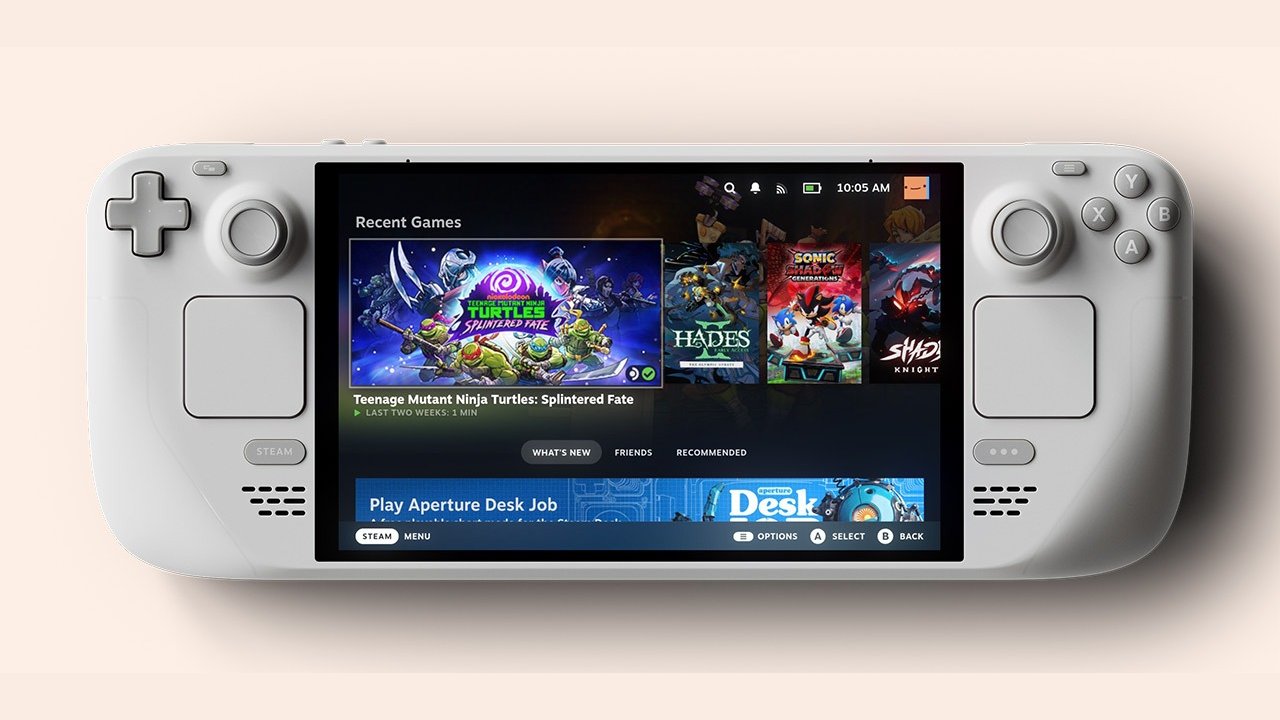
How Valve's Increase Compares to Other Manufacturers
Valve is not alone in its price hikes. Nintendo, Sony, and Microsoft have all increased the cost of their hardware, due in part to supply chain pressures and higher component prices. As for Switch 2, Nintendo raised its US price from $450 to $500 and gave almost 4 months' advance notice of the increase.
Sony raised the price of the PS5 early this year, with the standard version going for $650 and the PS5 Pro topping out at $899. Microsoft also bumped the Xbox Series X price up to $650. The price increase was not just an increase. Valve did not give any advance notice of the new pricing, but it was implemented immediately.
Those who had been considering buying a Steam Deck suddenly had to pay much more for a game that was once fairly priced. Those who had been considering buying a Steam Deck suddenly had to pay much more for a game that was once fairly priced. The magnitude of the increase is also significant. Other companies had smaller percentage increases, while the Steam Deck had one of the highest.
Why the Situation Might be Different with Valve
All three console makers, Sony, Microsoft, and Nintendo, are quite lucrative businesses when it comes to game sales, subscriptions, and first-party software. Hardware can be a gateway to bigger ecosystems that create recurring income. Valve can also make money from software sales via Steam, though the Steam Deck seems to be behaving differently. The company probably sold the device at a very thin profit margin to gain a foothold in the handheld PC market.
Often, a company has limited margins to absorb higher component costs, so there wasn't much room for Valve to spare. The company may have reached a point where it could no longer maintain the previous pricing. That distinction is important because it implies that the rise is due to production expenses rather than an attempt to squeeze the maximum profit from a product.
The Return of the Steam Machine
Steam Machine is another major facet of Valve's hardware plan. The initial Steam machine project came about 10 years ago. It failed to get off the ground due to poor hardware quality, software compatibility issues, and a lack of consumer demand. Subsequently, Valve has returned to the idea. A new Steam Machine will be available in 2026 with a small desktop-style design and with SteamOS.
The mission is as before: a gaming console that can be plugged into a television without requiring Windows installations or driver updates. Now, unlike the original attempt, Valve is developing the hardware, and SteamOS has taken a huge leap forward with the success of the Steam Deck.

The Original Value Proposition is Under Pressure
Steam Machine was pushed as a "less complex and may be a less expensive option for building a gaming pc. If the price of the value proposition is equal to or greater than that of other custom-built systems, it is harder to sustain. The benefits of the Steam Machine with set-in-stone hardware become harder to argue when buyers can get the same price for a traditional PC with upgradeable parts.
Users would be sacrificing flexibility and future upgrade options for a comparable price. Valve has already said pricing will be similar to that of competing PC hardware, which begs the question: how will the Steam Machine stand out?
Steam Deck bump up is part of a larger trend in the gaming industry. PS5 now costs $650, Xbox Series X costs $650, Switch 2 will sell for $500. Steam Deck has also begun at the new low price of $789, up from $759 last summer. Meanwhile, PC components are some of the most expensive they've been in years.
Very few options remain for gamers seeking more affordable gaming equipment.
Valve is still one of the more reliable gaming companies around, and it's been pretty open about Steam Deck pricing and Steam Machine expectations. There's no point in the fact that the decision to make it was not necessarily Valve's. That's not the case; it reflects the state of the hardware.
But if Valve, known for being a consumer-friendly company, was unable to keep up with Steam Deck pricing, it could suggest that component costs have reached a level that few manufacturers can handle. In the meantime, until memory pricing stabilizes or the broader market situation shifts, gaming hardware is likely to remain expensive.
For the Steam Machine, that could be when they reach a price point that fundamentally impacts their buying decision. The gadget could be a simple, inexpensive alternative to PC gaming, but it could also be a high-dollar, high-end option. It'll be interesting to see if Valve can overcome those hurdles, but with the recent price hike on the Steam Deck, it's a conversation worth having.
Editor, NoobFeed
Gaming Hardware Updates
No Data.