
Bungie Pulls the Plug on Destiny 2 Live Service as Marathon Struggles to Take Off
Inside the end of an era for Destiny 2 and the uncertain future of Bungie's next big bets.
News by Mahi Araf on May 22, 2026
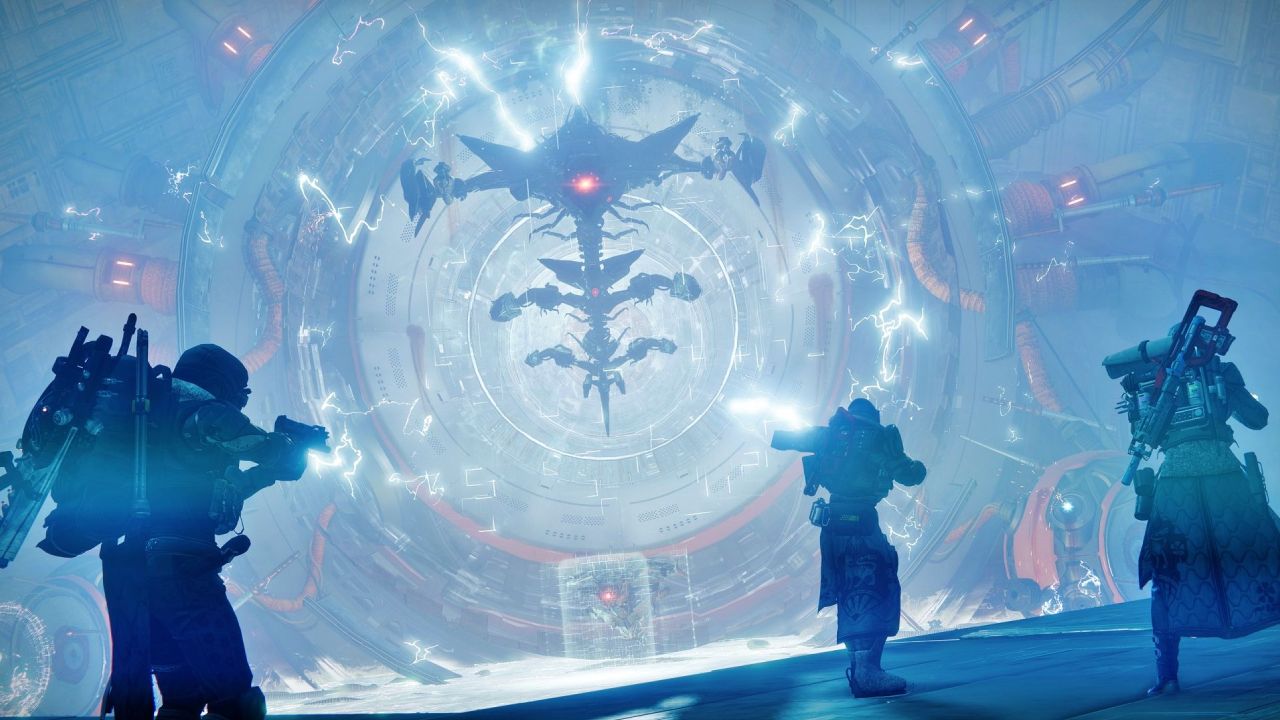
You're looking at what feels like the end of a major chapter in gaming, because Bungie has officially confirmed that Destiny 2 is stepping away from its live service model. The game isn't shutting down completely, but from this point forward, it won't receive new content updates, which, in practice, means the live service era is over.
The announcement came through Bungie's official channels, and the message is framed in a very reflective, almost thankful tone. You're told about nearly 12 years of Destiny, the shared journey with players, the ups and downs, and how building this universe alongside the community has been a major part of the studio's identity. They talk about reaching a natural end after The Final Shape and how Destiny 2 will transition into a state similar to Destiny 1, still playable but no longer actively evolving.

What you're left with is a promise that the game will remain accessible, even if it stops receiving fresh expansions or meaningful new systems.
In other words, it stays online, but the live service loop that defined Destiny 2 has effectively ended. Bungie also says the final major live service update is scheduled for June 9, 2026, which will act as the closing chapter for ongoing development.
The tone of the statement leans heavily into optimism. You're told the announcement is a transition into something new, not just an ending. Bungie hints that it's shifting its focus toward new projects in incubation, without clearly saying what those projects are. At the same time, there's a clear emphasis on gratitude, legacy, and the idea that Destiny's universe will live on in memory even if it stops expanding in real time.
But behind that messaging, the situation around Destiny 2 looks more complicated. You've been watching the live service model slow down for a while. After The Final Shape, engagement reportedly started dropping sharply, and the momentum that once kept Destiny 2 consistently active didn't return. Steam numbers, as referenced in discussions around the announcement, show that the game has been hovering at relatively low levels, with player counts dipping into ranges suggesting a steady decline rather than temporary fluctuations.
Instead of bouncing back after major updates, the game's activity curve has been trending downward. That kind of pattern is usually hard to reverse in live service games, especially when content updates no longer generate strong spikes in returning players.
At the same time, reports and commentary circulating online point to a broader shift inside Bungie itself. You're seeing claims that the studio has increasingly moved development resources away from Destiny 2 and redirected them toward Marathon, its next major live service project. That shift becomes important when you look at how both projects are now performing.
Marathon, which was meant to represent Bungie's future in the live service space, isn't having an easy time.
Player engagement numbers being discussed publicly show relatively low peaks, often hovering around the low tens of thousands in 24-hour activity. That puts it in a similar range to where Destiny 2 has fallen, which raises concerns about whether the new direction is actually gaining traction.
Even more concerning for some observers is the idea that Marathon, despite being the newer release and heavily backed as Bungie's next big push, is reportedly underperforming financially as well. In some comparisons being shared, Destiny 2 is still generating more revenue on certain platforms than Marathon, even though Destiny 2 is now in its end-of-life phase. That kind of gap is usually not what you want to see between a legacy title and its successor.
The situation becomes even more significant when you factor in Sony's acquisition of Bungie for roughly 3.6 billion dollars. Marathon itself is also reported to have a very large development budget, reportedly well over 250 million dollars, with ongoing costs tied to maintaining a live service infrastructure. When you combine that level of investment with weaker-than-expected performance, it puts a lot of pressure on Bungie's future output.
You also see discussion about how microtransactions and monetization systems in Marathon haven't yet reached the level needed to sustain a long-term live service ecosystem. That adds another layer of uncertainty, especially in a market where live service competition is already extremely crowded.
All of this feeds into a larger concern about Bungie's direction.
With Destiny 2 ending active development and Marathon struggling to establish itself as a dominant live service, attention naturally turns toward what comes next. Bungie has mentioned multiple projects currently in early development, described as being "incubated" internally. But there's no clear indication yet of what those projects actually are.
One possibility being widely discussed is a potential Destiny 3. However, based on current reports and industry commentary, that kind of project would still be in the earliest conceptual stages, if it exists at all. Destiny 3 was not a visible focus during Destiny 2's later years, especially as resources were shifted elsewhere. So if it does happen, it would require a long development cycle before anything becomes public.
Another possibility is that Bungie moves toward a completely new IP, but still within the kind of design space it knows best. That would likely mean a first-person shooter with strong multiplayer systems and long-term engagement hooks, similar in spirit to Destiny but not necessarily tied to its universe.
The challenge with either path is scale and risk.
A full Destiny 3 would require massive investment, potentially even more than Destiny 2, especially if it's meant to rebuild interest in the franchise from the ground up. At the same time, Bungie is already carrying the burden of Marathon's performance, which complicates how much additional risk Sony might be willing to absorb.
There's also the time factor. Large-scale live service or AAA multiplayer shooters take years to develop. If Bungie is only now beginning early-stage work on its next major project, that leaves a long gap during which revenue from active live-service games may not be as strong or stable as expected.
This is where the broader concern about Bungie's position comes in. The studio is now caught in a difficult space where its legacy live service title is ending, its successor isn't clearly succeeding, and its future projects are still years away from release.
Despite all that, there's still recognition that Bungie remains a highly skilled studio with a strong identity in shooter design. Destiny 2 is often remembered for its scale, variety of activities, and ability to create a shared-world experience that lasted for years.

That legacy is part of why this transition feels significant even if it isn't entirely unexpected.
Marathon, by contrast, is seen as a narrower experience. As an extraction shooter, it appeals to a more specific audience, with a steeper learning curve and a more demanding onboarding process. That limits its mass appeal compared to something like Destiny, which blended multiple gameplay styles into one evolving ecosystem.
Because of that difference, there's a growing sense that Bungie may need to return closer to what originally made it successful. That could mean revisiting the structure that made Destiny such a long-running live-service hit or building something new that still captures the same sense of scale and accessibility.
At the corporate level, Sony's involvement adds another layer of pressure. With a major investment already made, expectations for return on that investment remain high. If Marathon doesn't stabilize and the next project doesn't land successfully, Bungie's long-term position becomes harder to justify in purely financial terms.
Still, even with all the uncertainty, there isn't an immediate expectation that Bungie will disappear or shut down.
The more likely scenario is that it gets at least one more major opportunity after Marathon to prove itself again. What that project looks like, and whether it leans into Destiny-style design or something entirely new, will likely define the studio's next era.
For now, what you're seeing is a studio in transition. Destiny 2 is stepping out of active development after years of defining the live service shooter space. Marathon is trying to establish itself but is struggling to gain strong momentum. And the next chapter is still being built behind the scenes, without any clear signal yet of what it will become.
Senior Editor, NoobFeed
Related News
No Data.