
Dragontwin Keeps Growing as its New Battle Technology Pushes the Indie Game Further
The small indie project that went viral for its physics-based dragons has spent the last year quietly building battles, deeper systems, and a much bigger fantasy world.
News by Tahmid Mahi on Sep 12, 2026
It is kind of strange to look at what has happened with Dragontwin over the last year or two. The highly ambitious indie game suddenly appeared online with clips of a third-person character climbing onto an enormous physics-based dragon and flying through a fantasy world while burning everything underneath it.
For a while, those videos were everywhere, with people sharing them and comparing the project to the dragon game they had wanted for years. Some of those clips even pulled surprisingly large numbers before the internet eventually moved on to something else.
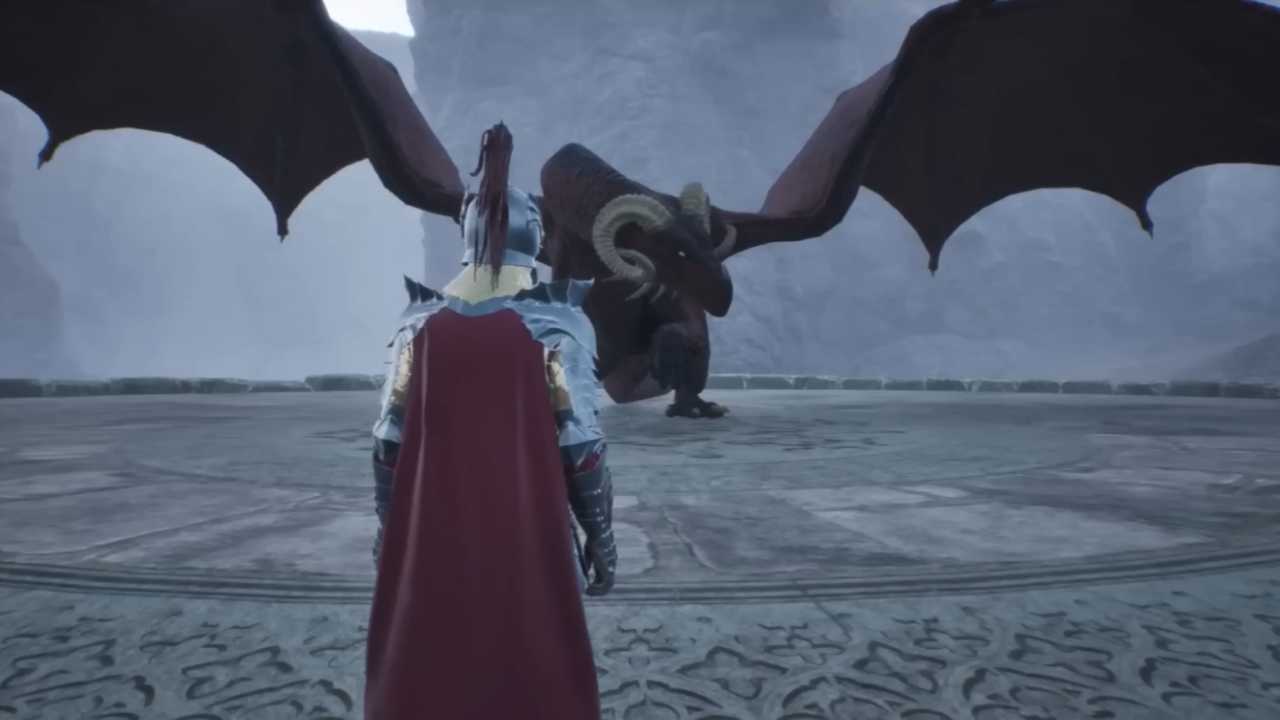
That is usually what happens with games that are still extremely early in development.
You see a prototype go viral, everyone talks about it for a while, and then the project becomes much harder to follow once the initial excitement disappears. Dragontwin has not actually slowed down, though, and the developer has continued posting development updates almost every week.
The dragon itself has been repeatedly rebuilt and improved, while the game has also gained a large customization system and continued changes to its world technology. Dragon fire is becoming considerably more complicated, and an entirely new battle simulation is being developed around the idea of huge medieval conflicts.
Major parts of the final game still do not exist, and the developer has been very open about how early the project remains. The important part is that development continues, with the team building new systems instead of the original idea simply sitting in prototype form. That makes Dragontwin an unusually ambitious project for such a small studio.
The long-term vision has not really become smaller either. Dragontwin is still planned as an open-world fantasy RPG and strategy game where you play as a mortal soul bound to a dragon. You will be able to create both your character and dragon, explore the world together, build a lair, gather followers, raise armies, conquer or liberate territory, and eventually establish your kingdom.
The developer has made it clear that the roadmap is the project's vision, not a guarantee that every planned feature will make it into the final game. Dragontwin is still some time away, and the eventual scope will depend heavily on funding and how much the studio can grow.
Even so, some of these ideas are starting to move beyond descriptions on a website and into actual systems that the team is developing. The battle system is probably the clearest example of that shift.
The original concept was never supposed to be limited to flying around on a dragon.
There has always been a strategy element where you can gain territory, build your power, raise armies, and eventually take part in large-scale battles. That idea wdifficultard to evaluate when the only thing available was a series of impressive dragon prototypes.
The newest battle technology uses GPU-driven systems to handle large numbers of units. This includes a new GPU-powered ragdoll simulation that the developer says can support hundreds or even thousands of concurrent ragdolls. That does not mean every battle is guaranteed to feature thousands of fully simulated soldiers fighting at the same time.
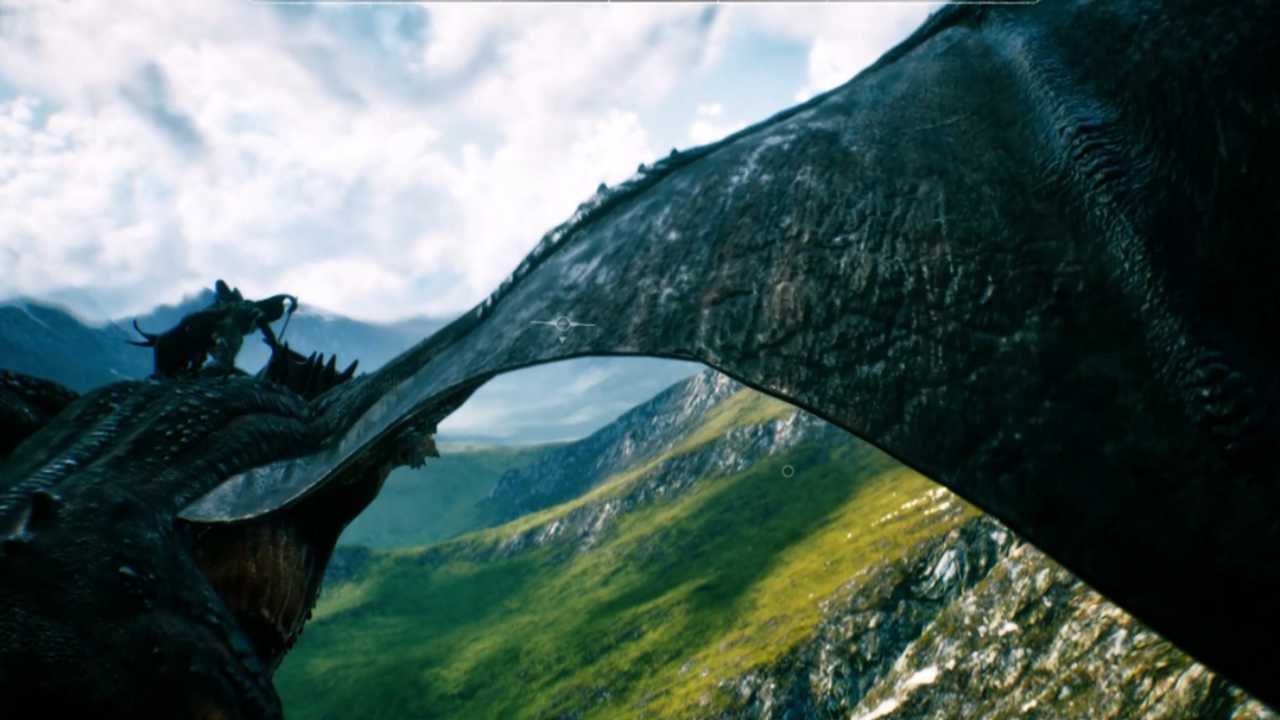
Draconic is also looking for an experienced simulation engineer to help build this part of the game. The studio's goal is to create a large-scale medieval fantasy battlefield simulation that combines crowd simulation technology with RDS gameplay to produce battles on a massive scale.
This is where the original dragon videos start to make more sense as part of the larger project. The idea is not simply to have you flying above an empty world, but to eventually have your dragon operating while an actual war is happening below you.
The battle system has already gone through a substantial foundational rework. There is now a new GPU state machine system, a data-driven movement system, improved rendering for large numbers of characters, and a modular system designed to give different units more visual variety.
Procedural animation support has also been added for those units alongside the GPU ragdolls. On top of that, the developers have started implementing an actual damage system featuring different damage types, resistances, and unit statistics.
One of the more interesting additions is the way the battlefield itself is being treated.
The developer calls it a battlefield-spanning environmental impact system, allowing units to visually react to the damage they receive. Particle effects can represent things such as blood and fire, while materials can also show damage.
That might sound like a small visual feature on its own, but it becomes more meaningful when you consider the scale of Dragon Twin's intended battles. If hundreds of soldiers eventually fight while dragons fly overhead, the battlefield is not supposed to look like a completely clean arena where everything resets immediately.
The developers are experimenting with systems that allow the aftermath of those battles to remain visible. Fire is also being developed around the same idea of leaving a more noticeable impact on the world.
Dragon fire was one of the biggest reasons the original Dragontwin clips attracted so much attention. Watching a giant dragon physically move through the air before torching an area below it immediately communicated what made the project different.
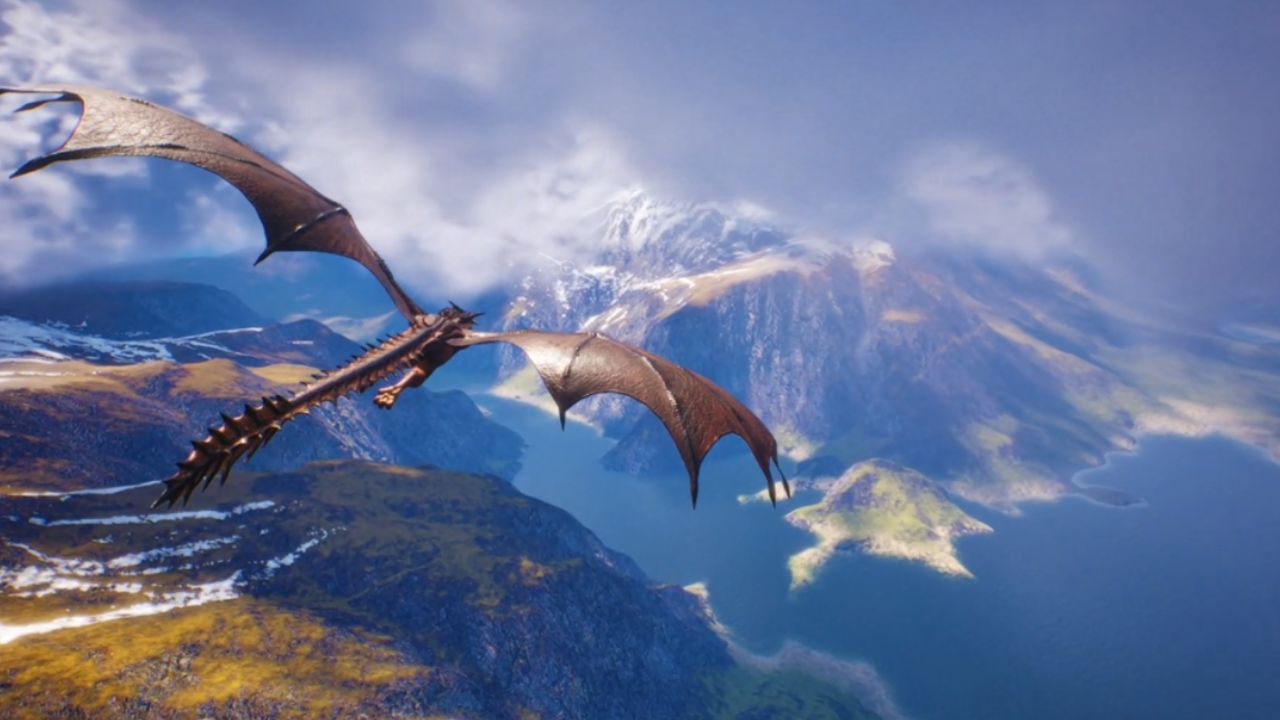
The developer has continued working on that system with major visual and performance improvements. More recently, the game has also received a system that creates smoke and soot in the wake of dragon fire.
Instead of treating fire as a simple particle effect that appears while you hold a button and disappears afterward, the developers are trying to make it interact more convincingly with whatever you are attacking. The goal is for the fire to leave something behind rather than feeling like a temporary visual effect.
The dragon itself has probably received even more attention than any other part of the project.
A lot of the early interest came from how unusual its movement looked, because Sidenius was not simply relying on traditional canned animations every time the creature moved. A large part of the dragon is controlled through physics and procedural systems.
Over the last several months, development has focused on making those systems easier to control without losing the weight and physical movement that made the original prototype stand out.
Flight has been reworked for easier control and responsiveness, while the spine, neck, wings, and tail have been repeatedly adjusted to move together more naturally. High-speed flight has received particular attention because the dragon could become too stiff when moving quickly.
The wing flapping now adapts to different situations, the wing fingers have additional movement, and even the membrane between the wings is being physically simulated so it can stretch and react rather than behaving like a rigid surface.
The developers have also been working through some of the problems that naturally come with a physics-driven creature. Keeping everything stable while the dragon moves quickly, twists around, or interacts with complicated terrain has caused issues such as physics desynchronization, high-speed jitter, micro-stutters, and problems when the controller encounters difficult terrain.
The developers have gradually addressed these problems, and they have also made significant improvements to the dragon's physics performance. In the latest September update, the developer went even further by overhauling how the dragon moves.
A new physics driver system now creates physical animation directly on the physics thread rather than relying entirely on the engine's standard animation system.
The developer has also built a runtime tool that lets you adjust physical animation parameters while the dragon is actually moving. That should make it much easier to tune the smaller interactions that determine how the creature feels during flight and movement.
image
The dragon was never impressive simply because it had detailed scales or flashy visuals. What made it stand out was the sense of weight, with its body moving beneath it as it flew and its enormous wings responding naturally.
Ground movement is receiving the same level of attention. There is now a first pass at wyvern-style ground movement for custom dragons, while turning and grounded movement continue to be adjusted so the creature properly reacts to changes in terrain elevation instead of sliding across uneven surfaces.
Landings are also becoming more deliberate, with smoother transitions between flying and being on the ground.
Even the rider is now being brought into the physics simulation rather than simply being attached rigidly to the dragon. The developer has been experimenting with making the rider respond to the dragon's movement, and the synchronization between the two has continued to improve.
Dragontwin is still clearly a long way from becoming the enormous fantasy RPG and strategy game that Draconic Interactive has described. Many of its biggest systems remain unfinished, and there is no guarantee that every part of the current vision will survive development.
Still, the steady stream of technical updates shows that the project is moving far beyond the viral prototype that first introduced it. If development continues at this pace, the next version of Dragontwin could look very different from the game that originally caught everyone's attention.
Editor, NoobFeed
Related News
No Data.