
Saber Interactive CEO Defends AI In Rideshare "Stimulator"
A messy AI controversy around Rideshare "Stimulator" turned into a public feud, several ugly comments, and one surprisingly graceful apology.
News by Adeela Tas on Aug 25, 2026
Saber Interactive, the studio behind Space Marine 2, found itself at the center of an AI controversy after its CEO admitted he'd have been perfectly happy replacing a real writer with artificial intelligence. He says that didn't actually happen here, but the way he talks about it makes you wonder just how thin that line really is.
You might be surprised to learn that this whole saga didn't start with AI at all. It started with a grudge. Randy Pitchford, the outspoken head of Gearbox Software, once left behind a USB stick at a restaurant packed with sensitive files. The old controversy resurfaced when Pitchford mocked Embracer Group, Saber and Gearbox's former parent company, while promoting Borderlands 4.
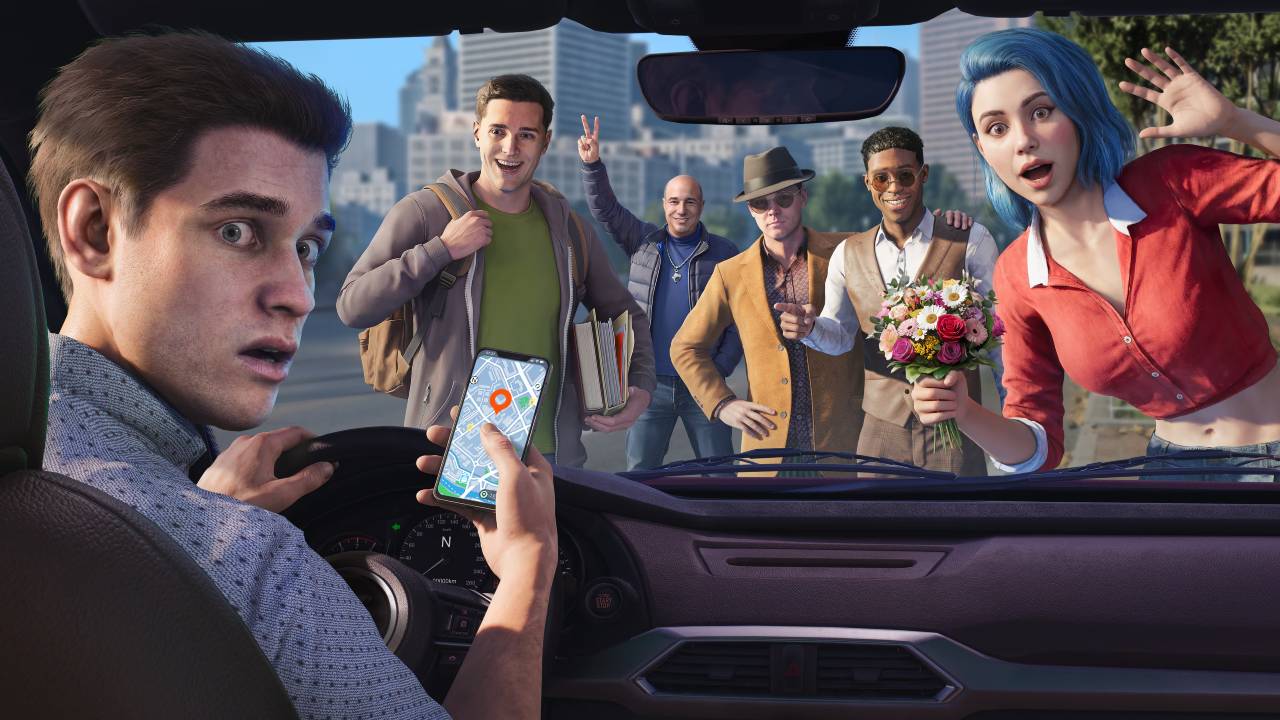
Saber's CEO, Matt Karch, didn't take that quietly.
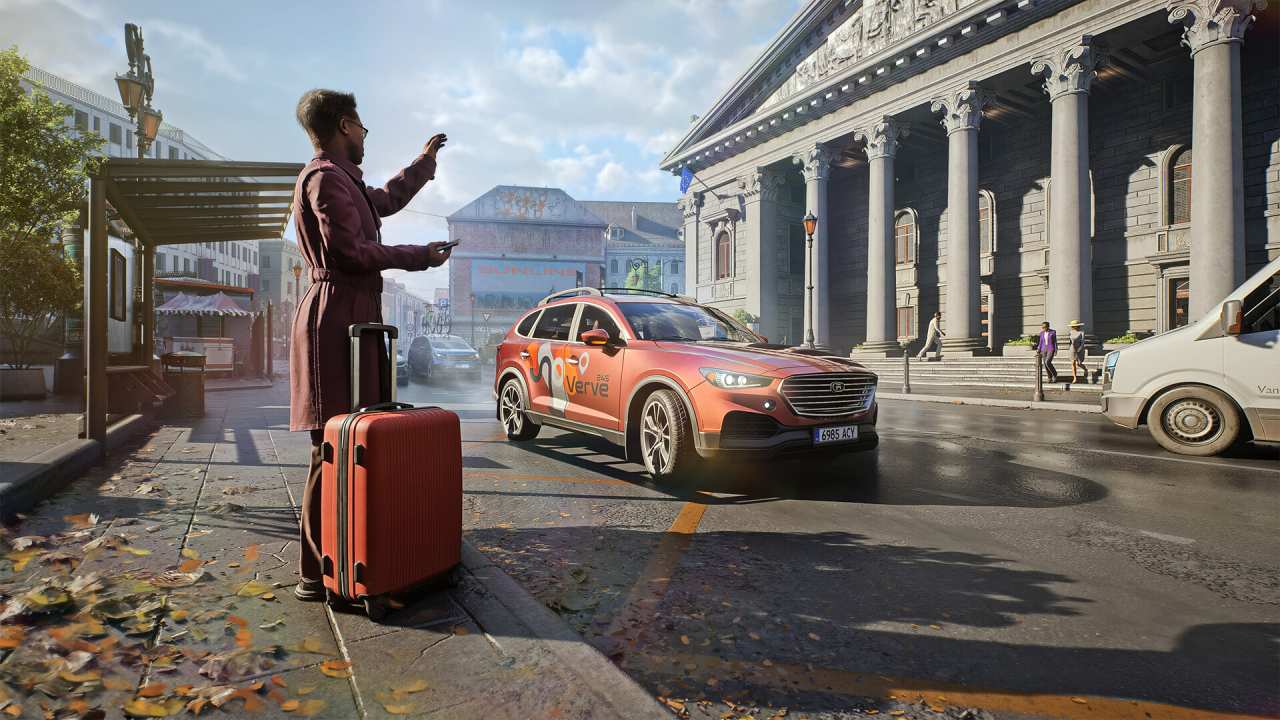
Instead, he buried a callback to Pitchford's USB scandal directly into the Rideshare "Stimulator" trailer, sneaking a license plate reading "USB GEAR DRV" into a shot as a not-so-subtle jab. That petty detail alone would've made for a funny footnote, except it accidentally reopened a much bigger wound.
You see, Rideshare "Stimulator" wasn't just any game to everyone watching that trailer. A veteran writer with two decades in the industry, Stella Sacco, had previously worked on the project before being let go nearly three years earlier. At the time, she said she'd been replaced by ChatGPT.
When the trailer finally dropped, and fans noticed the passenger dialogue felt oddly artificial and that the game had no AI disclosure on its Steam page, people started connecting the dots back to her claims. To Saber's credit, when asked directly, the studio denied that AI had replaced any writers, insisting the story was written by actual people and pointing out that its writing staff has tripled since 2023.
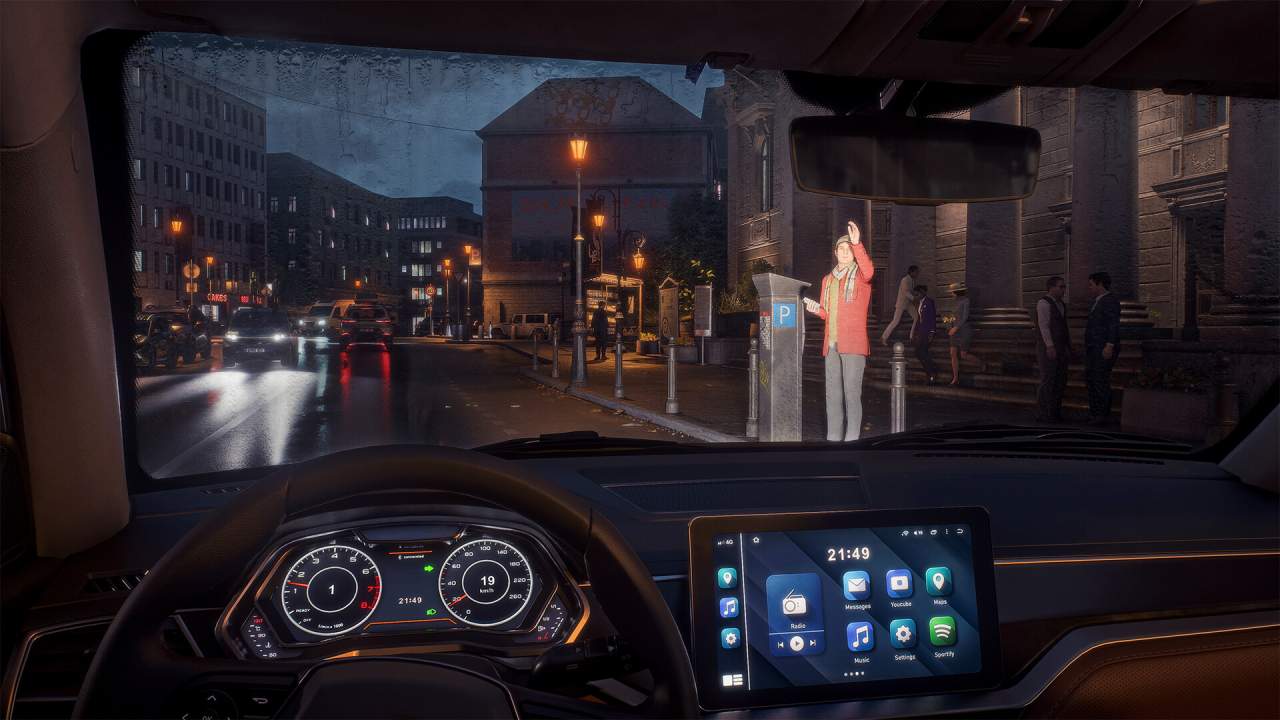
It did confirm, though, that AI plays a role in an experimental free-ride mode featuring an endless stream of AI-generated characters and conversations. So while the core narrative may have been human-written, there's still a chunk of Rideshare "Stimulator" built on generative tools, and that admission alone was enough to keep the AI conversation going.
That admission alone wasn't enough to end the controversy.
If the story had ended there, it genuinely wouldn't have been much of a story. A former writer makes a claim, a studio partially confirms and partially denies it, and everyone moves on to wait for launch day. But it didn't end there, because Sacco eventually named names.
Over time, she'd hinted that a Saber executive pushed for AI because, in her telling, "gamers love new tech" and it would make for great marketing. She hadn't publicly identified who that executive was until the Pitchford feud struck a nerve and pushed her to name Karch directly, claiming he pursued the AI push despite pushback from other studio leaders who wanted human writers to finish the job.
That's when things got genuinely uncomfortable. Karch responded to a request for comment by opening with, "Stella who? I had to ask Claude because I have never spoken to her or seen her," which is already a strange way to address someone you're about to publicly discuss.
He went on to confirm AI tools are indeed used in Rideshare "Stimulator", explained that the Steam disclosure would arrive once that feature was finalized, and argued the human-written parts of the game would still be award-eligible. He also framed the AI voice work as a win for players, since it helps keep the game affordable.
Karch's comments about Sacco only got more pointed from there.
Karch said Sacco had been replaced by "someone more talented" and was let go months later for unrelated reasons, adding that she "enjoys controversy" even more than he claims to. He then said that, looking back, he genuinely would've preferred replacing her with AI, joking that at least an AI would be "programmed to be honest."
Sacco fired back, saying the exchange showed everyone exactly what kind of person runs Saber. What makes this uncomfortable isn't just the insult itself, but the power gap behind it. You've got a studio CEO with a media platform and PR resources going after a former employee by name, while simultaneously praising how consumer-friendly and honest his AI-driven product supposedly is.
Whatever your take on the writer's claims, singling out an individual employee from that position isn't a great look, and it likely made life harder for his own communications team, who were still trying to clean up the initial statement when this new controversy landed.
Eventually, the Steam disclosure for Rideshare "Stimulator" did go live, confirming that human writers handled the campaign's story, characters, and dialogue, while AI was used for voice generation and localization work. The optional free-ride mode uses AI-generated missions, which players can skip entirely, but AI-generated music does appear on some in-game radio stations as labeled content.
The Steam disclosure didn't quite settle the dispute either.
According to Sacco, that disclosure actually confirmed more AI involvement than she had originally claimed, which somewhat undercuts the idea that she was exaggerating in the first place. Here's where the story almost turns into a genuinely good one.
By Sacco's own account, Karch reached out and apologized without excuses for how he'd spoken about her. She accepted it, made clear it didn't change her feelings about AI's role in the industry, and asked that the story be allowed to end there. That would've been a fitting, if imperfect, resolution to the whole Rideshare "Stimulator" mess.
Except it didn't quite end there either, because Karch then took to LinkedIn to reflect publicly on the situation. Much of that post was reasonable. He admitted he should've let his communications team handle the response and argued that disagreements should be resolved "human to human," which, to be fair, is exactly what he'd just done with Sacco.
But buried in the post was a swipe at a 26-minute video someone had made criticizing him, dismissing its creator as a "failed writer" before later softening that description after backlash. The writer in question turned out to be Chet Faliszek, known for his work on Left 4 Dead, Portal, and Half-Life, who had put together a detailed breakdown of Saber's handling of the situation.
A LinkedIn post then sparked a separate confrontation.
To be fair to Faliszek, much of his critique was sharp, and he even offered a stronger version of the apology Saber should have issued in the first place. But his response also went too far in its own right, calling on viewers to publicly confront and mock Karch at industry events over deeply personal and inappropriate territory.
Even if intended as exaggerated mockery, encouraging an audience to harass someone at a public gathering crosses a line, and it ended up undercutting an otherwise valid critique of Karch's behavior. Power imbalances absolutely deserve scrutiny, and CEOs should expect more criticism than the average employee, but that doesn't mean anything goes in response.
At the center of it all, the actual apology and its acceptance stand out as the one genuinely positive moment in this entire saga. Sacco didn't have to accept it. Public sentiment was largely on her side, and she could've kept pushing. Instead, she took the apology, closing things out by saying that apologies are too rare these days to turn one down when it's actually offered, and expressing hope that her statement on the matter would be her last.
Whatever you think about AI's growing presence in game development, or about how Rideshare "Stimulator" ended up as ground zero for this entire mess, the real takeaway might be simpler than any of the technology debates.
A CEO who felt wronged responded in kind more than once, a former employee got dragged into a fight that started over an unrelated grudge, and somehow, despite all of it, one person still chose grace over escalation when given the chance. That's rarer than any apology statement, and probably worth remembering the next time an AI controversy like this one blows up online.
Editor, NoobFeed
Related News
No Data.