
Intel Nova Lake-H 16-Core CPU Leaks With 4.8 GHz Boost and DDR5-8000
Intel's next-generation Nova Lake-H mobile processors emerge with higher clock speeds, faster memory support, and scalable integrated Arc graphics.
Hardware by Tanvir Kabbo on Nov 23, 2026
The next-gen mobile CPU family from Intel is taking shape, as a preliminary spec sheet for an Advantech industrial motherboard has revealed critical facts about its future Core Ultra Series 4 "Nova Lake-H" processors. The listing offers an early glimpse of a 16-core mobile processor with a 4.8 GHz boost clock, 18 MB of last-level cache, and support for faster DDR5 memory.
While this isn't a final market spec, the leaked information suggests Intel is developing an interesting mix of processing performance, memory bandwidth, and integrated graphics capabilities for its upcoming mobile platform. One element is worth a closer look, though: the CPU core configuration mentioned here directly contradicts earlier leaks about the speculated Core Ultra 9 4970H.
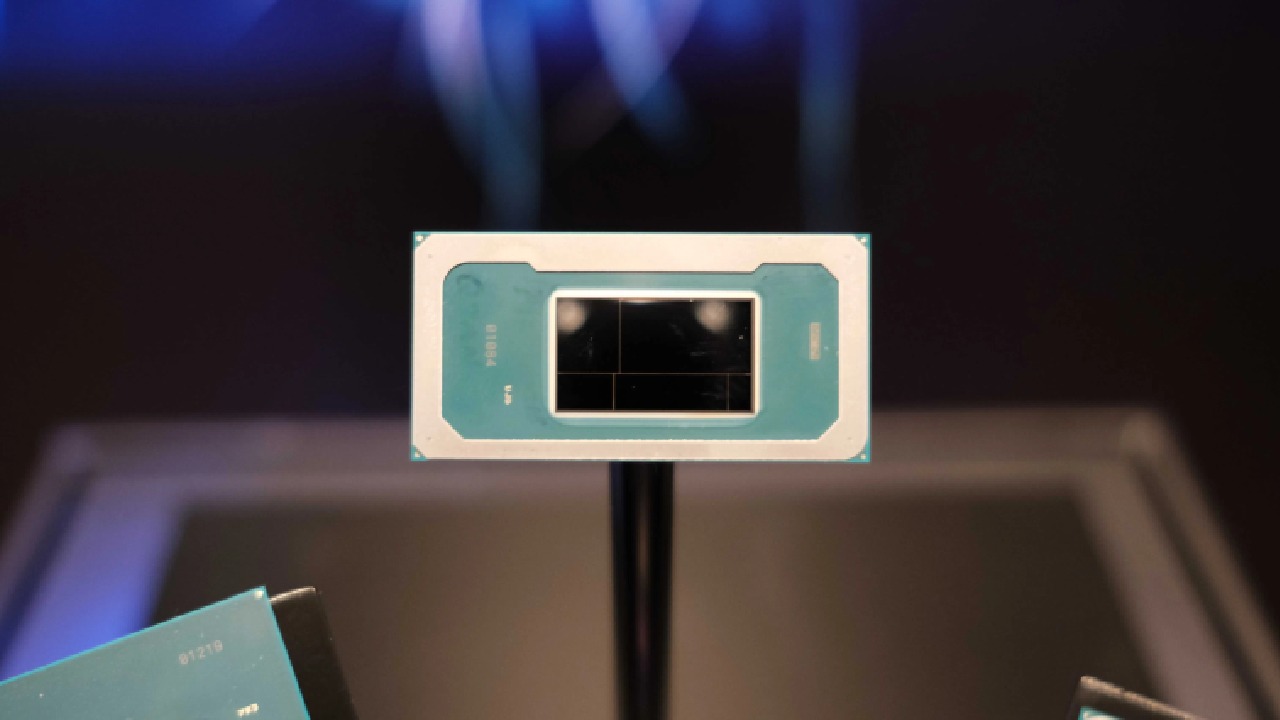
Breaking Down Nova Lake-H Specifications
Early documentation indicates that the 16-core Nova Lake-H processor includes a 2.0 GHz base clock, a maximum turbo frequency of 4.8 GHz, and 18 MB of Last-Level Cache (LLC). The specs point to a mobile processor that would be a good compromise for heavy-duty work while staying within the thermal constraints of laptop form factors.
Its claimed 25W TDP (configurable down to 15W) is quite fascinating. This flexibility could let manufacturers adopt Nova Lake-H across several laptop categories, from thin work notebooks to larger, performance-oriented mobile devices. The lower-power variants would focus on battery life and quieter cooling, while the 25W option would provide some more thermal headroom during continuous workloads.
The processor reportedly combines Intel's Coyote Cove Performance cores with Arctic Wolf Efficiency cores. However, the Advantech listing identifies its 16-core configuration as 8P + 4E + 4LPE, meaning eight Performance cores, four Efficiency cores, and four Low-Power Efficiency cores.
That configuration conflicts with previous leaks and package photographs associated with the rumored Core Ultra 9 4970H, which point toward a 4P + 8E + 4LPE arrangement.
The difference is substantial. With an eight-P-core design, you'd have much more traditional high-performance processing power. Still, with four P-cores and eight E-cores, you'd lean more toward efficient multi-threaded processing and workload allocation. Given the prior hardware data, the most plausible explanation is a typographical error in the preliminary Advantech document swapping the P-core and E-core counts.
For now, the 4P + 8E + 4LPE arrangement seems more consistent with earlier reports. However, Intel has not yet confirmed the final specs, so take both options with a grain of salt.

DDR5-8000 Memory Could Deliver a Significant Bandwidth Upgrade
Another fun feature in the leak is the rumor that Nova Lake-H will support dual-channel DDR5-8000 MT/s memory using CSODIMM slots, up to 128 GB capacity. This is 800 MT/s higher than Panther Lake's DDR5-7200 memory cap and could offer significantly more memory bandwidth for the next-gen mobile platform.
The enhancement matters because new mobile CPUs increasingly use system memory for CPU workloads, content production, and integrated graphics. Integrated graphics solutions, however, use system memory alongside the processor. Therefore, increased memory bandwidth can help to alleviate bottlenecks and boost graphics performance in bandwidth-sensitive applications.
The 128 GB capacity is also fascinating, which might make the Nova Lake-H a feasible option for demanding productivity systems and tiny mobile workstations. Real-world speed gains will still depend on memory timings, controller behavior, and laptop settings.
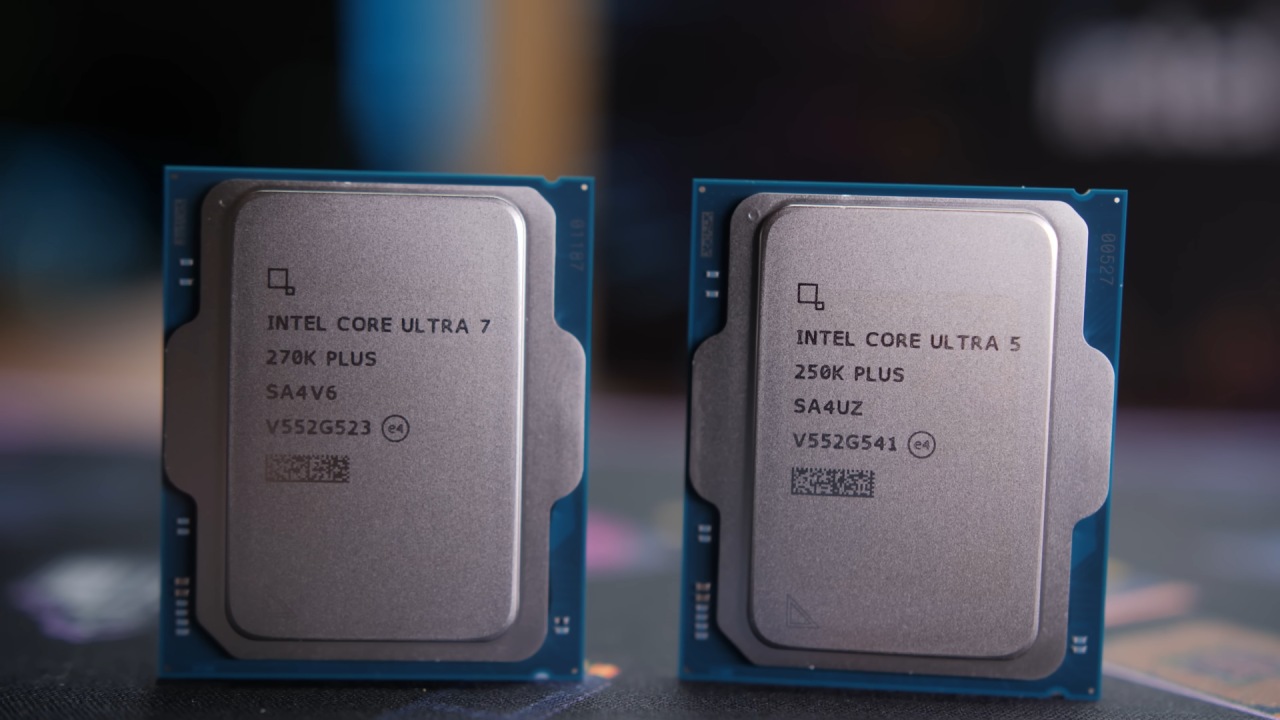
Integrated Arc Graphics Clocked at 2.3 GHz
Intel's integrated graphics could become another important part of the Nova Lake-H package. The preliminary specification lists an Arc iGPU clock speed of up to 2.3 GHz, although its exact execution-unit count remains TBD.
Interestingly, the accompanying block diagram references both 4 Xe and 12 Xe graphics configurations. This implies Intel wants to offer numerous tiers of integrated graphics for the Nova Lake-H family, giving OEMs a way to differentiate processors for specific performance categories.
Higher-end Nova Lake-H processors could appeal to laptops that would prefer integrated graphics over dedicated GPUs, with a possible 12 Xe arrangement. The improved graphics setup, along with DDR5-8000 memory, could use the extra bandwidth for gaming and graphics-intensive jobs.
However, clock speed is not the only measure of GPU performance. Ultimately, how competitive these integrated graphics choices become will depend on the final Xe configuration, architectural enhancements, power allocation, and cooling solution.
FAQ
Q. What are the leaked specifications of Intel Nova Lake-H?
A. The leaked 16-core Nova Lake-H processor reportedly features a 2.0 GHz base clock, 4.8 GHz turbo boost, 18 MB of LLC, and a configurable 25W TDP that can drop to 15W.
Q. Does Intel Nova Lake-H support DDR5-8000 memory?
A. Yes. The preliminary Advantech specification sheet lists dual-channel DDR5-8000 MT/s memory support through CSODIMM slots, with capacities of up to 128 GB.
Q. What is the expected core configuration of the 16-core Nova Lake-H CPU?
A. Previous leaks suggest a 4P + 8E + 4LPE configuration, rather than the 8P + 4E + 4LPE arrangement mistakenly listed in the preliminary Advantech document.
Q. How fast is the integrated Arc GPU in Intel Nova Lake-H?
A. The leaked specifications indicate an integrated Arc GPU clocked at up to 2.3 GHz, with the block diagram referencing both 4 Xe and 12 Xe graphics configurations.
Senior Editor, NoobFeed
Gaming Hardware Updates
No Data.