
Among the Trolls Review
PC
A missing family, ancient Finnish mysteries, and a forest full of secrets make survival only the beginning of the journey among the trolls.
Reviewed by Tahmid Mahi on Oct 14, 2026
Among the Trolls, developed by independent studio Forbidden Studios, is a first-person survival adventure that brings together resource gathering, crafting, exploration, and Finnish folklore. Its Finnish folklore adds a unique identity to the experience, shaping both the world you explore and the survival challenges you face. The studio was founded by industry veterans who formerly worked on games such as The Elder Scrolls V: Skyrim and Fallout 4, and that experience gives the project an intriguing starting point.
Their experience brings a familiar RPG background to the studio's survival-focused adventure. Rather than making another survival game where you spend most of your time gathering materials, building a shelter, and fighting whatever comes at you, the developers want you to think about your relationship with the world around you. Finnish mythology is not just decoration.
The story is about Anna, a Finnish-American woman who visits her grandfather in a remote Finnish archipelago from the United States.
She goes to his secluded forest cabin, looking to reconnect with her family and relive her childhood summers, only to find it vacant. Her grandfather and brother have gone missing. For no apparent reason, Anna must search the surrounding wilderness, gather what she needs to survive, and follow the signs left by her grandfather. A family visit slowly becomes a journey into a world where natural forces and ancient mythology closely intertwine.
The idea behind Among the Trolls is particularly engaging because it gives you a reason to explore beyond the usual demands of survival. You are not simply wandering around a forest because Among the Trolls needs you to collect wood or find food. Every discovery can bring you closer to understanding what happened to Anna’s family and why the surrounding islands have become so unusual.
The developers also draw on the Kalevala, the Finnish national epic, as well as traditional folklore, shamanic practices, and stories about the relationship between people and nature. These influences help Among the Trolls to carve out its identity, rather than relying on familiar fantasy creatures and generic Nordic scenery.
Anna begins to remember snippets of the summers she spent with her grandfather. At first her memories are fuzzy, like far-off dreams, but his disappearance slowly brings more of her own past into focus. This personal side of the story gives exploration a purpose beyond merely collecting useful things.
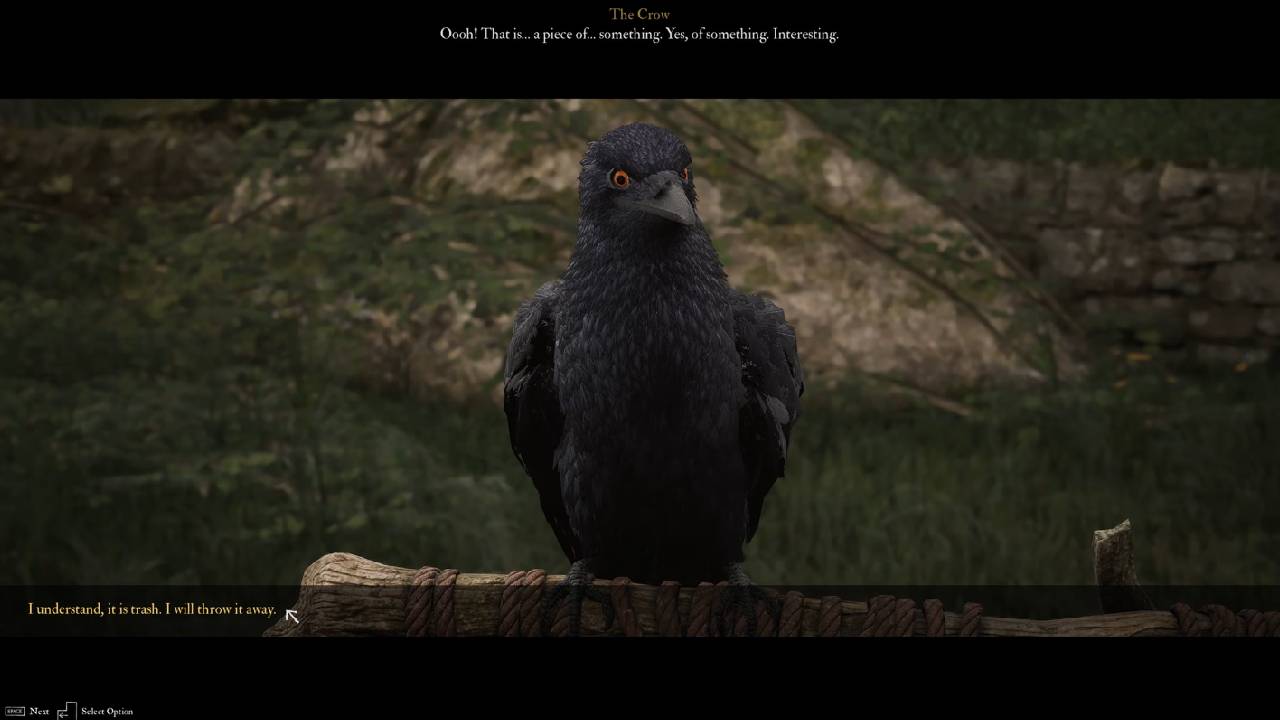
Anna is guided through the wilderness by a talking raven, one of her earliest companions.
The bird is sarcastic by nature and behaves more like a disappointed mentor than a friendly guide, making the dialog feel characterful. It sends Anna out to hunt a deer, prepare the meat, and come back with the results, teaching a few basic survival skills in the process. It starts out as a standard tutorial situation, but the raven’s attitude makes the interaction less mechanical.
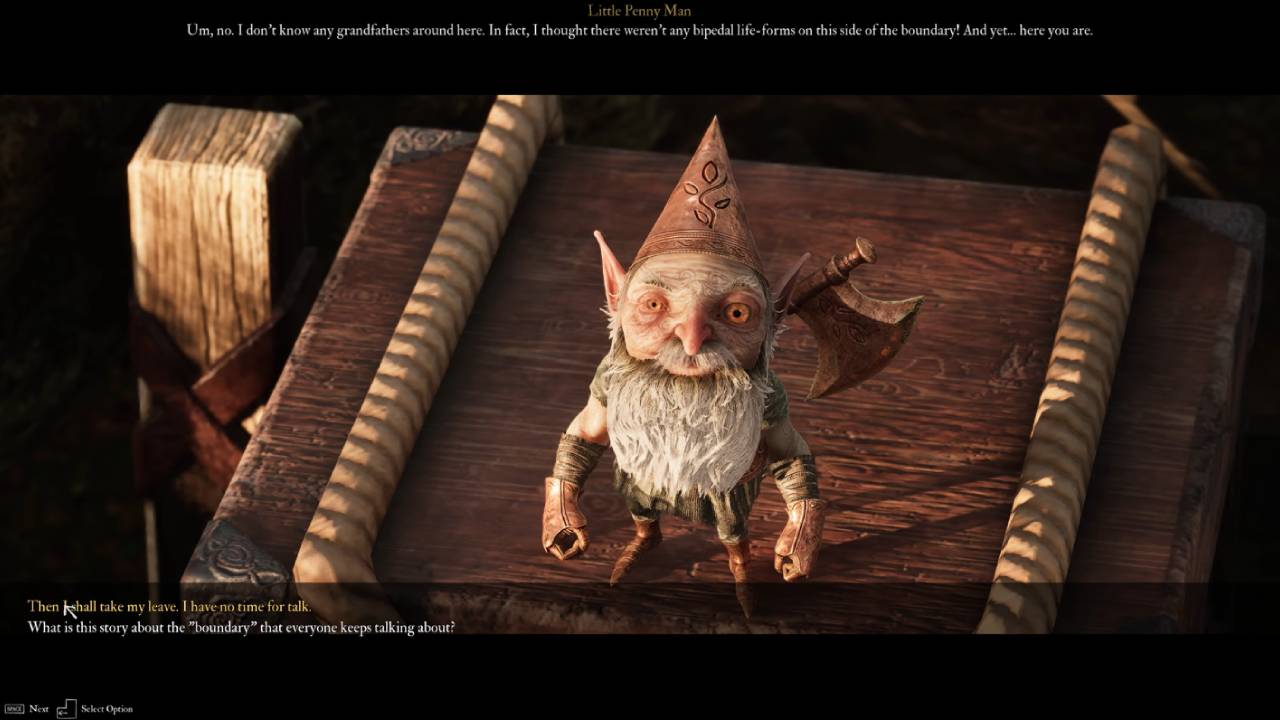
Other inhabitants contribute to the strange atmosphere surrounding Anna’s journey. A suspicious gnome, for example, adds yet another layer of uncertainty, and supernatural creatures scattered across the archipelago show that the world operates by rules not immediately apparent.
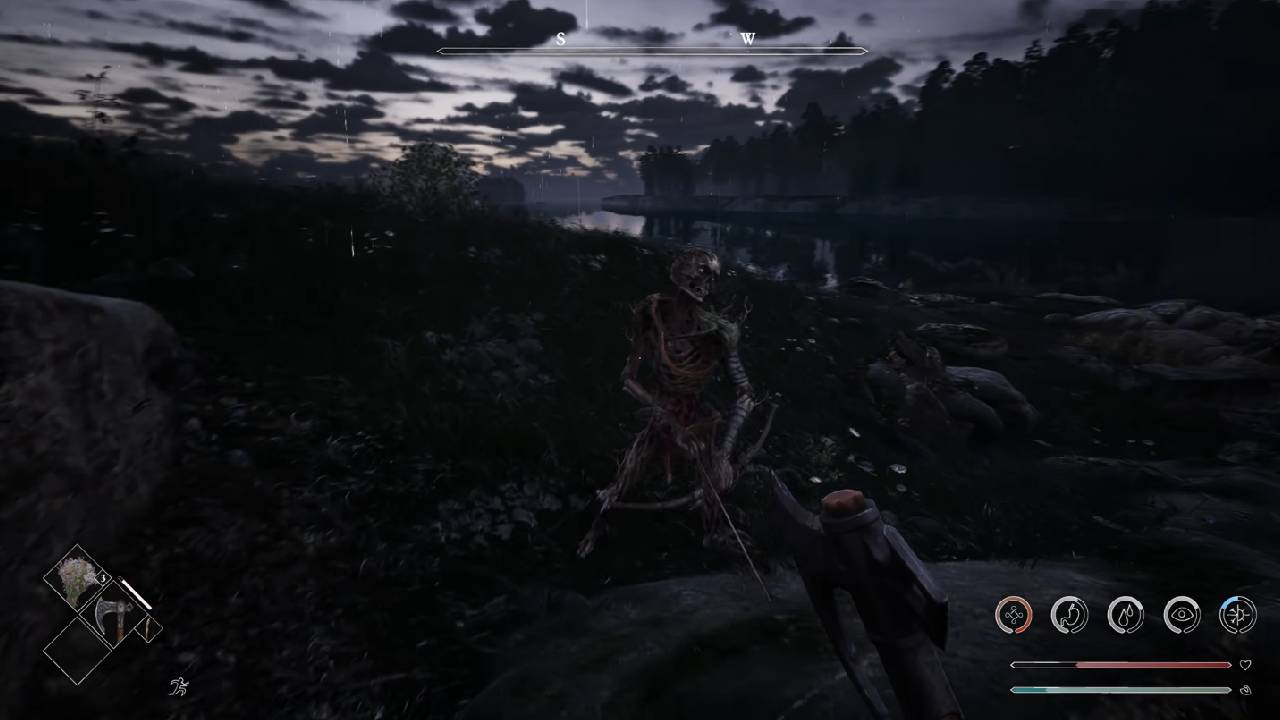
Some of the creatures help Anna restore balance; others pose a danger if the natural order is upset. These encounters connect the story to the gameplay, but the characters and their dialogue need to stay engaging enough to keep the narrative moving. The mystery works best when you discover information through exploration rather than spending too long in conversations.
Anyone who has played games like Green Hell, The Forest, or Valheim will recognize the survival mechanics. You gather resources, craft tools and weapons, hunt animals, and manage basic needs such as hunger, thirst, and cold. These activities are the foundation of your progress, and you need to be aware of the resources that are available to you if you want to be prepared for longer journeys.
However, the depiction of nature in Among the Trolls tries to make these familiar activities more meaningful. The forest is not just a pile of resources that you can take whenever you need them. Your actions can affect the balance of the environment, and disturbing it can bring forth corrupted or distorted creatures.
This changes your relationship with the wilderness in another way, because the act of collecting materials is no longer completely divorced from the results of your actions. You need to consider how you engage with the world, rather than seeing each tree, animal, or supernatural encounter as just another obstacle to overcome.
Sacrificial cupstones are an important element in this system.
These stones are spread throughout the landscape so you can leave offerings that help restore balance to the forest. Instead of relying exclusively on weapons to deal with supernatural threats, you can interact with the environment and respond to the problems it creates when you disturb it.
This is one of Among the Trolls’s more promising ideas because it makes folklore part of the survival loop. The forest becomes a place you need to understand and respect, not simply a dangerous location where collecting enough resources will eventually make you powerful enough to survive.
Two characteristics, Väki and Lykky, add another layer to these mechanics. Väki is magic, and Lykky is luck. How they interact determines your ability to survive and how the world around you behaves. These forces are most important to be aware of when preparing for dangerous places. You need to consider more than your food supplies and equipment because supernatural conditions can affect the challenges ahead.
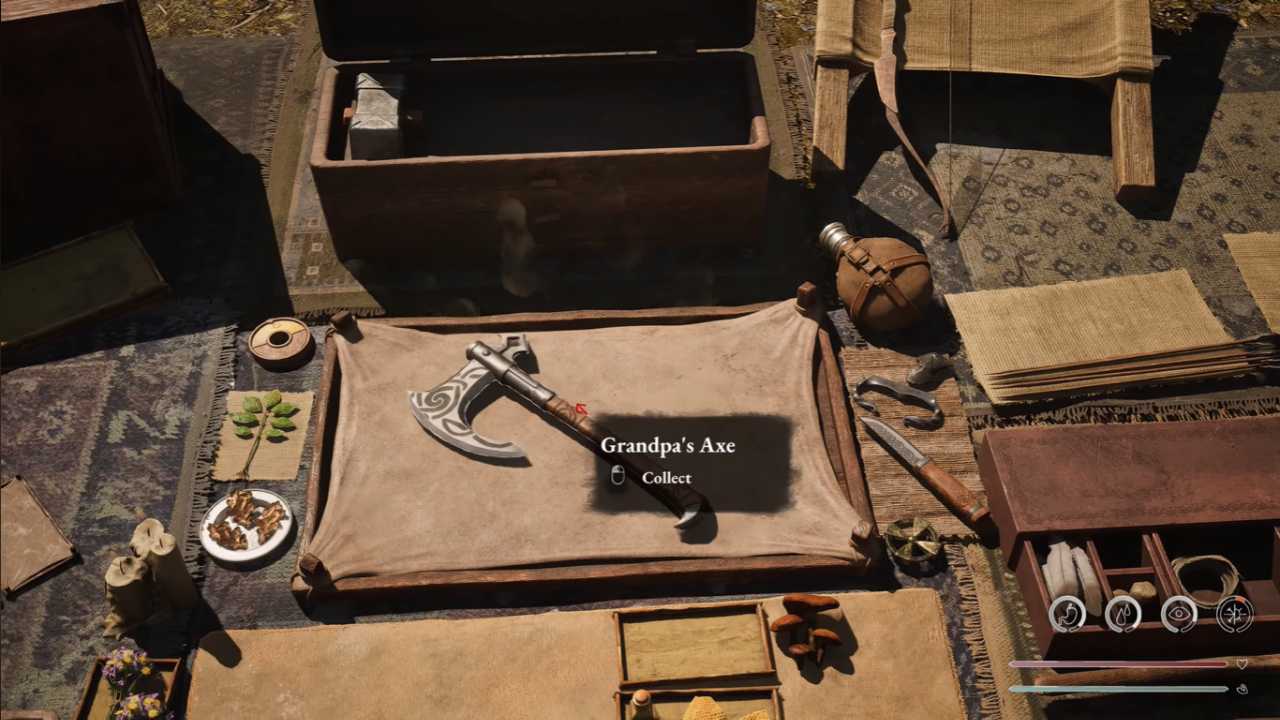
Crafting takes a physical, experimental approach that fits with Among the Trolls’ focus on immersion. Instead of opening a menu and selecting a recipe from a complete list, you use a journal Anna carries. Experimentation is how you learn recipes, and it helps you learn how different materials work together.
But the system has a pragmatic drawback.
Sometimes players need to manually drag items into the crafting space, and moving between journal sections is slower than it should be. Another example of how routine preparation can be more laborious than necessary is the making of three arrows at a time.
Navigation also sacrifices some of the conveniences you might expect from a modern survival game. You aren’t looking at a map with a marker pinpointing your exact location. You are looking at a physical map in Anna’s hands. Your main tools for exploring the archipelago are a compass and recognizable landmarks.
This can be rewarding if the world has plenty of unique landmarks, but frustrating if the environment lacks clear reference points. Without a position marker, you must use the landscape to find your location and destination. If several locations look similar, navigation can become more confusing than immersive.
The archipelago also contains ancient stone portals called kynnykset, or Thresholds.
According to the game’s lore, the tietäjät, the shamanic keepers of knowledge associated with the islands, created these structures. They connect the forest overworld to separate locations, opening up a different kind of exploration beyond the ordinary wilderness. You need to get special items called Portal Pages, each connected to a specific destination and its corresponding word, to use them.
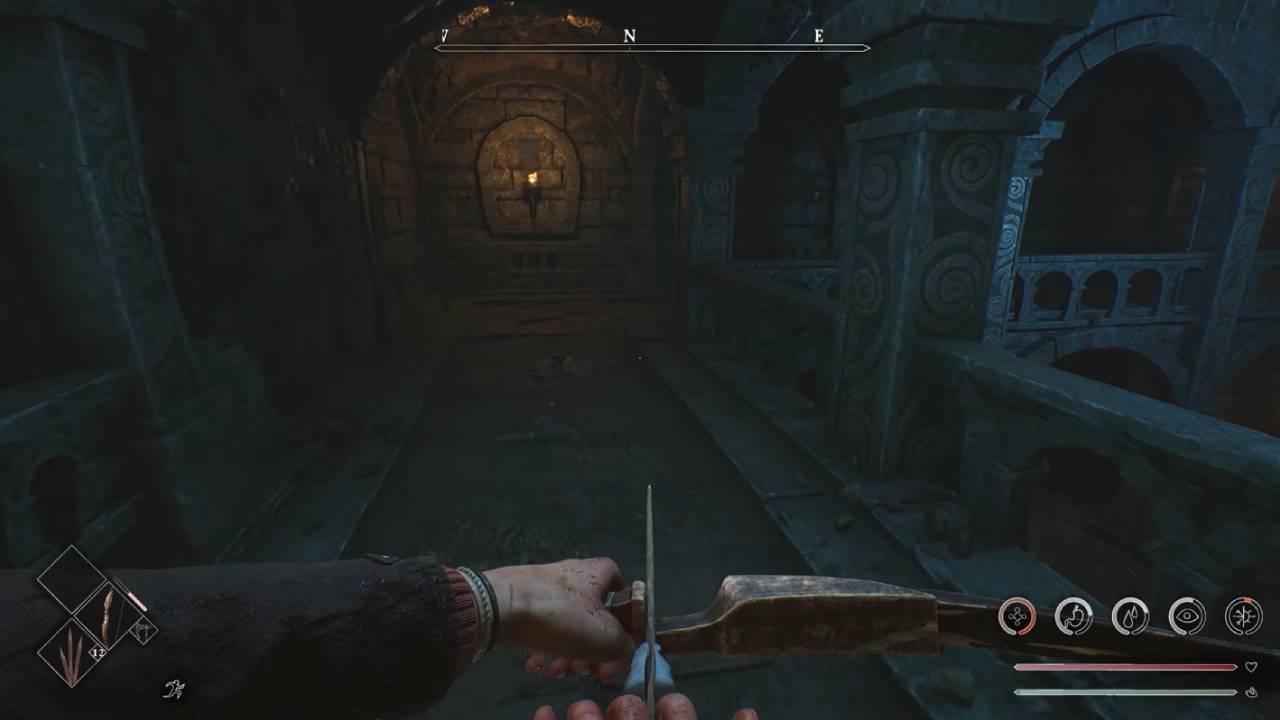
These portals lead to dungeons designed as distinct narrative spaces rather than interchangeable combat arenas. Every place has a different ambiance and suggested backstory. Some are more mysterious; some are more menacing. Some places make it clear that people used to live there. Look around you, because the places tell their stories, too.
Exploring dungeons also provides alternative ways to get around the world. When you finish at a location, you can either return to the entrance or find an exit that leads elsewhere. Some of these routes are initially inaccessible and require you to fulfill another condition or obtain an item first.
It is particularly important to prepare before entering these places.
Bring the right gear, manage your resources, and create potions or magical brews to help you deal with enemies and the negative supernatural effects associated with Lykky. The idea is that preparation for an expedition is just as important as the expedition itself. You can’t always enter a dangerous place expecting nothing to happen or that what you have will be enough.
Combat, unfortunately, is not as convincing as some of Among the Trolls’s other ideas. You can use weapons like axes for self-defense, but the attacks don’t always have the impact you would expect. Gauging the right distance to an enemy can be difficult, and blocking often feels like an ineffective defense.
Enemy behavior can make these encounters even less enjoyable. Some creatures don’t know how to navigate their environment properly; larger wooden enemies struggle to fit through dungeon doorways and end up waiting outside instead of chasing you. Wildlife can also be erratic in their behavior, making the hunt less challenging than it should be.
These problems are especially evident in Among the Trolls’s constant ability to compel you to interact with the environment. Even simple things like picking up a branch from the ground can be frustrating, as you have to locate the right angle and often need to try multiple times before it works. When you combine these problems with ungainly combat and inconsistent wildlife behavior, the result is a shattered rhythm of exploration.
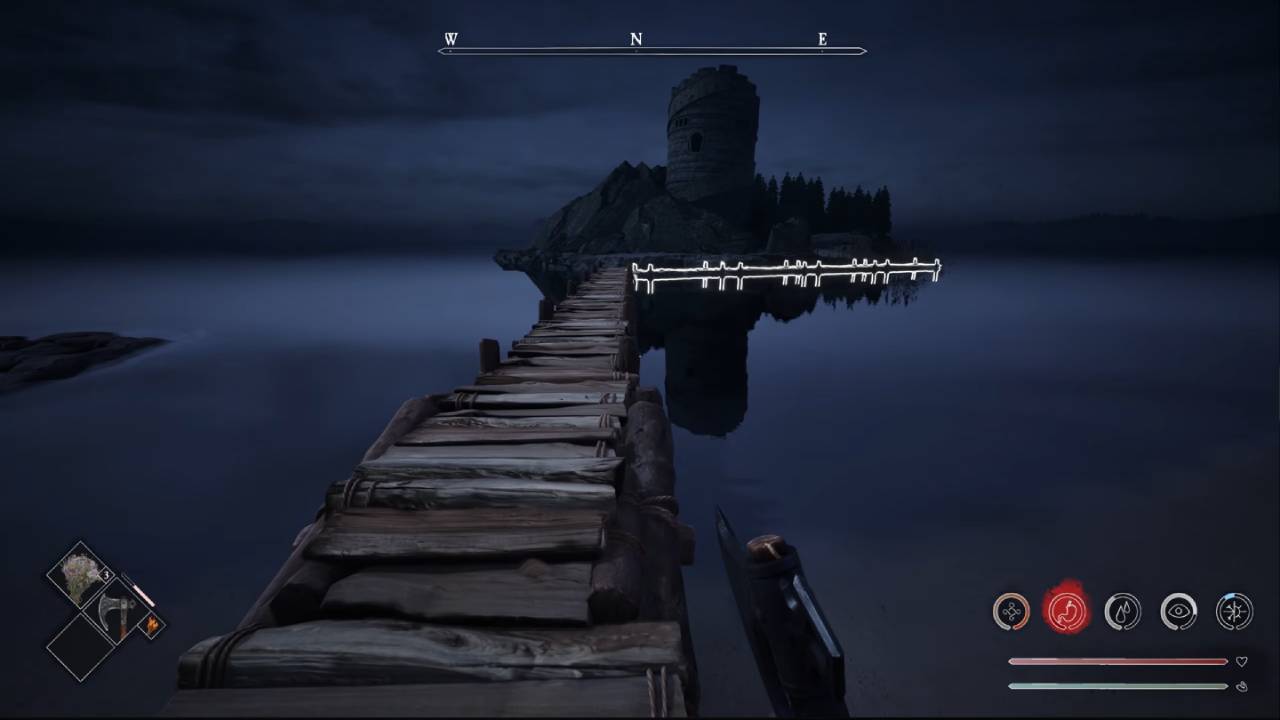
Progression closely links to discovering new areas, experimenting with crafting, collecting resources, and learning how the supernatural systems work.
There is nothing in the information provided to suggest that a typical experience-point grinding system is the focus of the adventure. Instead, much of your progress comes from improving your preparation, unlocking crafting options, discovering Portal Pages, and accessing previously inaccessible places. This is a good approach for a game based on exploration and knowledge, but the rewards need to be satisfying enough to keep you wanting to explore the unfamiliar.
The graphics help create the mood the developers want. The Finnish wilderness is filled with dense forests, isolated buildings, and prehistoric stone formations, all of which create a setting that feels in tune with the natural world and its mythology. This visual direction is introduced early on in the journey through the trees, where the branches bend across the path, and the surrounding landscape suggests something unusual beyond the ordinary.
Another strong point is the setting's cultural identity. Rather than just using general Scandinavian imagery, Among the Trolls draws specifically from Finnish folklore and traditions associated with the Kalevala. This adds more weight to the environments and creatures, creating a more meaningful connection between the world and the story.
But atmosphere alone won’t fix everything. The visual design fails when the landscape lacks visible landmarks or the opening drags on too long with nothing in it. If you're going to spend hours traveling through the wilderness, exploration has to offer you more than just beautiful views.
Sound also plays an important role in building the identity of Among the Trolls. The environmental audio and soundtrack are designed to take you to the Finnish wilderness, and the opening journey music helps set the tone. The sounds of the natural world also add to the feeling of remoteness and provide the forest with a sense of being a place where everyday survival issues coexist with something much older and more mysterious.
The main concern is how these audiovisual elements reinforce the rhythm.
A quiet walk can help establish the setting, but a long journey with no meaningful interaction can make the opening feel tedious. The greatest soundtracks connect to something happening in the world or encourage you to look more closely at your environment. Dialogue also needs to be focused; long conversations can slow down exploration if you want to explore the environment yourself.
In the end, Among the Trolls has a lot of potential, particularly in its blend of survival mechanics and Finnish folklore. And its story gives you a personal reason to explore, while ancient portals and dungeons provide destinations with their own histories and challenges. The physical journal and map also support the idea that you should learn about the world through observation and experimentation rather than relying entirely on convenient interfaces.
But there are several challenges to the experience. Crafting is a time sink; navigation could use more reliable landmarks, and combat lacks the responsiveness needed to make encounters satisfying. Wildlife and object interactions can also be inconsistent, breaking the exploration that drives the adventure.
These problems are especially annoying, as Among the Trolls is based on immersion and requires you to spend a lot of time gathering resources, running from one point to another on the map, and gearing up for dangerous encounters. Such factors can make minor gameplay issues feel much more disruptive over time.
Despite these shortcomings, the core idea is worth developing. Among the Trolls has a chance to bring something different to survival games that largely revolve around crafting better gear and killing increasingly dangerous enemies. Its strongest ideas encourage you to understand the forest, respect the forces governing it, and investigate the history hidden throughout the archipelago.
Editor, NoobFeed
Verdict
Among the Trolls is an interesting mix of Finnish folklore, survival, and exploration, but clunky combat, tedious crafting, and inconsistent interactions hold back its otherwise promising world and story.
55
Related News
No Data.