
Valor Mortis Review
PC
One More Level trades cyberpunk speed for Napoleonic horror, delivering demanding fights and rewarding exploration, even if its story and build variety fall short.
Reviewed by Mahi Araf on Oct 13, 2026
After Ghostrunner, One More Level takes a different direction with Valor Mortis. Instead of sending you sprinting across futuristic rooftops with a sword in hand, the studio shifts to an alternate Napoleonic-era France, where war, disease, and supernatural horrors have turned the battlefield into something far more disturbing. The result is a first-person Soulslike that borrows familiar genre ideas but gives them a different feel through its perspective and setting.
The shift works in several ways. You still need to learn enemy patterns, manage your stamina and health, use your weapons carefully, and accept that rushing into a fight can get you killed. However, seeing everything through your character's eyes makes close encounters feel more immediate.
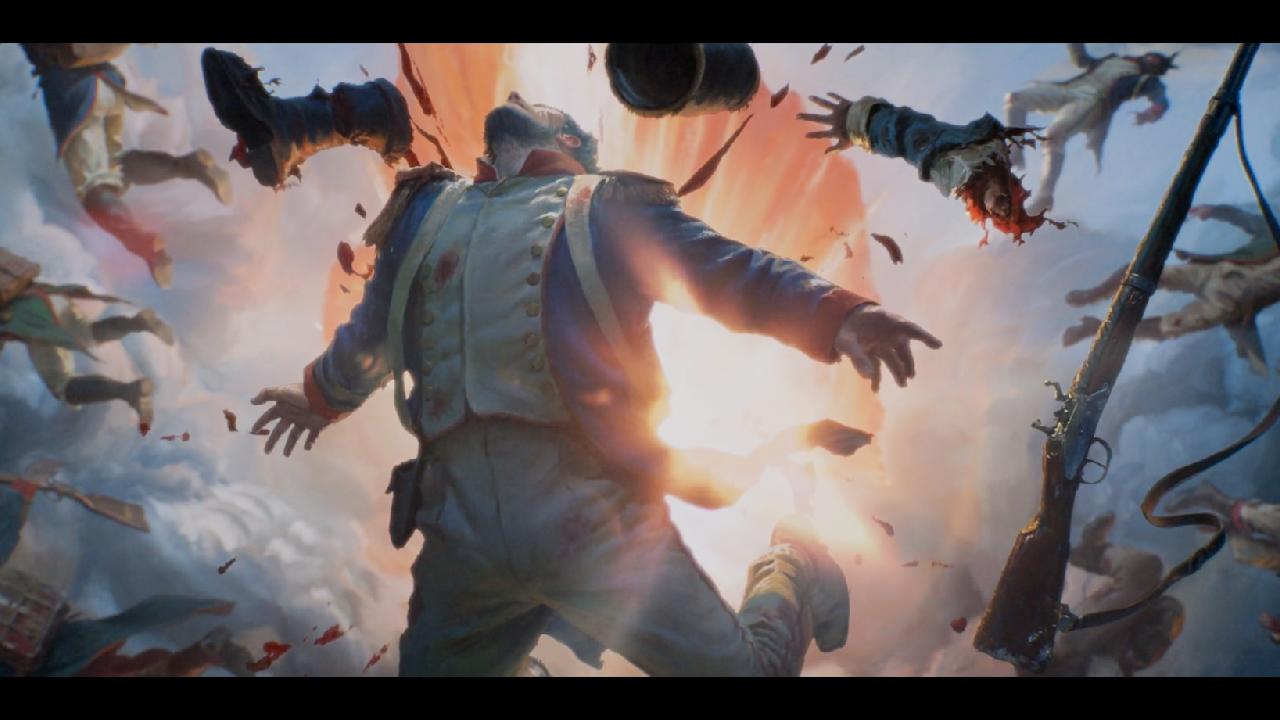
You are not watching your character trade blows from behind their shoulder; you are looking directly at the enemy trying to cut you down. That perspective gives even ordinary encounters a different rhythm, especially when several threats crowd around you.
Valor Mortis is also not trying to reinvent the Soulslike formula from the ground up.
Its foundations will feel familiar if you have played games built around parrying, dodging, shortcuts, and tough boss encounters. The difference is how those mechanics come together in a first-person action game, with melee weapons, firearms, and supernatural abilities all playing a role. Some ideas work better than others, but there is enough here to make the journey worthwhile if you enjoy games that expect you to learn from your mistakes.
The story places you in the role of William, a fallen soldier caught in a nightmare unfolding during the Napoleonic Wars. France has been overrun by a mysterious infection that transforms soldiers and other unfortunate victims into monstrous creatures. What begins as familiar military conflict quickly shifts into fantasy horror, with battlefields and settlements becoming places where the dead and the infected are as dangerous as any living enemy.
The historical setting gives the game a clear identity. Rather than relying on the usual medieval castles and fantasy kingdoms associated with Soulslikes, Valor Mortis draws on the uniforms, weapons, and atmosphere of the Napoleonic period. The contrast between that grounded military world and the supernatural corruption spreading through it is one of the experience's most interesting parts.
You move through a version of history that feels familiar at first, only to find it twisted into something hostile.
William's journey unfolds through a mix of direct storytelling, notes, flashbacks, and environmental details. You will pick up pieces of information as you explore, while the places you visit offer clues about what happened before you arrived.
This approach gives you reasons to pay attention to your surroundings rather than treating every level as a simple corridor leading to the next boss. The world has a history beyond the immediate fight, even when the game leaves you to connect some of the details yourself. However, the narrative does not always make the most of its premise.
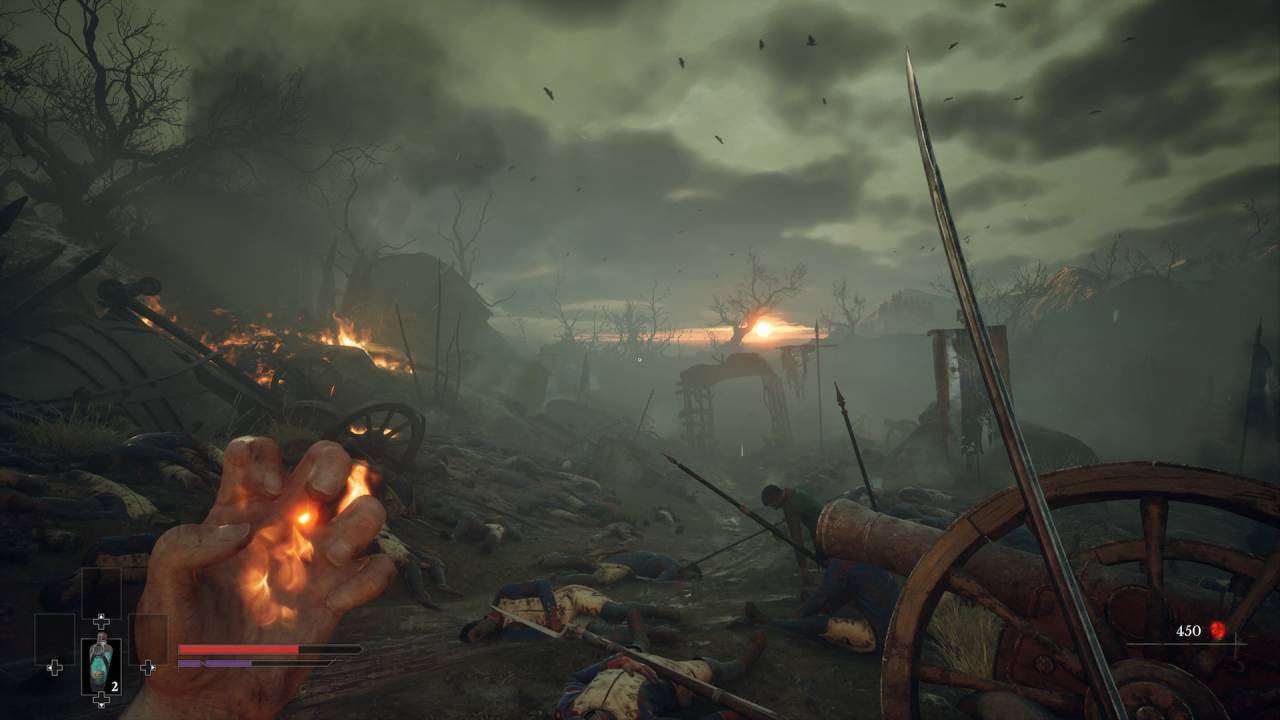
The ruined setting and infection provide a strong opening, but as the story progresses, it can feel predictable. Some developments don't land as hard as they should, and the narrative parts don't always fit together as naturally as they could. You can understand the broad direction of William's journey without necessarily feeling that every revelation has earned its place.
That weakness is more noticeable because the setting has so much potential. A horror story built around a corrupted Napoleonic army could explore the human cost of war, the collapse of military order, and the fear of facing an enemy that no longer behaves like a person.
Valor Mortis touches on those ideas, but it doesn't always turn them into a story that sticks with you. The environmental storytelling often builds curiosity more effectively than the central narrative delivers a satisfying payoff.
Fortunately, the moment-to-moment gameplay gives you a stronger reason to keep moving.
Valor Mortis is a first-person Soulslike, but its combat also clearly draws on games that make parrying and reading enemy attacks central to every encounter. You cannot simply swing your weapon until something falls over. Enemies follow patterns you need to recognize, and your chances of survival improve as you learn when to attack, defend, and dodge.
The first-person perspective makes that learning process feel different from the third-person games that helped establish the genre. You see the enemy directly in front of you, and the distance to an incoming attack becomes especially important.
A successful parry can open up an opportunity to counterattack, while a poorly timed move can leave you exposed. The perspective makes the fights feel close and personal, although it can also create problems when threats approach from outside your field of view.
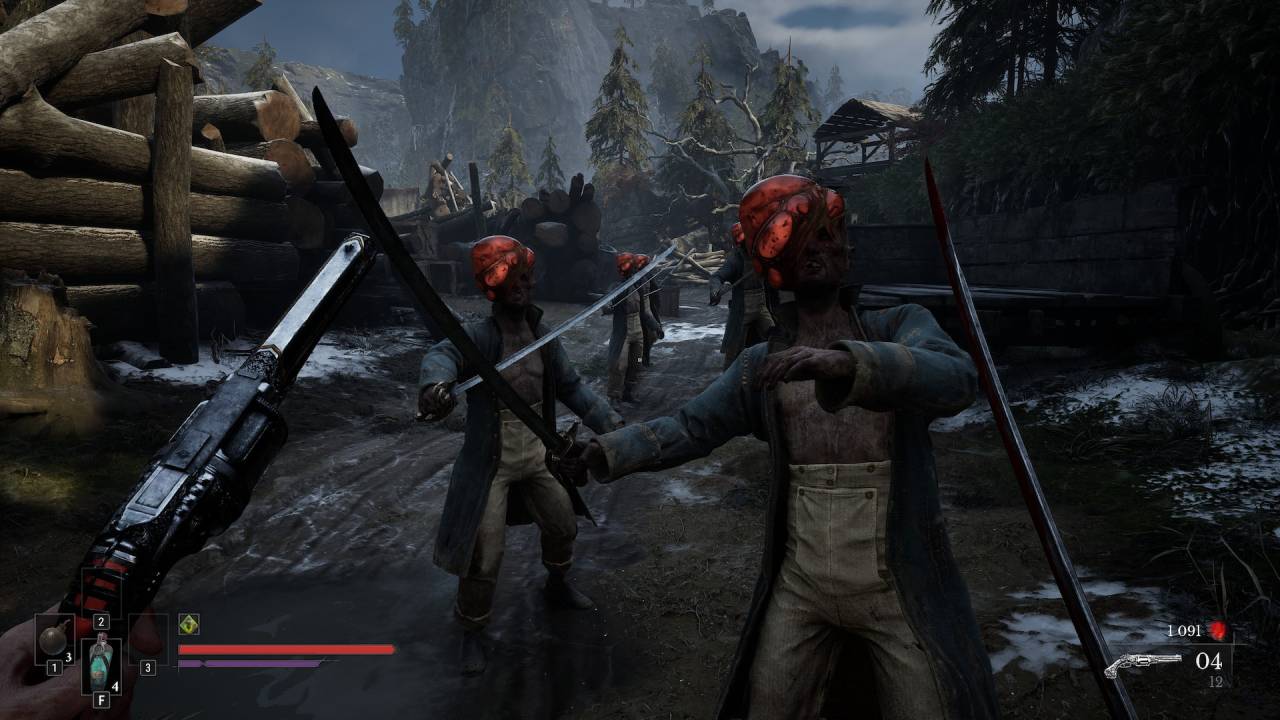
Keep that last issue in mind. The camera gives you a clear view of the opponent you face, but it cannot show everything happening around you. Off-screen attacks can be frustrating, especially when several enemies are involved. In a game where timing and positioning matter so much, getting hit by something you couldn't properly see can make a difficult encounter feel unfair rather than challenging.
This is one drawback of building combat around a first-person camera.
Your main tools include melee weapons, firearms, and supernatural abilities known as transmutations. Each offers a different way to approach an encounter, but the melee system is at the heart of the experience. You need to stay close enough to land your attacks while watching the enemy's movements, and your choice between defense and aggression can determine whether a fight ends in your favor.
Blocking lets you defend yourself without needing to time every hit perfectly. Blocking lets you recover from damage, giving you a chance to claw back lost ground instead of treating every mistake as permanent. Meanwhile, blocking ties more directly into breaking enemies and damaging their posture. A well-timed parry can turn an opponent's attack into an opening, rewarding you for learning the rhythm instead of constantly retreating.
Dodging remains important, especially when an enemy signals an attack you can't safely block. Red attack indicators tell you when to move instead of standing your ground. Learning which attacks to parry and which to avoid becomes part of the combat language.
Once those rules click, encounters feel less like frantic exchanges and more like a series of purposeful decisions.
Your melee weapon choice also changes how you handle a fight. The saber offers a three-hit combination with an area-of-effect component, making it useful when you need to deal with more than one enemy. The rapier focuses on thrusting attacks and offers a different way to deal damage. Neither removes the need to know your opponent. But having different ways to attack gives you leeway to find a weapon that suits your preferred rhythm.
Firearms are another way to deal with threats, especially if you can hit an enemy's weak points. They aren't simply a substitute for your melee weapon. Instead, they offer an alternative when an opening appears, or you need to attack an enemy differently.
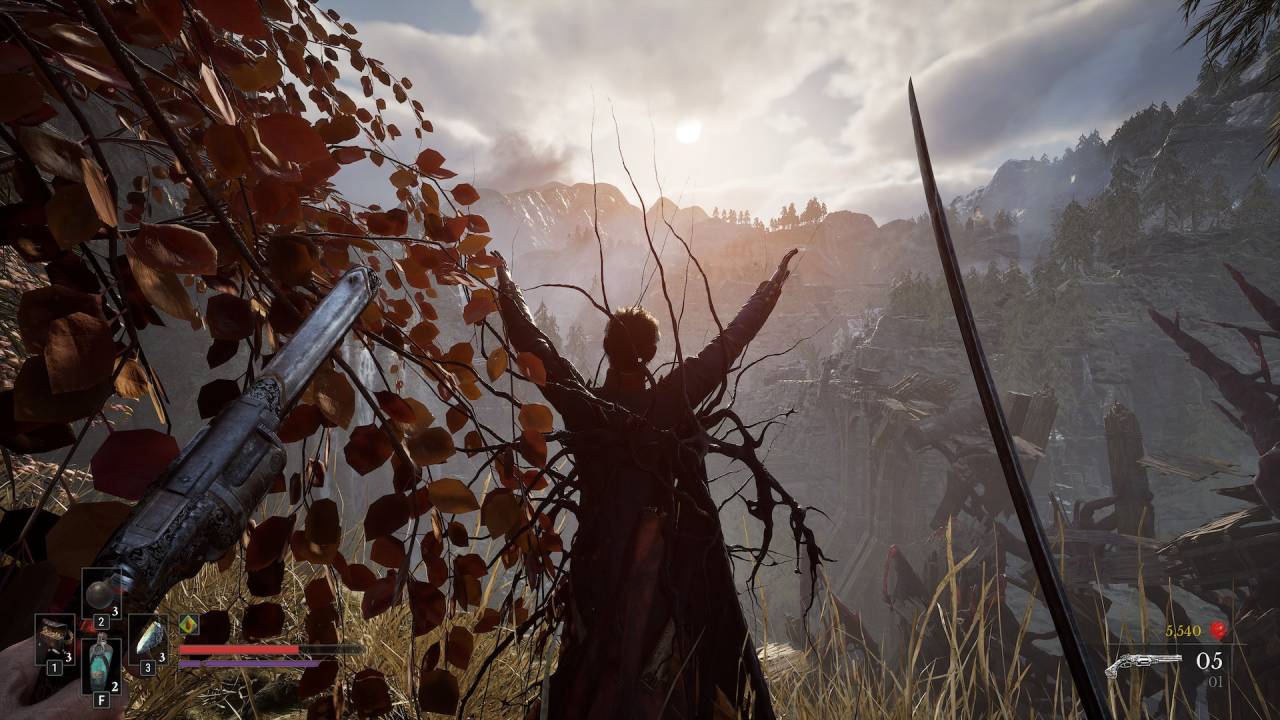
Transmutations add superpowers to the mix, giving you more ways to fight than a sword or axe alone. Together, these systems set Valor Mortis apart from a straightforward sword-fighting game, even if the overall arsenal doesn't offer as much variety as it could.
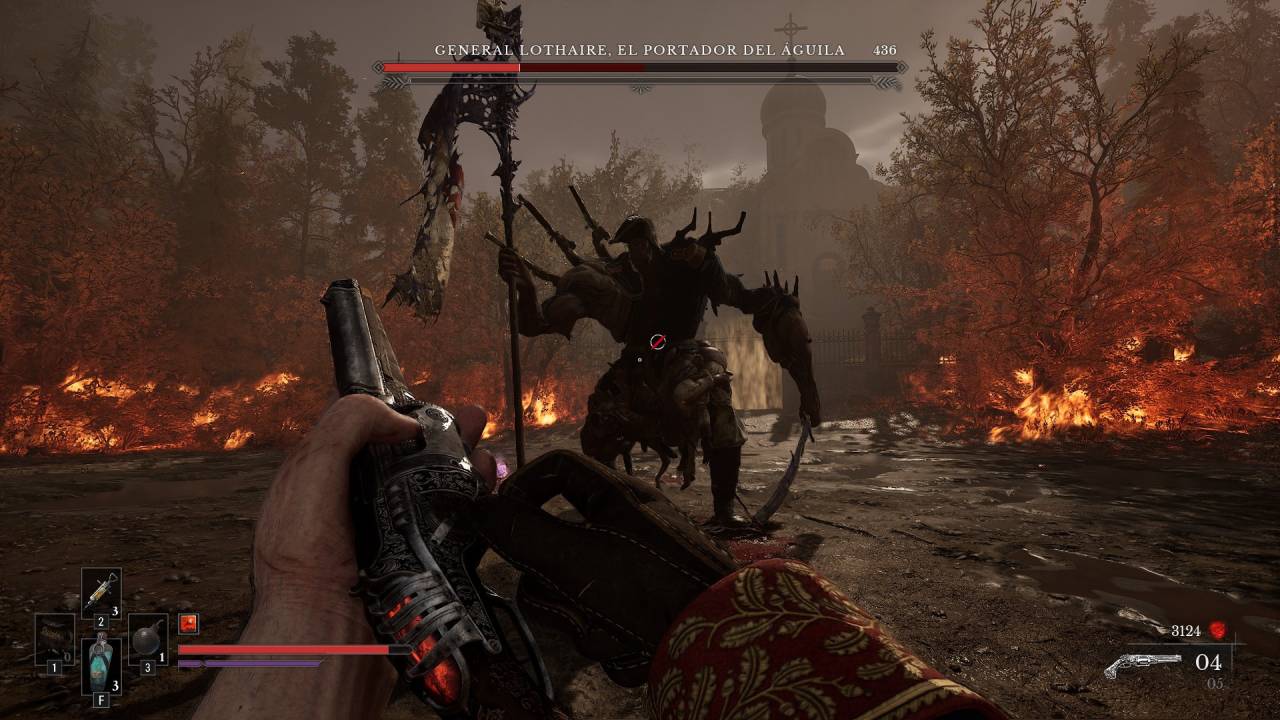
Boss encounters are among the strongest parts of the combat. Larger enemies demand more attention than normal enemies, forcing you to learn their attack patterns and identify when it's safe to strike. Bosses such as the Orphan and the Entity give the game opportunities to test the defensive and offensive skills you have been developing throughout the journey.
These fights can be demanding, but they also show the combat working as intended: observe, react, find an opening, and make the most of it.
The best encounters encourage you to adjust rather than repeat the same attack until it works. You have to think about distance, timing, and the hazards of getting close to a dangerous opponent. When you finally learn a boss' patterns and take it down, it feels earned. These moments also keep combat fresh across the game's ten levels.
But the system is not without its limitations. The weapon and ability choices offer some options, but not the broad build variety you might find in other Soulslikes. Combat relies on a fairly defined set of tools, and your choices don't change how you play as much as they might in a game with a wider selection of weapons and playstyles. If you want a combat system that always introduces new approaches, the parry-based design can also feel repetitive.
Progression offers ways to upgrade William and prepare yourself better for the threats ahead, little by little.
Ambers serve as key resources tied to your character's development and upgrades. You can also invest in the skill tree to improve your abilities, and the game's other progression systems encourage you to pay attention to the resources you collect while exploring. Crafting is another reason to explore levels instead of rushing to the next objective.
This progression matters because the game doesn't rely solely on your reflexes to get past every obstacle. You want to learn enemy patterns, but you also want to use the tools and improvements at your disposal sensibly. If a fight gets difficult, exploring more thoroughly and using the resources you have gathered can help you prepare for what is to come. The process gives exploration a practical purpose alongside the story details and hidden areas you may discover.
At the same time, progression doesn't fully solve the limits of combat variety. As you level up, fights become more manageable, but the core approach still relies on the same weapons, parries, dodges, and special abilities. The pleasure is in getting better with those tools, not in finding totally different ways to fight every time. Players who enjoy mastering a focused combat system will find that rewarding, while anyone expecting a huge range of radically different builds may leave wanting more.
Exploration follows a mostly linear structure, but that does not mean you are simply walking from one fight to the next.
The levels include shortcuts, hidden areas, caves, and platforming sections that give you reasons to look around. Some routes require you to pay attention to the environment, while others use movement challenges to break up the combat. Wall-running and other traversal bits add variety to the journey, a nod to the studio's history with movement-centric action games.
Backtracking is part of the experience, too. As you explore, you can find paths that make it easier to travel through areas you've already visited. Taking the time to search for secrets can yield useful resources. This strikes a nice balance between staying on the main route and deciding whether something off the beaten path is worth finding. The structure has some Metroidvania qualities, even though the overall progression remains relatively linear.
The level design shines when it encourages exploration without losing sight of your immediate goal. A battlefield, camp, quarry, or cave can provide a different backdrop for the same basic systems, and shortcuts help the areas feel more connected than a series of isolated combat arenas. Platforming sections also change the pace, though they don't always reach the same level of satisfaction as the fights. Exploration complements combat rather than replacing it.
Visually, Valor Mortis makes good use of its setting.
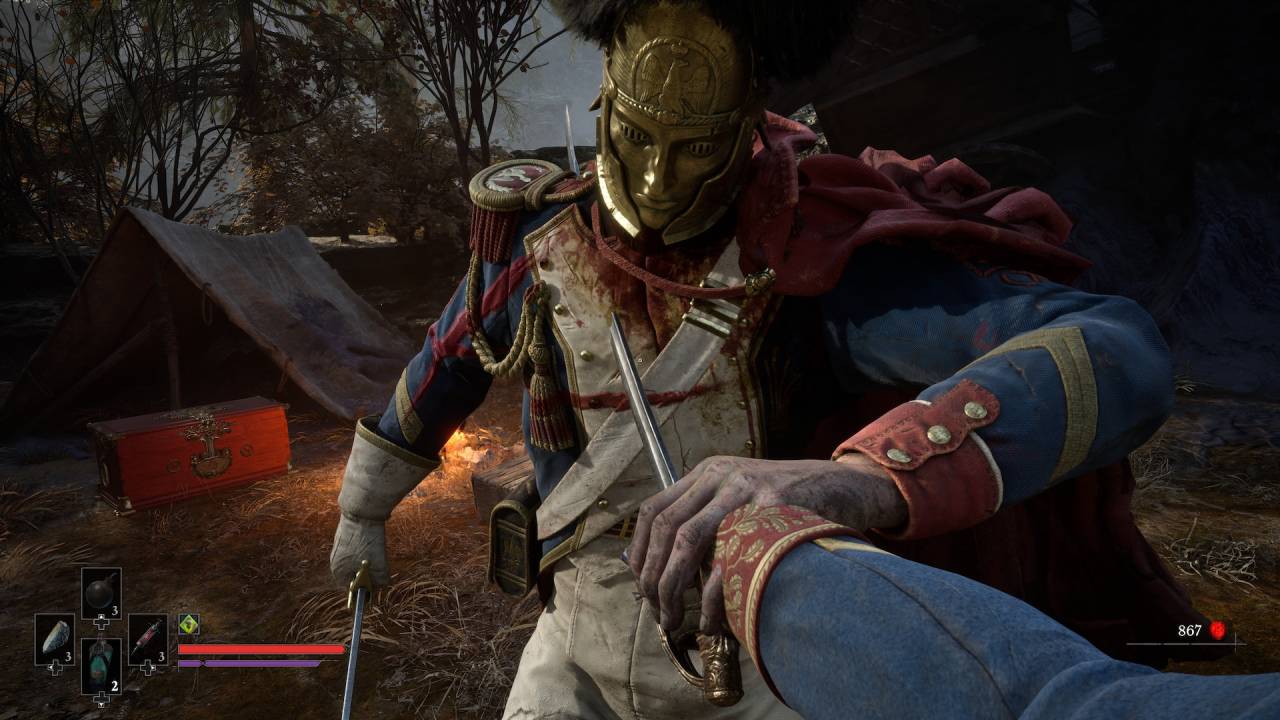
Its environments combine the look of Napoleonic France with the damage caused by the spreading infection, creating places that feel pulled from an ordinary historical setting and pushed into horror. Ruined locations, hostile battlefields, and tainted areas help establish the mood without the story having to explain every detail. The world is still fascinating to move through, partly because of its environmental presentation, even if the main narrative loses steam.
First-person view also allows you to enjoy the scenery firsthand. You see the spaces from William's perspective, which makes exploration feel more tangible and keeps the connection between movement and combat intact. The same perspective that adds tension to close encounters can make environmental details feel more present, giving you a reason to slow down and examine the places you pass through.
Performance on PC is encouraging based on the tested setup. With a Ryzen 7 7800X3D processor and an RX 7800 XT graphics card, the game ran above 80 frames per second at 2560×1440 resolution. That result is specific to the testing hardware, of course, but it shows the game can deliver a smooth experience on a capable PC. Performance depends on your system, so don't take this result as a guarantee for every configuration.
Controls are less consistent. The default keyboard layout includes awkward Ctrl and Alt assignments, which can make certain actions feel less comfortable than they should. You can change the controls to your liking, and a controller can make combat feel more natural.
Given how much the game relies on exact timing, comfortable controls are more than just a nice-to-have.
Sound and voice acting further build the atmosphere, making the ruined world feel uneasy as you switch between exploring and fighting. Audio is important in a first-person action game for identifying danger, especially when reacting to what an enemy is about to do next.
Still, the camera's limited view can make off-screen attacks frustrating, and sound alone isn't always a substitute for an enemy you can't see. The presentation is broadly consistent with the experience but doesn't entirely overcome the perspective problems.
The ten-level campaign provides about 20 to 30 hours of play, depending on how much time you spend exploring, searching for resources, and learning the tougher encounters. That gives you room to engage with the combat and level design without turning the game into an enormous commitment. The additional details hidden around the world also make exploration worthwhile for players who prefer to uncover more than the main route reveals.
Replayability depends more on how much you enjoy mastering the combat than on a huge range of alternative builds.
You can revisit encounters with a better understanding of enemy patterns and use your abilities more efficiently. Still, the limited variety means the experience may not feel dramatically different on another run. New Game Plus was also expected later in the year, which could give players another reason to return. However, treat that as a planned addition rather than a feature you can assume is already available.
The price makes the package easier to consider. The standard edition costs $39.99, while the deluxe edition costs $59.99. Valor Mortis is also available on Game Pass from day one, letting subscribers try its first-person Soulslike approach without buying it separately. Whether the full price feels worthwhile depends on how much you value the combat and atmosphere, especially if you want extensive build variety or a more memorable story.
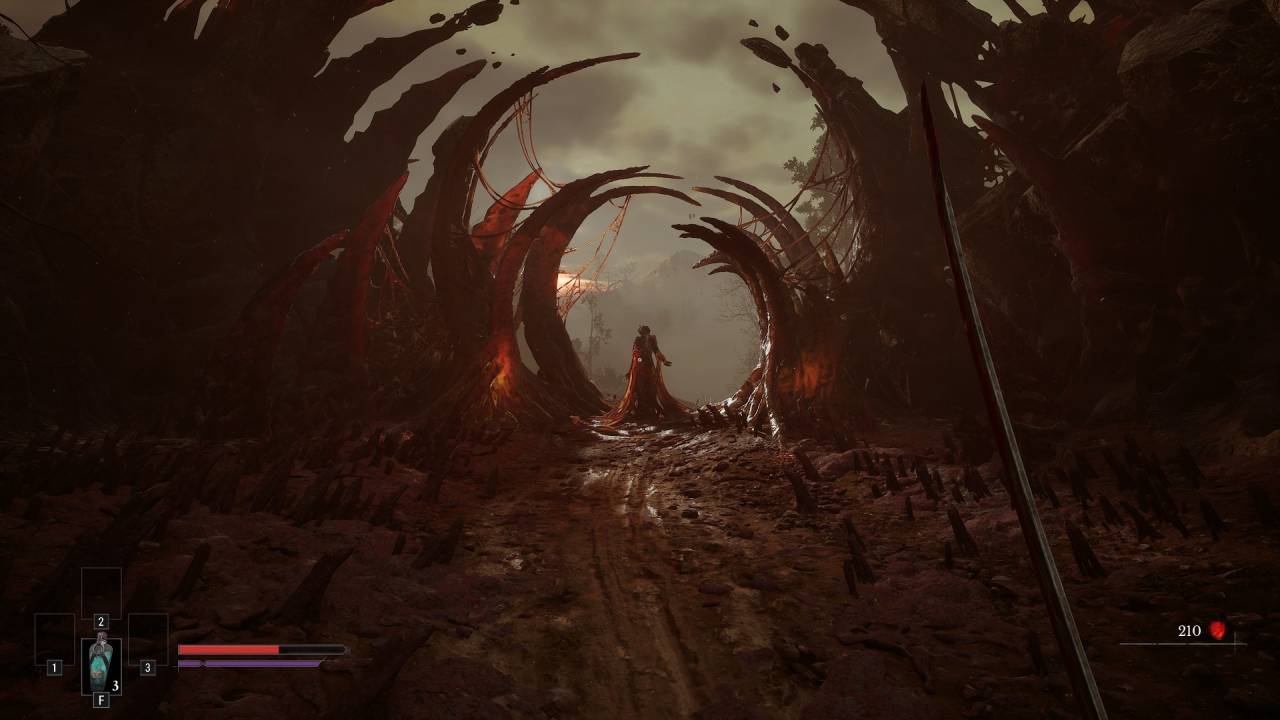
Ultimately, Valor Mortis is strongest when it focuses on the basics of a demanding action game. Its first-person perspective gives familiar Soulslike combat a different feel, the parry system rewards patience and timing, and the Napoleonic horror setting offers a change from the genre's more common fantasy worlds. Boss fights can be satisfying, exploration has enough secrets and shortcuts to reward curiosity, and character progression gives you practical reasons to search the levels carefully.
Valor Mortis's weaknesses get harder to ignore as you go deeper.
The story is not always as engaging as its premise suggests, the available builds feel limited, and off-screen attacks can undermine otherwise fair encounters. The keyboard controls could also use a more comfortable default layout. These issues don't ruin the game, but they keep it from reaching the same level of consistency throughout the experience.
Even so, One More Level has created a solid Soulslike that understands what makes this style of game appealing. It asks you to learn, adapt, and pay attention, then gives you satisfying fights when you put those lessons into practice. If you like the challenge of learning enemy patterns and want to see that formula through a first-person perspective, Valor Mortis is worth your time. It's not a major reinvention of the genre, but it's got a different setting and a combat system that can be rewarding once you get into its rhythm.
Senior Editor, NoobFeed
Verdict
Valor Mortis offers tense first-person Soulslike combat, rewarding bosses, and a striking Napoleonic horror setting, but predictable storytelling, limited build variety, and off-screen attacks hold it back—a good genre piece, not a reinvention.
78
Related News
No Data.