
Gears of War: E-Day Review
Xbox Series X|S
A focused campaign, faster movement, deeper combat, and the return of Marcus and Dom make this prequel feel like what Gears fans have been waiting for.
Reviewed by Azfar Rayan on Oct 01, 2026
Gears of War: E-Day has had a lot to prove. The last mainline entry, Gears 5, arrived seven years ago and took the series in a different direction with larger environments and a more open structure. Since then, you've had smaller doses of the franchise through Gears Tactics, the Hivebusters expansion, and the remaster of the original game.
Still, the wait for another mainline Gears experience has been long. Instead of moving the story forward, The Coalition takes you back to where everything went wrong. Gears of War: E-Day is set 14 years before the original game, dropping you into Emergence Day, when the Locust Horde first emerged from beneath Sera, beginning the war that would reshape the planet.
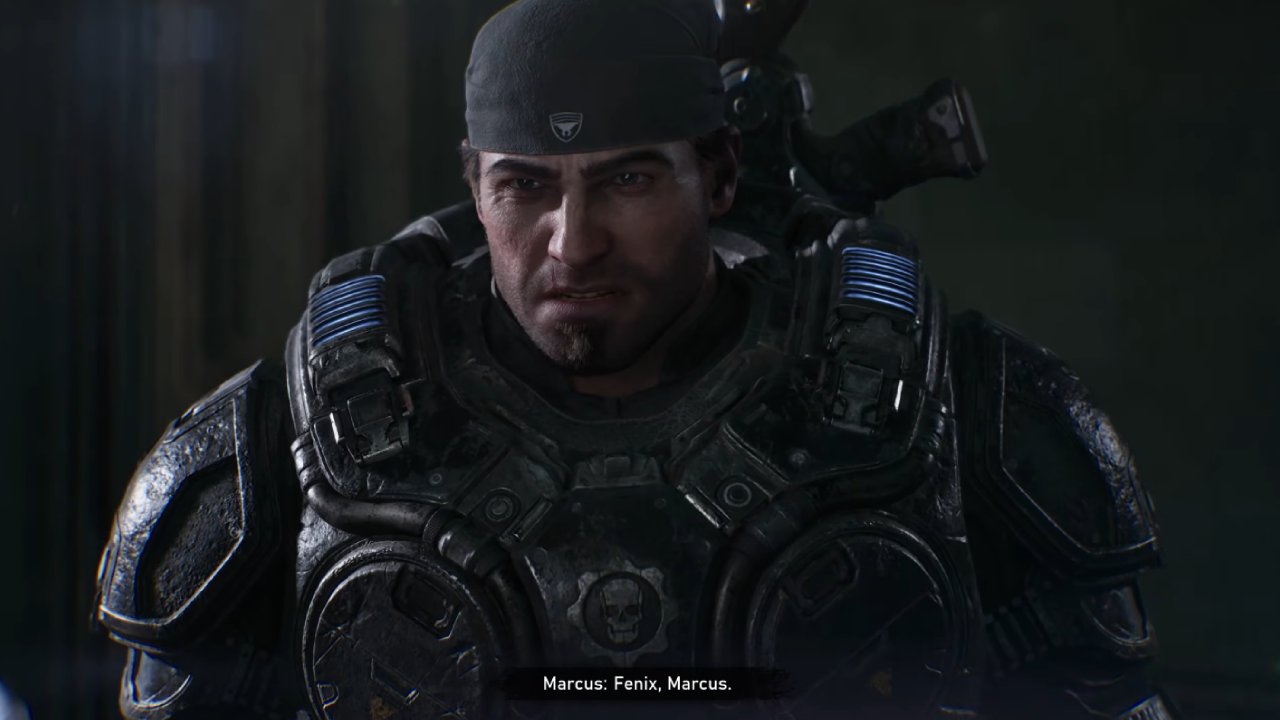
It also brings Marcus Fenix and Dominic Santiago back to the center of the story, giving you a chance to see the two characters long before the events of the original trilogy. That decision immediately gives the game a different identity.
You aren't playing through another chapter of a war that's already well underway. You're seeing the moment that started it all as you watch younger versions of Marcus and Dom deal with something they have never experienced before. At the same time, the game clearly wants to remind you why the older Gears games worked so well in the first place.
The story takes place over a few disastrous nights in the city of Kalona, keeping the campaign focused rather than sending you across a large portion of the planet.
That focus works particularly well because Emergence Day itself is the centerpiece. You get to watch an active, populated city turn into a war zone as the Locust attack from below. Once busy streets become dangerous, buildings are destroyed, and you experience the scale of the invasion rather than simply hear about it.
Marcus is once again the main protagonist, and seeing him and Dom together is easily one of the most enjoyable parts of the narrative. Marcus has the gruff personality and blunt one-liners you would expect, while Dom provides the other half of their relationship. Their brotherly bond feels familiar without being out of place in this earlier period of their lives. If you've spent years with these characters, it's easy to see the appeal of seeing where that relationship began.
The writing itself isn't always as strong as the characters. Some stretches of dialogue feel flat, and some character interactions don't land as well as they should. Marcus' personal storyline also leans into past trauma in ways that may feel familiar, especially since the series has already explored similar themes elsewhere.
Dom has an important connection to Marcus, but his arc feels underused, leaving you with the impression that the character could have been given more to do.
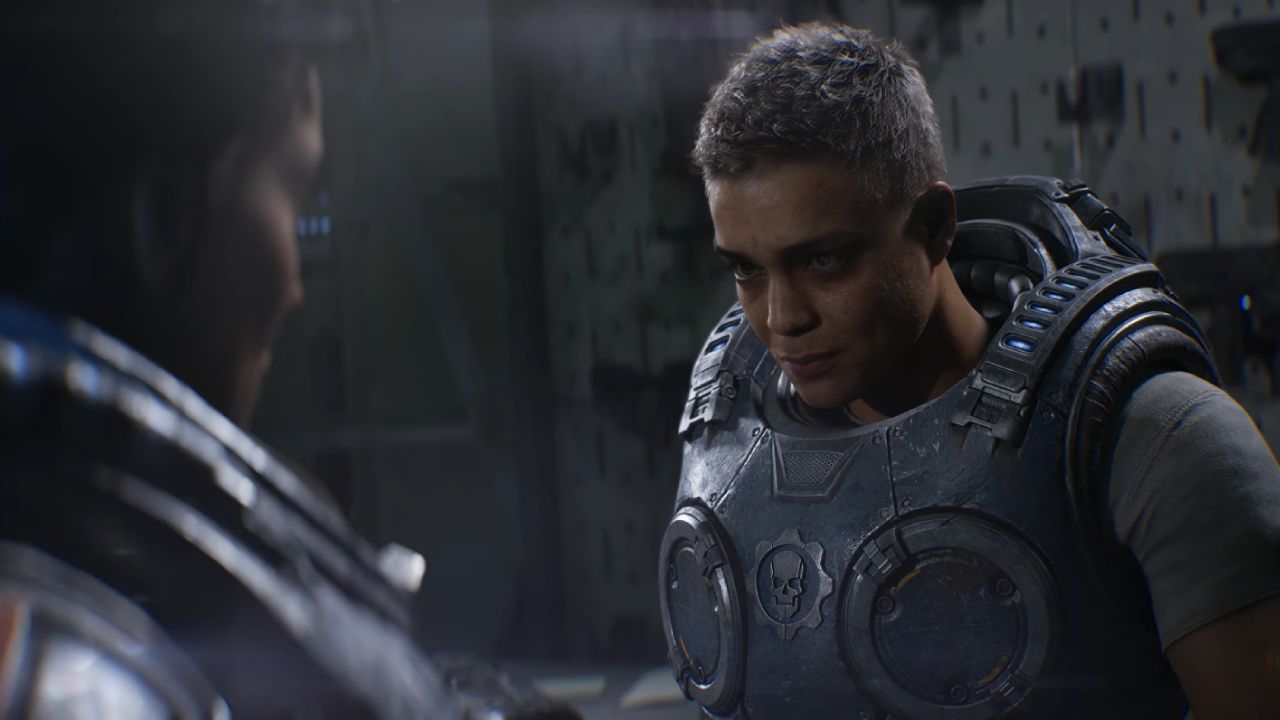
Fortunately, the game introduces two new characters who help carry the narrative. Mags Carter is a former Gear dealing with a respiratory illness and growing disillusionment with the government she once served. Emergence Day forces her back into a conflict she had already begun distancing herself from. Her story eventually becomes one of the more interesting parts of the campaign, even if its development feels incomplete at times.
Lucas Reyes takes a different approach. He's a nervous but well-meaning rookie who could easily have become a forgettable side character, but his personality makes him surprisingly easy to like. Together, Mags and Lucas fit naturally into the group alongside Marcus and Dom. Their presence also prevents the campaign from relying entirely on nostalgia.
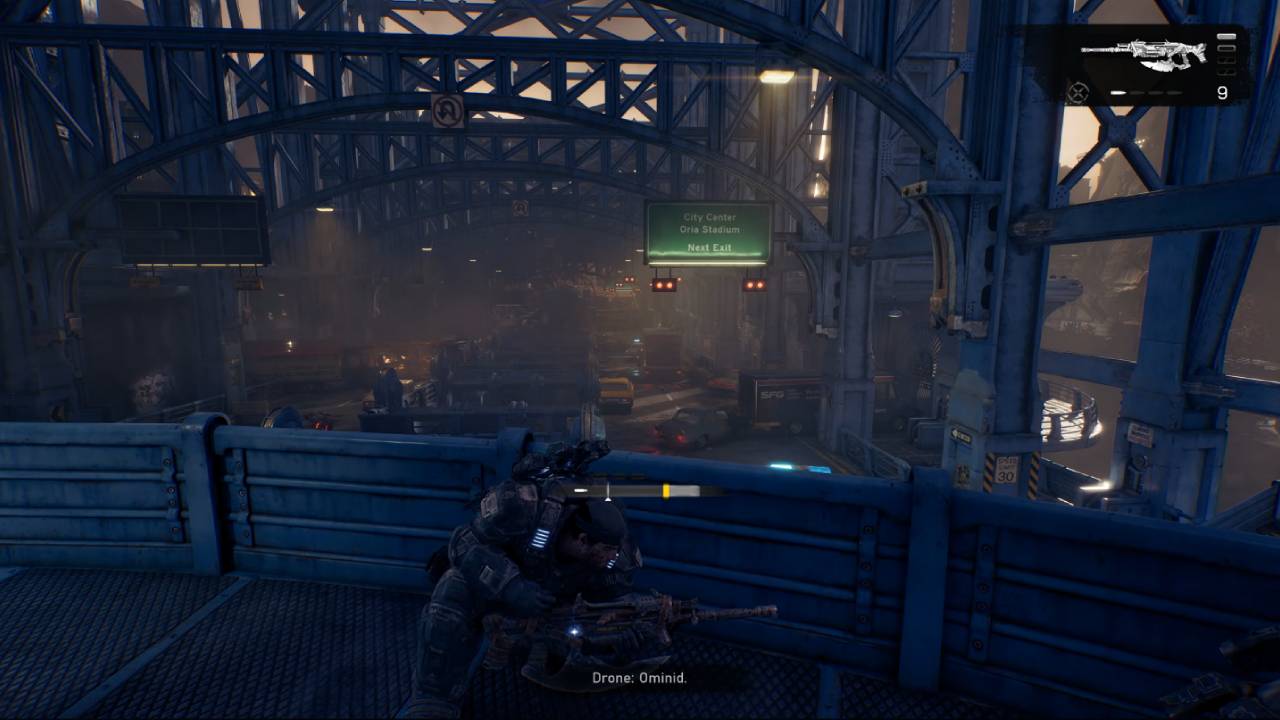
The game really succeeds, though, in building its world around Emergence Day. Kalona is an unusual setting for Gears because it begins as a functioning urban environment rather than an already-destroyed battlefield. You get to move through a city that feels lived in before watching it fall apart. That makes the destruction hit harder and brings back some of the horror atmosphere of the older games.
You still get plenty of explosions, large-scale action, and the usual Gears spectacle, but there are quieter stretches where the game lets you walk through dark corridors, damaged buildings, and scenes of destruction. Those moments create a sense of dread that isn't always present in the later entries.
The game feels more grounded and, at times, closer to the horror-tinged atmosphere that helped define the original trilogy.
The city also changes how you move through the campaign. Rather than giving you the large, open areas seen in Gears 5, the game takes a smaller, denser approach. Kalona works as a semi-open environment, giving you room to explore without losing the tight level design that suits Gears better than completely open spaces.
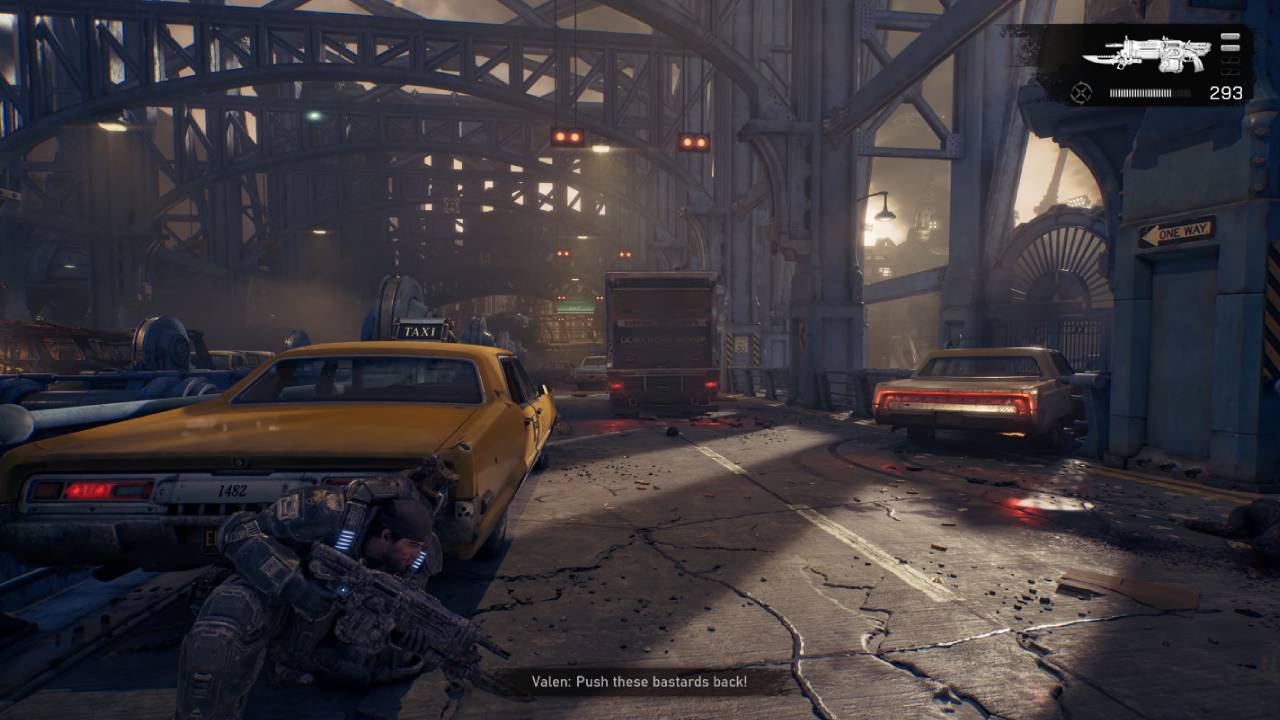
You can follow the main route or spend time hunting collectibles, side missions, weapon modifications, and other optional content. Exploration is generally enjoyable because the city itself is interesting to navigate, although the optional activities aren't always as strong. Some side missions offer worthwhile situations, but others mostly amount to extra combat encounters with little narrative or mechanical variety.
That doesn't stop the city from being fun to move through, largely because movement itself has been meaningfully overhauled.
Gears characters have always felt heavy, and that weight remains, but Gears of War: E-Day gives you more options for getting around. You can climb and vault over obstacles, jump, slide under gaps, use lower pieces of cover, and move through spaces with more freedom than before.
The result is a version of Gears that still feels like Gears but feels less restricted. You can move faster and react more naturally, which is especially useful once combat starts. The additional movement also gives level designers more opportunities to build vertical encounters.
That verticality is one of the biggest changes you notice during combat. Arenas can have multiple layers, different approaches, and more opportunities to move around enemies. Instead of simply moving from one piece of cover to another, you can climb, slide, vault, reposition, and use the environment to change how an encounter develops.
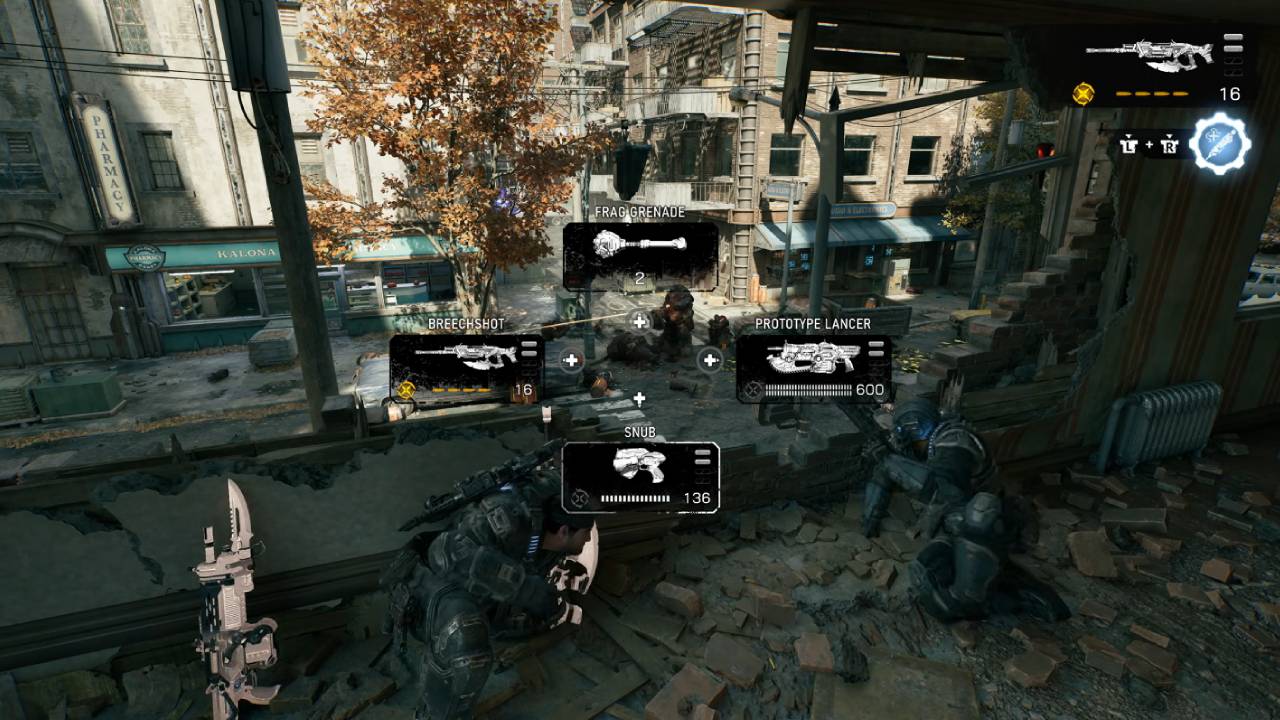
That works particularly well because the basic Gears combat system was already built around movement and positioning. Familiar cover-based shooting remains at the heart of everything, but the added options make firefights feel less static. You can still settle behind cover and line up shots, but you're no longer limited to staying in the same lane throughout an encounter.
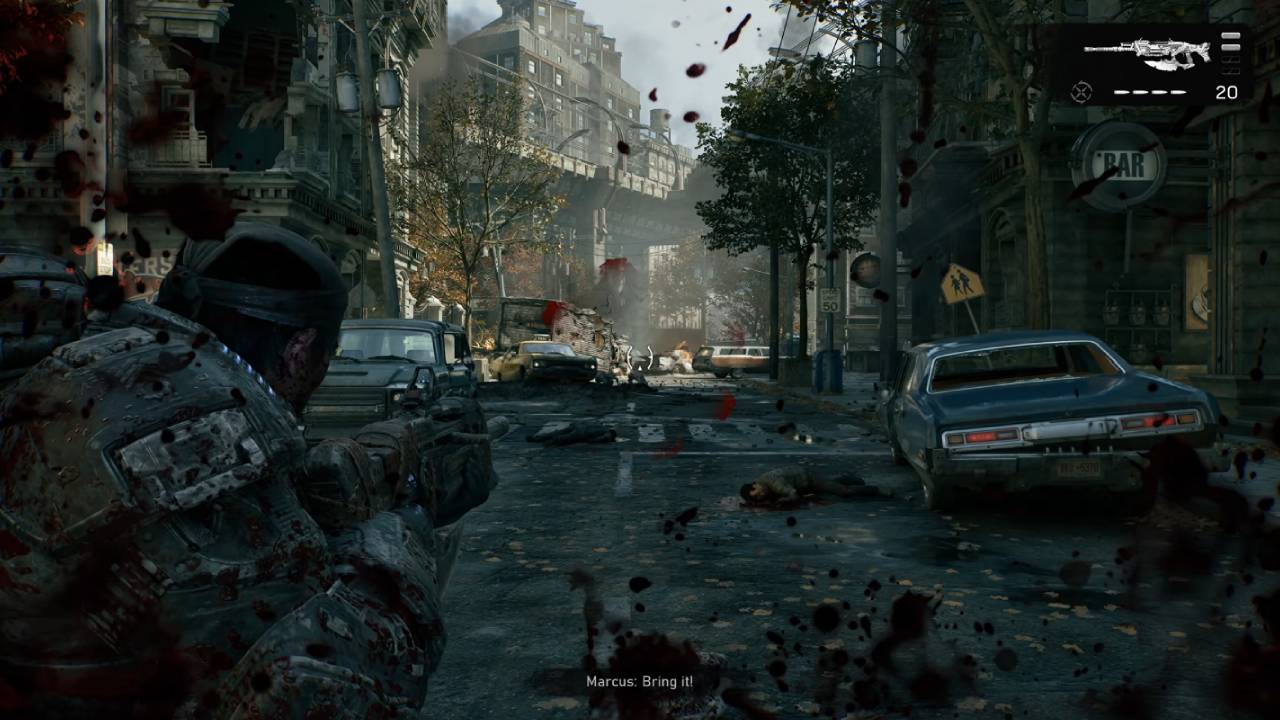
Weapons remain heavy and satisfying.
The Lancer and its chainsaw execution remain among the most recognizable parts of the series, while returning weapons such as the Hammerburst and Torque Bow offer different ways to handle enemies. Each weapon feels different when fired, and the new Gut Puncher adds another option to the arsenal.
The active reload system is also back and remains one of those mechanics that makes even a familiar firefight feel satisfying. You can get that instant feeling of control when you reload perfectly, but if you miss, you'll deal with the consequences in the middle of a fight.
The game also features customization of weapons, armor, and tactics. Weapons can have multiple mod slots, armor mods increase your defenses, and tactical skills have cooldowns. These systems aren't deep enough to make Gears of War: E-Day a full character-building game, but they do give you some control over how you approach combat.
Some modifications can noticeably affect how you play.
Certain weapon upgrades can tie into chainsaw executions and perfect reloads, while tactical abilities give you additional tools during encounters. Finding these modifications while exploring the city gives you another reason to move away from the critical path.
The combination of movement, weapons, customization, and level design makes the combat the strongest part of the campaign. The encounters vary enough to keep the basic shooting loop from getting stale, and the game knows when to change the pace. You move between standard firefights, larger set pieces, boss encounters, and sequences that push you through the environment rather than simply asking you to clear another group of enemies.
That pacing is one of the campaign's biggest strengths. The story runs for roughly a dozen hours, with some playthroughs stretching further depending on difficulty and how much optional content you explore. More importantly, the campaign rarely feels like it is simply filling time. It keeps introducing different situations and steadily raises the scale.
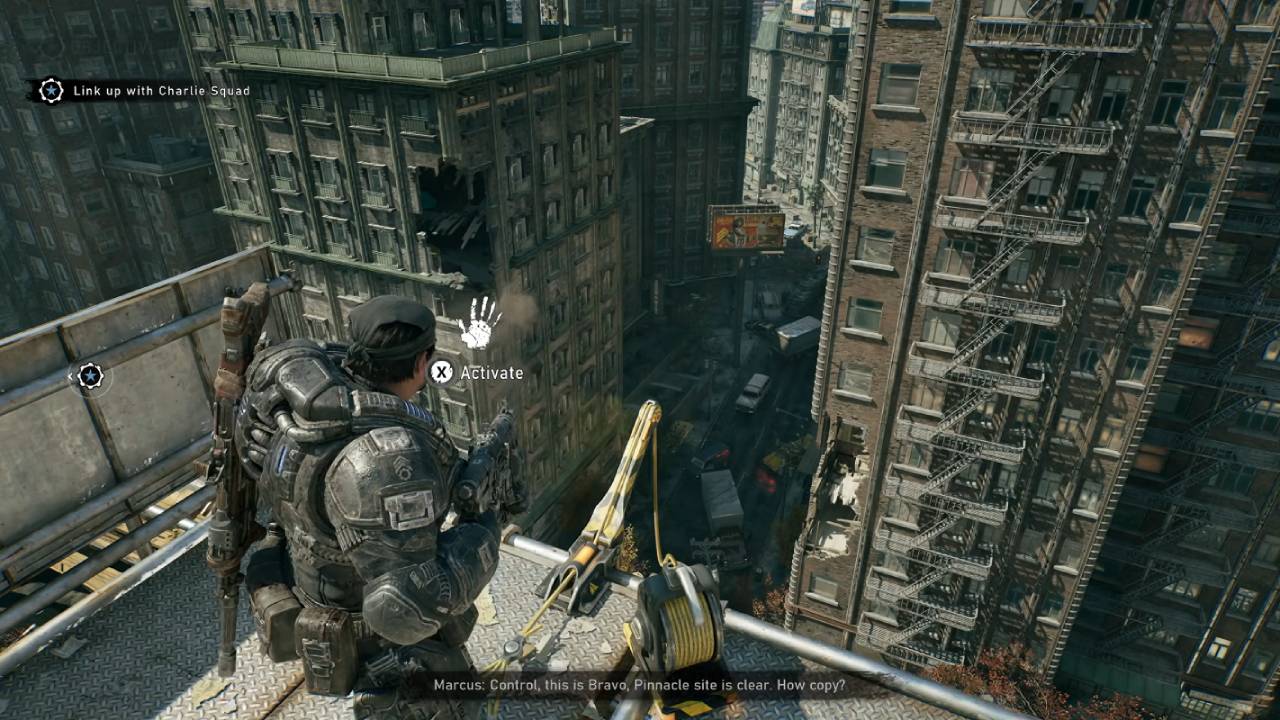
The enemy AI also works best when the Locust are allowed to swarm and pressure you from different directions.
Gears has always been about managing enemies while using cover intelligently, and Gears of War: E-Day's more layered arenas give the enemies more room to approach you. Encounters can still feel like familiar Gears combat patterns, particularly in some optional missions, but the added movement and vertical space help keep the main campaign moving.
Outside the campaign, Gears of War: E-Day also gives you several multiplayer options. You can play the campaign online with up to four players, while console players can use split-screen couch co-op.
Competitive multiplayer includes 4v4 Versus matches, and Horde Siege provides a PvE option for players who want to take on waves of enemies. Crossplay between Xbox and PC also helps keep the multiplayer side connected.
Horde Siege is particularly well-suited to the systems Gears of War: E-Day introduces, as the improved movement and combat mechanics carry over into multiplayer. The different modes also give the game's weapon systems and combat arenas more room to breathe after you've finished the campaign.
The campaign doesn't rely on a traditional XP-focused progression loop.
Instead, progression is tied more closely to finding modifications and improving your approach to combat. That means you aren't constantly forced to grind enemies just to become strong enough for the next mission. Exploration and experimentation matter more than repeated farming experience.
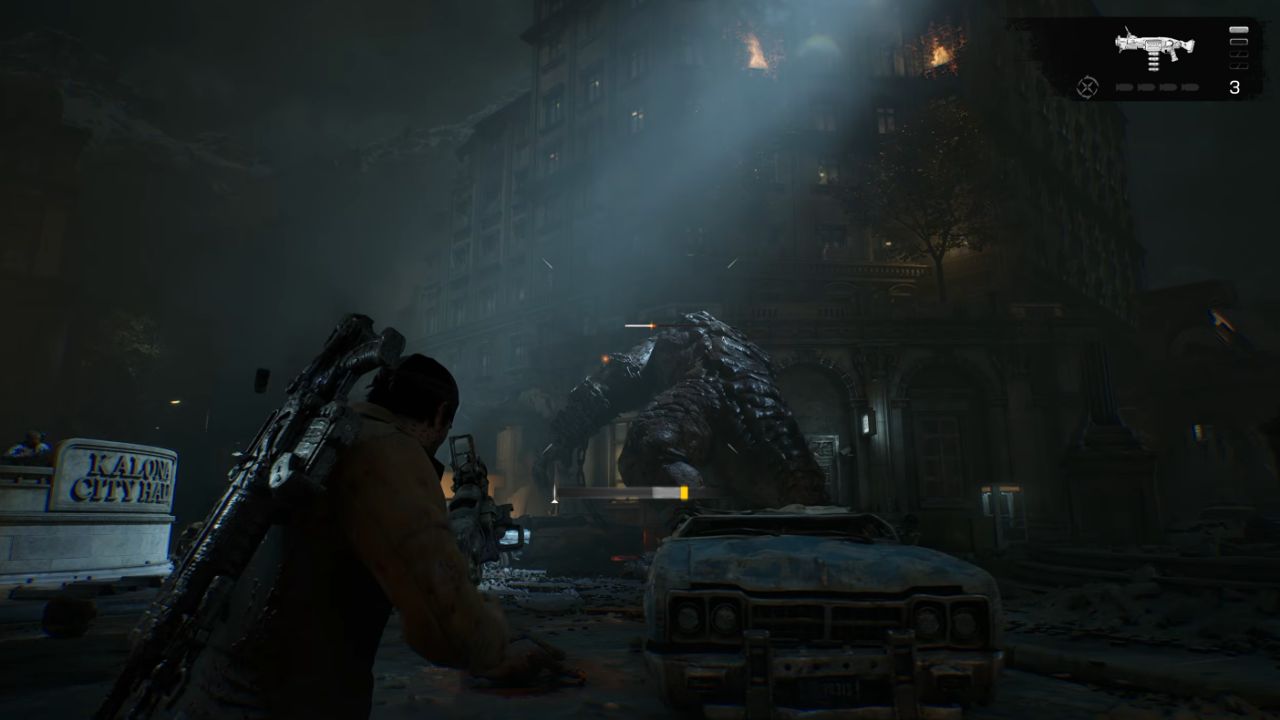
Visually, Gears of War: E-Day feels like a deliberate return to the original trilogy while still taking advantage of modern hardware. The environments use a darker, more muted palette that recalls the war-torn look of the older games, but the level of detail far exceeds what those original games could provide.
Kalona is especially effective because the visual detail supports its transformation. You see buildings, streets, vehicles, and populated areas before the Locust invasion turns them into something almost unrecognizable. The destruction isn't simply there to make the game look impressive.
It gives you the impression that you are watching a city being destroyed in the first hours of a world war.
The character models are just as detailed, with realistic facial features, clothing, animations, and physical details. The enemy designs retain the familiar Gears identity but are now augmented by the additional visual fidelity. The large set pieces also give the game plenty of opportunities to show what current-gen hardware can do.
On Xbox Series X, performance mode generally keeps the action moving smoothly, though the frame rate can occasionally stutter. The game is also demanding on PC if you want to push visual settings and fidelity. Even with those issues, the overall technical presentation is one of the game's stronger areas.
The sound design supports the same shift in tone.
There's the weight of gunfire you expect from Gears, while explosions, enemy sounds, and environmental audio help make combat feel physical. The game's darker feel works well in the quieter sections, giving the ruined city and enclosed areas a sense of heightened tension. The music also supports the more serious tone without detracting from the action.
Ultimately, Gears of War: E-Day works because it understands what made the series work while also being willing to change up parts of the formula. You still get the heavy weapons, cover-based shooting, brutal executions, explosions, and large set pieces, but the movement system gives you more freedom, and the denser urban setting creates more interesting spaces to fight through.
The campaign's biggest weakness is its storytelling.
It's fun to see Marcus and Dom again, and Mags and Lucas are good additions, but some of the characters don't get the attention their arcs deserve. The writing can also be inconsistent, which becomes more noticeable because the rest of the campaign is paced so well.
The optional content has similar issues. Exploring Kalona is fun, but some side missions offer little beyond extra combat. The city itself does enough heavy lifting that the weaker activities don't ruin the experience, but they can make the semi-open structure feel less meaningful than it could.
Even so, the core experience remains strong. You get a focused Gears campaign that understands the value of momentum and doesn't allow the action to lose its energy. The improved movement makes the combat more dynamic, the encounters take advantage of vertical spaces, and the return to a darker tone helps Gears of War: E-Day feel closer to the identity of the older games.
Most importantly, Emergence Day is finally given the attention it deserves.
Instead of treating the event as backstory, Gears of War: E-Day lets you experience the first hours of the Locust invasion from the ground level. Watching Kalona go from a functioning city to a battlefield gives the prequel premise real purpose.
For longtime fans, Marcus and Dom's return adds another layer to that experience, while newcomers can still follow the story as a starting point for the larger conflict. You get a campaign that stands on its own while filling in one of the most important moments in Gears history.
Gears of War: E-Day doesn't completely reinvent the series, and it doesn't need to. Its biggest changes come from movement, encounter design, customization, and the decision to focus the campaign around a single city and a short period of time. Those changes work because they strengthen the parts of Gears that already mattered.
After years without a new mainline entry, Gears of War: E-Day feels like a return to form built around the same foundation that made the franchise memorable. It has some uneven writing and optional content that could have been stronger, but the campaign's combat, pacing, setting, atmosphere, and technical presentation make it an engaging return to Sera's darkest day.
Senior Editor, NoobFeed
Verdict
Even with uneven storytelling and optional content, Gears of War: E-Day is a tight, well-paced campaign with improved movement, solid combat, a compelling urban setting, and a welcome return for Marcus and Dom.
92
Related News
No Data.