
The Division Resurgence Review
PC
Ubisoft brings The Division’s cover shooting, open-world exploration, loot grind, co-op, PvP, and Dark Zone to mobile, with impressive results and a few compromises.
Reviewed by Maisie Scott on Aug 10, 2026
If you've at any time wanted to play a proper looter shooter on your phone without ending up with the feeling that you're playing a watered-down version of a larger game, The Division Resurgence really does offer a good argument in its favor.
Ubisoft takes The Division's well-known formula and reworks it for mobile, including third-person shooting, cover-based combat, an open version of Manhattan, gear grinding, multiplayer features, and the Dark Zone. It turns out to be a surprisingly comprehensive package, even though the drawbacks of playing on a smaller screen become obvious when all the action happens at once.
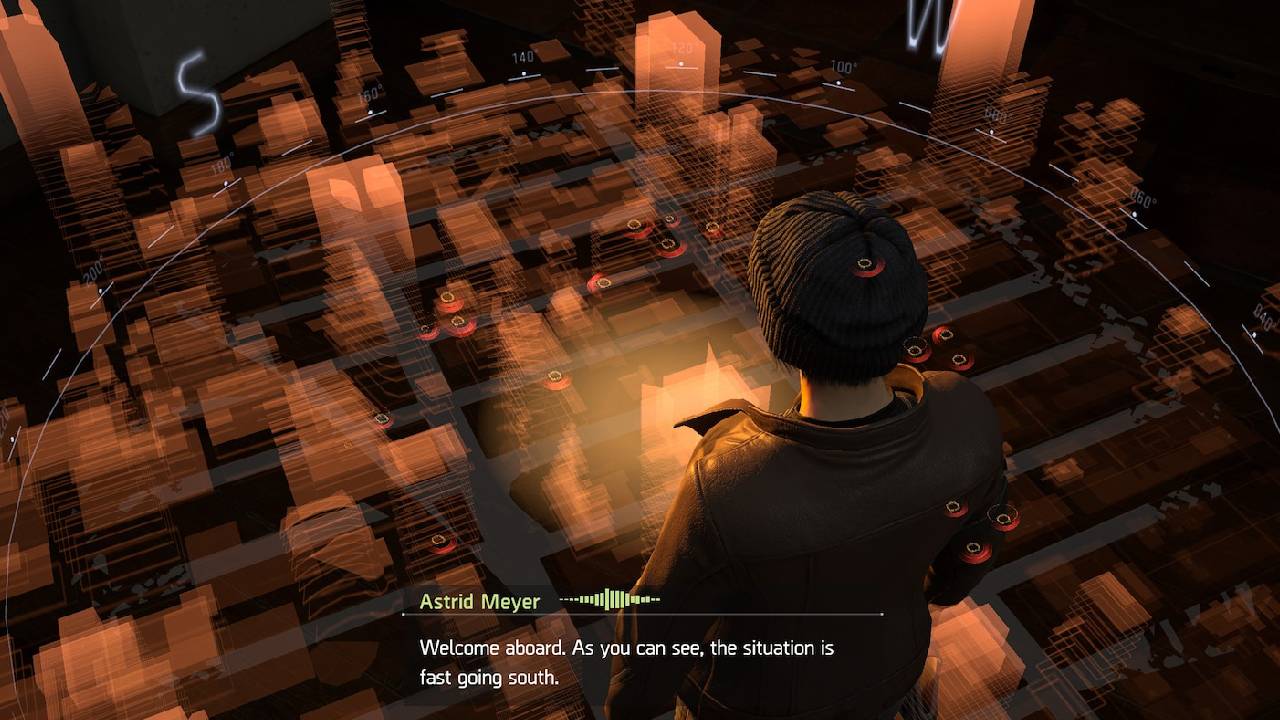
Instead of just copying the console and PC games, The Division Resurgence presents its own story set in the same universe.
You create your own agent, select a specialization, explore Manhattan, deal with hostile factions, carry out missions, gather better equipment, and gradually develop a character who is capable of facing tougher enemies. This approach means it is fairly easy for new players to get started without knowing all the details from the earlier games.
The situation remains largely the same. The Green Poison, which is also called the Dollar Flu, has destroyed the United States and left society in ruins, transforming Manhattan into a hazardous battlefield. Various hostile groups are fighting among themselves to gain control, while civilians are having a difficult time surviving and the government forces are trying to reestablish a certain degree of order.
The narrative succeeds because the story does more than just take the player from one shooting section to another. The missions have context, the world feels connected, and even the smaller objectives have a clear narrative purpose.
When you enter Manhattan, The Division Resurgence offers you a wide variety of reasons to remain in the city. The open world includes hostage rescues, supply runs, outpost restoration, interrupted arms deals, elite patrols, and bounties, plus daily and weekly activities.
You can take your time with the main storyline, explore the map, choose the activities you like, and develop your character as you move through the city. It also gives you the freedom to mix story missions with side activities, so your progress feels less tied to a single path.
A shared world also means Manhattan has a multiplayer feel without requiring you to play co-op all the time. You have the option of exploring by yourself, coming across other players, or joining up if you'd like some company.
There are some limitations to the open-world design, though.
Manhattan is large, but it doesn't always feel as alive as the environments in the console and PC games. Occasionally you move between areas and suddenly run into enemies because you've crossed into a particular combat zone, making certain parts of the city feel more like carefully arranged gameplay spaces than a naturally functioning environment.
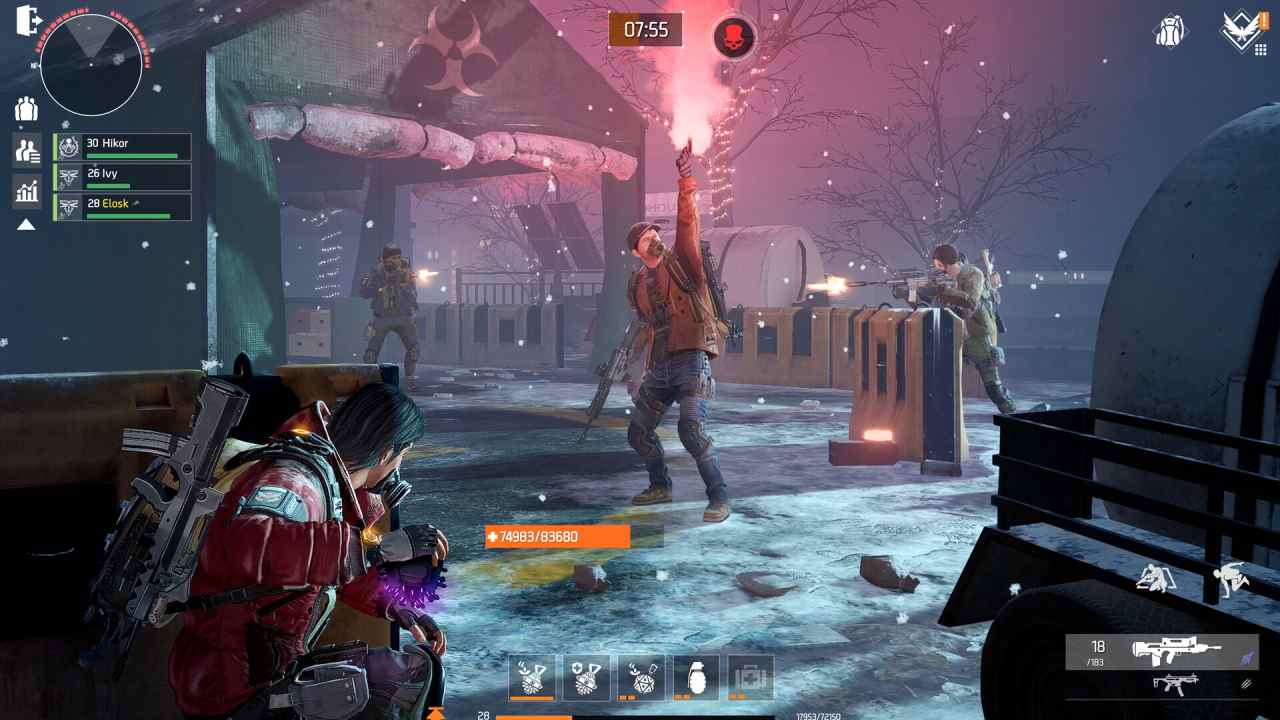
The situation is the same with mission structure: you usually move through an area, take cover, eliminate enemies, move forward, and repeat the sequence. This approach works, especially when combat is at its peak, but the pattern can become predictable after a few hours.
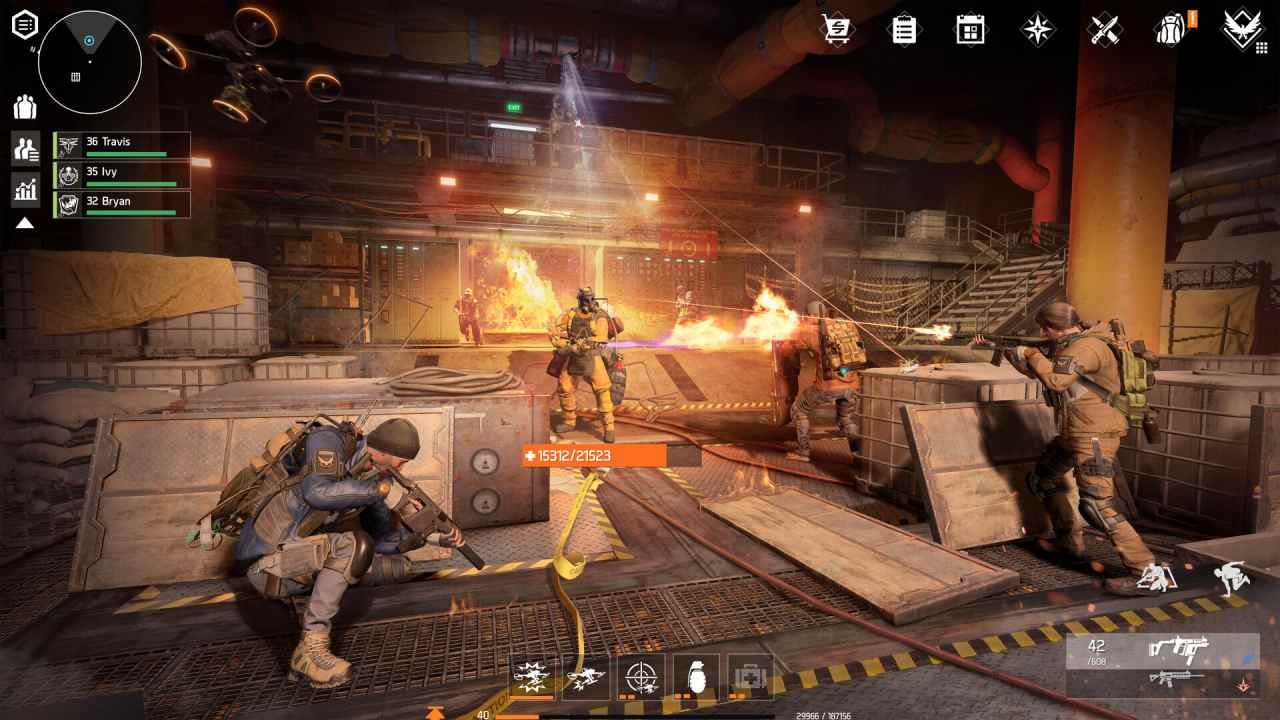
It is in the gunfights that The Division Resurgence probably makes its most effective impression. Rather than turning The Division into yet another fast-paced mobile shooter, Ubisoft has retained the tactical cover system, which is characteristic of the series.
Enemies are able to rush you, flank your position, and reward you for remaining exposed, which means that you have to consider your positioning, keep an eye on enemy movements, use cover, and time the activation of your abilities.
This choice helps The Division Resurgence maintain its distinct character, as you don't just wander around shooting until everything is gone; instead, your position matters, and your abilities can completely change how you handle tough situations. The shooting therefore requires a bit more thought than you would normally expect in a touchscreen game.
The controls are also flexible enough to accommodate different players.
You can customize the touchscreen layout, move buttons around, and choose between manual and automated cover options. Aim assistance helps make shooting manageable, but a lot still competes for your attention during a fight. Enemies, abilities, menus, effects, and controls can all crowd the screen at once, making precision more difficult when things get hectic.
Switching to a controller makes a big difference: moving and aiming seem more natural, and the overall experience becomes much more similar to the console-style gameplay that The Division Resurgence is attempting to replicate. The controls are simple enough to use on a mobile device without losing The Division's core feel, so a controller is a good choice if you want more precise control.
The Division Resurgence sticks very closely to the standard looter-shooter formula. Throughout the game, you keep acquiring new weapons, equipment, attachments, and modifications, and higher gear tiers enable you to increase your overall strength.
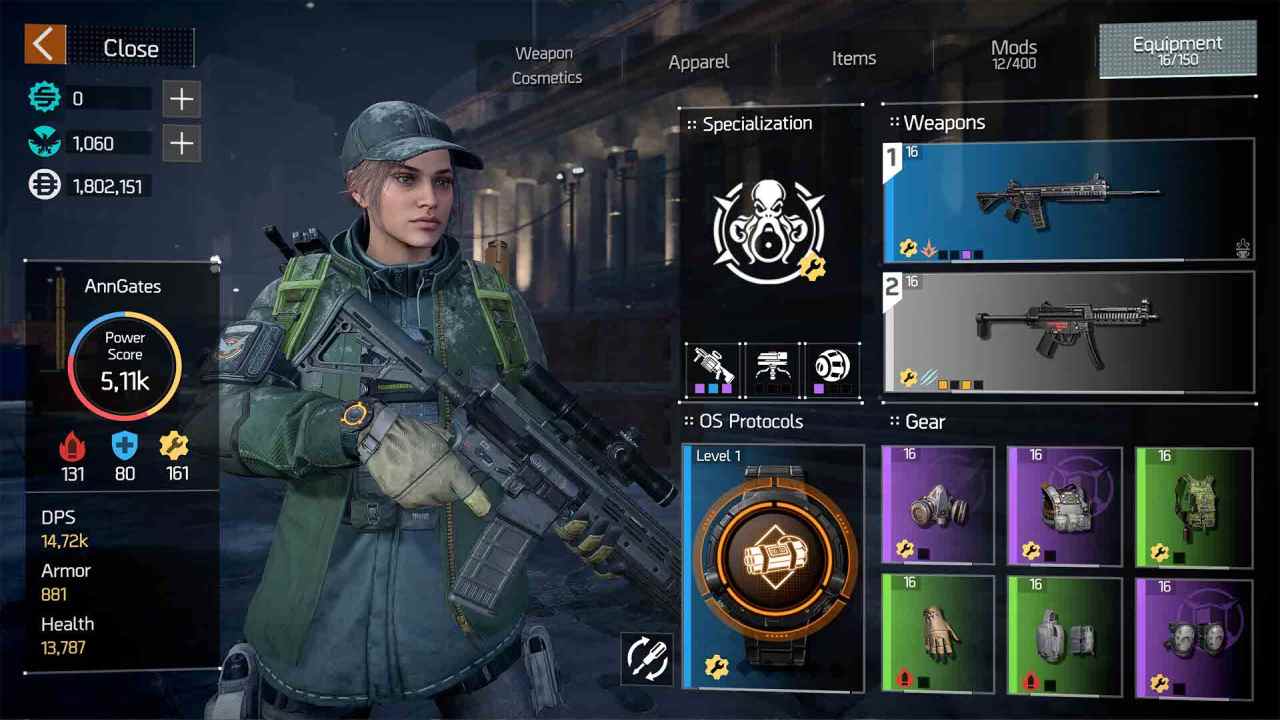
There is also plenty of room to experiment. You can mix different weapons, gear combinations, abilities, and specializations together to create different playstyles. Demolitionist focuses on explosive damage, Field Medic combines support with offensive tools, Bulwark uses shields and close-range protection, and Vanguard emphasizes weapons and detection abilities.
The issue is that advancement can eventually feel like a lot of management. You have currencies, materials, upgrades, notifications, daily goals, weekly goals, and events all vying for your attention. You may end up collecting resources to upgrade other resources, only to have to replace the equipment you've just improved a short time afterward.
The multiplayer aspect makes the repetitive tasks more meaningful. Cooperative play supports up to four players, and harder content becomes more enjoyable when everyone communicates and coordinates their builds. Familiar missions can still feel different when a group works together, and things go wrong.
The Dark Zone remains one of the most compelling features: a quarantined area of Manhattan with useful loot, though you have to face both AI enemies and other players.
You are able to gather contaminated equipment and try to extract it, but another player might intervene before you have escaped. This risk makes each successful extraction more rewarding and gives the region the kind of tension ordinary PvE missions lack.
You can also access Conflict for more direct PvP action, while clans provide an additional dimension to the multiplayer aspect. The clans have their own base, facilities, missions, and activities, which gives you even more reasons to stay active rather than just entering into occasional matchmaking sessions.
Visually, The Division Resurgence sits somewhere between impressive and dated. It is genuinely impressive that a game with this scale can run on a phone, with large environments, character models, lighting, explosions, and combat effects recreating much of The Division's general look.
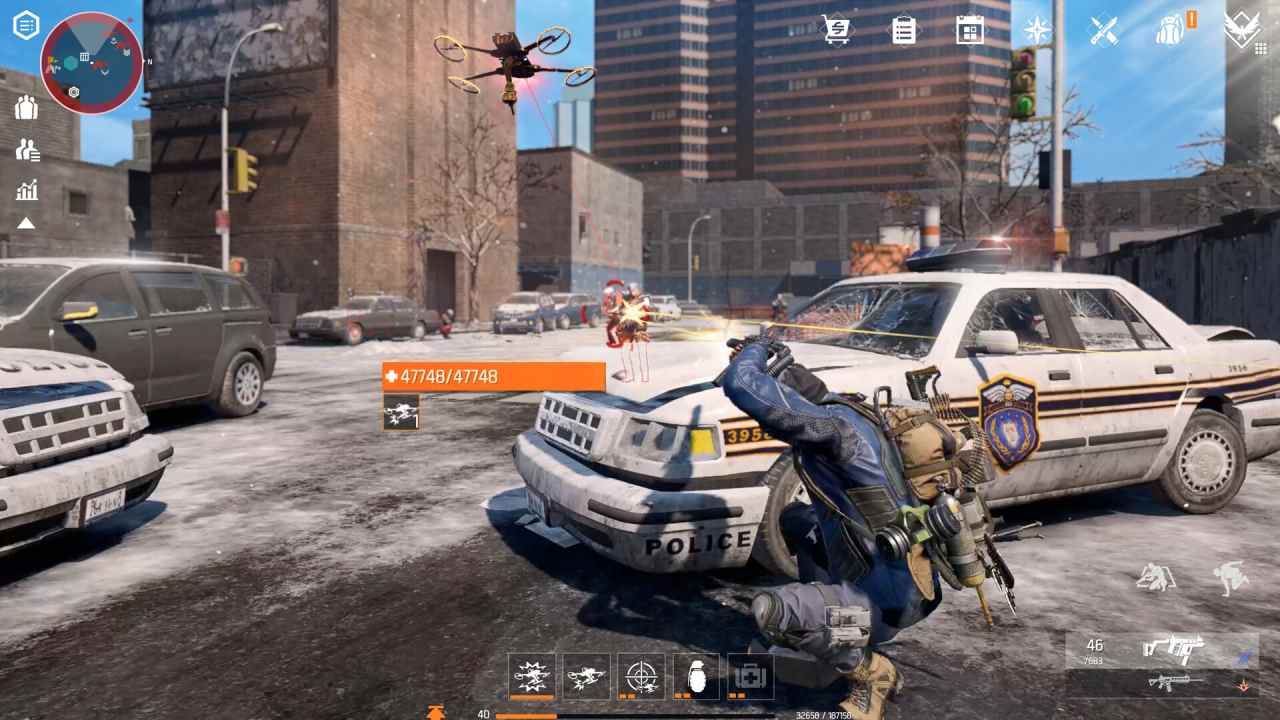
At the same time, some locations appear dated, lighting can look flat, distant objects can pop into view, and certain areas lack the environmental detail you would find on a console or PC. Still, the overall presentation captures the look and atmosphere of The Division well, especially when you focus on the action rather than the finer details.
Performance also depends heavily on the phone you're using and the settings you choose. You may have to sacrifice graphical quality for a higher frame rate, while higher resolution can affect performance. That means the experience can vary considerably between devices.
The audio presentation supports the experience without needing to dominate it. Solid voice acting and well-produced cutscenes help give missions some personality, while the overall presentation maintains enough of the atmosphere associated with The Division.
The biggest issue is still the mobile format.
A smaller display makes the already busy interface harder to manage, especially when enemies, objectives, buttons, effects, minimaps, health indicators, and other information appear at once. Even on a powerful phone, a larger screen can make everything easier to read and control.
The Division Resurgence also cannot fully avoid the repetitive aspects of the looter-shooter formula, since players will have to keep carrying out similar tasks: gathering equipment, getting rid of unwanted items, upgrading new ones, and then pursuing better rewards.
This kind of routine will be something that Division fans will recognize, but those players who are not keen on spending a lot of time improving their character builds might eventually become tired of it. After a while, the constant chase for better gear can start to feel more like a chore than a reward.
Monetization also becomes part of that clutter. Alongside the core experience, there are battles, shops, cosmetics, and several currencies, and although these don't entirely spoil the game, the free-to-play model makes it difficult to ignore them. Players seeking a simpler progression system might find the number of systems and options overwhelming.
There are some compromises, but The Division Resurgence does more than you might expect from a mobile version. Cover shooting, open-world exploration, loot, builds, specializations, co-op, PvP, The Dark Zone, and the progression systems that define The Division Resurgence.
It’s not a substitute for console or PC games, and its shortcomings become apparent after a while.
Unfortunately, it doesn’t quite deliver, with dated graphics, a slightly artificial open world, repetitive missions, a jumbled progression system, a busy touchscreen interface, and the free-to-play setup. Yet these faults don't change the fact that you are carrying a substantial looter shooter on your phone.
For someone who is already a fan of Division, Resurgence is worth looking at, particularly if you're after a portable version of The Division Resurgence or if you enjoy playing co-op. It also lets people new to the series jump in without needing to be very familiar with the previous entries.
In the end, The Division Resurgence is both impressive and frustrating. You might be surprised at how much of The Division fits on a phone, only to soon afterward encounter a cluttered interface, repetitive tasks, or another upgrade menu.
The Division Resurgence has enough content, variety, and depth to make you want to come back and do another mission, and that might be its biggest accomplishment as a free-to-play mobile shooter. The mix of solo play, co-op activities, and different progression options also gives you enough flexibility to break up the grind when it starts feeling repetitive.
Editor, NoobFeed
Verdict
The Division Resurgence does a good job of bringing the essential elements of the series to mobile: shooting, loot, co-op, PvP, and the Dark Zone. Repetition, clutter, old visuals, and the limitations of the touchscreen hold it back.
72
Related News
No Data.