
Lunarium Review
PC
You may come for the demanding combat, but you'll stay for the world, the companionship, and an adventure that proves atmosphere can be just as powerful as action.
Reviewed by Mahi Araf on Jul 30, 2026
When a new indie Soulslike appears, it's easy to assume you've seen everything it has to offer before you even press start. The genre has become crowded over the past several years, with developers from all over the world taking inspiration from games like Dark Souls, Sekiro, and more recently Clair Obscur. Some borrow the stamina management, others copy the brutal boss fights, and many simply chase the satisfaction of overcoming impossible odds.
With a genre so saturated, it's hard to stand out, especially as a smaller studio with the marketing budgets of bigger publishers. That's precisely the challenge Chinese developer Lunarium Studios set for itself with its first title, Lunarium. Instead of attempting to reinvent the Soulslike wheel from the ground up, the studio focuses on refining familiar ideas, but wrapping them up in a memorable fantasy world full of quiet beauty, melancholy, and just enough mystery to keep you moving forward.
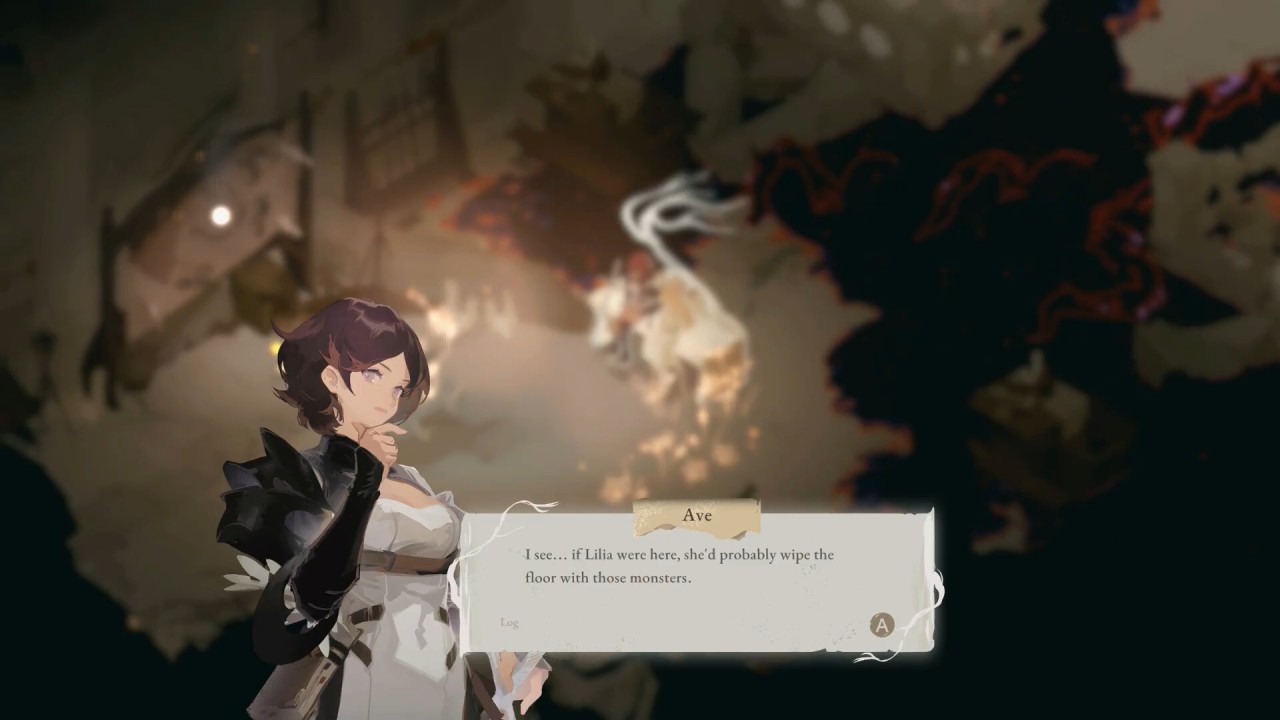
The first thing that becomes clear is that Lunarium is not trying to confuse you with complicated systems or long tutorials.
Instead, it slowly draws you into a world that is both peaceful and disturbing. You play as Ave, a young lightly armored knight from a small village. What starts as an ordinary mission turns out to be much greater. What should have been a simple job of killing the monsters attacking the village turns deadly serious when one of the creatures is brought back to life by some mysterious shadowy force after being killed.
After days into the encounter, she wakes to find herself being cared for by a mysterious girl named Lune. Lune is more than just a fellow traveler. She is a Starfarer, a creature of the stars that has watched over the lands around for centuries. Much of her memory has faded after a long sleep, but she still remembers enough to recognize the evil that is now spreading across the world.
It was a force, a force named the Nihilus, a darkness that had visited and left throughout history, seeking to corrupt and possess all living things. In the past, the Starfarers had been able to contain it, but this time something is different.
The threat has grown stronger, and Lune believes the answers lie within Scanstone, a massive fortress ruled by another Starfarer named Lilia. Of course, Ave gives her a sword, and the two set off on a journey that takes them through kingdoms, forgotten ruins, dreamlike landscapes, and even worlds beyond ordinary reality.
The overall story is not particularly original on paper.
It's not the most original idea to have a battle between light and darkness, and you will likely see many of the general plot points before they happen. Lunarium knows its strongest asset is not the premise itself, but the relationship between its two main characters.
The game doesn't deal with shocking twists and constant plot reveals, but instead builds up the companionship between Ave and Lune. The conversational tone is relaxed and natural; both characters bounce off each other in ways that seem rarely contrived.
Ave brings determination, optimism, and courage to whatever situation she finds herself in, and Lune brings wisdom gleaned from centuries of experience, even if her memories are fragmented. Their partnership naturally develops through the writing as it subtly suggests how they each need the other in more ways than combat.
There's a subtlety to the writing at times here in hinting at something more than friendship, but it never quite commits to romance. You might be left wishing for a little more exploration of the relationship. Still, even without any overt romantic development, the emotional connection between the pair becomes the heart of the journey.
The world itself is a big player in the storytelling too.
Instead of breaking up your adventure with long cutscenes, Lunarium encourages you to explore to find out about its history. Notes scattered through each region tell of ancient civilizations, forgotten tragedies, magical traditions, and the devastating effects of the spreading corruption.
Environmental storytelling does a lot of the heavy lifting, with ruined cities, abandoned villages, and haunting landscapes communicating as much as the dialogue. But the one downside is that the world can feel a little empty sometimes.
There aren't many NPCs to meet outside of major story moments, and side quests remain fairly limited, meaning some areas could have benefited from more opportunities to interact with their inhabitants.
Once you're fully settled into the story, combat quickly becomes the focus of nearly every moment you spend playing. Lunarium is an isometric action RPG, but beneath that camera angle lies a combat system that proudly wears its Soulslike influences. Success depends far less on button mashing and far more on understanding enemy behavior, learning attack patterns, and mastering timing.
Ave serves as your primary playable character, handling all direct combat through light attacks, heavy attacks, dodges, and parries. Lune is with you for almost every fight, but she's not a second fully playable character you can switch between; she's a dedicated support partner. This choice ends up making the combat feel a lot smoother than it otherwise would have. No need to constantly swap characters to interrupt the flow; just weave Lune's abilities into Ave's attack chains.
One of the more satisfying examples is Lune's Light Arrow.
Firing it into an enemy before immediately attacking allows Ave to dash directly along the arrow's path, instantly closing the distance between you and ranged opponents. Holding the ability instead charges a heavier magical attack capable of breaking armor on tougher enemies.
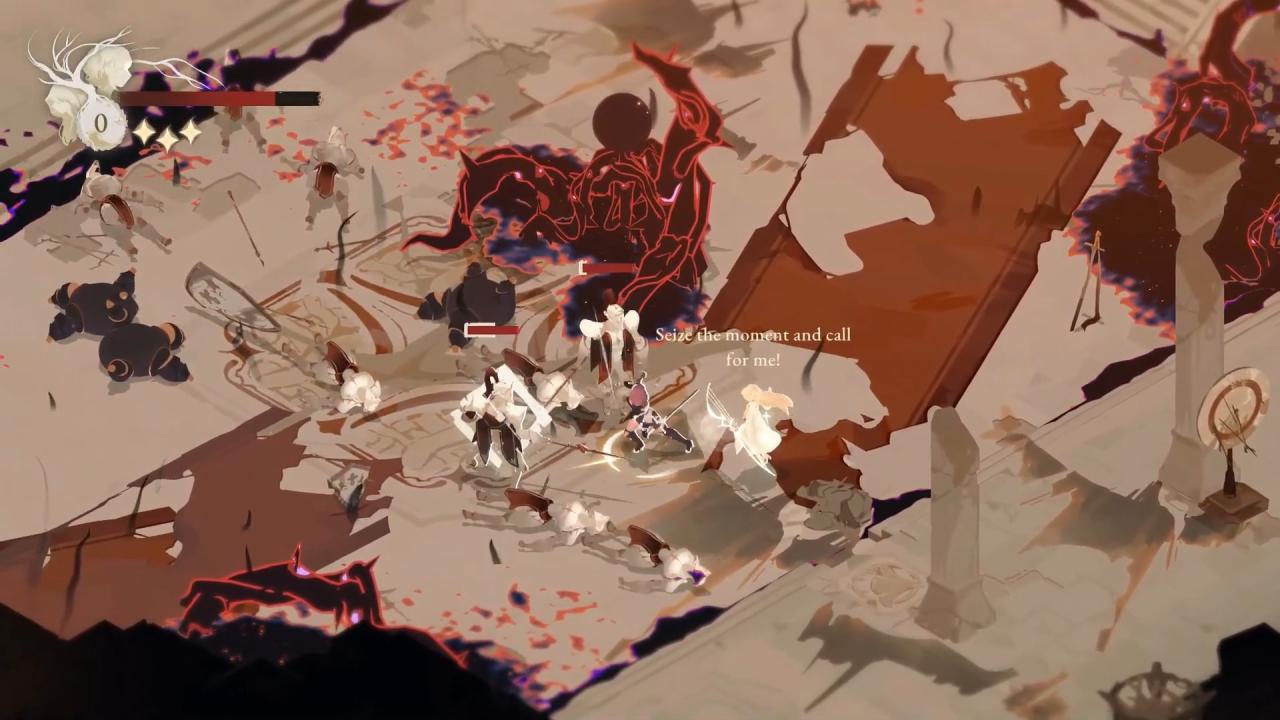
These abilities don't feel like optional extras but become natural extensions of your own moveset. Soon you're mixing melee attacks, support magic, dodges, and defensive maneuvers all into one continuous rhythm that makes every encounter feel much more dynamic than the simple control scheme initially suggests.
Everything eventually circles back to one mechanic that defines the entire experience: parrying. Whether you enjoy that idea will probably determine how much you enjoy Lunarium as a whole. Unlike some Soulslikes where parrying is merely one viable option among many, here it sits firmly at the center of nearly every major encounter.
You certainly can dodge attacks, and in many situations dodging is the safer option. The problem is that dodging alone doesn't significantly advance the fight. Nearly every powerful enemy possesses a stagger meter that fills primarily through successful parries. When the enemy is full, they are vulnerable, and Lune can break their defenses before you can unleash devastating follow-up attacks.
This creates an interesting balancing act in every fight.
Playing defensively may keep you alive, but it also means fights last considerably longer. Playing aggressively by standing your ground and timing your parries correctly rewards you with much faster victories. Bosses especially demand that you embrace this system. Their attacks are well telegraphed, giving you just enough time to react but rarely allowing for hesitation.
Learning their rhythms gradually turns impossible encounters into manageable duels, providing the satisfying sense of improvement that characterizes the best games in the genre.
The parry timing itself feels very responsive, thankfully. Unlike some action games where success is determined by what appears to be random animation windows, Lunarium provides consistent visual and audio feedback. Every successful block feels good, the impact emphasized by the heavy sound effects, bright visual flashes, and the sight of the enemy's stagger meter filling up.
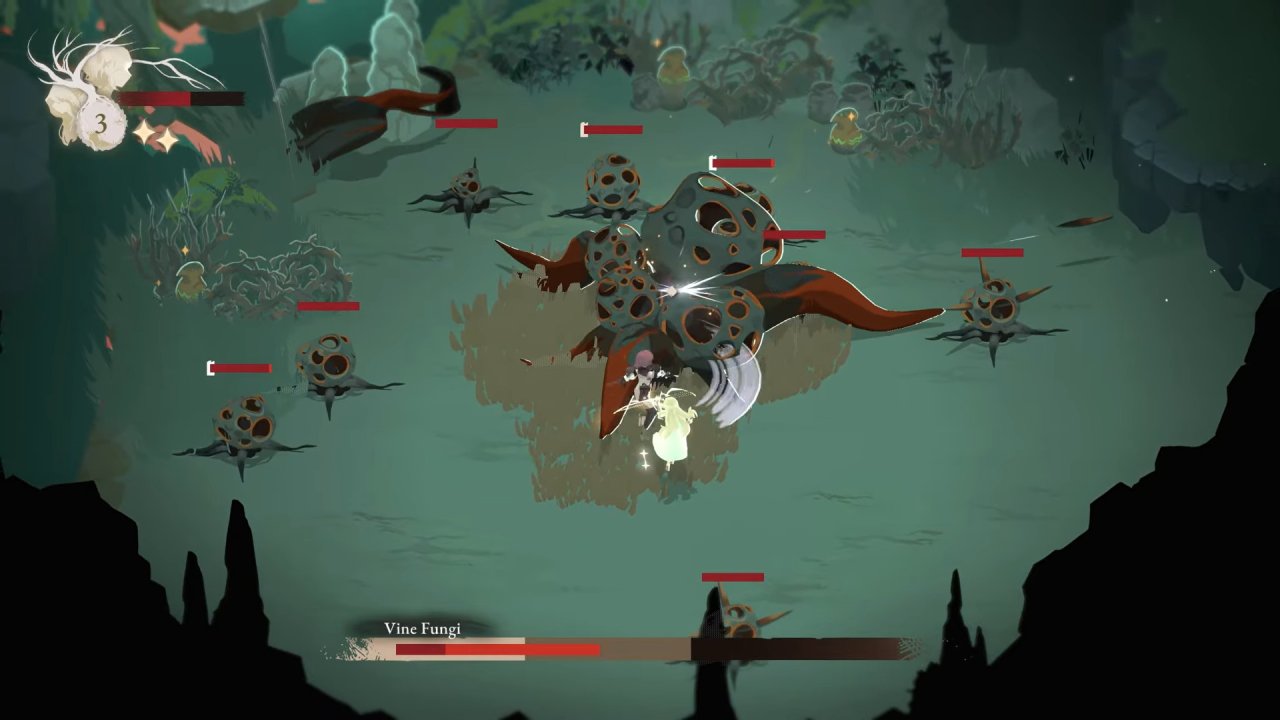
Variety in enemies also helps keep combat interesting for much of the adventure. Aggressive wolves, corrupted wildlife, and dangerous plant creatures that can attack you from a distance come with early forests. Later areas add armored knights, mechanical guardians, spectral enemies, and ever more elaborate boss battles that always require new strategies, not just rote memorization.
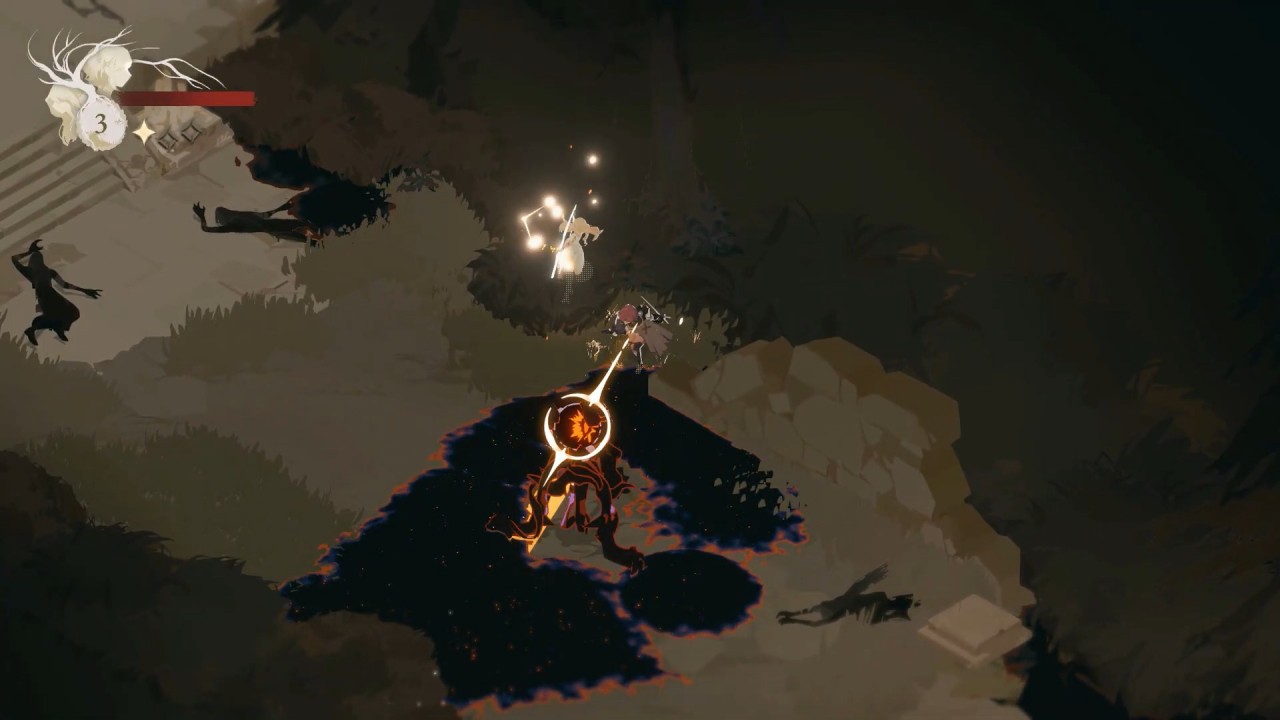
The boss fights are, predictably, the definite highlight of the experience.
Every big fight has its own mechanics, attack timings, and visual spectacle. Some stress careful positioning, others patience, while some demand complete mastery of the parry system. While a few bosses, particularly those in Scanstone, have relatively similar visual designs, the mechanical differences between encounters generally stop them from becoming repetitive.
Combat wouldn't remain engaging for long without meaningful progression, and thankfully Lunarium gives you several ways to shape how Ave develops over the course of the adventure. None of these systems completely reinvent RPG customization, but they work together well enough that you rarely feel locked into a single approach.
Rather than bombarding you with a dozen mechanics at once, the game slowly builds each on top of the other, so that experimentation feels natural, rather than intimidating. The first progression system you'll see is a pretty straightforward skill tree. It looks rather modest at first glance, and it is.
You can spend the currency you earn from defeating enemies to unlock passive bonuses and active abilities, slowly building up Ave's toolkit. The choices feel meaningful from the very beginning as you decide which tools fit your playstyle best.
Some unlock survivability upgrades, and some unlock new ways of fighting, such as deflecting enemy projectiles or advanced dodge moves that slow down enemies for a short time after a perfect dodge. Eventually, however, you'll unlock nearly everything available, causing those earlier decisions to lose some of their long-term significance.
The more interesting customization comes through cloaks and embroideries, two interconnected systems that influence nearly every aspect of combat. Each cloak has its own passive ability and also changes Ave's appearance, so each new piece of equipment has a visual identity in addition to its gameplay benefits.
Your starting cloak gives solid stat boosts depending on how many embroideries you have equipped, making it surprisingly useful even after you get better gear. But later cloaks, as you go further on your journey, get much more specialized. Some change attack animations, some increase weapon range or raw damage, and some add entirely new combat mechanics and stances.
One particularly satisfying option transforms Ave's heavy attack into a full 360-degree spinning strike while extending the reach of her normal attacks, making crowd control much easier during larger encounters.
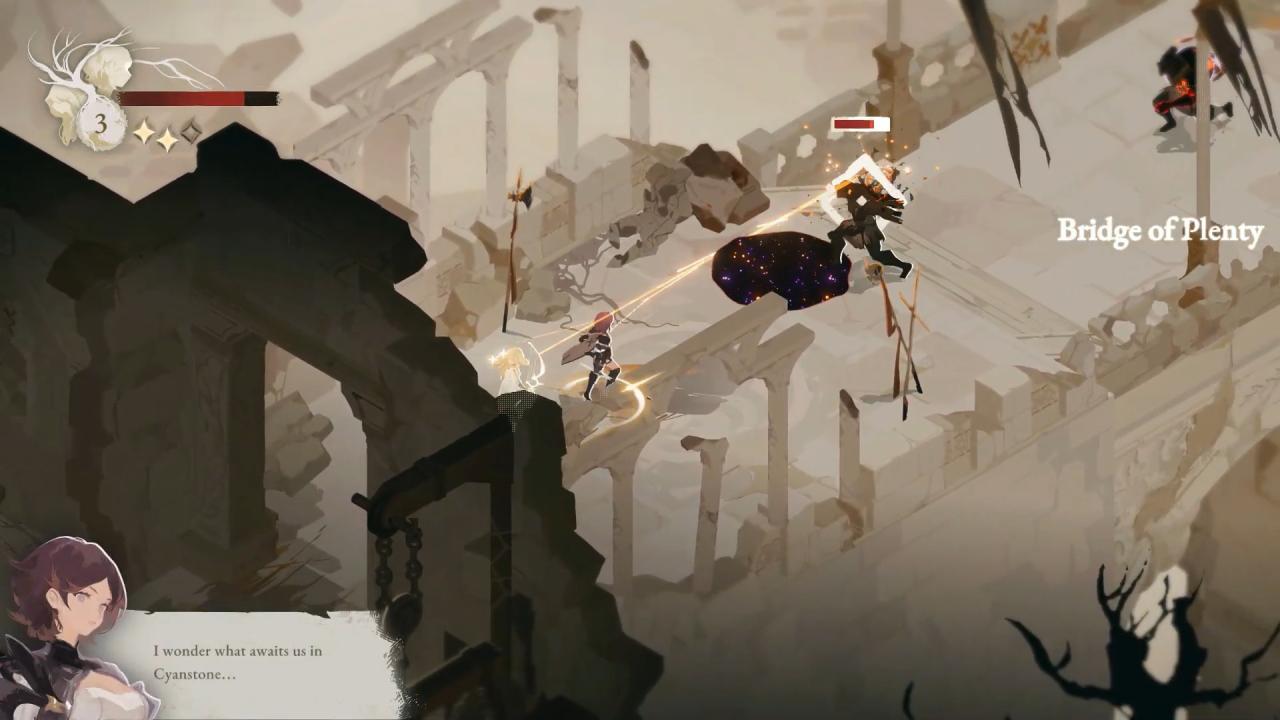
Each cloak also contains a limited number of embroidery slots. Embroideries aren't just straight stat boosts; they're more like passive abilities that define your build. Exploration opens up dozens of different options from materials found in recipes hidden throughout the world.
Some boost maximum Resonance, effectively expanding your magical resource pool. Other options reward aggressive play by restoring health when spending Resonance, increasing damage after healing, or improving defensive capabilities.
That gives you lots of chances to experiment.
You can build Ave into a sturdy frontline fighter capable of lasting long engagements, go for high-risk damage output with a glass-cannon build, or balanced builds that constantly regenerate resources in battle. None of these systems feel especially groundbreaking if you've spent years playing action RPGs, but they're flexible enough to keep combat fresh from beginning to end.
Fortunately, resource gathering never feels like mindless grinding. Nearly every enemy contributes toward progression, while exploration naturally rewards you with ores, crafting materials, embroidery recipes, and upgrade resources. Returning to town after clearing a major area becomes part of the game's rhythm.
You process newly collected materials, buy useful equipment from merchants, unlock stronger cloak tiers, and get ready for the next trip. These more peaceful moments give you a chance to breathe and think about what you've accomplished before jumping back into the thick of things.
Praise the exploration as much as the combat, because Lunarium always rewards your curiosity. Instead of filling giant maps with a bunch of repetitive objectives, the game is all about the handcrafted environments that have almost every detour with something worth waiting for at the end.
Hidden trails weave their way behind waterfalls, optional trails loop back to re-enter familiar areas via satisfying shortcuts, and well-hidden chests tend to contain valuable crafting resources or permanent upgrades rather than disposable loot. It's always worth taking a little extra time to investigate suspicious corners.
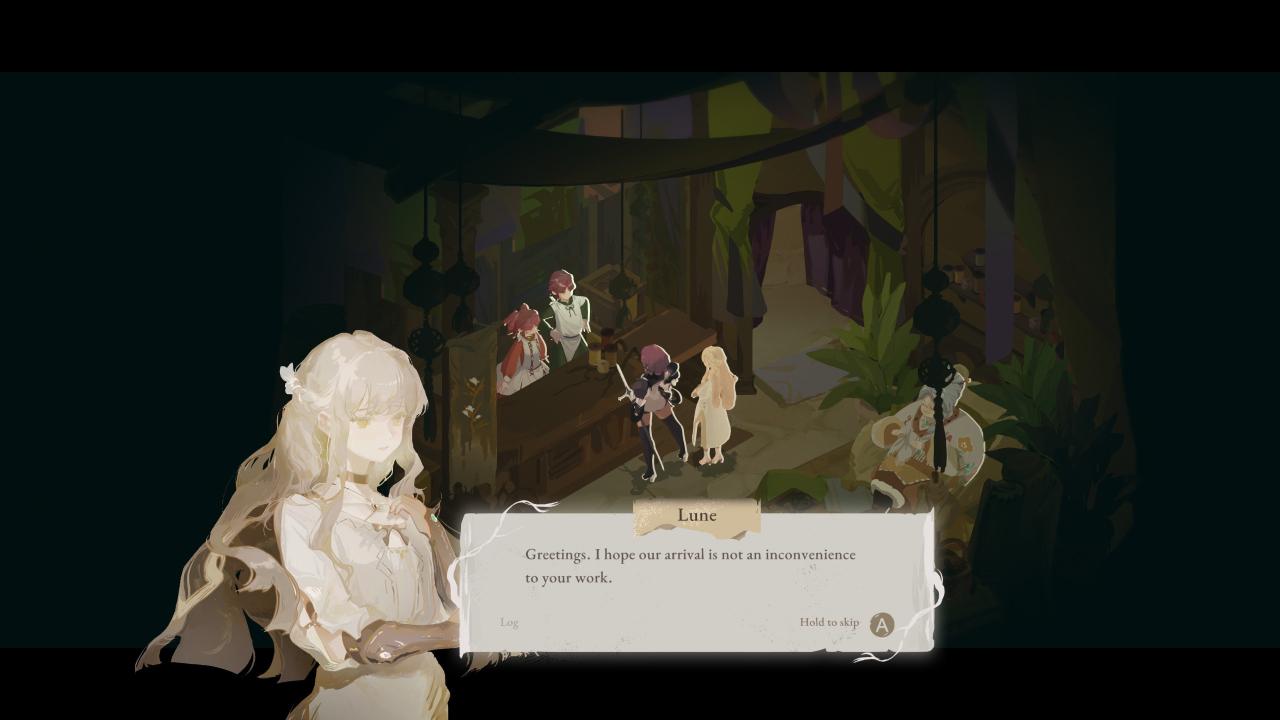
The environments themselves are consistently memorable throughout the adventure.
You will be introduced to the world through a dense forest full of corrupted wildlife before giving way to Scanstone, a massive stone city inspired by classical architecture and populated with towering mechanical guardians, hostile rogues, and opposing factions that can even fight each other independently as you explore.
Enemies fighting each other add a much-needed sense of unpredictability to the overworld, making each trip through the city feel a little different. Later, the adventure takes place in one of its most imaginative settings: a coastal settlement shaped by the ebb and flow of the tides and a dynamic day-and-night cycle.
The water level is constantly rising and falling, changing the environment. Now you can see structures that were inaccessible before, but other structures are now under the sea. You'll even battle aquatic enemies that summon spirits, and the dynamic environments will require you to adjust to the enemies and environment alike.
The puzzles in these areas are never too taxing, but that's by design. They are there to encourage observation, not to stop you in your tracks. They add to the exploration, not impede the pacing. The focus is always on discovering secret zones, learning the art of combat, and searching for fragments of the history of the world.
Visually, Lunarium is easily one of the strongest indie action RPGs in recent memory.
Even before you begin fighting, the world immediately establishes its identity through an art direction that feels inspired by stained-glass paintings and illustrated fairy tales. There is soft lighting that filters through colorful environments, making each area feel handcrafted, which is impressive throughout the entire adventure.
Surprisingly effective is the muted color palette. Bright flowers and glowing magical effects are contrasted with washed-out stone structures, deep blues and brilliant reds immediately catching your attention to important landmarks. Each biome somehow manages to feel unique, whilst still following the same artistic philosophy.
The portraits of the characters are done in the same way: soft brush strokes, few lines, making the dialogue like an illustration of a storybook. Also worth a mention are the enemy designs, which blend so seamlessly into each environment. Corrupted wildlife, armored warriors, ancient constructs, and ghostly creatures all seem to belong in the mythology of the world, not just there for a combat encounter.
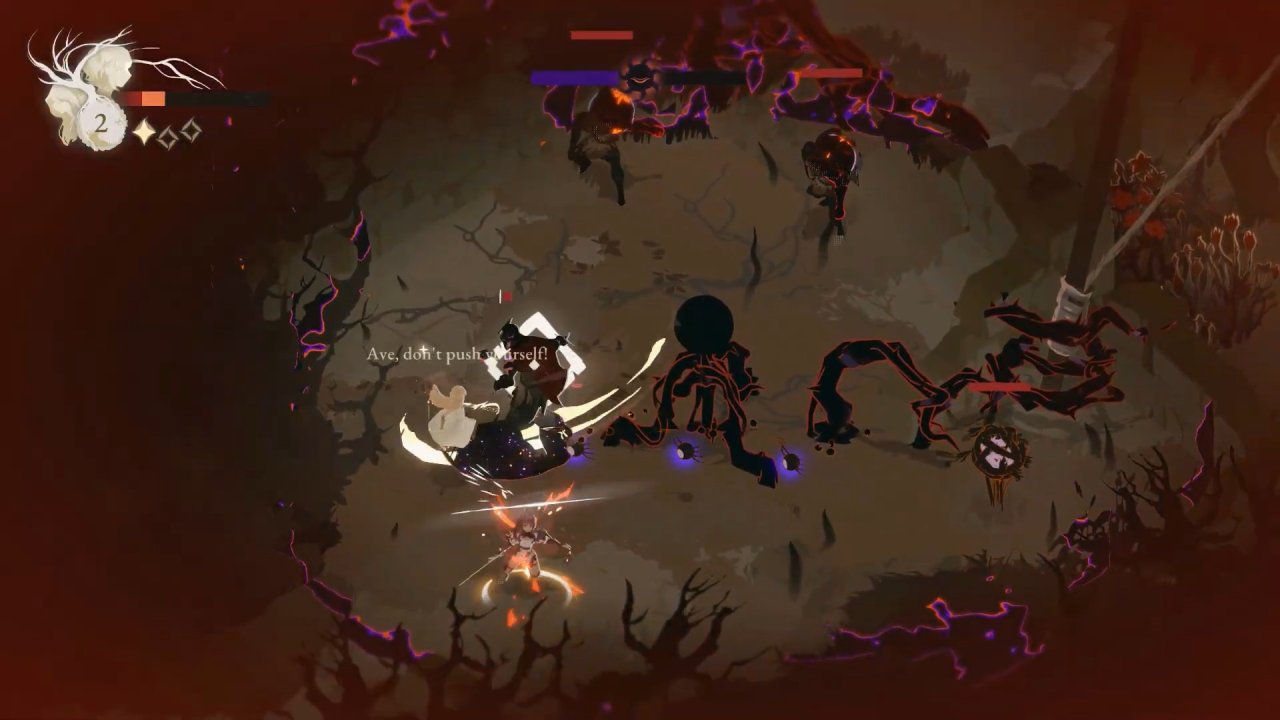
The technical performance is just as impressive. The game runs extremely smoothly throughout the experience, and the frame rates are very stable even during larger boss encounters that are filled with particle effects and magical attacks. Add to that the clean interface that keeps HUD elements out of the way, and the presentation rarely takes your attention away from the adventure on screen.
The soundtrack quietly becomes one of the best parts of the game.
Instead of demanding attention all the time, it subtly strengthens the emotional mood of each place. Forgotten ruins get a soundtrack of melancholic piano melodies, boss fights are accompanied by swelled orchestral arrangements, and calmer renditions of each area's theme appear whenever you find a haven.
These little variations make the world seem alive. One moment you're strolling through an empty city with peaceful strings in the background, then as soon as combat kicks off, those same melodies become dramatic orchestral pieces. The soundtrack is seldom overwhelming, but it is always enhancing.
Sound effects get equal credit because they are directly supporting the gameplay. All successful parries have a satisfying metallic impact, heavy attacks feel suitably weighty, and magical abilities have distinct audio cues to help reinforce timing in combat. Because accurate reactions are essential throughout the adventure, these sound cues are more than just presentation; they are an important gameplay tool.
Accessibility options are pretty basic, with button-remapping, controller customization, autorun, and a handful of quality-of-life settings, instead of a lot of extensive difficulty modifiers. Even so, controller support feels excellent, and every input remains responsive regardless of whether you're playing with a keyboard or a gamepad.
By the time the credits roll, Lunarium hasn't completely rewritten the Soulslike rulebook, and it never really tries to. Its story borrows familiar ideas, its progression systems resemble mechanics you've likely encountered before, and much of its overall structure will feel immediately recognizable if you've played modern action RPGs over the past decade.
Yet somehow, those familiar pieces come together into something surprisingly memorable.
Much of that success comes from restraint. Lunarium avoids throwing dozens of disparate mechanics at you and instead focuses on a smaller set of ideas and executes them well. The connection between Ave and Lune gives the journey emotional weight, exploration continues to satisfy your curiosity, and combat remains fun because every win feels earned.
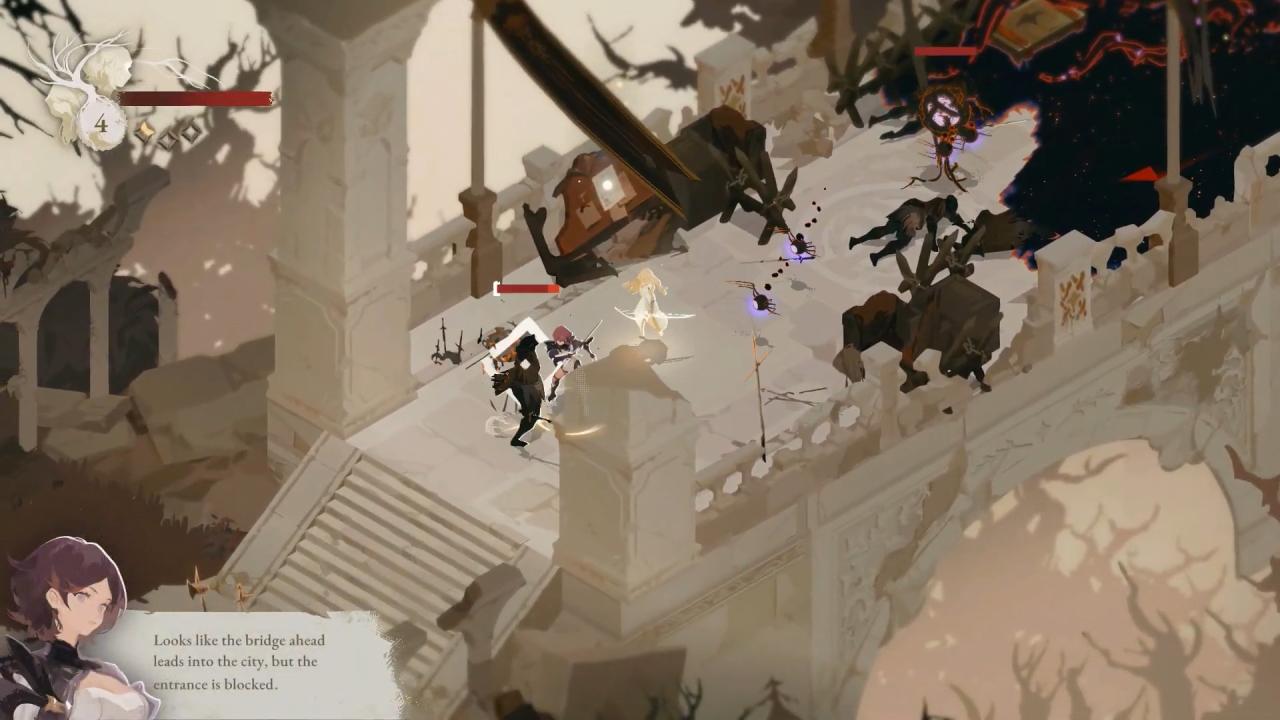
That doesn't mean the game is flawless. If you hate parry-heavy combat, you might struggle to enjoy the experience, as the system rarely offers equally effective alternatives.
While its strongest character moments hint at emotional heights the story never quite reaches, the limited cast of NPCs and side activities occasionally make the world feel emptier than it should. Additionally, some customization systems can lose their thrill after most of the available upgrades have been unlocked.
Despite those shortcomings, Lunarium works, and that's because it knows exactly the kind of experience it wants to deliver. It isn't interested in becoming the biggest Soulslike on the market or replacing the genre's giants. Instead, it's about delivering a finely-tuned adventure where gorgeous environments, satisfying combat, and a heartfelt partnership guide you from start to finish.
If you're looking for an approachable entry into the genre, you'll find a game that teaches its mechanics well while still demanding patience and improvement.
If you're already a veteran of Soulslikes, you'll discover enough thoughtful ideas and atmospheric world-building to make the journey worthwhile, even if many of its systems feel comfortably familiar. Sometimes, that's all an action RPG needs to be.
Senior Editor, NoobFeed
Verdict
Lunarium might not reinvent the Soulslike formula, but its satisfying combat, memorable world, fantastic atmosphere, and heartfelt companion dynamic make it an easy recommendation for action RPG fans seeking a gorgeous, challenging adventure.
90
Related News
No Data.