
YMTC's Zhitai TiPro 9000 Challenges Samsung 9100 Pro
China's Zhitai TiPro 9000 SSD reaches 14,900MB/s read speeds, challenging Samsung's flagship storage performance with advanced NAND technology.
Hardware by Nahe Yan on Oct 30, 2026
China's consumer SSD market has reached a new performance level with the Zhitai TiPro 9000, a solid-state drive rated for sequential read speeds of up to 14,900MB/s. Developed by YMTC, the drive competes with Samsung's 9100 Pro, which advertises read speeds of up to 14,800MB/s. The TiPro 9000 is a commercial product now available in retail channels in Taiwan, bringing YMTC's NAND flash technology to the consumer storage market.
The main question is how the manufacturer reached this performance level and whether the added speed matters in everyday computing. The advertised numbers place the TiPro 9000 among the fastest consumer SSDs. Still, real-world performance, sustained write speeds, cooling, pricing, and customer support also matter when comparing it with established alternatives.
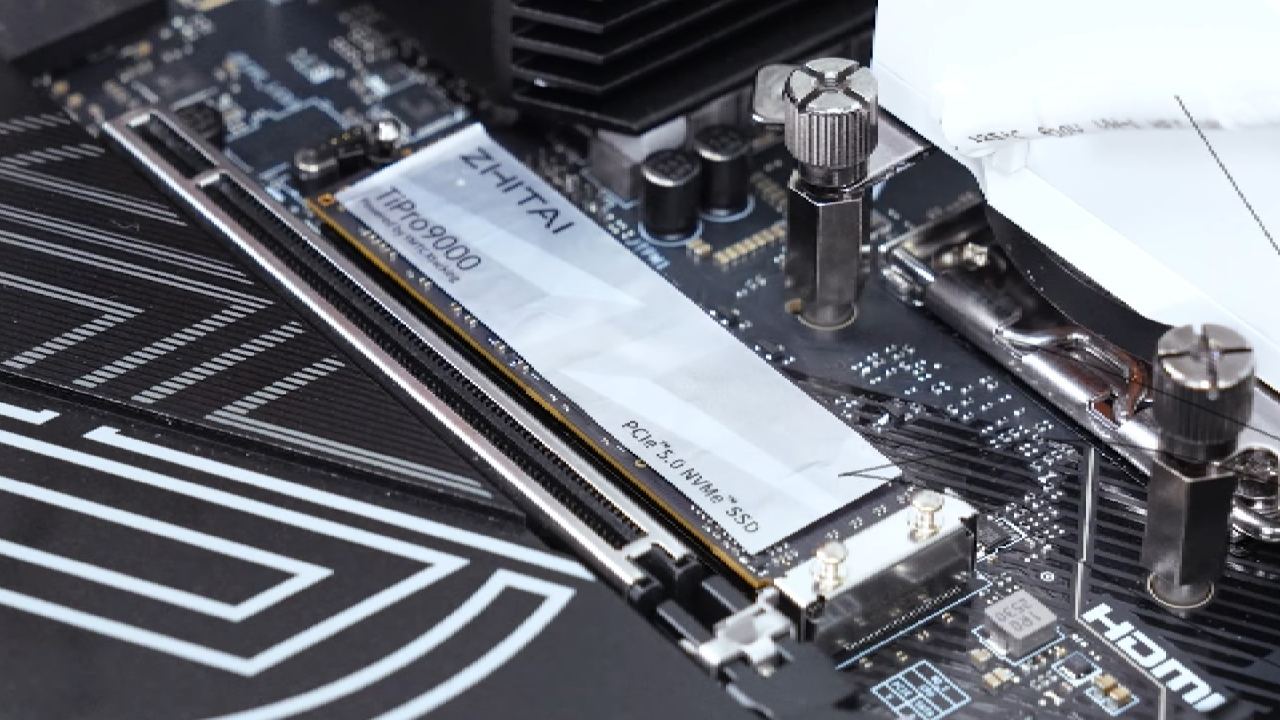
Zhitai TiPro 9000 Competes With Samsung's 9100 Pro
An SSD stores the operating system, photographs, programs, games, and other saved files. Unlike traditional hard drives, it has no spinning platters or moving heads. It stores data in electronic memory cells, letting the computer retrieve large files faster. At its advertised peak, the TiPro 9000 transfers nearly 15GB every second.
That's almost twice the maximum advertised read speed of a premium PCIe 4.0 drive and roughly 27 times faster than a conventional SATA SSD. However, the comparison with Samsung is much closer. Samsung 9100 Pro reaches read speeds of up to 14,800MB/s, depending on capacity. Zhitai's advantage is just 100MB/s, or less than 1%.
You shouldn't notice that difference when opening a folder or launching a program. The bigger story is that a Chinese storage brand is competing in the same performance class as an established manufacturer. TiPro 9000 also offers sequential write speeds of up to 13,800MB/s on the 2TB and 4TB models.
The 1TB version is rated for up to 13,500MB/s, while Samsung advertises up to 13,400MB/s for the 9100 Pro. Sequential write performance matters when creating large video files, recording data, or transferring substantial amounts of material to the drive. These figures represent advertised maximums under favorable conditions, not speeds every transfer will maintain until the drive is full.
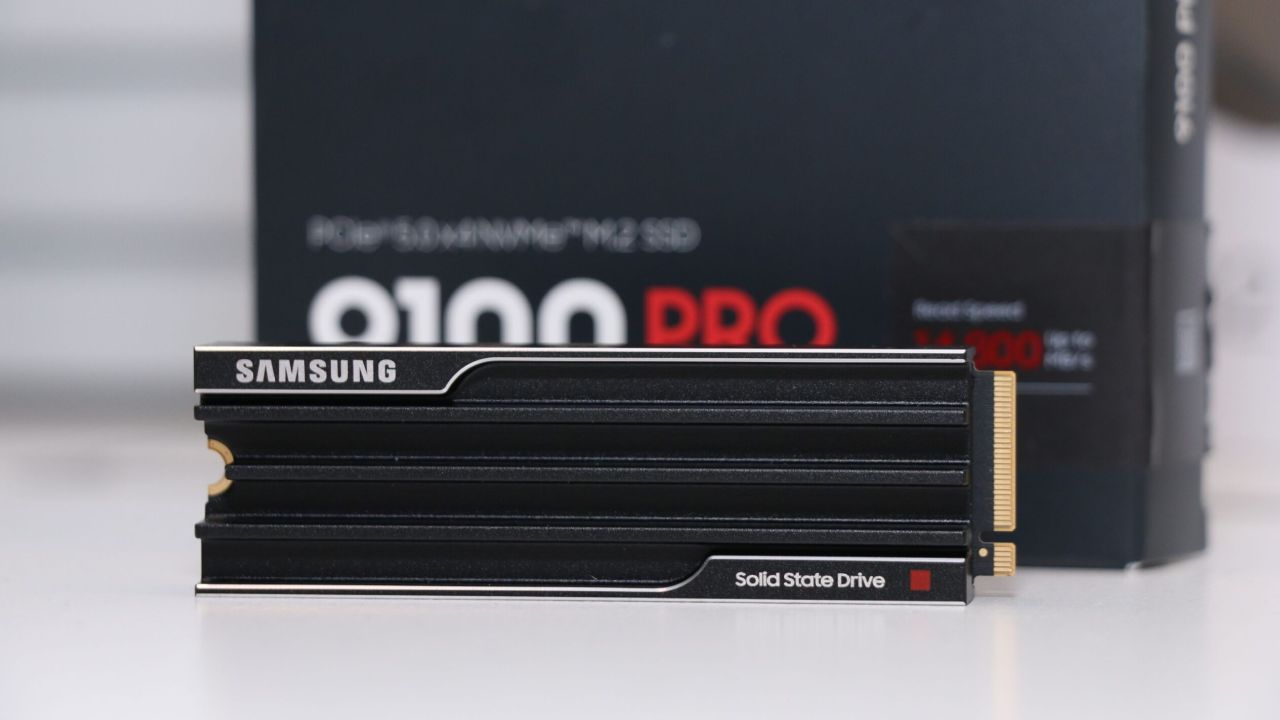
The SSD must coordinate data transfers between the computer and its memory chips.
The controller manages flash channels, corrects errors, and schedules data transfers. However, the June 2026 specification sheet does not identify the controller in every updated retail configuration. The teardown therefore does not prove that every unit uses identical electronics. It does demonstrate that this Chinese flash product draws on expertise from a wider semiconductor supply chain.
The connection to the computer uses PCIe 5.0 with four lanes. Think of it as the highway between the SSD and the rest of the system. Each newer PCIe generation increases how much information those lanes can carry. Four PCIe 5.0 lanes provide enough bandwidth for drives approaching 15GB/s. However, if you install the TiPro 9000 in a motherboard slot limited to PCIe 4.0, you will not see its full rated speed.
A faster drive offers limited benefits when the connection becomes the bottleneck. Zhitai also includes dedicated DRAM to help track where information is stored. The lineup has 1GB of DRAM on the 1TB model, 2GB on the 2TB version, and 4GB on the 4TB version. Think of this memory as the drive's index, not extra space for movies or other files.
Editor, NoobFeed
Gaming Hardware Updates
No Data.