
RTX 5070 Gaming: Is DLSS Enough for 3440x1440 Resolution Display?
RTX 5070 delivers impressive ultrawide gaming performance, but demanding ray tracing and path tracing settings reveal its hardware limitations.
Hardware by Tanvir Kabbo on Oct 29, 2026
NVIDIA's GeForce RTX 5070 targets gamers who want high-quality visuals and smooth performance without the flagship price tag. However, recent games are much more demanding at an ultrawide 3440x1440 resolution, especially with ray tracing and path tracing enabled. The RTX 5070 with 12GB VRAM must balance quality, performance, and memory use to deliver a good experience in demanding titles.
Resident Evil Requiem Pushes the RTX 5070 to Its Limits
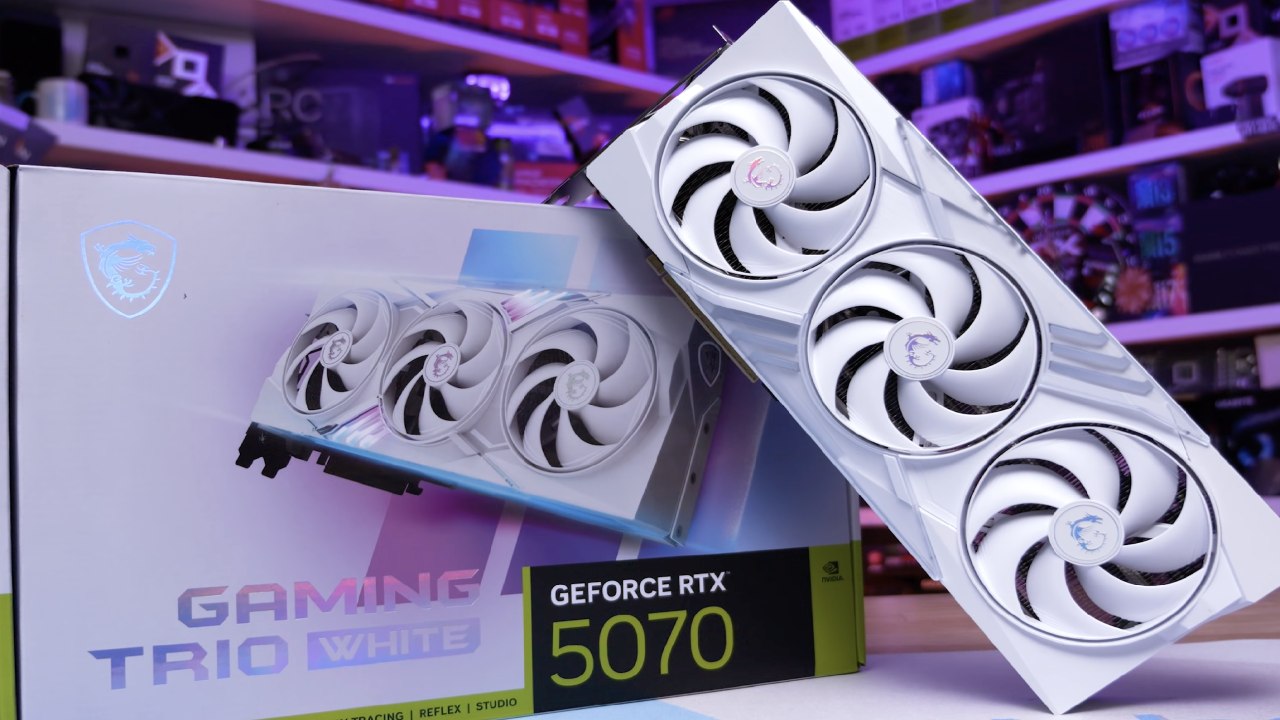
The MSI Gaming Trio RTX 5070 pairs with the Ryzen 7 9850X3D CPU to reduce potential bottlenecks. Resident Evil Requiem is first tested with path tracing enabled, high graphics settings, and DLSS quality mode. Without frame generation, performance is 40-50 fps in normal regions and below 40 fps in demanding areas.
Switching DLSS to balanced mode can boost speed, sometimes pushing frame rates beyond 60 fps, while keeping image quality acceptable. But the 12GB of VRAM becomes a problem when you combine path tracing and frame creation. In more demanding sequences, the RTX 5070 starts to show its limits, severely stuttering when the video RAM is exhausted.
Restarting the game helps stabilize performance, and 2x frame generation gives about 100 fps in less demanding sections. However, traditional ray tracing is more feasible. Without DLSS Quality mode and frame generation, performance stays above 60fps and occasionally hits 90-100 fps inside. The reflections aren't as detailed as path tracing, but the smoother gameplay makes the tradeoff worthwhile.
DLAA at native resolution delivers roughly 40-50 fps during hard sequences; DLSS upscaling is the better alternative. Meanwhile, 2x frame generation offers a better balance than 4x, which sacrifices too much real-frame performance on this GPU.
Crimson Desert Benefits From DLSS Quality Mode
Crimson Desert is tested with ultra graphics, ray tracing, and DLSS 4.5 quality mode. It runs at about 80 fps, and the updated upscaling model keeps more detail in the moving grass and trees.
Turn on ray reconstruction for a big boost in reflections, lighting, and shadows, but performance drops to about 40 fps. The visual benefits are significant, but the performance penalty makes the function hard to suggest on the RTX 5070 at 3440x1440.
With ray reconstruction disabled, 2x frame generation pushes displayed performance above 100 fps. However, native-resolution gameplay drops to around 50 fps and falls lower in demanding areas. DLSS quality mode remains the better choice for balancing image quality and smoothness.

Death Stranding 2 Requires Careful DLSS Settings
Death Stranding 2 operates at full graphics settings with ray tracing activated for reflections and ambient occlusion. At DLSS 4.0 quality, I get roughly 60 to 70 fps. Upgrading to DLSS 4.5 increases motion detail retention, but costs about 5 to 10 fps.
Performance may drop below 50 fps in demanding scenarios, reducing responsiveness. Switching DLSS 4.5 to balanced mode brings frame rates up to about 55-60fps in the heavier scenes, but there's a fine line to walk between image quality and performance. Both configurations remain playable, but DLSS 4.0 Quality mode may be better if you want a higher base frame rate.
ARC Raiders Delivers Smooth Ultrawide Gaming
ARC Raiders performs considerably better with optimized settings. It combines cinematic textures and view distance with dynamic, high ray-traced global illumination and DLSS 4.5 quality mode. Performance comfortably exceeds 100 fps in close-quarters environments.
Locking the Frame Rate to 90 fps makes it more consistent. Or dropping the graphics level to high and turning off ray-traced global lighting gets performance up to around 120-150fps depending on the situation.
Final Thoughts
With reasonable graphics settings and DLSS upscaling, the RTX 5070 delivers a pleasant 3440x1440 gaming experience. Path tracing shows its VRAM limitations, while traditional ray tracing offers a better balance of visuals and speed. While Crimson Desert and Death Stranding 2 will need some tweaking, ARC Raiders shows off the card's potential in a big way.
The RTX 5070 is ultimately a strong ultrawide gaming pick that doesn't need frame generation in every title. DLSS Quality mode and tweaked settings provide a strong foundation for smooth gameplay without the flagship-level expense.
Senior Editor, NoobFeed
Gaming Hardware Updates
No Data.