
Nintendo Faces Backlash Over Switch 2 Game Key Cards as Retailer Reveals Physical Release Restrictions
A Nintendo policy is preventing publishers from reprinting existing Game-Key Card releases in standard physical cartridge form, raising questions about licensing, production costs, and the future of physical games.
News by Tahmid Mahi on Oct 29, 2026
Nintendo Switch 2 Game-Card keys have been controversial among gamers since they were introduced, with many wondering if they are as good value as traditional physical releases. Some developers say game-key cards have practical advantages, especially for big games that don't fit on standard cartridges, but others feel they are an unnecessary compromise for consumers.
The debate has now gained fresh attention after Canadian retailer Video Games Plus revealed that a Nintendo policy is preventing publishers from reprinting certain Game-Card titles as standard physical cartridge releases. The retailer says it has repeatedly pushed for existing games to receive traditional physical editions, but the situation has yet to change.
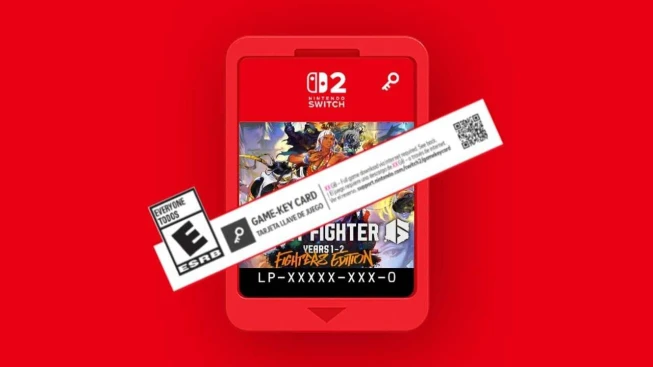
Game-Key Cards allow players to purchase a physical product that requires downloading the actual game onto their console or storage device.
Unlike traditional cartridges, which contain the game data, these cards primarily serve as a means of accessing the downloadable version. Some developers have also suggested that installing games on the console or a microSD card can provide performance advantages over reading data directly from a cartridge.
However, players who prefer physical ownership have raised concerns about the format, especially when games that appear small enough to fit on a conventional cartridge are released as Game-Key Cards instead. This has led to growing frustration among collectors who expect physical releases to include the complete game on the cartridge rather than requiring an additional download to access the content.
Video Games Plus brought the issue into the spotlight through a now-deleted social media post. The retailer explained that it had been contacting publishers and Nintendo to get existing GameCube card titles reprinted as full cartridge editions. According to the company, a Nintendo policy currently prevents such reprints from happening, leaving publishers unable to offer traditional physical versions of those games under the existing arrangements.
The statement quickly attracted attention online, with players questioning why a game released through one physical format could not later receive another. Many fans also viewed the situation as another example of how publishing decisions can limit consumer choice, particularly for those who value collecting and preserving physical copies of their favorite games.
The retailer then posted a follow-up to clarify its position: Nintendo wasn’t actively blocking publishers from making physical cartridges when there was no reason to. However, Video Games Plus noted that there were good reasons behind the policy being in place at the time, although it did not detail exactly what those reasons were.
The company said it would continue to push publishers and ask questions about the situation as well. This clarification implies that the restriction may be more about business arrangements or technical considerations than a simple decision to discourage the old-school physical format.
One reason could be in the contracts and distribution agreements for different formats of games.
Publishers may have contracts stating whether a game will be released as a Game-Key Card or a regular physical cartridge, making it difficult to change the format after launch. Retailers have to manage distinct stock-keeping units (SKUs). SKUs are specific to different products for distribution and sales. If a publisher commits to a format first, a different version may need a different agreement or a different product designation.
There are other examples in the gaming industry where certain releases are tied to specific formats or distribution arrangements. Consider the Evercade ecosystem, which is mostly cartridge-based, but a few games have been released under different arrangements with dedicated hardware.
These are examples of how licensing agreements and platform-specific decisions can impact the way games are distributed. Nintendo's current policy, however, is not clear, and there is no confirmation that contractual restrictions are the primary reason GameCube card titles aren't receiving regular cartridge editions. Another possible workaround could be to release expanded editions instead of simply reprinting an existing game in a different format. Sometimes, publishers will put out definitive editions, complete editions, or Game of the Year editions that combine the original game with extra content.
Such releases could be treated as standalone products that have their SKUs and could potentially open up a different avenue to a physical cartridge release. If a game was originally shipped as a game key card, and then a complete edition including its downloadable content is released, the publisher may have more flexibility to ship it on a standard cartridge.
Those who like to collect physical copies and want their games at their fingertips without relying on a download-based format may prefer this method.
It could also give publishers another opportunity to market an existing title to those who passed on the initial release because of its Game-Key Card format. That said, it wouldn’t necessarily solve all problems. Players who already bought the original version might be frustrated that they have to buy the game again to get a traditional cartridge.
The debate also involves the question of production costs. For larger storage capacities, Standard Switch 2 cartridges can be considerably more expensive for publishers than Game-Key Cards. The transcript mentions reported costs of around $17 to $18 for a 64GB cartridge, but the actual cost may differ depending on the production agreement and other factors. Game-key cards could be a more cost-effective choice for the smaller publishers. With traditional cartridges, publishers are paying for physical media to hold the game data. Game-key cards alleviate some of those production demands. Companies need to balance these savings with the desires of customers who want physical copies that include the games themselves.
Another factor is performance, as some games may benefit from being installed on internal or microSD storage. Developers have previously suggested that certain titles run more efficiently through these options than when reading data directly from a cartridge. Mario Kart World, for example, has been reported to load faster in its digital version than in its standard physical cartridge version.
At the same time, games like Cyberpunk 2077 show that technically demanding games can still be released on physical media, making it difficult to argue that Game-Key Cards are a must-have for every release. This suggests that the decision to use game-key cards is often driven by publishing costs, storage limitations, and business priorities rather than technical necessity alone.
Ultimately, it is a tradeoff between cost, convenience, performance, and consumer preference.
There are probably some practical benefits of game key cards for some publishers, but players buying physical games are often expecting to locate the game data on the cartridge. Customers may wonder whether titles that could easily have been fitted onto traditional cartridges but chose the alternative format instead did so for technical reasons or merely to save money.
Video Games Plus thinks there is still room for publishers to re-evaluate, especially among the smaller publishers who may be more open to trying alternative release strategies. But the retailer also said that many of the biggest publishers have been reluctant to change their current practices despite repeated requests.
That means simply asking companies to make more physical cartridges won't settle the debate, especially when their decisions are influenced by manufacturing costs and existing business arrangements. Publishers will need to balance these financial considerations with consumer expectations if they want to maintain trust among players who still prefer owning complete physical copies of their games.
As for Nintendo’s policy, the retailer’s statements and information available don’t quite answer why the existing Game-Key Card titles cannot be reprinted as standard physical editions, so the issue remains a point of uncertainty for now. Another option could be complete and definitive editions, but publishers would have to judge whether this is a commercially viable option.
As the Switch 2 library grows, the debate over physical ownership, manufacturing costs, and consumer choice will likely continue for gamers looking for more than a download-based game tied to a physical card. Future releases and potential changes to Nintendo's publishing policies could determine whether physical editions become more accessible or whether Game-Key Cards remain a common compromise between collecting games and downloading their content.
Editor, NoobFeed
Related News
No Data.