
Rubinite Review
PC
A stylish boss rush where patience becomes your greatest weapon.
Reviewed by Nusrat Choity on Jul 23, 2026
Today's indie gaming scene has many Soulslike action games. Many promise challenging combat, intriguing settings, and memorable boss encounters. Unfortunately, many strive to do too much, filling their worlds with superfluous mechanics that dilute their best concepts.
Rubinite goes another way. Instead of enormous interconnected landscapes and unlimited exploration, Cup Dog Games bases its entire experience on one idea: every combat matters. The game’s focused perspective makes Rubinite stand out from the competition. Instead of fighting enemies, going on fetch quests, or exploring dungeons, the game is all about well-designed boss fights.
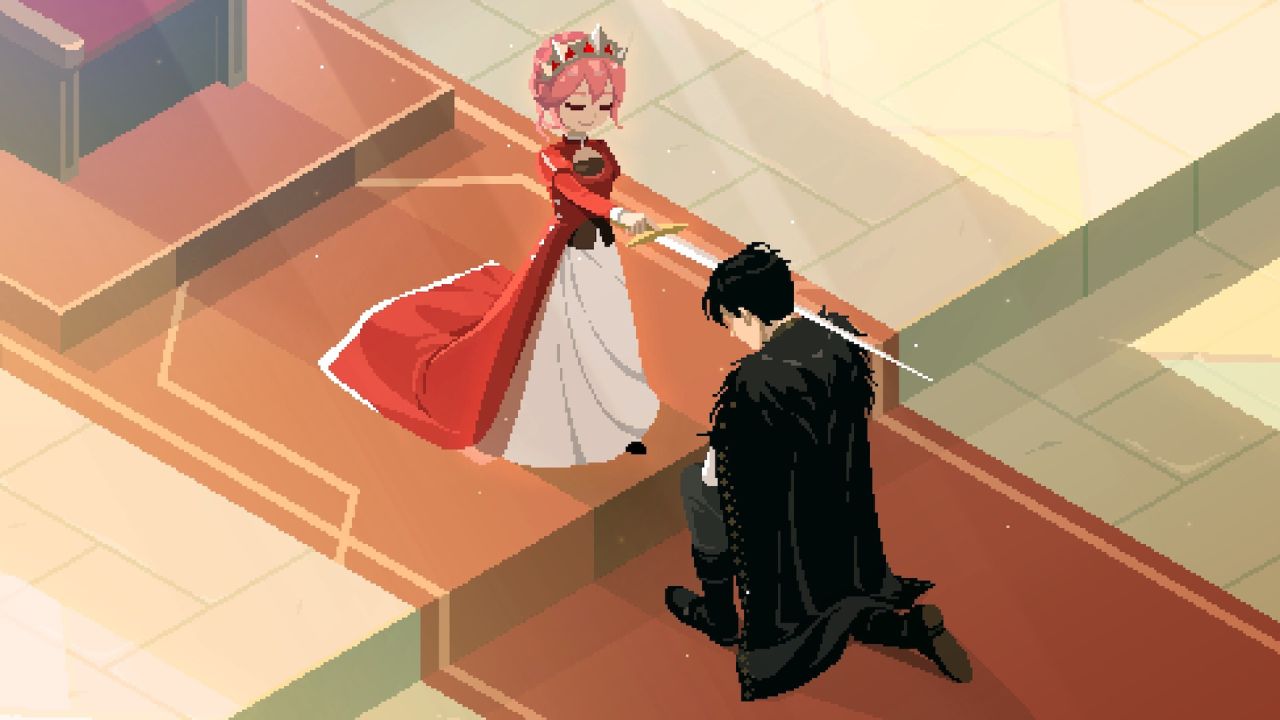
It’s ambitious for a tiny independent studio, given its low margin for error. Without entering a fight, the experience fails. Fortunately, Cup Dog Games knows its strengths. Rubinite doesn't aim to be another massive action RPG. Instead, it provides a finely plotted journey that tests your talents and eventually reveals the sadness of a destroyed kingdom. A game that is confident in its identity throughout.
Princess Ruby is the true heir to the Scarlet Kingdom, which has been destroyed by an ancient plague and taken over by a witch. The once-prosperous realm is now home to corrupted beasts, immortal monsters, ancient cultists, and horrid entities twisted by Pure Blood.
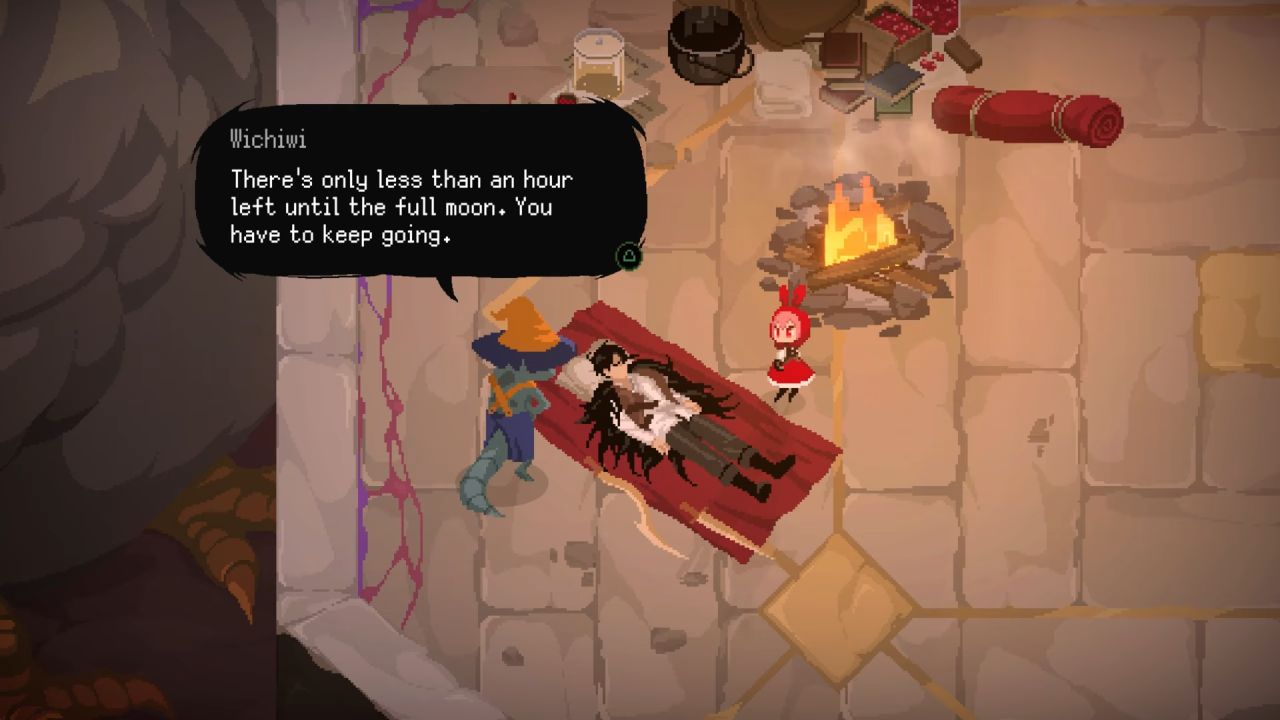
Ruby escapes the wreckage barely alive and is taught to fight the corruption by Roy, a seasoned hunter, and a lizard-like ally.
Their guidance begins a journey of revenge and optimism. Ruby’s goal is not just to restore a throne but to discover what happened to her kingdom and why the witch brought it down. Rubinite’s strength lies in its restraint. Much of the story can be discovered without long cinematic cuts or constant chat.
The story is told through nature, with each boss arena, abandoned structure, and devastated battlefield revealing the history of the world.
The peaceful monastery hub provides a stark contrast. It offers a brief respite between harsh combat before returning to bodily horror and strange enemy designs. The environmental change highlights just how shattered the Scarlet Kingdom is. Every major triumph reveals more about the story of retribution, which is kept simple.
Every boss defeat reveals more about the plague, the collapse of the kingdom, and the witch's reasons. These insights give narrative weight to every difficult fight, instead of treating bosses as separate challenges. The story never becomes complicated, but it doesn't need to. Its biggest merit is providing enough mystery to keep you fascinated while letting the unsettling world speak louder than explication.
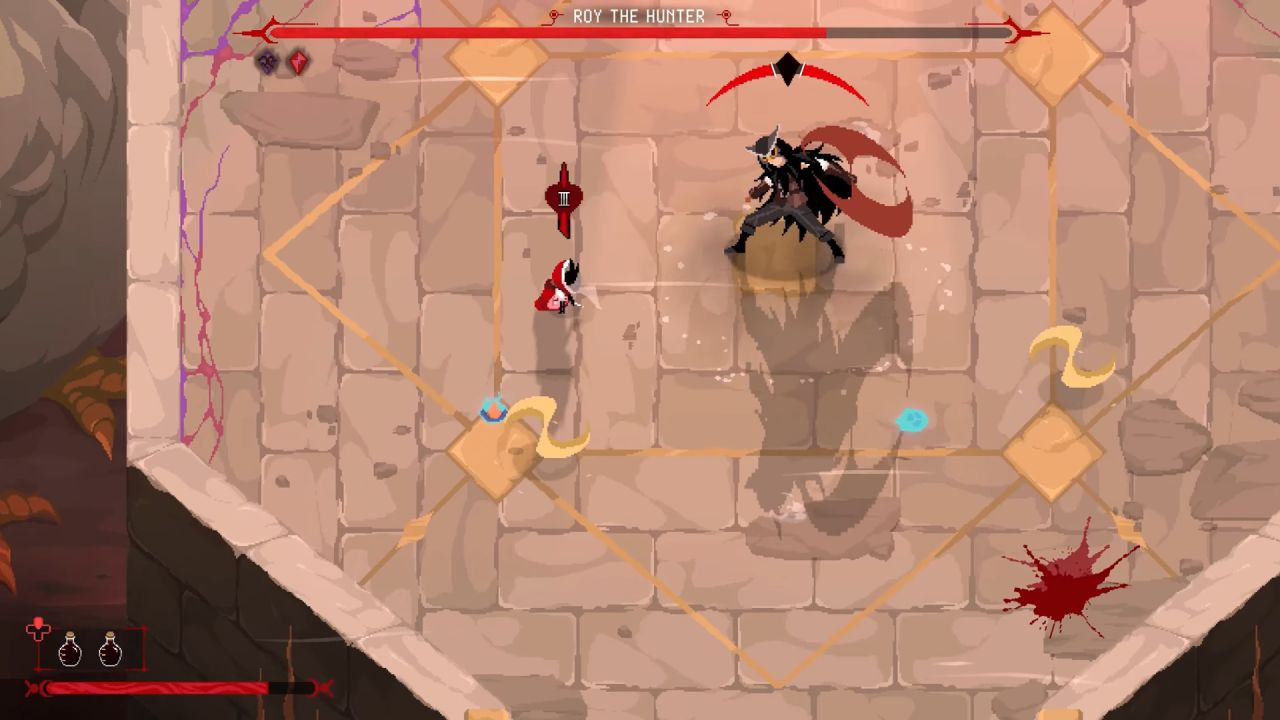
Rubinite proves that reckless attack doesn't work. Every struggle requires observation, patience, and learning. It looks like the controls are familiar. Ruby can evade, heal, perform light attacks, and gain new skills. Standard attacks barely harm most bosses. The game's combat system, Focus, does not allow for mindless violence.
Focus makes every fight something. You do not simply swing your weapon over and over; you watch the enemies as they move while staying uncomfortably close. Holding your position builds the Focus Gauge and builds it to levels. Dodging attacks, especially well-timed dodges, fills the meter more quickly.
When charged, Ruby does a deadly thrust attack on an enemy's weak point of the Pure Blood crystal.
This is the real victory of the game, as these attacks do much more damage than normal attacks. Catch makes the mechanic exciting. Charging Focus exposes you greatly. Limited movement forces you to rely nearly exclusively on well-timed dodge rolls. Even worse, taking damage resets your focus, destroying your progress and forcing you to start over.
A very rewarding risk-versus-reward system results. Stand farther away for safety but much slower focus generation. Standing inches from gigantic beasts fills the gauge faster but requires perfect timing. Greed is punished here; every decision matters. Rubinite rewards discipline, not mashing buttons. Every boss is a lethal dance.
You learn attack animations, find safe openings, build focus, dodge devastating counterattacks, and land a well-timed, earned finish. The more you play, the better you get. More numbers rarely beat the day. It’s about spotting enemy patterns and reacting with confidence. Rubinite can be proud of her continued self-improvement.
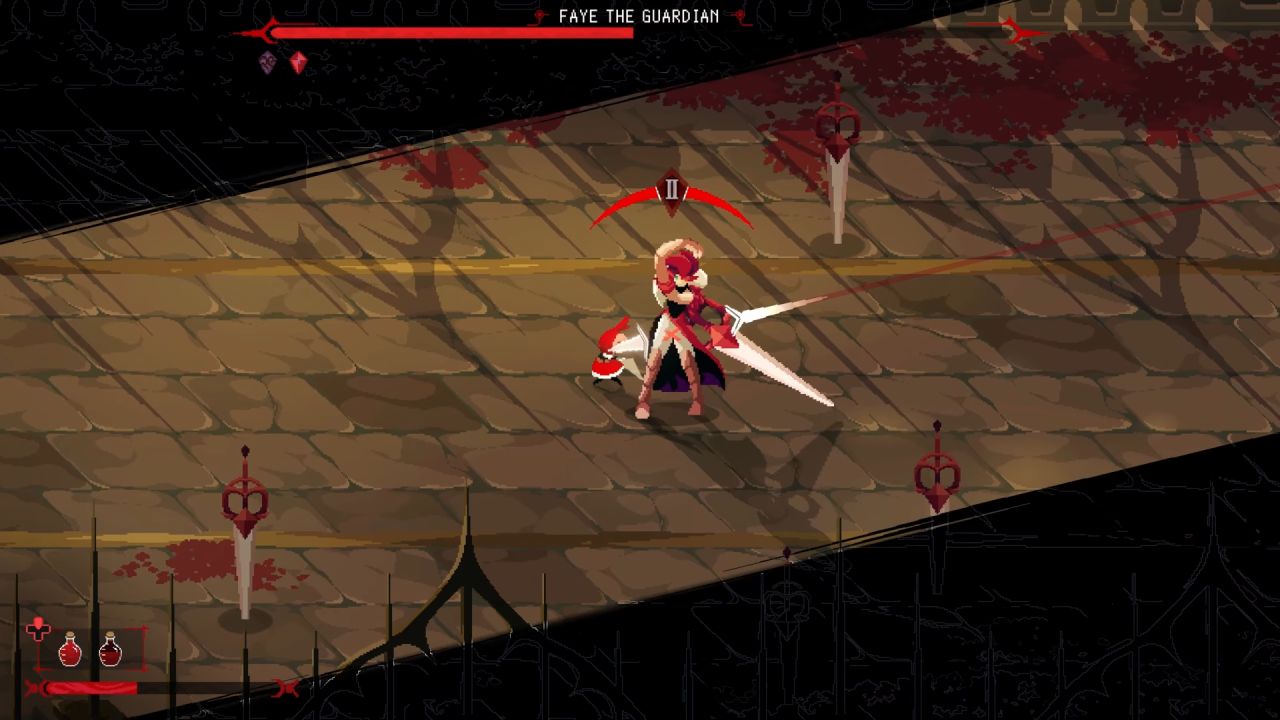
Progression works well with the gameplay without overwhelming it. Killing hard enemies gives Ruby resources to unlock skills and passive bonuses. Some skills counter dangerous moves like aerial dives or unblockable grabs. Others improve healing, survivability, or offensive options. The Talisman system flanks the skill tree.
Talismans allow character construction, adding customization. Some boost defense but slow movement. Others boost Focus, attacking power, healing, or summon helping allies that attack automatically throughout battle. Trying different Talisman combinations pays off because each boss rewards different techniques.
Knowing how the enemy behaves, you can build either a conservative setup for tough battles or an aggressive setup for maximum damage.
Upgraded talismans help out with health, but dodging, positioning, and focus management are still part of the game. Stats favor player skill, so wins are satisfying at all points throughout the quest. After extended play sessions, a restriction becomes clear. The pacing of Rubinite's gameplay doesn't shift much, since the majority of its playtime is spent during boss fights.
Each combat follows the same pattern: observe, dodge, charge, focus, strike, repeat. The bosses add enough new elements, attack patterns, fighting phases, projectile-heavy sequences, and environmental differences to avoid monotony. However, gamers anticipating adventure, puzzles, or dungeon progression should know what Rubinite delivers before starting. It prioritizes boss fights.
Rubinite doesn't have environmental puzzles, but every boss is one. Combat puzzles replace switches and riddles. Every enemy is different and requires careful investigation to find the safest and most effective strategy to win. This design makes the game sparkle. Major bosses have unique mechanics, attack patterns, and personalities. Some require precise dodge timing due to unrelenting melee pressure.
Others fire projectiles into the arena, temporarily turning it into a bullet hell shooter. Later encounters are harder due to several combat stages, phony attack animations, delayed strikes, and powerful grab attacks that punish negligent posture. Cup Dog Games challenges you to rethink your tactics rather than just raising enemy health.
Every loss teaches something; thus, learning from these experiences is fun.
You'll learn to evade, stay calm, and unleash a fully charged Focus strike by understanding tiny animation clues. The Focus mechanic prevents fight repetition. Each fight has a rhythm, yet bosses always add new twists. Some fights reward you for sticking close to the enemy, others for backing off enough to bait out attacks, and this sort of variation keeps even old mechanics feeling new throughout the campaign.
The boss presentation deserves kudos, too. Bloodstained is full of monstrous creatures, plague-ridden, warped warriors, and eldritch monstrosities. The visual designs are terrifying, but they also convey personalities and fighting styles. Each arena is customized for the boss, employing environmental storytelling to emphasize the misery of the Scarlet Kingdom.
Ruby’s increasing skills improve combat. Defeated bosses open up new attack-blocking skills. Well-timed dagger throws can stop aerial strikes, and other skills let you escape deadly holds or punish unavoidable hits. These features make progression meaningful without throwing out the existing mechanics.
Balanced advancement is refreshing.
Unlike many action RPGs, raw stats don’t replace mechanical talent in Rubinite. Boss battles reward you with coins and Pure Blood to unlock skills and craft Talismans. Bosses are the primary progression path, so XP grinding is rare. The advancement feels skill-driven.
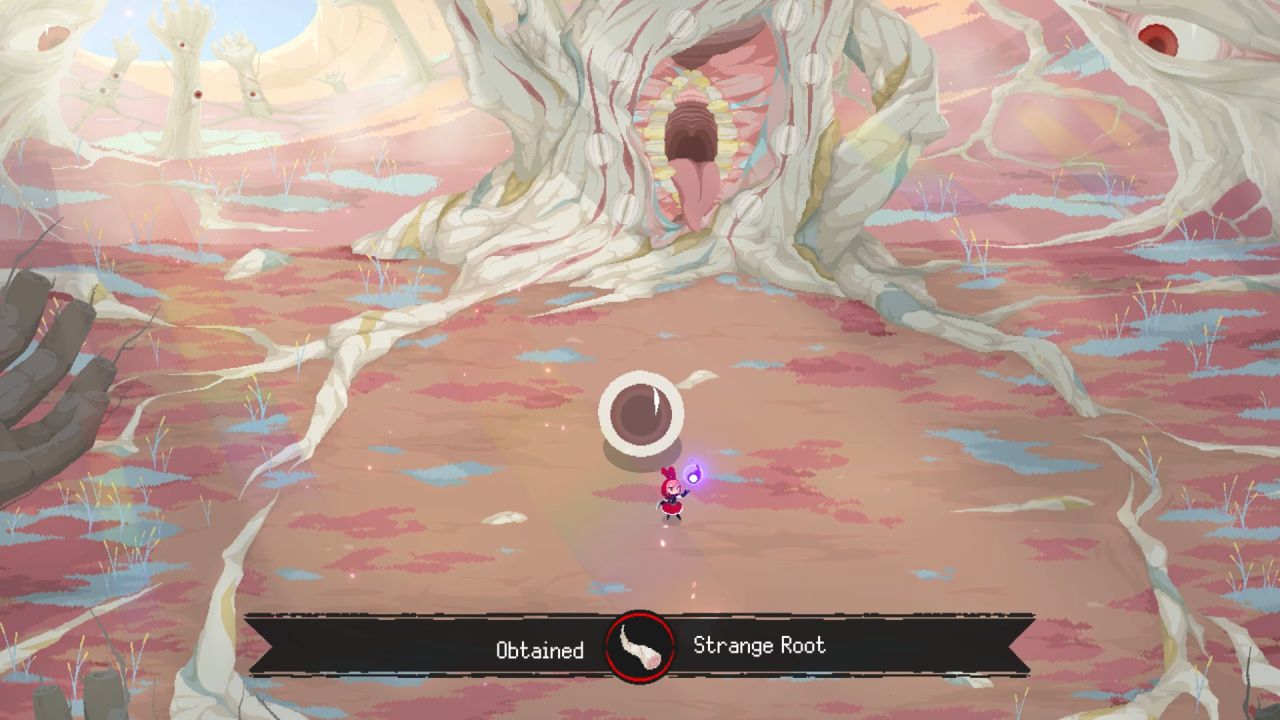
Each win gives you resources to buy skill tree improvements or to try out new Talisman combinations. Resources are limited, so you should first unlock improvements strategically. Should you get healthy? Optimize healing? Get fresh counters? Increase focus? The RPG offers substantial choices without being overly complicated.
Talismans increase flexibility. Defensive builds help you survive tough encounters, and offensive builds reward bold, aggressive play. Some Talismans have passive effects like refilling healing charges or summoning damage-dealing companions. Importantly, no upgrade eliminates boss pattern learning.
Even with the best equipment, poor positioning or dodges will beat you quickly. That dedication to player skill makes every win feel earned, not grinded.
Combat isn’t perfect. Its laser focus can be a touch restrictive. Most encounters are a matter of charging focus, dodging, and hitting weak points, so the core gameplay loop doesn’t really change much. The constant boss confrontations may leave some players wanting more weapon variation, combat techniques, or even brief breaks to explore.
Minor difficulties plague a few interactions. Some bosses have long invulnerability phases that slow down the game, and some attacks have irregular hitboxes. Although rare, these faults stick out because the fighting is so well-polished. These objections never overshadow Rubinite's achievements. It knows what kind of fighting experience it wants and delivers it brilliantly.
Rubinite's nostalgic pixel art and sophisticated presentation grab you right away. Everything looks made, and the fallen Scarlet Kingdom is heartbreaking and exciting to explore. The juxtaposition of calm hubs with horrible battlefields works well. Quiet monasteries offer respite before returning to blood-soaked battlefields full of monsters.
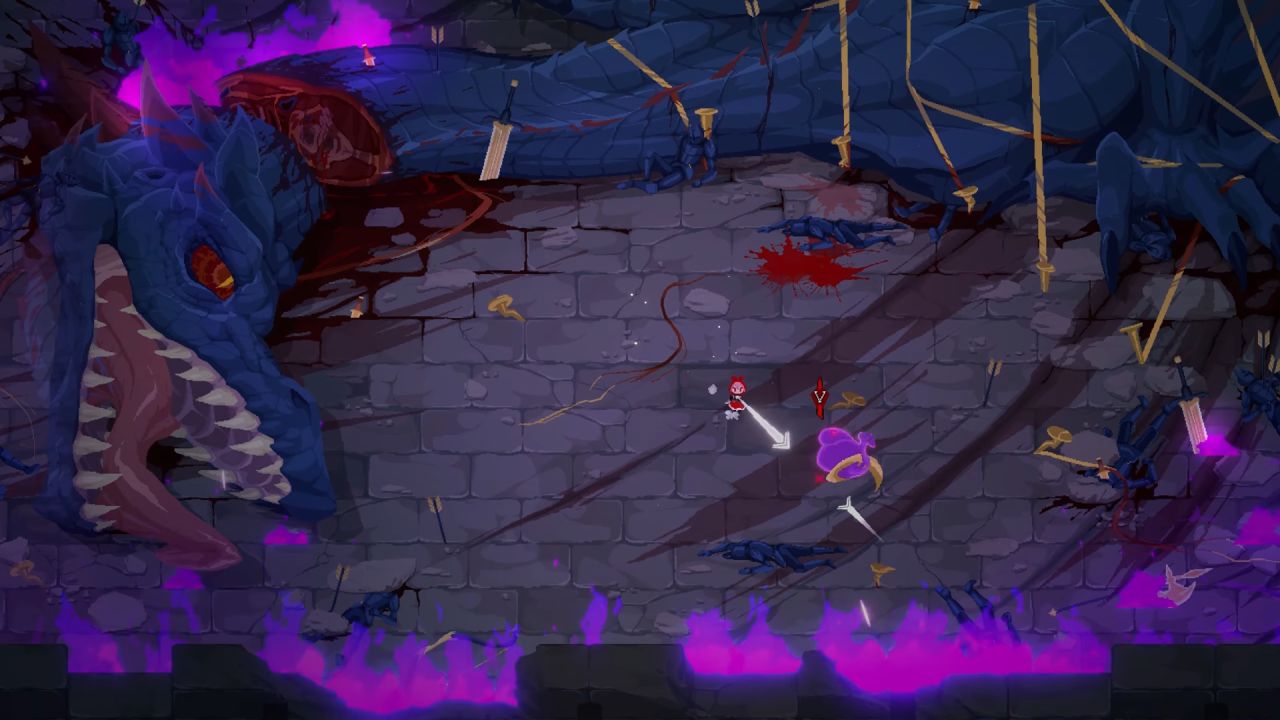
That visual difference enhances the adventure's emotional effect and prevents visual repetition. Character animation also shines. Ruby moves smoothly, and every dodge, thrust, and attack motion feels responsive. Most significantly, enemy animations are clear. Combat is built on reading attack telegraphs, so Rubinite's animation is usually solid.
Bosses telegraph their intentions with small movements, so winning feels earned. Bosses steal the show. Each creature has its own unique style and form, from the hideous plague victims to the towering armored monstrosities and the eerie eldritch creatures. Each arena matches its boss, reinforcing environmental narrative without explanation.
Presentation is enhanced by lighting. Pixel art has depth thanks to flickering torches, blazing corruption, crimson skies, and dramatic visual effects.
Visual filters reduce your focus and increase tension in Focus mode, making every charged attack more dramatic. Visual quality is always above expectations for an independent production.
Visuals catch your attention, but audio gently reinforces practically every emotion the game seeks to evoke. Soft, melancholy songs accentuate Ruby's loneliness throughout exploration. As bouts commence, the soundtrack switches to gothic orchestral tunes that match the intensity of each fight. Combat sound design is satisfying.
Perfect dodges sound sharp, and Focus assaults hit hard. Every successful stroke is rewarding because those lethal thrusts sound as forceful as they appear. Recognize environmental ambiance too. Empty halls, distant echoes, and strange ambient sounds make the Scarlet Kingdom feel abandoned but alive.
Voice acting is minimal, but it never feels like a compromise. Rubinite uses environmental narrative, music, and visuals to convey emotion, and the quiet often enhances the lonely atmosphere. Although the soundtrack may not have instantly recognizable standalone tunes, it continually enriches the experience without distracting, which is crucial for a game about focus and time.
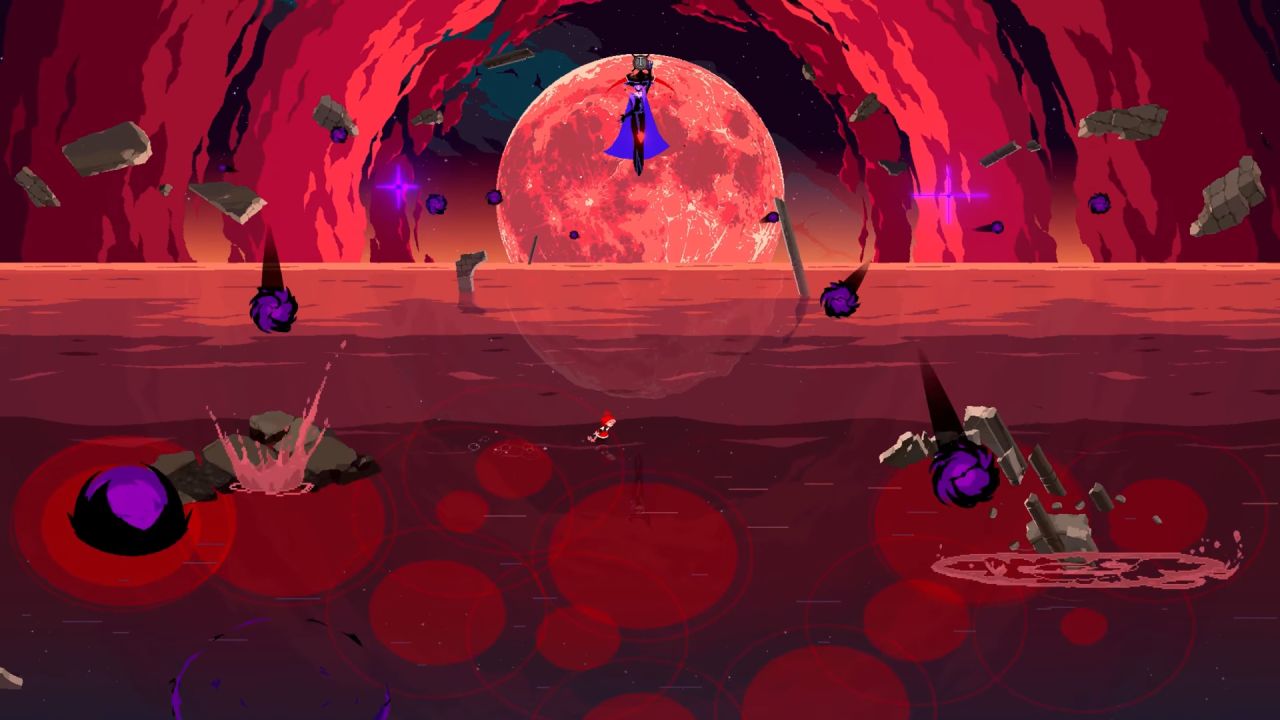
Rubinite shows that a focused vision may achieve more than countless features. Cup Dog Games focuses almost solely on crafting memorable boss encounters based on one great feature, rather than aiming to become another massive Soulslike with large levels and various mechanics.
Every encounter becomes a tense struggle where patience defeats rash aggression with the Focus system. Every win seems earned since success requires observation, timing, and discipline, not grinding or overpowered equipment. The game's gloomy setting, beautiful pixel art, boss diversity, meaningful advancement mechanisms, and exciting combat keep players engaged throughout.
The basic tale and lack of exploration may turn some players off, but they rarely overwhelm the game's virtues. Technical issues occasionally mar otherwise great experiences, and more gameplay variation would have been wonderful. These glitches never detract from the experience.
Rubinite is one of the best independent boss-rush games of recent years for difficult action gamers who prefer studying enemy patterns to counting. Every triumph in the Scarlet Kingdom is worth the patience, endurance, and careful observation.
Contributor, NoobFeed
Verdict
Rubinite is a superbly focused indie boss-rush that uses patience, precision, and tactical awareness instead of mindless aggression. It has unique monsters, exciting combat, and great pixel art despite restricted exploration and repetition.
84
Related News
No Data.