
Pathogenic Review
PC
A gross, glorious crawl through the human body that turns you into the deadliest thing alive.
Reviewed by Adeela Tas on Jul 21, 2026
Behind every strange, brilliant idea in gaming, there's usually an equally strange story about how it came together, and Pathogenic is no exception. The game comes from Aberrant Labs, a studio nobody had really heard of until this project showed up, published under Slug Disco, a label that has built a solid reputation for backing well-made indie titles.
What's unusual here is that Pathogenic marks Aberrant Labs' first credited release, despite the studio having maintained a fairly active online presence for some time before that. Behind the game sits Matt, the lead developer, who spent seven years working as a software engineer at Google before walking away from that career in early 2025 to start Aberrant Labs from scratch.
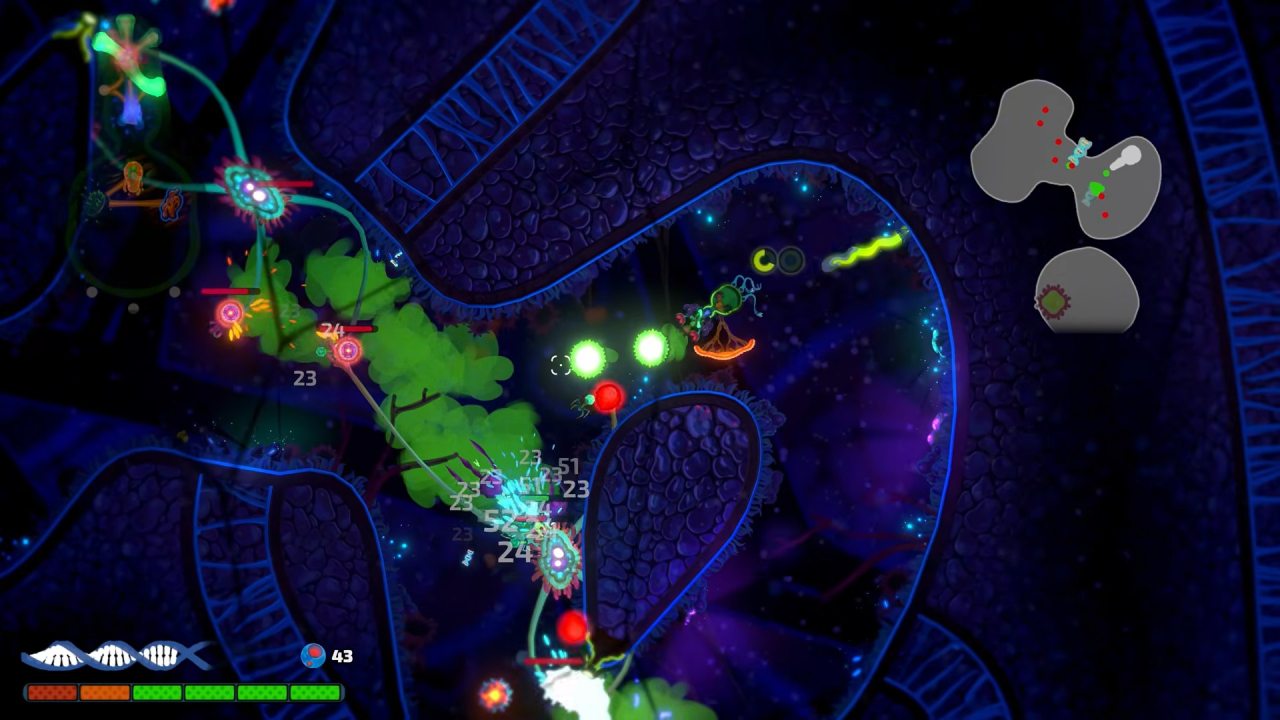
He has described his pitch for Pathogenic as a more developed version of the early cell stage from Spore, reshaped into a roguelike, with The Binding of Isaac and Hades as the games that pushed him in this direction. The visual side of the game comes courtesy of a Brazilian artist working under the name Rettroper, and between the two of them, the whole thing was built without leaning on AI-generated art or assets.
The developer's background also includes composing the soundtrack for Brotato.
That experience goes a long way toward explaining why the music in Pathogenic hits as hard as it does. The setup for Pathogenic is short and doesn't try to be more than it needs to be. You're a microscopic organism sitting in a test tube in some lab, and through pure accident, that tube breaks and spills you straight into a scientist's body.
From there, your only goal is to spread, evolve, and take the entire body down from the inside. You start out as a fairly simple bacterium, and depending on the run, your path takes you from the skin down through the intestines, stomach, liver, and lungs before reaching the heart, or in some cases pushing further up into the brain and respiratory system.
There's no cutscene-driven plot weighing things down here, no dialogue trees, no characters to get attached to. This story is used only for the sake of the theme, which is so strong that it does not need any support beyond itself. There’s no story here; there’s only an experience of becoming the most horrifying creature in the history of human bodies, and Pathogenic doesn’t pretend it’s something else.
Once you're in a run, Pathogenic plays out as a twin-stick shooter at its core: left stick to move, right stick to aim, plus a dedicated dodge to get you out of danger. Before you even start, you pick which type of organism you want to control, and there's a decent spread on offer.
The bacterium is the classic, well-rounded choice, while the helminth is the worm-like design, which is good for close combat, using its tail to defend against attacks.
The amoeba lacks any defined structure, requiring less energy to make but growing additional bulbs rather than adhering to a particular body form. Finally, the spore confines you to an internal slot while being unable to turn around. There's also a nanobot you can design more freely, an organism built to cling to walls, and a unique diatom form that opens up local co-op, allowing a second player to join by splitting movement and aiming controls between two people.

Whichever organism you pick, the way you build it out is where Pathogenic gets genuinely interesting. You attach external organelles for weapons and movement, and internal organelles for support effects, and every piece has a direction it pushes power toward, shown through small arrows whenever you hover over it.
Mixed into the internal options are mitochondria, a rarer type of upgrade that only pays off once a specific condition is met, but rewards you heavily when it lines up right. None of this snaps together at random either, since certain organelles are locked to particular spots on your body, so you're constantly working out the best physical layout for your build rather than just picking whatever looks strongest on paper.
As you clear rooms and take down enemies, you'll pick up currency to spend at merchant rooms scattered through each stage, along with a couple of guaranteed rooms per zone offering free upgrades to choose between. There's a large shopkeeper creature you're free to attack instead of trading with, though doing that means he won't be showing up again for the rest of that particular run.
Fast travel opens up once you've cleared a stage, so backtracking for extra loot or health before pushing forward isn't as much of a hassle as it could be.
Where accessibility is concerned, Pathogenic enables automatic aim or fire, disables a global hazard that might cause an early end to the current session, and allows choosing from three modes, with normal as the default and two easier levels below it. If, however, the reverse approach is desired, there is a mod related to the antibiotics being infused into the host.
Combat in Pathogenic comes down to managing a single stamina bar that does double duty. That same meter controls your dodge and also acts as your ammo or reload system, so every fight becomes a constant balancing act between attacking, backing off, and repositioning rather than just holding down the trigger the whole time.
Enemies are modeled after real components of the immune system, and it shows in how they move and attack: macrophages come in a range of sizes and patterns, monocytes are quicker than most other enemies you'll run into, and neutrophils throw themselves at you almost like suicide runners.
Bigger threats include other bacteria, viruses, and set-piece bosses like a tapeworm that shows up in the intestinal stage. Bosses generally close out each zone and tend to run through multiple phases, with the toughest ones expecting you to track more than one attack pattern at a time.
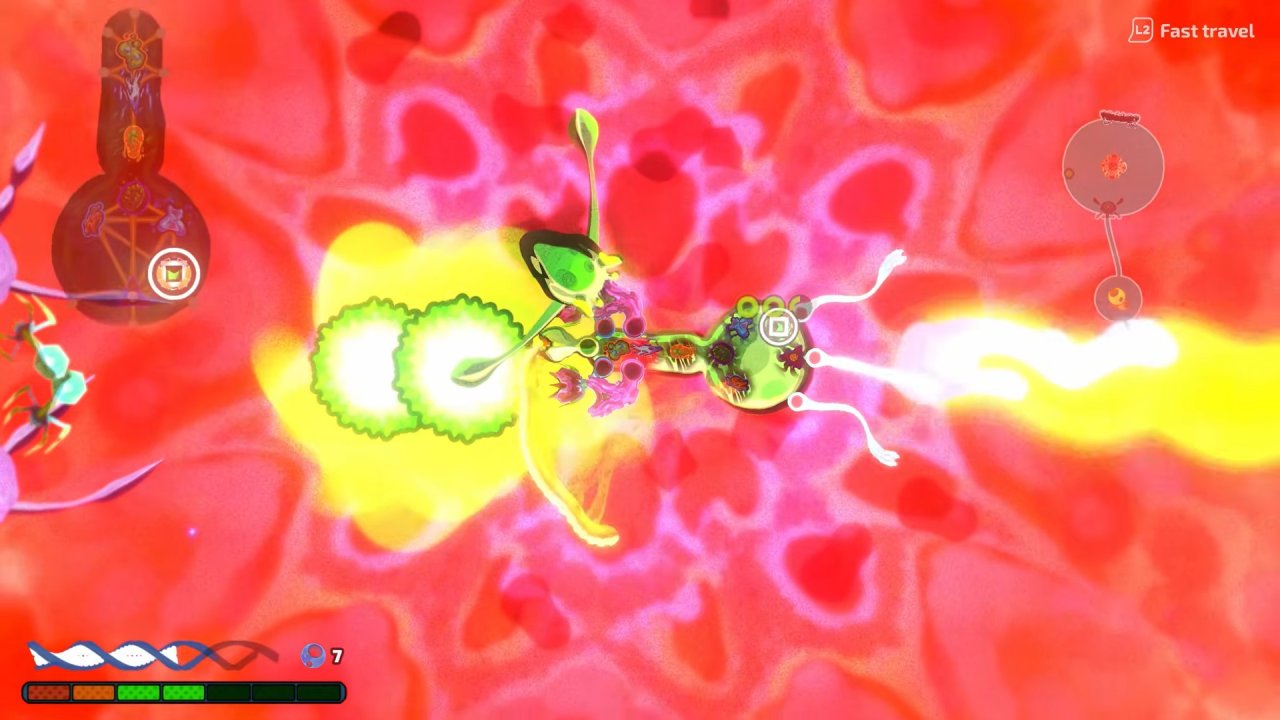
Fights are further shaped by the terrain of whatever body part you're passing through.
Hazards like spiked growths in the intestines, jets of acid in the stomach, and gusts of air pushing you around in the lungs are all things you need to dodge on top of whatever the enemies themselves are throwing at you. What works well here is how much that dual-purpose stamina system changes the pace of combat compared to most shooters in this genre.
You can't just spam your dodge and expect to be fine, because doing that leaves you without enough stamina to fire back, and the reverse is just as true if you spend everything shooting instead. It forces a level of restraint that a lot of twin-stick games don't usually ask for, and it makes fights feel tactical rather than chaotic, even during the busier boss encounters.
On the downside, once you're several stages deep, the amount happening on screen at once can get genuinely hard to read, with enemy attacks, your own effects, and terrain hazards all overlapping at the same time. Some of the later internal organelles are also worded in ways that require careful study to fully understand what they're doing for your build.
There's a learning curve built into the systems themselves, not just in the difficulty of the fights. On top of that, there are no continues to lean on. Dying means starting the entire run over from scratch, which stings early on before you've built up much permanent progression to fall back on.
Progress across runs in Pathogenic is split into a few separate layers, and it helps to understand how they connect.
Inside a single run, defeating enemies earns you DNA, which lets your organism level up and occasionally trigger a full evolution, changing its size and opening up more organelle slots to fill. These evolutions aren't guaranteed to help you either, since sometimes a new form can actively work against whatever build you've been putting together, so skipping an evolution is sometimes the smarter call if your current setup is already working well.
Separate from DNA, you'll collect currency to spend at shops on the organelles and weapons you actually want rather than whatever the game hands you for free. Outside of individual runs, plasmids carry over permanently and slot into a skill tree for each pathogen type, gradually improving your base stats over time.

This is where the grind comes in, since unlocking new pathogen forms, extra starting gear, and stronger baseline stats takes a fair number of runs, and the game leans on repetition to get you there. Early on, a lot of your success comes down to the randomness of what upgrades show up in a given run.
However, the more plasmids and unlocks you bank over time, the more consistently you can steer things toward the build you actually want instead of just reacting to whatever you're handed. From an artistic standpoint, Pathogenic takes a fleshy, wobbliness-driven approach with surprising charm rather than disgust.
Every action in the game responds physically to being struck, creating an interaction with tangible weight through deformation and bounce.
The game borrows from body horror without chasing shock value, treating the human body as something to exaggerate and stylize rather than replicate with any real accuracy. Every area is defined by its own unique color and texture scheme, from the intestinal area's use of nasty greenish-yellow colors and worm-like walls to the stomach area, which is flooded with green and purple acid sprays.
Different zones continue to change the color scheme often enough so that no two areas look the same, which is something you don't see in many other roguelikes. This makes the game less repetitive because you never find yourself looking at the same background for long.
In terms of performance, Pathogenic generally works fine, with occasional dips when there’s more going on, but it seems to be something that can be fixed in future updates. The inclusion of the handheld option is also real, not just an additional feature, with graphics and physics working separately to ensure smooth performance on devices like the Steam Deck and ROG Ally X.
The audio in Pathogenic is as important as the game's visual aspects. It changes significantly from exploration mode to the combat one, remaining light in the former case and then becoming a faster, more intense electronic soundtrack as soon as you start fighting.
Some of your organism's abilities depend on the musical tempo, providing additional power to attacks performed to the beat.
This aspect might go unnoticed for many until you have played the game several times. Each zone in Pathogenic features its unique soundtrack instead of using the same one all the time. Moreover, all the sounds are used purposefully to make each battle feel unique.

As a whole, Pathogenic succeeds in making this very unpleasant subject quite entertaining and enjoyable to spend hours playing. This is because the subject matter doesn’t just provide a surface layer to an otherwise ordinary shooter, but in fact influences everything from the way you construct your creature to how each level works and how battles progress.
The stamina system alone gives twin-stick combat a different rhythm than most games in the genre manage, and the sheer number of organelle combinations means builds rarely feel repetitive across runs, even once you've unlocked most of what's on offer. It's tough, but if you're looking for an easy ride, you won't find one here; with such a variety of ways to make it easier for you and different levels of difficulty, it's not out of reach for anybody.
It isn't flawless. The grind to unlock everything can feel slow early on, screen clutter becomes a real issue in later stages, and a handful of upgrade descriptions could use clearer wording. None of that undoes what Aberrant Labs has managed to put together with a small team and no shortcuts through AI-generated content, though.
Pathogenic plays like something with a lot more experience behind it than a debut release usually has. That's likely down to the specific mix of people who built it. If you've got any interest in twin-stick shooters, roguelikes, or just want to see a genuinely creative idea followed all the way through, Pathogenic is worth the time it asks of you.
Editor, NoobFeed
Verdict
Pathogenic turns a gross idea into a sharp, satisfying roguelike shooter, with real depth in its stamina-driven combat and creature-building systems. A confident, inventive first outing that's well worth your time.
82
Related News
No Data.