
Planet Zoo 2 Review
PC
A bigger zoo, deeper tanks, open skies and a reserve where your animals finally get to roam.
Reviewed by Adeela Tas on Oct 13, 2026
Frontier Developments has spent more than twenty years making park simulations. The English studio, which also made Elite Dangerous, has released a steady run of them, and the first Planet Zoo is among its best-known. Players logged over 238 million hours in it and built 8.7 million franchise zoos.
Many kept asking for the same three things: aviaries for birds that fly freely, proper aquariums for aquatic species, and natural reserves where animals can live outside an enclosure. Planet Zoo 2 is Frontier's answer. The studio announced it on May 28, 2026, nearly seven years after the original. It arrived on every platform at once: PC via Steam, the Epic Games Store, and XBOX on PC, plus PlayStation 5 and XBOX Series X and S.
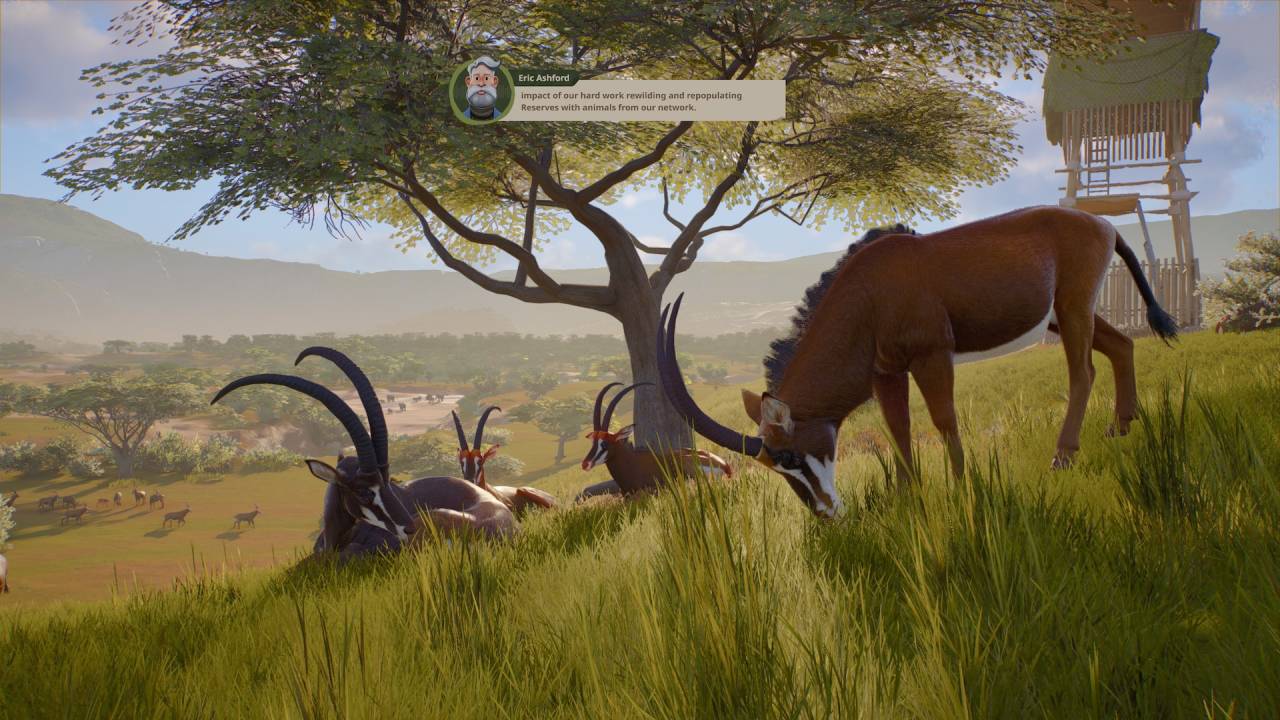
If you spent years with the first game, you will recognize the foundations straight away.
You still look after animals and keep the finances afloat. What has changed is how far the game reaches beyond the zoo gates. The story is light and comes mostly through career mode. You start as a new species conservation coordinator with the Fauna and Ecosystems Network (FEN).
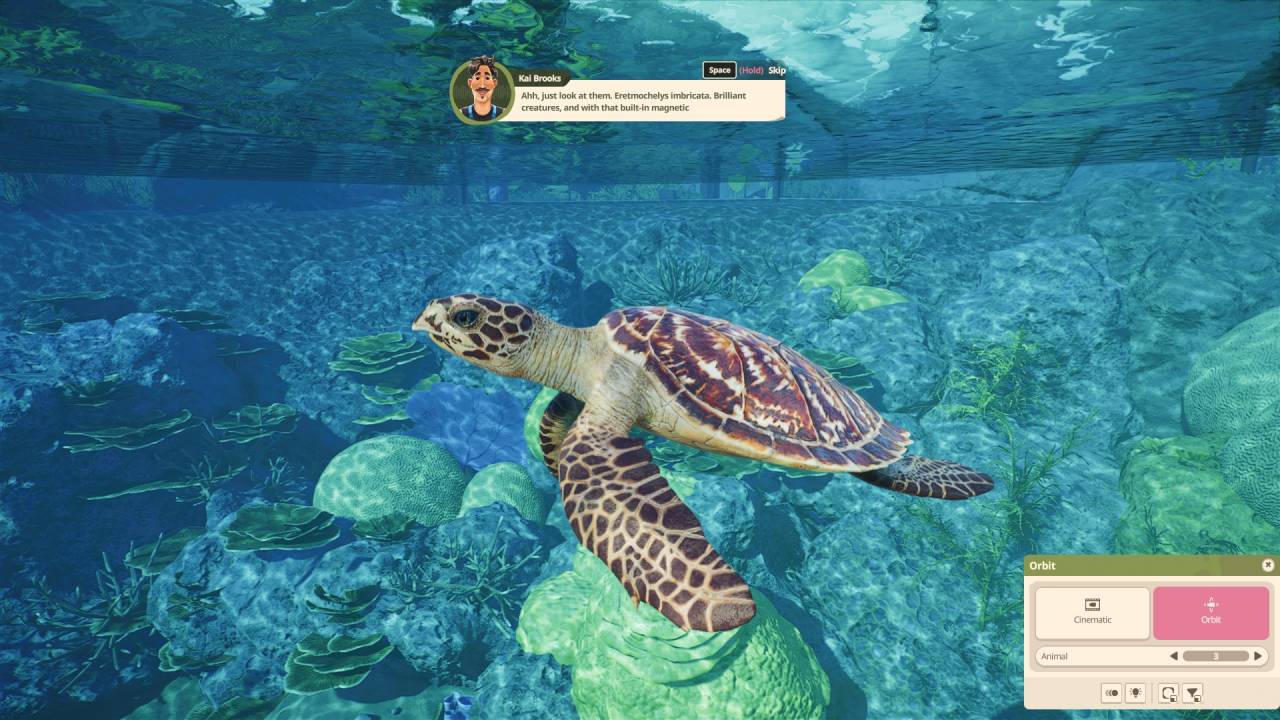
The organization sends you around the globe to get zoos and nature reserves back on their feet. Early on, you land in the fjords, where a marine biologist named Dr. Brooks greets you and explains that today's project is to introduce some new residents to the underwater world. The first missions are straightforward, and you will notice.
They work as tutorials and move at a gentle pace. Stick with them, because the later missions ask for more, give you far less guidance, and put some truly exotic animals in front of you. They also teach the advanced ideas that pay off once you return to your own long-running save.
It gives your work a purpose: build a good home for the animals, look after them, and then, where it makes sense, send them out into the real world. When you ship an animal to a reserve, it doesn't vanish like a childhood pet supposedly went off to a farm. It heads to a living landscape you shaped yourself, and that changes how you feel about every animal you raise in Planet Zoo 2.
Most of your time still goes into acquiring animals, designing enclosures that suit them, and giving visitors reasons to walk through your gates. The building toolkit is huge, with many construction pieces, plants, rocks, and terraforming tools. You can scale objects to any size so that you can place animals in specific spots.
The terrain tool also fixes an old annoyance: you can reshape the ground around water without removing the water first. The nature brushes show how Planet Zoo 2 saves you effort. A brush groups several objects, either a set the developers made or one you assemble, and you paint it across the land. Plants and rocks settle naturally without obvious patterns.
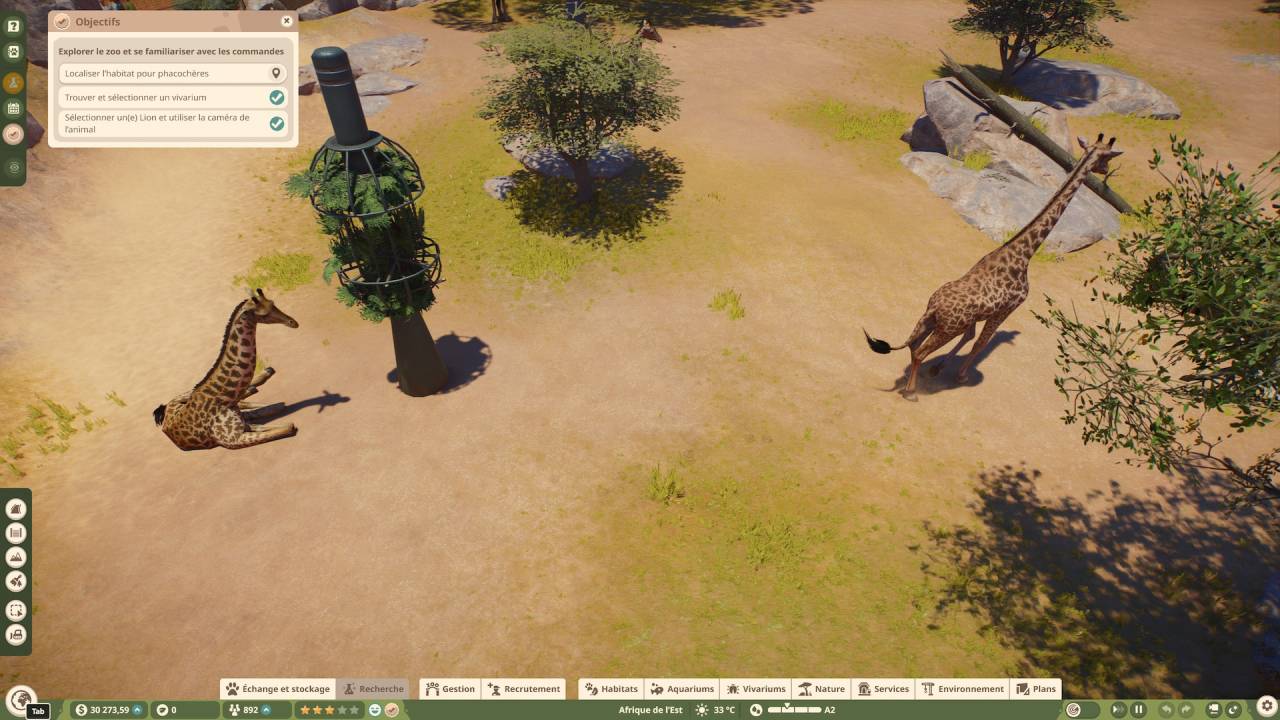
You pick a brush for a biome, and the right flora is ready; clicking an animal's needs often filters objects and brushes to match. The base game also includes plenty of scenery, and you can customize shops, restaurants, and staff rooms while guests can still use them. If you want something ambitious, such as a Welsh castle, the pieces are there.
Planet Zoo 2 offers several ways to play. Sandbox gives you complete freedom and removes the financial pressure. Franchise mode links a series of zoos and reserves and lets you trade animals between them. Career mode gives you directed goals, and multiplayer lets you build a zoo with others.
A planet hub lets you jump between zoos and reserves mid-session.
You can drop animals at a reserve, head to another zoo, trade for something different, and keep going, and you can complete many goals in more than one way. The business side will feel familiar. Animal welfare, guest satisfaction, and finances all matter, and your reputation splits into four parts: animal husbandry, sustainability, guest education, and guest experience.
When your rating drops, you can tell which part is responsible, even if the cause is as simple as forgetting to recycle. You hire keepers, mechanics, vendors, vets and educators, and each expects pay that matches their qualifications. Feed and new objects cost money, and income comes from tickets, donations, bred animals and, to a large extent, food, drink and souvenirs.
Staff buildings have been rethought too. In the first game, you buried them behind hills to protect guest ratings, but now visitors can watch keepers and vets at work, so the zoo's inner workings become part of the show. Research covers animals, zoo management, improvements, and diseases. Tracking illness is a constant background task. Seasons and weather add another layer.
Aquariums in Planet Zoo 2 let you build underwater and reward curiosity. You can build tunnels and paths through the tanks so guests see what is happening around them, and the tanks can be very large, in salt, fresh, sh or brackish water. Sharks and turtles get individual welfare tracking, while smaller fish come in schools, so one placement gives you a whole group instead of dropping in each mackerel.
You manage pumps and filters, choose the right water for the species, and add coral. Staff dive in for maintenance and feeding.
Stress matters too. In one early tank, the turtles got agitated because guests kept banging on the glass, and the fix was a sign asking people to stop. You can also turn off the interface, sit inside the tank, and watch the fish drift by, making it easy to lose an evening. Aviaries in Planet Zoo 2 do the same, but for air.
You set the boundary and supporting poles, the mesh stretches over them, and a basic aviary comes together in a couple of minutes. You can change heights and roof shapes, and you can download other players' builds from the marketplace. You can put a roof on any exhibit, so you can cover a warthog enclosure and add birds, or roof a fish tank and bring birds inside.
The game warns you when you combine species that may not get along. The toucans are a highlight, and some birds look great flying around a glass dome, though some species are better to watch than others. Wildlife reserves are the biggest addition in Planet Zoo 2.
A reserve starts as a damaged landscape that you restore. You remove invasive plants, place suitable trees and rocks, redraw boundaries so a dense forest becomes savannah (or vice versa), and meet welfare requirements before any animal arrives. Then you pick release groups from your zoo and set them free.
Locations include the Scottish Highlands, snowy Sweden, a Pacific island, and a savannah in Tanzania.
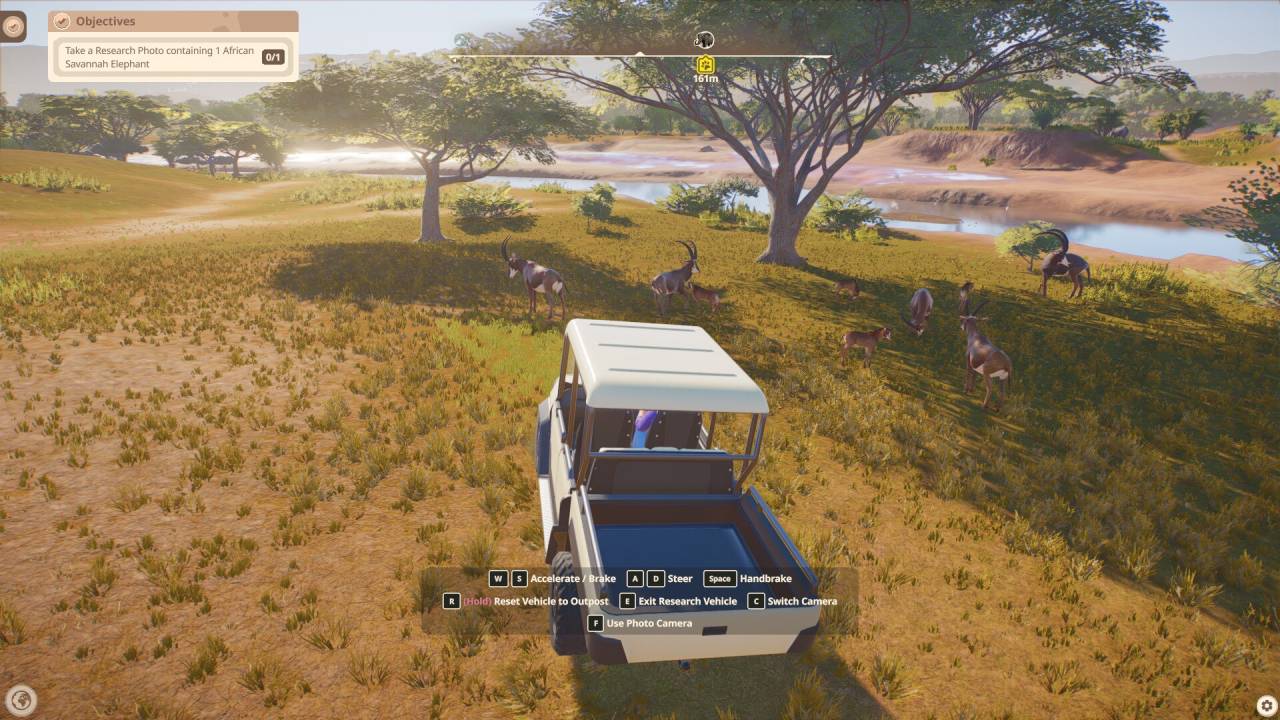
The savannah takes 28 species, and by the end you can fill it with rhinos, elephants, zebras, vultures, and secretary birds, plus lion prides whose cubs wander the brush. Once the animals are out, you can walk the land or drive a research vehicle through it. You can build observation posts, photograph your animals,s and earn conservation points.
Those points buy more animals for your zoo, so you can house more and release more, and that loop gives the game a clear direction. The animals behave believably. Drive too close to a calf drinking water, er and it runs back to its parents, and it can knock your cart over.
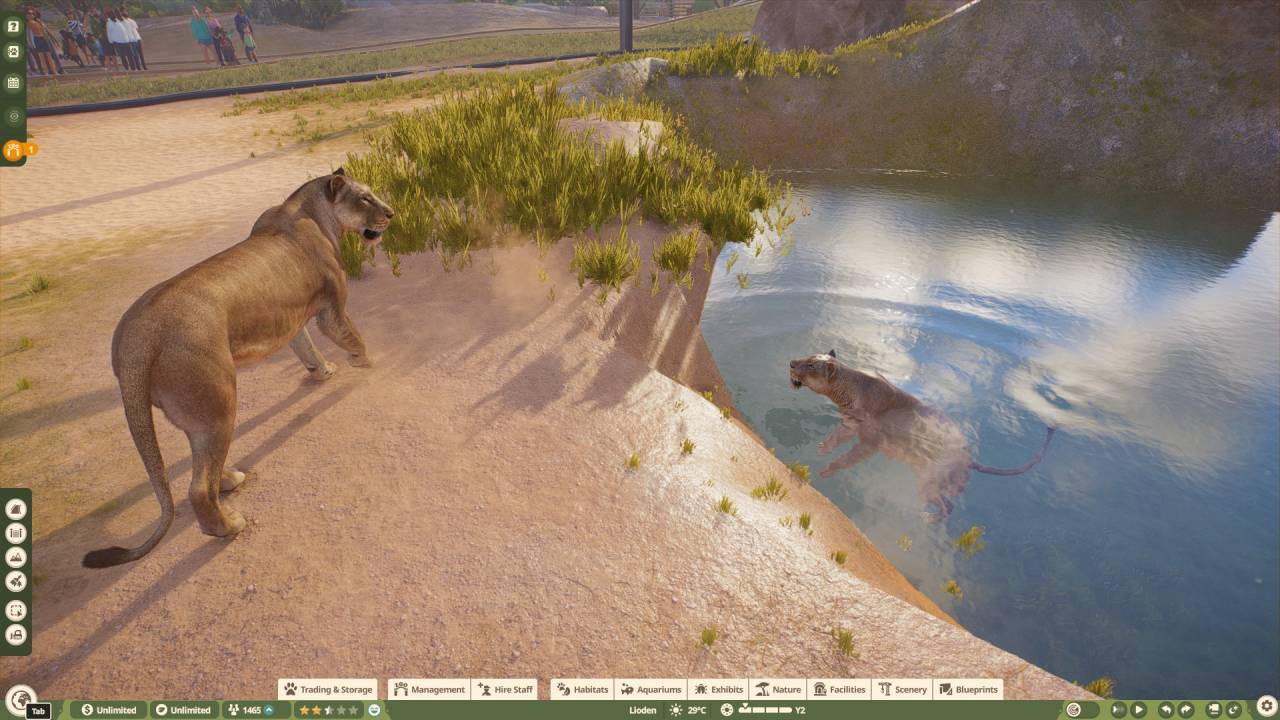
Predators do take down prey, though it is shown in a simple, bloodless way to suit the all-ages rating. There are limits: the animals have no individual personalities or detailed routines, and a species doesn't die out if you catch its last two members because new ones appear. It works as a backdrop, but a good one. It is also a calm counterpart to the busy zoo.
The challenge in Planet Zoo 2 does not come from fighting or puzzles. It comes from keeping a complicated system in balance. You manage welfare, containment, guest happiness, and money together, and when one slips, the others tend to follow. Escapes show this best.
In one early zoo, a zebra gets out, and while a mechanic walked it back in, a second zebra bolted. You raise the fence, and then a chimp slips away through an unrepaired barrier. Soon the chimp is in the wild dog area, and guests sprint for the exits.
It is chaotic, but it feels tied to your own choices, which is what makes management games work.
The systems behind that chaos hold up. Each species behaves differently, so you learn what each one needs. Chimps move between climbing and walking, and tigers scratch trees. Climbing has improved a lot. Animals spend more time on their frames, each species has new animations, and the traversable area is wider, so you get decent terrain without a mod.
Some jank remains, but the balance has shifted toward good moments with a little jank. There are weaker spots. Building controls can feel fiddly, with an extra click here and an oversensitive snap there. Paths are better than before, especially for plazas and tunnels, but complex layouts still need patience. The economy is generous: a handful of food stalls can carry a zoo, and fast-forwarding time makes you rich.
Information can hide, too. One owl had an illness that only showed up when you tried to transfer it, and nothing on the animal itself mentioned it. Climbable pieces are limited to foliage and enrichment items, and ropes are missing. None of this spoils the game, and most of it looks fixable. Planet Zoo 2 doesn't use traditional experience points, but it works similarly. You earn it through research, conservation points, reputation, and career milestones.
Research unlocks knowledge about animals, diseases, and improvements, and training staff lets you get more out of them.
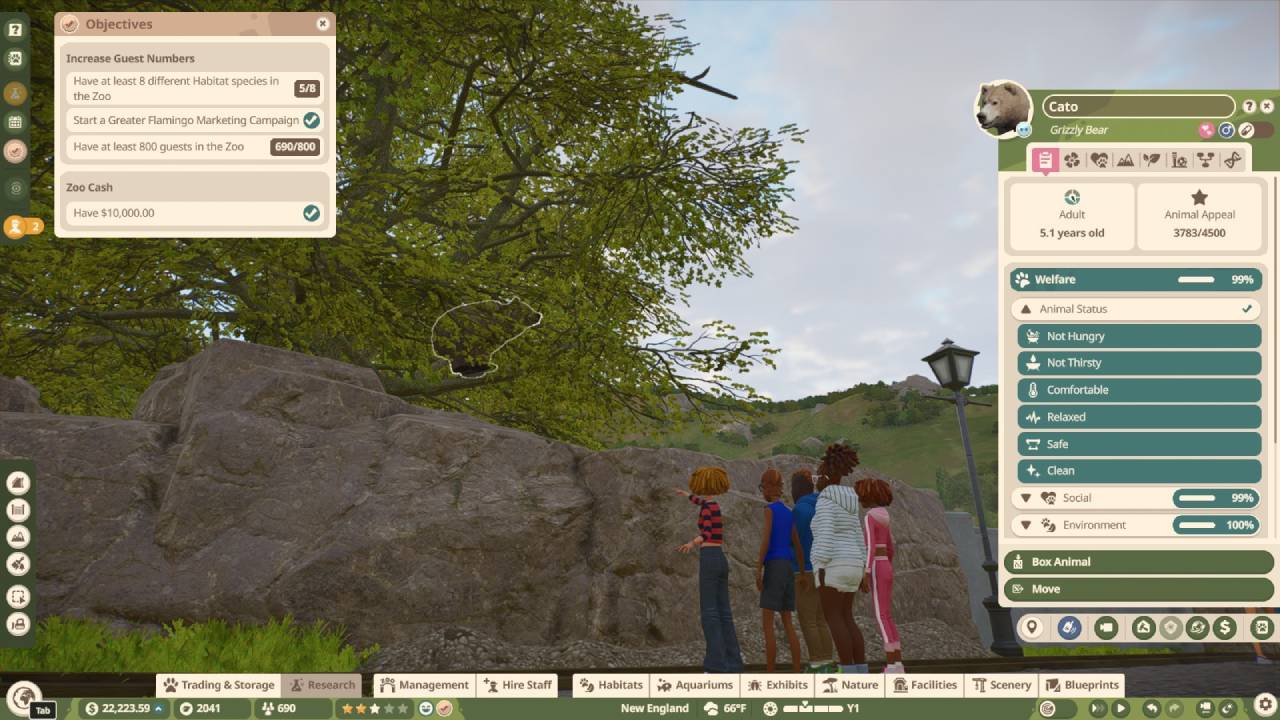
You earn conservation points by releasing and photographing animals, and you spend them on new animals, so the more you care for the land, the more you can grow. You can also buy animals with cash, giving you two routes to a bigger collection. This keeps you moving between zoo and reserve. A release sends you back to your enclosures to prepare the next group, and each group sends you back to improve the landscape. Eventually the loop turns inward.
Once you unlock the diseases and items you need, the game nudges you toward detailed building rather than constant expansion. If you enjoy assembling habitats piece by piece, that stage rewards you. If you prefer faster growth, it may feel quieter. Planet Zoo 2's graphics grab you first. The animals have detailed textures, and you can see fur, feathers, scales, and breathing. An elephant, a toucan, or a turtle will make you stop and look, and the play and fighting animations add life.
Seasons carry a lot of the visual weight, with plants turning to fall tones at different times so the shift feels natural. You cannot set or lock the season yourself yet, the way you can with time of day and weather, and that would be welcome. The maps vary, and some sculpted ones place a small town or castle in the background. The European tundra map has a lovely valley.
Planet Zoo 2's performance is mostly solid.
Loads between zoos and reserves are quick, and the game offers frame generation and a long list of settings, so you can lower them or add more visitors. In demanding moments, the game ran at around 45 to 60 frames per second, and during a long session on maximum settings with ray tracing it began to stutter. Turning off ray-traced reflections helped.
There were small glitches too, like an owl walking along a nonexistent branch for about thirty minutes, staff getting stuck, and guests wandering around in shorts during winter. None of it hurt the experience. Sound is a strength in Planet Zoo 2. Animal calls carry real information about how a habitat is working, so you can watch and listen to judge whether things are going well. The music is calm and stays out of the way. You probably will not remember a tune, and since it plays often, turning it down is easy.
Voices are used sparingly, mostly from keepers calling to report the next problem. It does the job and moves on. Overall, Planet Zoo 2 doesn't reinvent the formula, and it doesn't need to. It keeps what worked in the first game, fixes several long-standing frustrations, and adds three major features that fit the way the game already plays.
The aquariums have more depth than you might expect.
The aviaries are easy to build and flexible, and the reserves give the experience a meaningful endpoint, since every animal you raise can lead somewhere. Care shows in everything, from animal animations to weather and the educational facts you pick up. You do need patience early on, because the simulation and controls take time to learn, and the first few hours may feel slower than expected.
The roster is the other thing to weigh. The base game includes 130 animals, with six more in the Deluxe Edition, which is plenty to fill a zoo and a reserve. It leans toward Europe, Africa, and Southeast Asia, and the roster is already big enough to fill a zoo and a reserve with plenty of variety. Species like polar bears, cheetahs, and kangaroos could be great future additions for anyone building a zoo around a particular region.
If you enjoyed the first game despite its rough edges, Planet Zoo 2 has fewer of them and much more to do. If that game never clicked for you, this sequel won't try too hard to change your mind. If you like building, caring for animals, and watching a landscape recover, Planet Zoo 2 is a great way to spend your time.
Editor, NoobFeed
Verdict
Planet Zoo 2 is the ultimate management sim. By pairing long-awaited aviaries and aquariums with purposeful wildlife reserves, Frontier turns a classic builder into a breathtaking, deeply rewarding global conservation journey.
90
Related News
No Data.