
Kioku: Last Summer Review
PC
A relaxed summer adventure through a child's eyes, packed with ideas, mini-games, and promise, but held back by technical instability.
Reviewed by Mahi Araf on Jun 19, 2026
Kioku: Last Summer comes from Assemble Entertainment, in collaboration with Norwegian indie developer Lugn Games, marking their first cozy adventure release on Steam for PC in May. It steps into the growing space of relaxed, story-focused life simulation games that prioritize atmosphere and emotion over challenge or complexity.
From the start, you're placed into the role of a young girl named Asti, who arrives on a quiet Scandinavian-inspired island in the mid-1990s alongside her father. It doesn't shove you in the deep end of crazy mechanics and high-stakes objectives. Instead, it brings you into its world through mundane moments, exploration, and small interactions that help you understand island life.
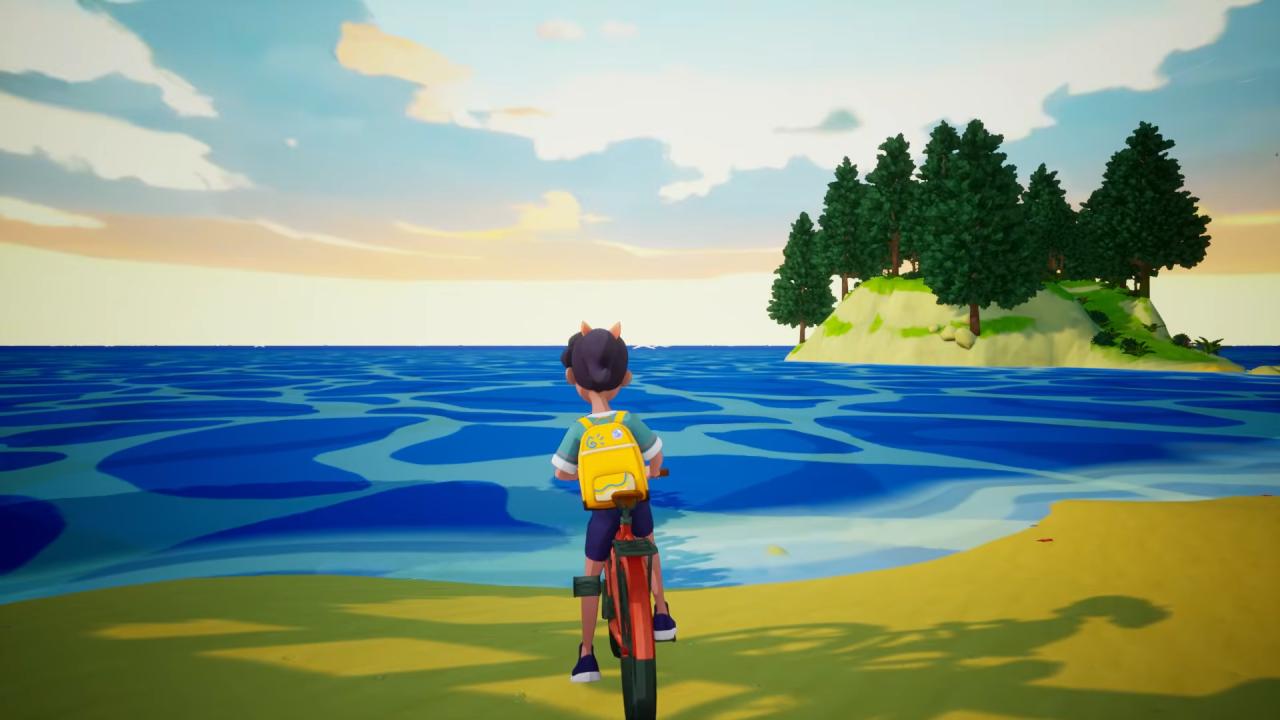
Kioku: Last Summer is pretty straightforward when you get into it.
You're not dealing with heavy systems or demanding gameplay loops. Instead, you're given a compact island environment, a group of local kids to meet, and a simple structure built around passing days marked by a quiet countdown in the background.
As you move through the game, each day naturally leads into the next, guiding you through small events, light tasks, and moments of exploration. It's less about being directed and more about settling into a rhythm in which you explore, interact, and slowly piece together what the countdown is building toward, all while experiencing a laid-back summer childhood from Asti's perspective.
When you start playing, you're stepping into Asti's life as she adjusts to this new island environment. You're not really following an intense plot in the traditional sense. Instead, you're moving through days that slowly build toward something the countdown is hinting at, even if it's not immediately explained.
As you progress, you meet local kids and slowly form connections with them.
There's a central trio of children you spend a lot of time around, and most of the emotional weight of the game comes from these small interactions rather than any dramatic story twists. Everything is delivered through text bubbles, since there's no voice acting at all, which keeps things simple and readable but also very quiet in presentation.
The story itself is linear in structure. Even though you feel like you're free to explore, the game does guide you through a set progression of days that move forward as you complete small tasks or trigger events. As the days pass, you start to understand what that countdown is actually leading toward, and it becomes part of the background tension that gently pushes the experience forward without ever becoming urgent.
When you're actually playing Kioku: Last Summer, most of your time is spent walking around a small island and interacting with whatever you come across. The island itself is compact, and you quickly learn that you don't really need fast travel because you can get everywhere on foot or by bike in very little time.
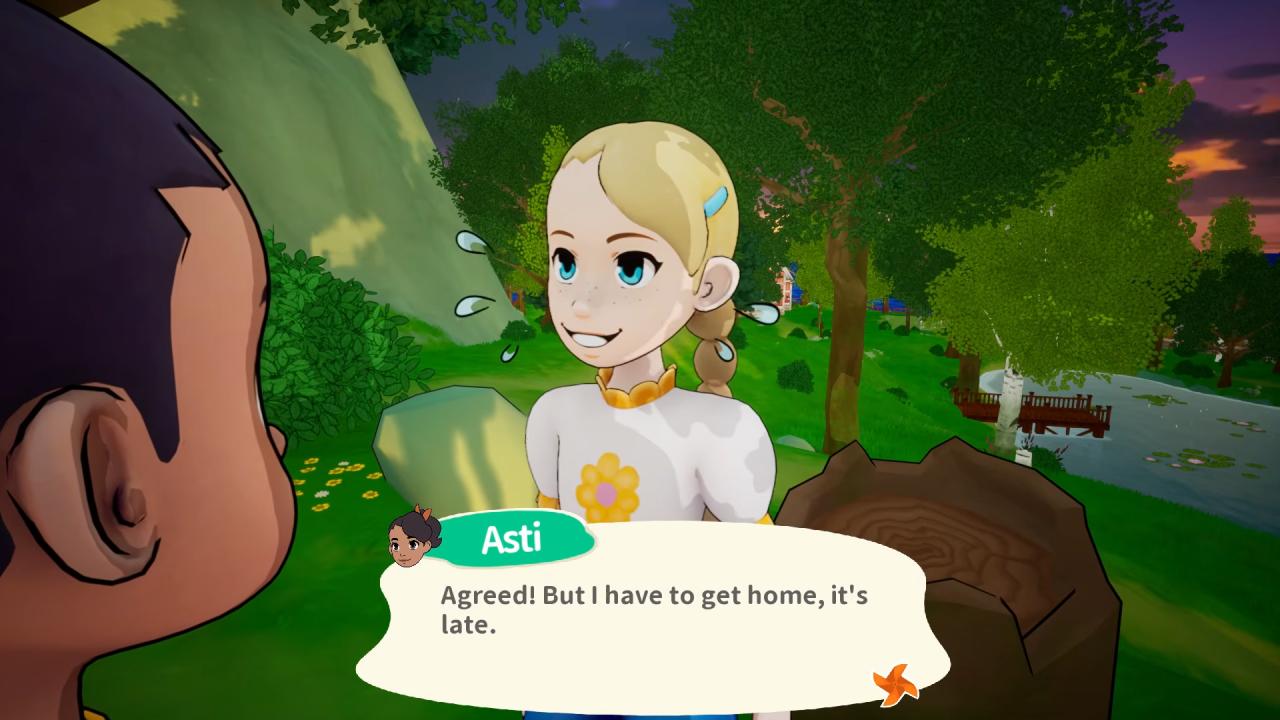
Movement is surprisingly fast for a cozy game. Once you unlock the bicycle, you're basically zooming across the island, sometimes even taking it into places it probably shouldn't go, just because the physics allow it. It turns traversal into something more playful than restrictive, and you end up using it constantly.
A big part of your day-to-day loop is talking to other kids, picking up small tasks, and engaging in light activities scattered across the environment. You don't have deep quest chains in the traditional sense. Instead, you get short, self-contained objectives that push you through the days.
You also spend a lot of time interacting with a few key systems.
One of the main highlights is the marble-based battler system called Marubi. This is where you collect marbles from packs and use them in arena-style fights that feel like a mix between marbles, Pokémon-style mechanics, and a slightly chaotic toy battler.
You build small teams of marbles, each with different properties, and then face off in simple but surprisingly engaging matches. Early on, it's just one-on-one battles, but later it expands to team-based fights like three-versus-three, which adds a bit more strategy to how you approach matches.
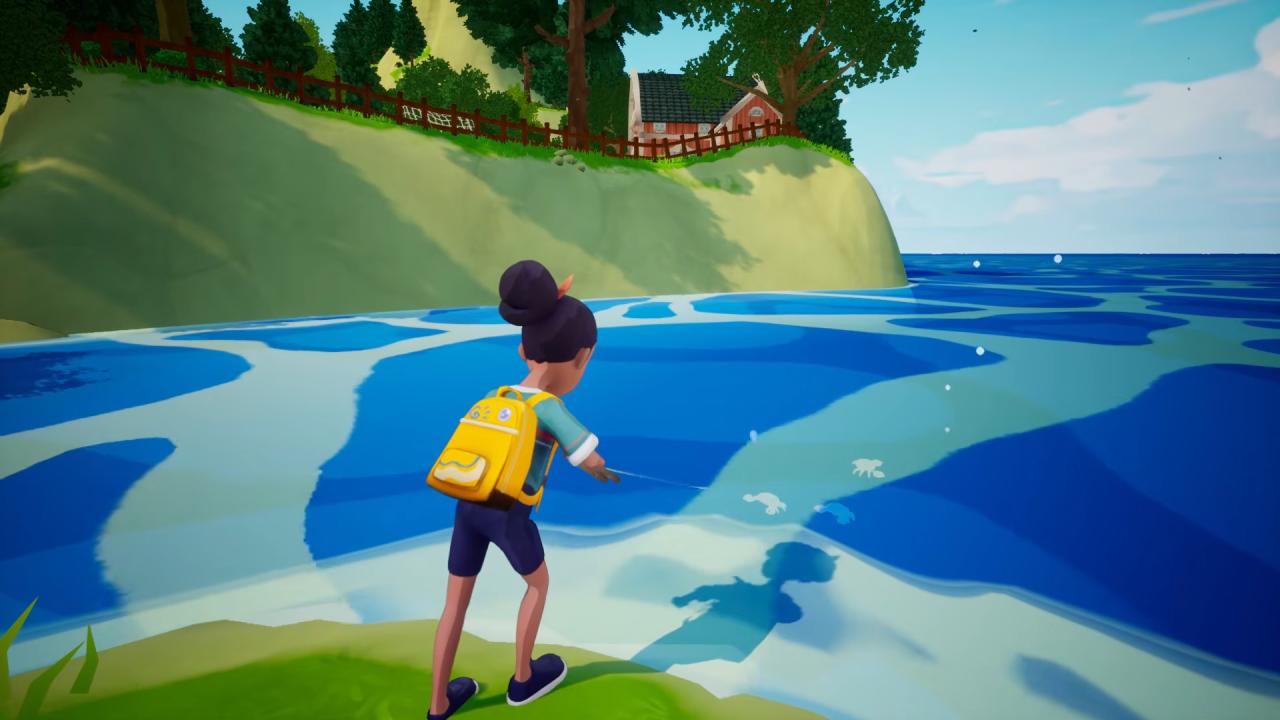
Another major activity is fishing, which is more about resource collection than about simulation depth. You cast your line, wait for a reaction prompt, and then quickly interact to pull up catches. Most of what you're collecting includes crabs and occasional items that tie into other systems. There are also crab cages and special items like crab pots, which function as a kind of currency or progression resource you trade with NPCs.
Exploration in Kioku: Last Summer is very freeform yet very simple.
You're not solving complex puzzles or navigating layered environmental challenges. Instead, you're encouraged to just move through the island at your own pace, talk to people, and see what you find. The island is intentionally small, and that shapes everything about how you explore. You don't spend time figuring out where things are because you'll naturally encounter most of them just by walking around.
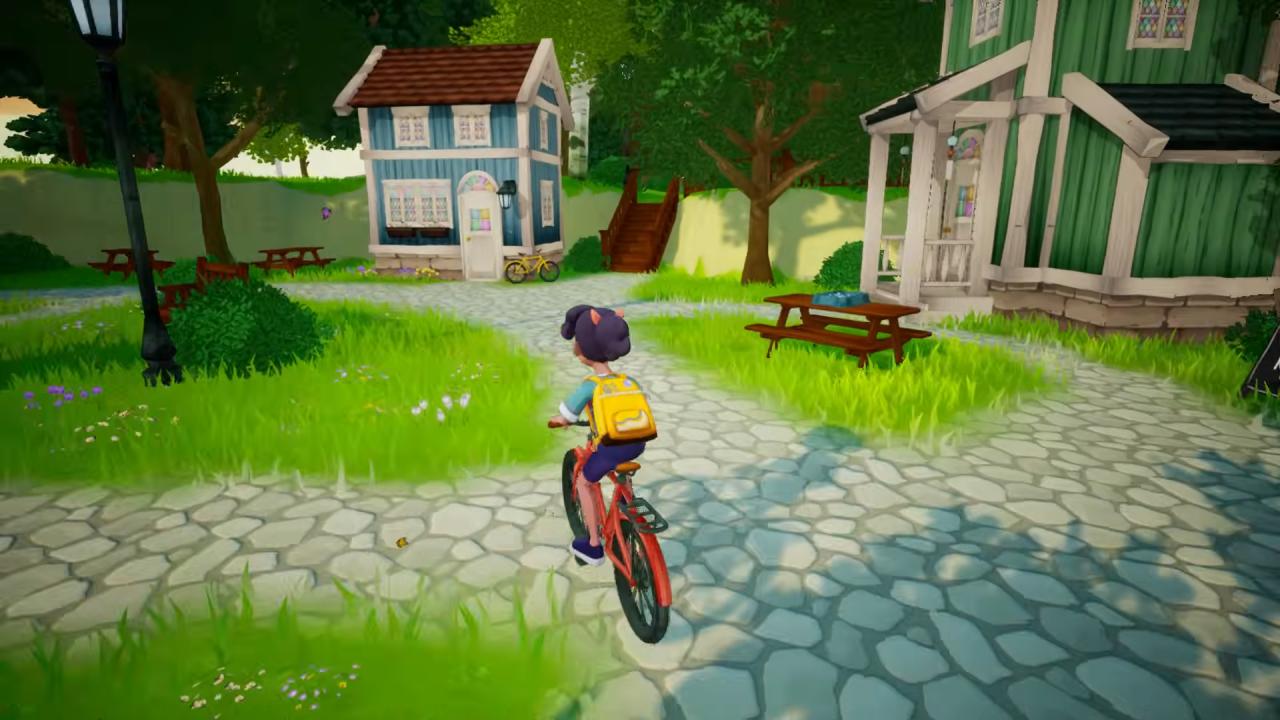
The design avoids traditional waypoint-heavy guidance, meaning you're not constantly being pointed in a direction. Instead, you're left to discover things through curiosity, which makes it feel closer to wandering around a real summer location than following a structured game map.
What stands out is how little resistance the world gives you. Doors, paths, and activities are all easy to access. There aren't many barriers between you and content, which keeps the pacing light but also makes the world feel thin in some areas.
On the good side, this approach makes the game extremely accessible.
Even very young players can understand where to go and what to do without needing guidance. It's easy enough that a five-year-old can handle the controls, understand the layout, and just explore independently. Even younger children can engage with the visuals and movement without feeling lost, which makes it feel like a shared family experience.
On the downside, the simplicity also means there isn't much depth. You're not really challenged, and the lack of structured puzzles or layered exploration can make the world feel a bit empty after a while. The systems are fun in short bursts, but they don't evolve dramatically as you play.
Progression in Kioku: Last Summer is mostly about completing small objectives, collecting items, and moving through the day-to-day story structure. There isn't a traditional XP grind system in the way you might expect from RPG-style games. Instead, progression is more about unlocking new events, new days, and new interactions.
You also progress based on how well you do in things like Marubi battles and crab fishing.
Winning matches, acquiring better marbles, and gathering crab pots and other resources unlock more content. It's a soft progression loop rather than a numbers-driven grind, which keeps it approachable but also means it doesn't feel very structured or rewarding in the long term.
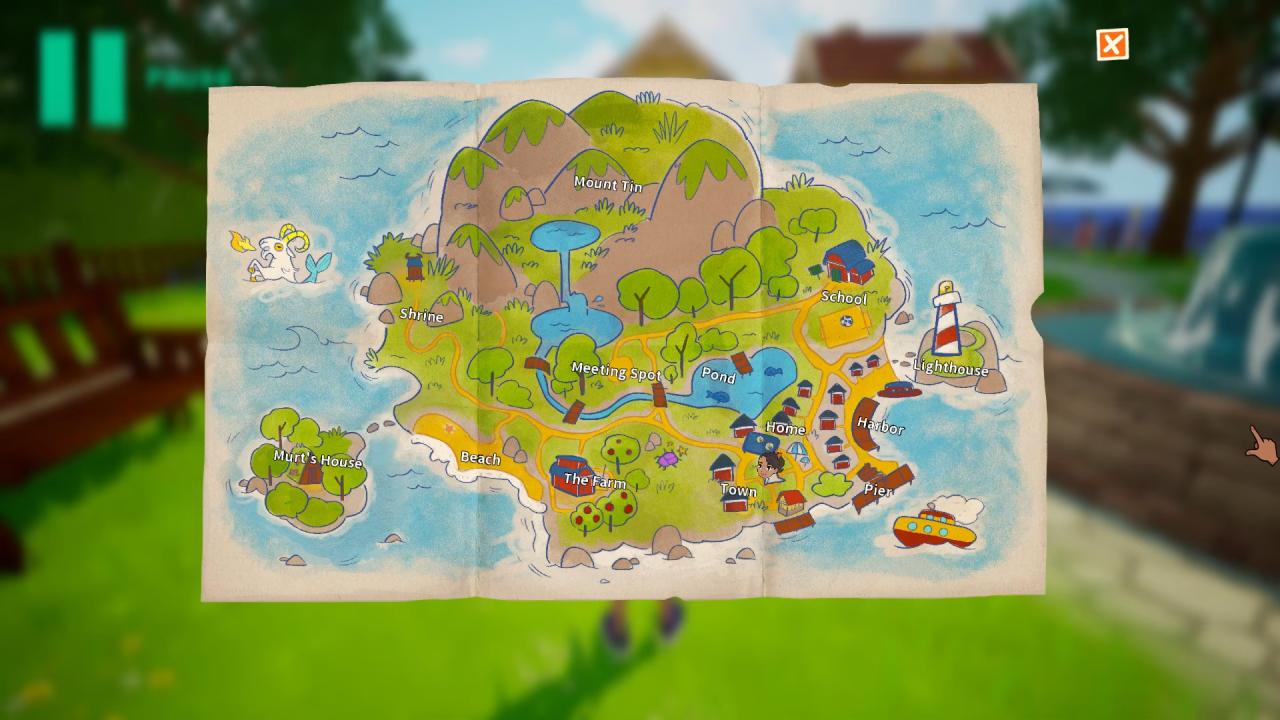
Visually, Kioku: Last Summer leans heavily into a soft, cartoony aesthetic that fits its childhood summer theme really well. The island feels bright and clean, with simple but expressive environments that match the tone of a laid-back narrative experience.
The character designs are small and stylized, which reinforces the notion that you are viewing everything from a child's point of view. Animations are good enough to follow the fast movement speed, especially when you're on the bike and rushing across the island.
The game also captures a mid-90s vibe pretty well, especially the sense that the world feels nostalgic without being overly detailed or cluttered. It does not aim for realism, but rather a memory-like version of summer.
The audio design is very minimal and ambient.
So you end up with soft background music that supports the relaxing nature of exploration, instead of strong, memorable tracks. It's not something you pay attention to all the time, but it fits the experience well enough that it never feels distracting.
The sound effects are basic and functional, used primarily for movement, interaction, and mini-games like fishing or marble battles. The lack of voice acting keeps everything focused on reading text bubbles, which makes the game feel quieter and more personal, but also reduces emotional impact in some story moments.
Kioku: Last Summer is one of those games that clearly has a strong idea at its core. You're given a small island, a relaxed summer setting, and a collection of simple yet creative systems, like Marubi battles and crab fishing, that work together to build a cozy life-sim experience.
At its best, you're just wandering around, interacting with kids, playing small games, and enjoying the simplicity of it all. The fast movement and tiny map make exploration easy, and the whole thing feels very approachable, especially if you're looking for something light and family-friendly. But as you get deeper into it, the cracks start to show.
You run into glitches, broken sequences, and moments where the game doesn't load correctly or forces you to restart. Sometimes events skip entirely or freeze, and in more severe cases, you can end up stuck or forced to replay sections multiple times. These issues accumulate to the point that they interrupt the flow of the experience, especially later in the game.
Even so, there's a sense that the developers are actively working on it, and there's enough charm and potential here that it could become something much more stable and enjoyable with future updates. Right now, it feels like a game that's still trying to fully come together.
Senior Editor, NoobFeed
Verdict
Kioku: Last Summer is a charming yet technically unstable cozy island adventure that shows strong potential but needs more polish to fully deliver its vision.
77
Related News
No Data.