
Directive 8020 Review
PlayStation 5
Supermassive Games takes the Dark Pictures formula beyond Earth, into paranoia, mimicry, and real-time survival horror on the Cassiopeia.
Reviewed by Azfar Rayan on May 11, 2026
You’ve probably already seen what Supermassive Games does best over the years. Before Directive 8020 ever shows up on your screen, you’re dealing with a studio known for cinematic horror experiences like Until Dawn, The Quarry, and the Dark Pictures Anthology. This isn’t a developer trying to reinvent itself every time it ships a game.
Instead, you’re looking at a team that keeps circling the same idea: narrative-driven horror where your choices shape who survives and who doesn’t. What you’ve always been getting from them is essentially an interactive horror film. You sit back, make decisions, fail quick-time events, and watch characters live or die based on how well you read a situation or how quickly you react under pressure.
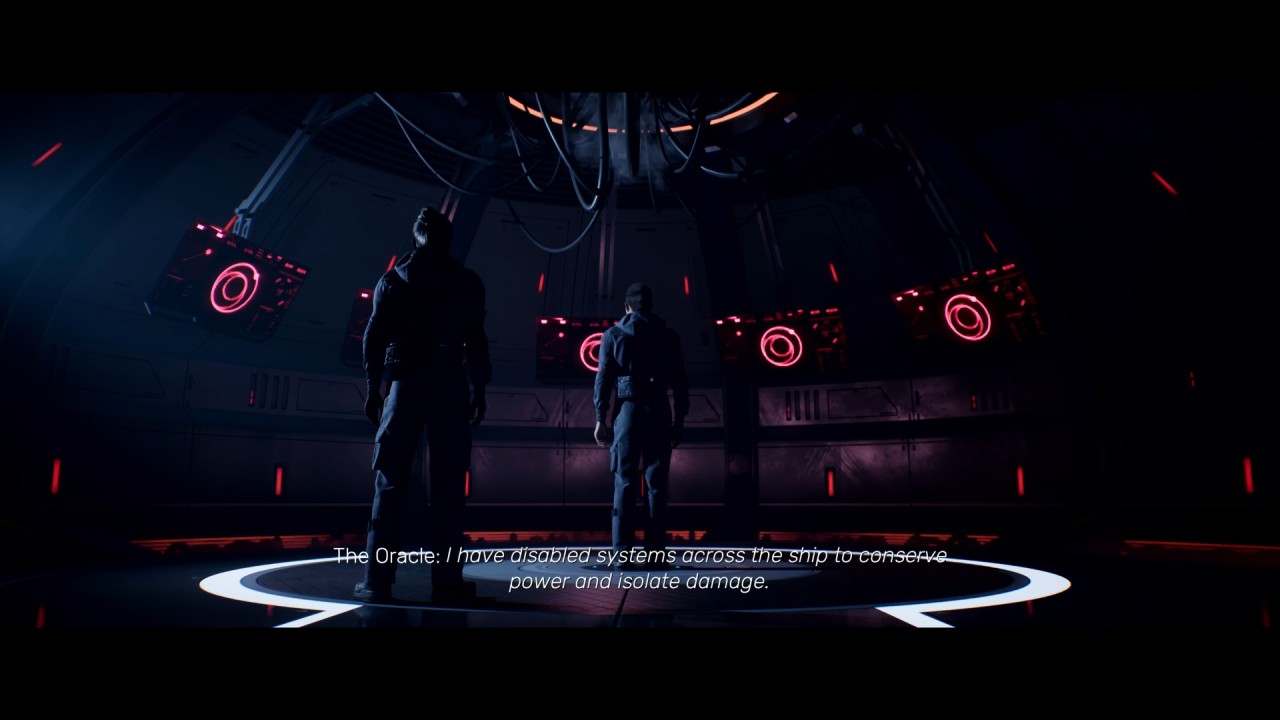
That identity is still intact in Directive 8020, but you can feel right away that something is shifting under the surface. The studio isn’t just iterating anymore; it’s trying to evolve. With Directive 8020, you’re no longer just in a haunted lodge or remote town.
You’re taken into deep space aboard the Cassiopeia, a colonization vessel heading toward a distant planet called Taeti F. That shift alone already changes the tone of everything you’re used to. Supermassive is still leaning on its familiar storytelling structure, but now it’s wrapped in sci-fi isolation, where every corridor feels colder, and every silence feels heavier.
This also marks a notable production step for the series, as it runs on Unreal Engine 5. That change isn’t just technical on paper. You can feel it in how the game tries to push its cinematic presentation further, especially in lighting and character detail. Even so, what really stands out isn’t just the tech upgrade but the ambition behind blending horror survival mechanics with the studio’s traditional choice-driven storytelling.
From the outside, Directive 8020 looks like the most experimental entry in the Dark Pictures lineup so far. It’s still very much a Supermassive game at its core, but it’s clearly trying to push past the limitations of the anthology’s earlier titles. Instead of sticking purely to cinematic branching paths, it attempts to merge those with real-time exploration and survival gameplay in a more direct way than you’ve seen before.
The structure still follows episodic storytelling, split across chapters where your choices ripple outward.
But there’s a noticeable shift in pacing and tone, almost like the game is trying to balance two identities at once. On one side, you’ve got the familiar branching narrative. On the other hand, you’ve got a more hands-on gameplay loop that wants you to actively move through space, not just watch it unfold.
That tension between old and new is really what defines Directive 8020’s identity. It’s not abandoning the Dark Pictures formula, but it is stretching it into unfamiliar territory. You can feel the influence of other sci-fi horror games creeping in, especially in how the ship itself becomes a living, claustrophobic environment that constantly puts pressure on you.
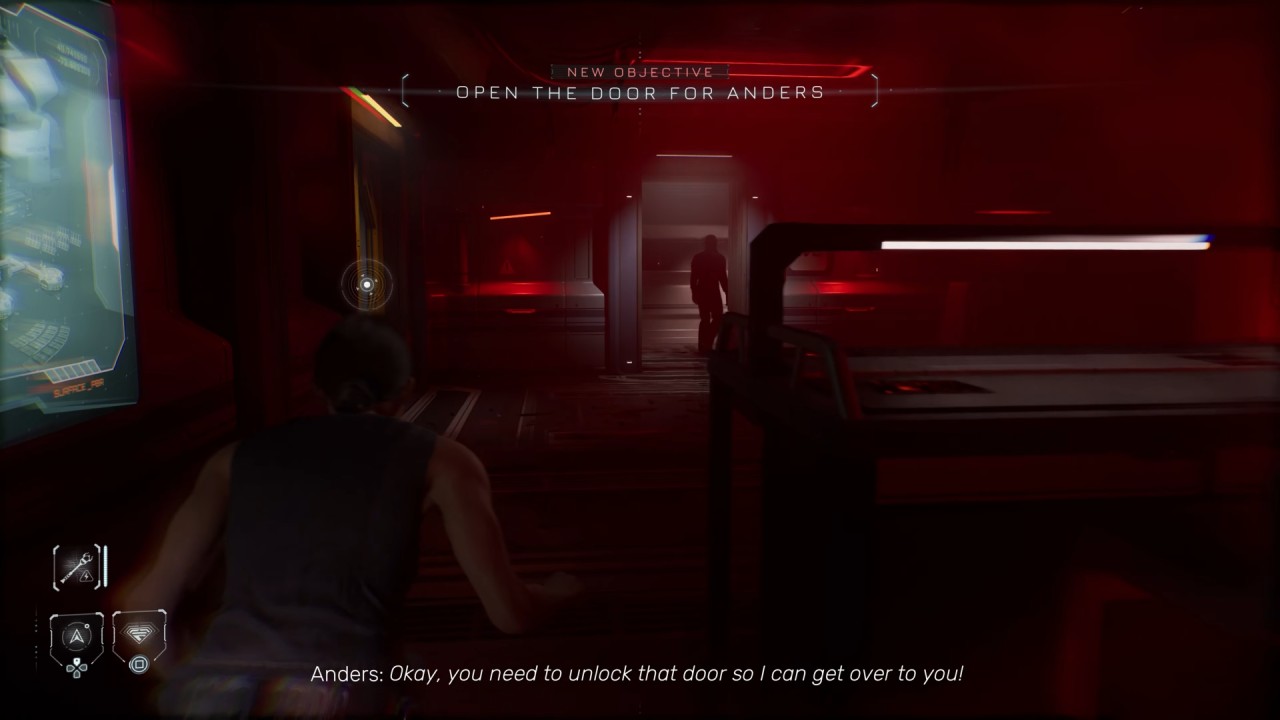
Most of what you experience occurs aboard the Cassiopeia, following a catastrophic event that changes everything. A mission meant to scout a new planet quickly collapses into chaos when an asteroid impact introduces something far more dangerous than environmental hazards. Inside it is a hostile alien lifeform capable of imitation, and that single concept drives almost everything that follows.
Once the infection spreads, you’re left questioning every interaction. Anyone on the ship could be what the game refers to as a mimic, a shape-shifting entity capable of copying crew members almost perfectly. That idea turns every conversation into a potential trap, and you’re constantly second-guessing whether what you’re seeing is real or not.
The narrative doesn’t rely on a single linear thread either.
Instead, you’re pushed through branching storylines where relationships, suspicions, and alliances constantly shift. You’ll find yourself observing people more than trusting them, especially when the game starts deliberately blurring emotional behavior and scripted reactions.
What makes this even more unsettling is how early the paranoia kicks in. You’re not eased into the threat gradually. Instead, you’re dropped into situations where something already feels off, and it never really lets you relax after that point. The quiet times, even those, feel temporary, like they are only there to fool you until the next crisis.
As you progress, the story leans heavily into tension built through uncertainty rather than spectacle. It’s not just about what the creatures do, but about whether you’re making the right calls in identifying them. That emotional pressure becomes the backbone of the entire narrative experience, and it’s where the game does some of its strongest work.
The gameplay is where things start to split more noticeably from Supermassive’s earlier titles.
You’re still making choices through dialogue and decision points, but now you’re also moving through environments in real time. You take control of characters directly, navigating corridors, interacting with doors, and exploring the ship from a third-person perspective that feels closer to traditional survival horror.
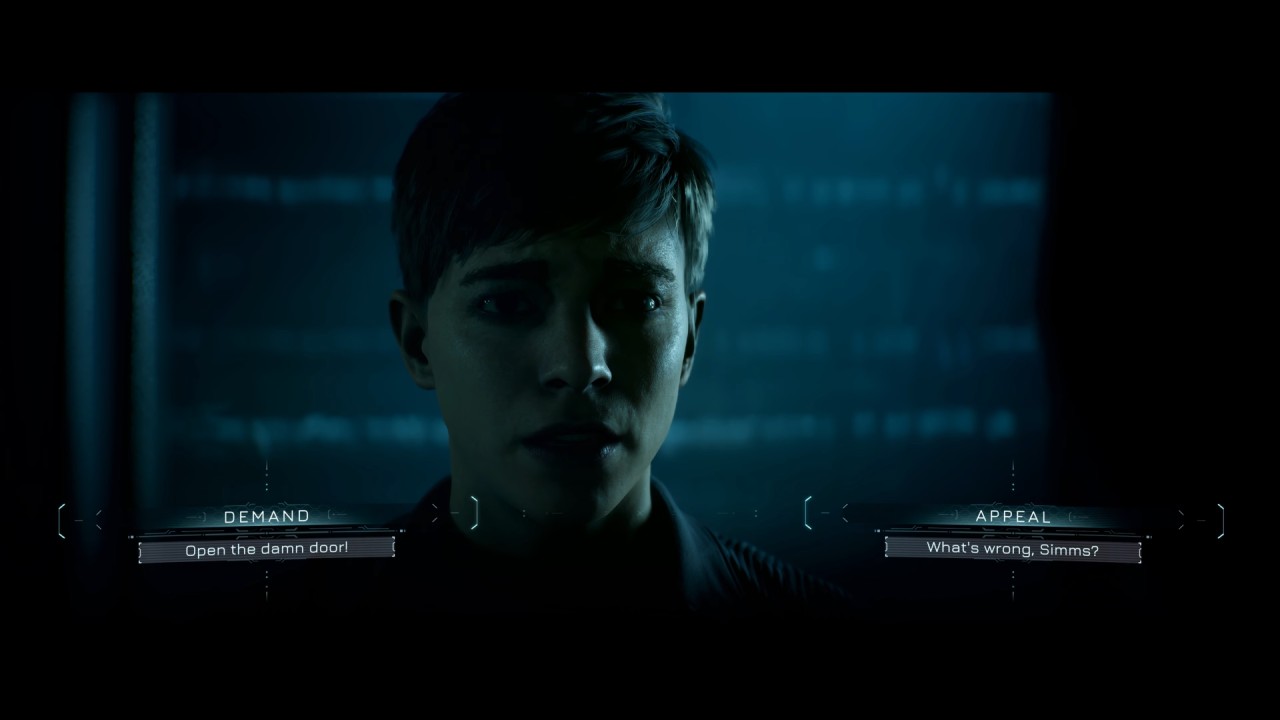
This shift adds a different kind of agency, but it also changes how you experience tension. Instead of purely reacting to cutscenes or prompts, you’re now responsible for physically moving through danger zones. It brings Directive 8020 closer to something like Dead Space in structure, even if it still keeps its narrative DNA intact.
The game also introduces systems like Turning Points, which let you rewind key decisions. But it does allow you to change alternate outcomes without having to replay the entire game. On the other hand, it can dilute the impact of your decisions, especially if you like consequences to feel permanent.
The quick time events are still here, but they don’t feel quite as much a part of the game. You’ll still be tapping and reacting in high-pressure moments, but now they’re part of a larger system that includes exploration, stealth, and decision-making under uncertainty. The balance isn’t always perfect, but it does create a more varied rhythm compared to earlier entries.
Stealth sections become a major part of the experience, and the gameplay is where things start to feel less refined. You sneak past enemies, reroute power, or open doors, all the while trying to stay under the radar. Over time, the structure becomes repetitive and the sense of danger doesn't always match the mechanics that support it.
This inconsistency can be explained by how enemies behave.
The concept of the mimic threat is scary, but in practice, they can feel predictable or anticlimactic in stealth encounters. Sometimes, instead of always being on the lookout for prey, you see patterns that relieve some of the tension the game is trying to create.
Puzzles and environmental interactions are fairly simple overall. You’re mostly dealing with tasks like restoring power, moving objects, or unlocking access points. These moments are more about pacing than about challenge, giving you brief respites between narrative and stealth-heavy sequences.
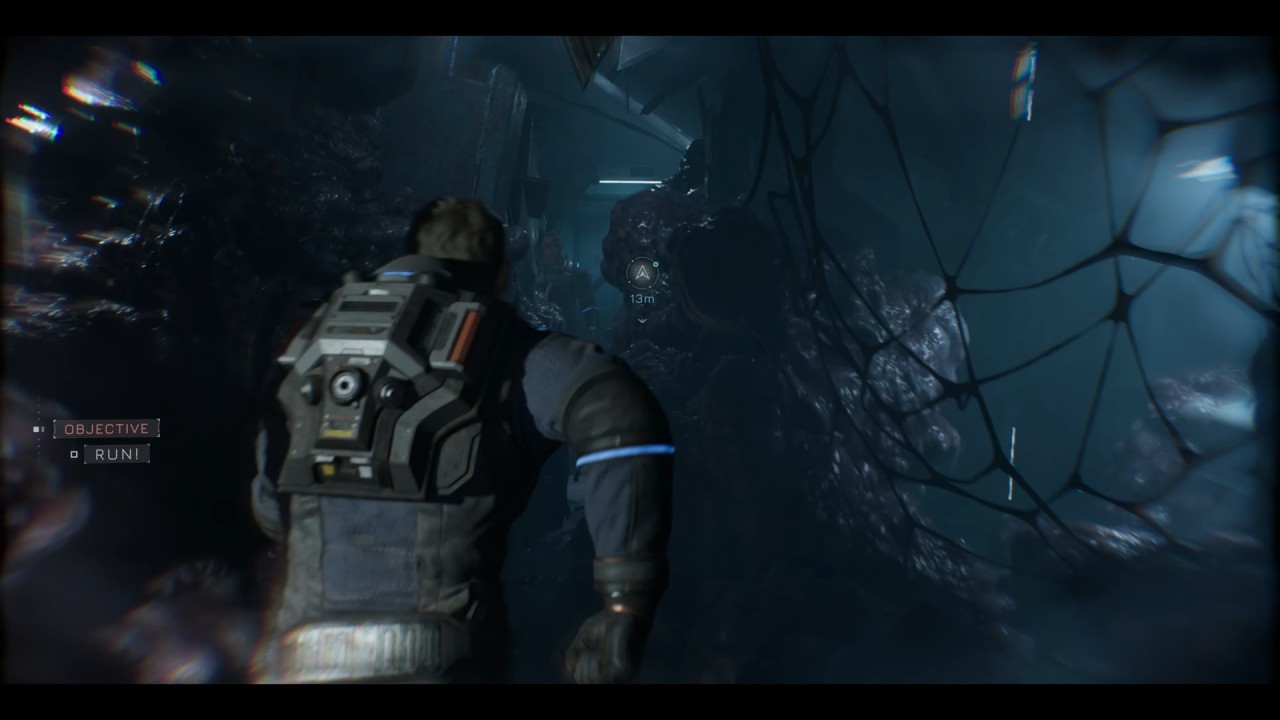
That simplicity means exploration is more about feeling than mechanics. You’re not working on difficult problems or complex systems. Instead,you’re traversing a tightly-controlled environment that’s built to keep you focused on tension and storytelling rather than deep gameplay systems.
Progression is very much dependent on your choices and relationships with other crew members. Conversations, decisions, and even small behavioral interactions shape how characters see each other. And in time, these dynamics shape the story. They influence survival outcomes and narrative direction.
Directive 8020 is visually one of Supermassive's more impressive efforts to date.
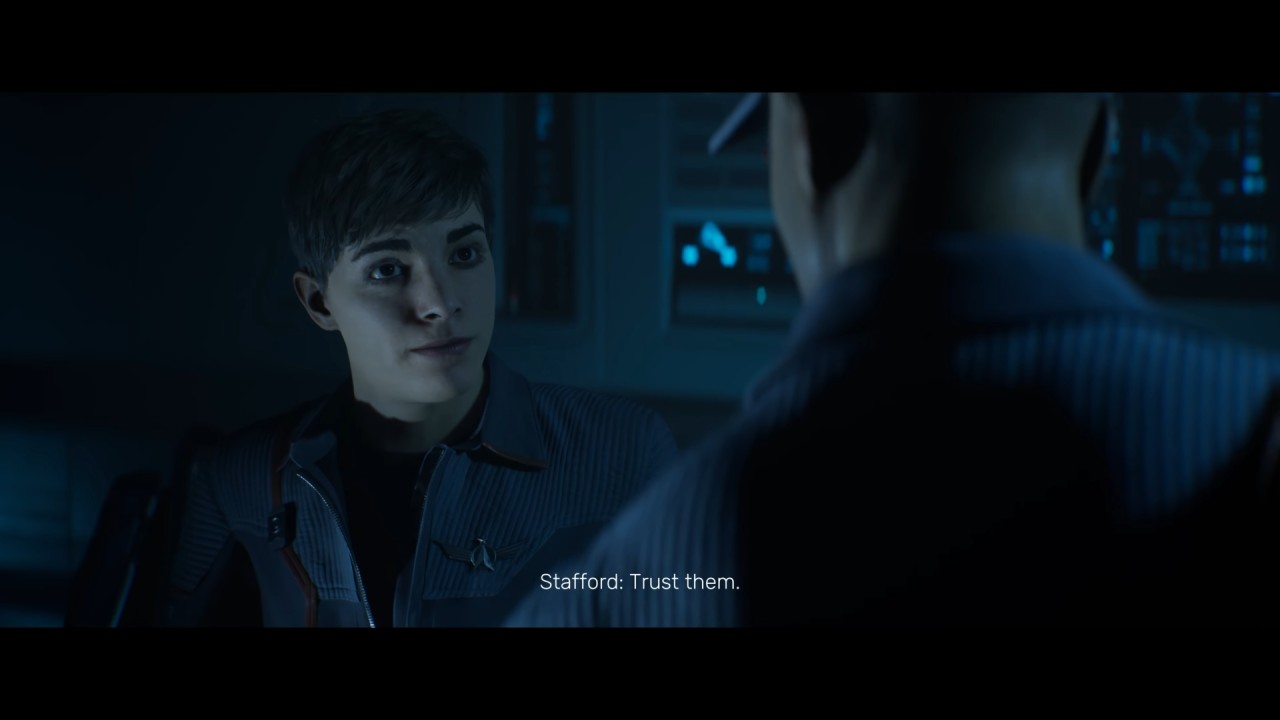
The use of Unreal Engine 5 has allowed us to enjoy detailed character models and powerful lighting effects, especially in darker environments where shadows and emergency lighting are used to set the mood. The Cassiopia itself becomes part of the experience, moving from a sterile vessel into something much more disturbing as it slowly drifts.
However, performance is not entirely stable. For the most part, the game runs smoothly, but there are moments where you’ll find that stuttering and technical hiccups will break immersion, especially in more intense moments. These problems aren’t enough to spoil the game, but they are distracting enough to break you out of certain scenes.
Sound design plays a huge role in creating atmosphere. A mechanical hum, distant banging, and ambient noise all add to the constant feeling of something not quite right. The audio is more subtle; there are no jump scares, but a constant background tension that builds pressure to put you on edge.
Music is more sparing in its use, but when it appears, it tends to heighten key moments effectively. It mixes familiar tones of horror with sci-fi ambiance, reaffirming the feeling that you’re alone in a machine that’s slowly falling apart around you.
By the end of Directive 8020, you have a game that feels ambitious even when it doesn’t fully land every idea. It pushes Supermassive Games into new territory, attempting to merge real-time survival mechanics with its established narrative structure. That combination doesn’t always feel seamless, but it does feel meaningful in how it tries to reshape the formula.
You’re likely to walk away with mixed impressions depending on what you value most.
If you prefer tight stealth systems and deep mechanical gameplay, you’ll probably feel the rough edges more clearly. But if you’re there for atmosphere, narrative tension, and choice-driven storytelling, there’s still a strong experience underneath it all.
At its best, Directive 8020 feels like a step toward something larger for the series. It may not fully define that direction yet, but it clearly lays the groundwork for what Supermassive could build next. It sits in an interesting space where it’s both familiar and experimental at the same time, even if that balance isn’t always stable.
Senior Editor, NoobFeed
Verdict
Directive 8020 is a tense sci-fi horror experiment that expands Supermassive’s formula with real-time gameplay and strong atmosphere. It falters a little in stealth and design but succeeds in tension and storytelling.
80
Related News
No Data.