
Heartworm Review
PC
A PS1-style survival horror with soul, sorrow, and some truly sinister statues, Heartworm revives the old-school horror spirit with modern polish.
Reviewed by Maisie Scott on Jul 30, 2025
In the last few years, if you want to find that old-school survival horror game that made your hands sweat on the PlayStation 1, you should skip the AAA line and go straight to the indie section. In that area, games like SIGNALIS, Alisa, and Amnesia: The Bunker have made their own creepy places. Now Heartworm joins the group.
It doesn't do anything new, but it does pay tribute to what made old-school survival horror games great in a quiet, sad way. Heartworm is a survival horror game made by Vincent Adinolfi and released by DreadXP. It looks back on things on purpose in order to move forward. This game is based on old favorites like Resident Evil and Silent Hill.
.jpg)
It brings back the creepy comforts of tank controls and set camera angles, but it does so with a modern polish and a sense of cinematic purpose. Adinolfi, who used to be a photographer, uses his love of telling stories through pictures in every frame. As a result, the game is both a tribute and an improvement.
Heartworm doesn't try to be exciting or new. Instead of going with the flow, Heartworm is based on a very specific period of horror history and asks, "What if those late-1990s design choices weren't limitations, but strengths?" This isn't an action game that tries to be a survival horror game.
A young woman named Sam is at the heart of Heartworm. She is still upset about the death of her beloved grandfather. As she deals with her sadness, she gets lost on the internet and becomes obsessed with a particular urban legend: there is a house in the woods near an old power plant where there is said to be a room that lets you cross over into the next world. Of course, no one who has gone in has ever come out. Sam still goes.
She goes to find that house and possibly find some peace of mind. All she has with her are her memories, a lighter, and an old film camera. Heartworm slowly peels back Sam's mind with voiceovers, random notes, environmental details, and both in-engine and CGI cutscenes. She's not a whiny or edgy stereotype. Instead, she seems older and stuck, and she is deeply human and thoughtful.
Her voiceovers don't happen very often, but when they do, they say important things without going into too much detail. She isn't sure if her attempts are worthwhile. She thinks about the artists whose work fills the world of the game and is thankful that they kept going even though it hurt. That same theme of not giving up is also present in Sam's story.
Heartworm's story isn't very clear; the world, atmosphere, and times when the point of view is pushed do most of the work. There is a story, but it isn't squished between walls of text or explanation dumps. Instead, the game leads you with dread, frames, and visual hints.
.jpg)
It almost felt like I was being pushed or dragged in a specific direction or that I was stuck on a linear path. You have to put things together like a puzzle, a journal entry, or a faded picture found in a haunted attic. You don't know what to be afraid of. You're shown. It's often what you don't see that scares you the most, though.
Heartworm is all about exploring at its core. You have to find your way through scary environments, opening new paths, solving puzzles, and moving the story forward that is hidden in the environments. The fixed camera angles may look old-fashioned on paper, but they're used very skillfully here to shape your experience, framing important times like in a horror movie.
You can use the old-school tank controls or switch to the more modern camera-relative action. No matter which one you pick, though, you'll still be in Heartworm's carefully put-together spooky house. Since you're a guest living through someone else's nightmare, you're not a free spirit here, and it shows.
There are towns, woods, mansions, and other places you'll visit, and each one has its own scary vibe. Some places are set up linearly, while others are more like the Spencer Mansion from Resident Evil, with areas that open up and connect with shortcuts that can be unlocked. Heartworm isn't a Metroidvania, but it knows how satisfying it is to loop back around and find that you've just freed up some space.
It even has a cheeky visual tribute to the Spencer Mansion itself hidden away in one part. You'll spend a lot of time moving through these rooms, listening to Sam think, putting together the story from notes you find, and slowly learning what the world is and isn't. There is a lot of free time, quiet places to walk, and a low-rumbling soundscape. It's never dull, though. Not only what is seen makes people uncomfortable, but also what is said.
Fighting isn't the point. Fighting is very limited or nonexistent, just like in the first few Resident Evil games. Heartworm, on the other hand, focuses on puzzles that are based on the surroundings, logic, and stories.
.jpg)
These aren't just random "match the tiles" events. The puzzles are meant to feel like they are part of the world. They are the kind of puzzles where the answer comes to you easily through exploration and intuition, not by forcing your way through a Sudoku grid. They got the idea from games like Myst and Riven, where the answer is part of the story and not something different from it.
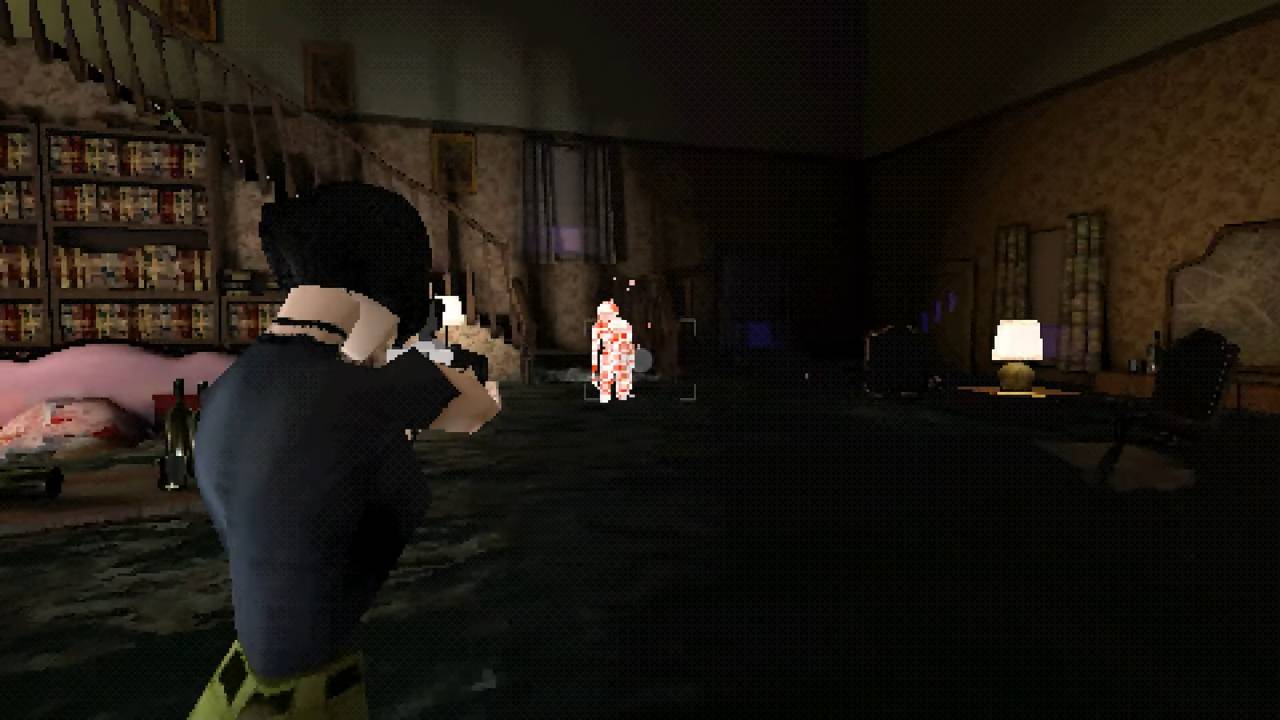
The main weapon in Heartworm is Sam's film camera, which instantly makes me think of Fatal Frame, though the similarities are mostly on the surface. This game doesn't have an upgrade system, first-person shooting, or ways to take pictures of ghosts. You can shoot targets from behind or from a fixed camera angle, but the fixed camera angle can be awkward when you're zoomed in. The combat is a lot like old-school Resident Evil: you point, shoot, run away, and do it again.
The enemies are one of the best parts. Humanoid figures that don't move, sometimes statues, sometimes mannequins, and sometimes... things that should not be explained. Their sound design is great; creepy whispers and mechanical groans make them seem like they're always there. Sure, there are times when you'll feel scared, but most of the time, you'll be able to avoid fighting enemies. It's usually smarter to save film (ammo) than to waste it, but the game gives you a lot if you look around a lot.
You can use your camera as a light, too. You can flash it to quickly light up an area, which seems like a mechanic that would be great for building tension. It works at first. It helps the dark, shadowy house at the start of the game the most. But later settings, like open woods, don't really use it to their advantage.
There are short parts with dummies that would have been great if they relied more on the flash mechanic. Imagine moving through completely dark areas where the flash shows you things that weren't there before. That tension isn't quite as strong as it could be.
Puzzles, on the other hand, are useful but not very hard. The worst kind of puzzles are the ones that are just easy regurgitation puzzles, where you find a password and enter it two rooms later. There is a symbol-based tile-sorting game that is a little more interesting, but other than that, you won't have much trouble with most of them.
There is no doubt that the problems are what make Heartworm fun. The maker wants you to feel like you earned them instead of getting them for free. It feels great to find an answer because you noticed something in the environment, like a painting, a noise, or a small detail in a corner.
Combat isn't usually scary, puzzles aren't always hard to solve, and managing inventory never really requires you to make a trade. Whichever one comes last is the most annoying. The game adds the idea of juggling items, which is what makes Resident Evil's inventory system so tense. But once you get eight spots, that tension goes away. You won't have to make many choices. The method feels like it's just there to make things easier, even though it was meant to make things more stressful.
Heartworm looks kind of old-fashioned and new at the same time. Textures and presentation take me back to the PS1 era, with rough edges and lo-fi grit that make it feel rightfully cursed. But the lighting, camera work, and overall composition are all current. Even better, the game does a great job with its camera views. Fixed angles and changing angles work together without any problems.
Wide shots show how big some places are, making Sam look like a dot and making you feel vulnerable and small. At times, you'll stop and just take it all in. This is especially true in the forest, where the camera stays still and the trees sway slowly, making the already strange world feel even stranger. Since the days of Silent Hill and Resident Evil, this is one of the best ways to use the camera. It's a big part of why Heartworm feels like a real love letter to the genre.
Another big strength is sound. The music is mostly piano-based and ranges from sad to unsettling. There are also a few strange, experimental tracks that are very confusing near the end of the game. Overall, the sound design is great, especially for the enemies.
The sounds of the machines, the thumps in the distance, and the background noise all do their job of making you feel uneasy without using loud stingers or cheap jump scares. When you walk into a room in the game, you hear something move but never see it. That alone shows how the sound here makes the fear stronger. Monsters aren't always after you. The environment is following you around.
.jpg)
Heartworm won't change the way survival horror games are made. It doesn't mean to. Instead, it's a very personal and carefully written letter to the history of the genre. It does a great job of capturing the mood, pace, setting, and even the flaws of horror games from the PS1 era.
The fighting, puzzles, and item management aren't challenging enough to keep you interested, but the story, camera work, and haunting beauty more than make up for it. The film-like eye behind the lens makes it stand out. All of the shots look like they were put together by someone who knows how to scare you. Even though the demo may be a little out of date, the full version looks like it will have careful puzzles, a steady pace, and handcrafted horror.
Yes, not everyone will like it. If you're used to fast-paced battles and being held while you learn, this may feel like a relic from the past. But if you want something more thoughtful, creepy, and atmospheric, you should definitely check out Heartworm. The slow burn is full of tension, and the frame is made to look like a cursed film clip. It was made for horror fans who like a scalpel over a sledgehammer.
Editor, NoobFeed
Verdict
A haunting tribute to PS1-era horror—slow, stylish, and sincere. Heartworm favors atmosphere over action, delivering an emotional journey that lingers long after the credits roll. Not perfect, but unforgettable, nostalgic, and beautifully unsettling.
78
Related News
No Data.