
Steam Machine Update Improves Verification as Steam Frame Nears Launch
Valve continues refining the Steam hardware ecosystem with improved verification, smoother streaming, and expanded compatibility across multiple devices.
Hardware by Masaru Hoshino on Jul 17, 2026
Valve continues to expand its Steam hardware ecosystem with a series of meaningful updates for the Steam Machine, Steam Deck, and the upcoming Steam Frame. The latest improvements focus on a more detailed verification system, smoother game streaming, and broader compatibility across devices.
At the same time, new Steam Frame changes strongly suggest that the headset is approaching launch, with Valve steadily preparing both developers and users for its arrival.
.jpg)
Steam Machine Verification System Continues to Improve
The first major update focuses on the Steam Machine and its verification system, which is honestly getting a lot better. The Steam Deck verification system still feels a little messy, and it almost seems like Valve may be saving a complete overhaul for the eventual release of the Steam Deck 2.
However, with the Steam Machine, regular SteamOS, and Steam Frame, Valve appears to be putting much more effort into ensuring that games genuinely perform well before receiving the bright green verification check mark on the Steam Store. Finding the verification status depends on where the game is being viewed.
On the Steam Machine, users simply open a game's page, move to the Game Info section, and the verification status appears alongside the reasons the title was or was not verified. On other platforms, users can visit the Steam Store page, scroll down to the verification section, select Learn More, and browse through the different compatibility columns. It starts with Steam Deck compatibility, followed by SteamOS, Steam Machine, and eventually Steam Frame.
Assassin's Creed Black Flag Resynced Earns Full Verification
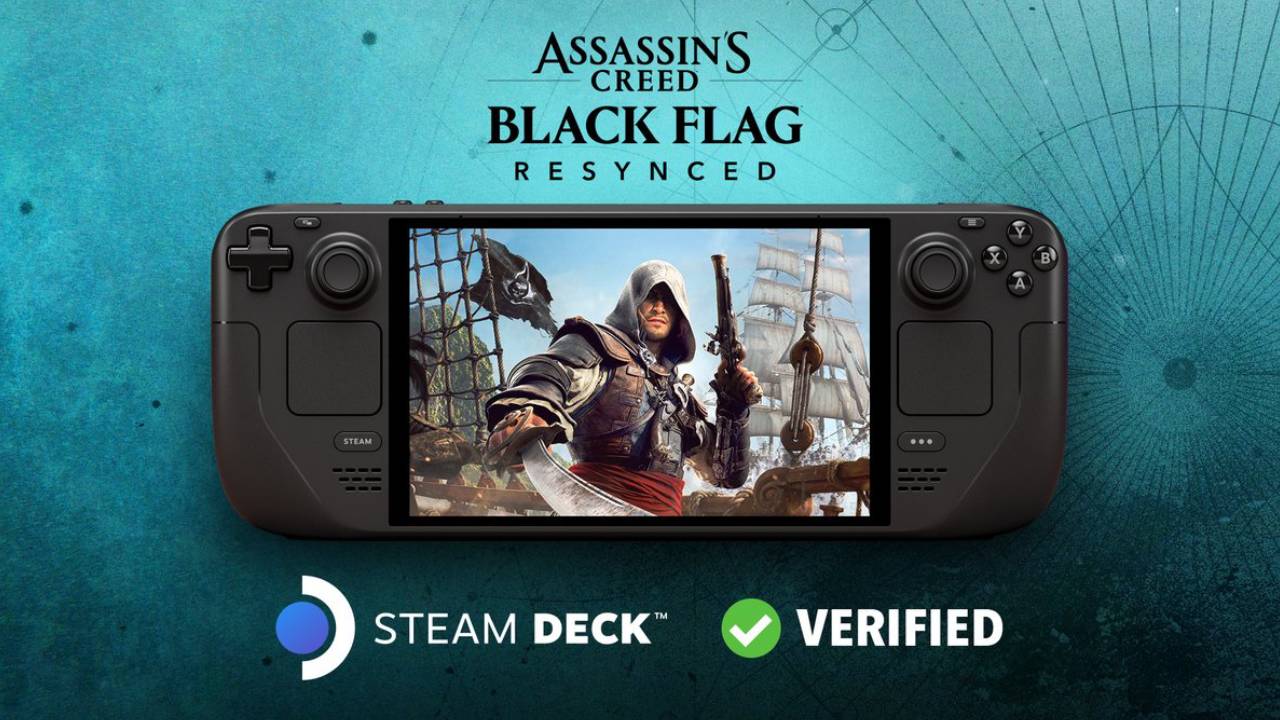
One of the first major games to receive full Steam Machine verification at launch was Assassin's Creed Black Flag Resynced. According to the verification details, every gameplay function works correctly with the default controller configuration, the interface displays the correct Steam controller icons, and the default graphics configuration performs well on the Steam Machine.
The game still includes DRM, although it does not rely on the complete Ubisoft launcher. Instead, the launcher briefly appears during the initial startup without requiring repeated logins. While completely removing launchers would still be preferable, this lighter implementation is a welcome improvement because future launcher updates are far less likely to break Linux compatibility.
More significantly, the game's verification genuinely represents real-world performance. Extensive testing began by replicating the PlayStation 5 settings. The PS5 has a Performance Mode at 1080p 60fps, a Balanced Mode at 1440p 40fps with light ray tracing, and a Quality Mode at 30fps with more visual settings enabled. The base Steam Machine setup was 1440p High at 30 fps with FSR 4 Quality, which was already doing quite well.
After upgrading to an LG B5 OLED television with four HDMI ports supporting full 120Hz, the settings were adjusted by keeping the High preset, switching FSR 4 to Balanced, and setting the target to 40 fps. The result was an almost perfectly locked 40fps throughout gameplay, with only occasional cutscenes briefly fluctuating between 39fps and 42fps. Overall performance closely matched the PlayStation 5 while using mostly higher graphical settings.
Early Performance Creates Confidence
One verified game does not establish a trend, but the early testing has been encouraging. Every demanding title tested on the Steam Machine performed well, including John Carpenter's Toxic Commando and Dying Light: The Beast. Based on those results, there are a few concerns about major compatibility problems for at least the next several years.
Valve's hardware approach is also a good sign for the platform's long-term prospects. Valve has also said future hardware modifications can arrive considerably faster than Steam Deck updates, because the Steam Deck uses off-the-shelf components rather than waiting for dedicated handheld CPUs.
Although the Steam Machine experienced a somewhat rocky launch because of pricing concerns, reception has steadily improved as more users experience its actual gaming performance. The other important goal is just to reduce the total price."
Demand remains strong, and devices are selling out quickly, but hitting the original objective of approximately $750 would be a huge boost for the platform. Even at $1,500 for the 2TB model, the overall experience still feels worthwhile, which reflects positively on the platform as a whole.
Steam Machine and Steam Deck Ecosystem Continues to Expand
One particularly exciting area for future development is the interaction between the Steam Machine and the Steam Deck. The possibility of creating an ecosystem similar to the Wii U, especially through emulation and connected gameplay, opens up interesting possibilities. Valve also appears to be designing these products with cross-device compatibility in mind, while the community will almost certainly expand those capabilities even further.
New Frame Rate Limiter Improves Streaming
Another important update introduces support for limiting games to 59.94fps. While that number may seem unusual, most televisions running at 60 Hz actually operate at 59.94 Hz.
Without matching the television's refresh rate, streaming gameplay from a Steam Machine or gaming PC to a television through a docked Steam Deck can produce a ghost frame approximately every 17 seconds. That brief synchronization causes noticeable stuttering and inconsistent input latency.
With the new frame limiter, we can now match the television's actual refresh rate, resulting in noticeably smoother streaming performance and much more consistent gameplay.
Steam Frame Appears Ready for Launch
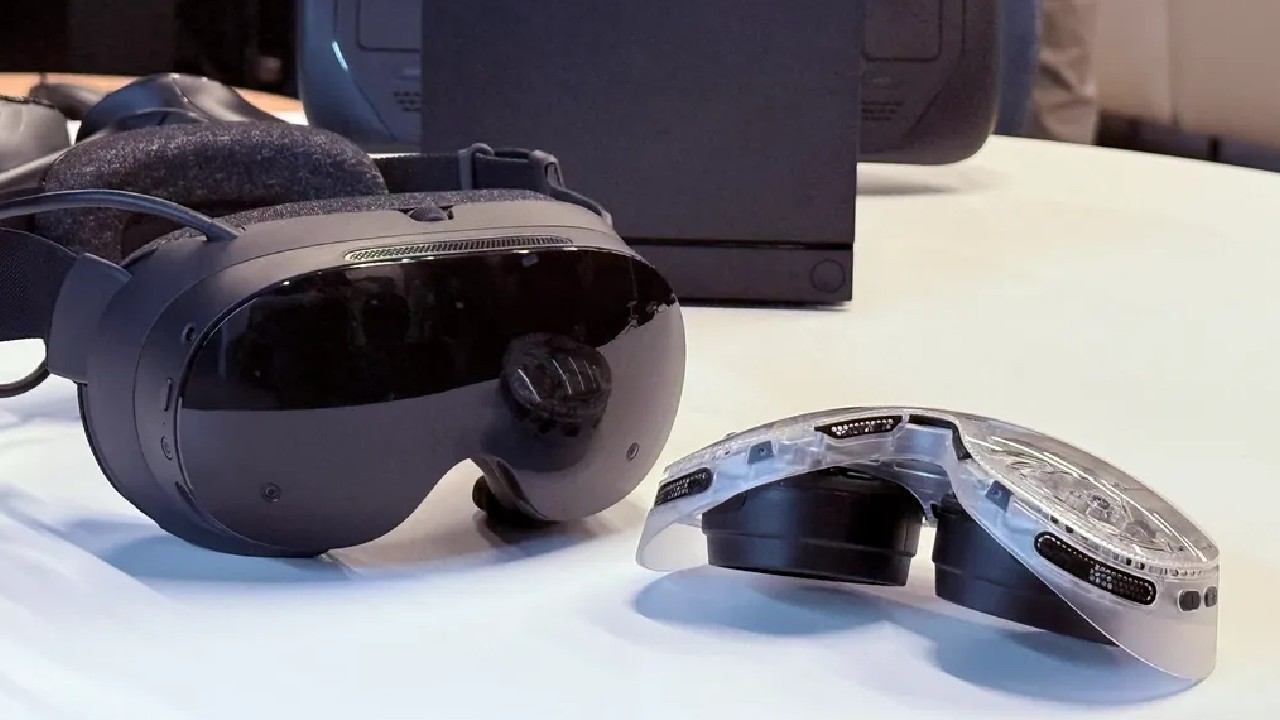
Valve also appears to be making significant progress toward launching the Steam Frame. Development kits have already been distributed to developers, many of whom have started sharing gameplay footage from their VR projects. While creator access still appears limited, the latest platform updates strongly indicate that public availability is getting much closer.
One of the biggest additions is a dedicated "Great on Frame" section within Steam. Surprisingly, the Steam Machine does not yet have an equivalent section, although that will likely arrive after Valve gathers additional compatibility data.
Initially, the Steam Frame category only included several Valve-developed games, such as Portal 2. However, additional third-party titles gradually appeared throughout the weekend as more developers completed the verification process. As the verified library continues expanding, the list should grow naturally over time.
Valve Updates Steam Frame Verification Rules
Valve has also modified the verification requirements for traditional non-VR games on the Steam Frame. Previously, one requirement stated that games needed to render at the Steam Frame's full native resolution of 2096×2096. That requirement created compatibility problems for games like Portal 2.
The updated guidelines now allow traditional 2D games to run inside floating virtual windows rather than requiring full-screen square rendering. Developers can instead target common aspect ratios such as 1920×1080, 1280×720, 1920×1200, or 1280×800. That decision dramatically expands the available launch library because nearly the entire Steam catalog becomes more accessible without requiring major modifications.
Flat Games Could Become a Major Strength
VR already offers many excellent experiences, including Metro Awakening, Half-Life: Alyx, Boneworks, Bonelab, Moss, and Arizona Sunshine. However, many long-time VR users have already experienced most of those flagship titles.
What becomes even more exciting is the ability to access an existing Steam library through SteamOS while using the same SD card across devices such as the ROG Ally, Xbox Ally X, Steam Machine, and eventually the Steam Frame. Combined with Valve's ongoing Android-to-Linux compatibility work, that creates an increasingly unified ecosystem where games move easily between different hardware platforms.
Pricing Expectations and Valve's Hardware Strategy
Pricing remains one of the biggest unanswered questions surrounding the Steam Frame. However, consumers generally understand that standalone VR hardware naturally costs more to manufacture than traditional gaming systems. High-resolution displays, onboard batteries, passthrough cameras, hand tracking, dedicated controllers, and other VR components significantly increase production costs.
However, it seems the Steam Machine, Steam Deck, and Steam Frame all target the same clientele. They are for keen users who are willing to spend on the gear and make the most of it. Valve is building an environment around gamers who use their devices frequently and are invested in the broader Steam platform, rather than pursuing the largest possible install base.
Editor, NoobFeed
Gaming Hardware Updates
No Data.