
Luna Abyss Review
PlayStation 5 Pro
Inside Luna Abyss, where movement is survival, memories are fragmented, and every mission literally costs you years of your life.
Reviewed by Mahi Araf on May 20, 2026
From the moment you step into Luna Abyss, you're not really stepping into a normal sci-fi shooter setup. You're being dropped into a punishment system disguised as a mission structure. You play as Fawkes, a prisoner with over 9,000 days on her sentence, and that number isn't just background flavor. It's the entire framing device for why you exist in this world at all.
You're not a hero on a mission. You're someone being sent deeper and deeper into an impossible structure buried beneath the moon's surface, all in exchange for shaving years off your punishment. That structure, the Abyss, sits under a broken, artificial moon that once held a colony called Greymont.
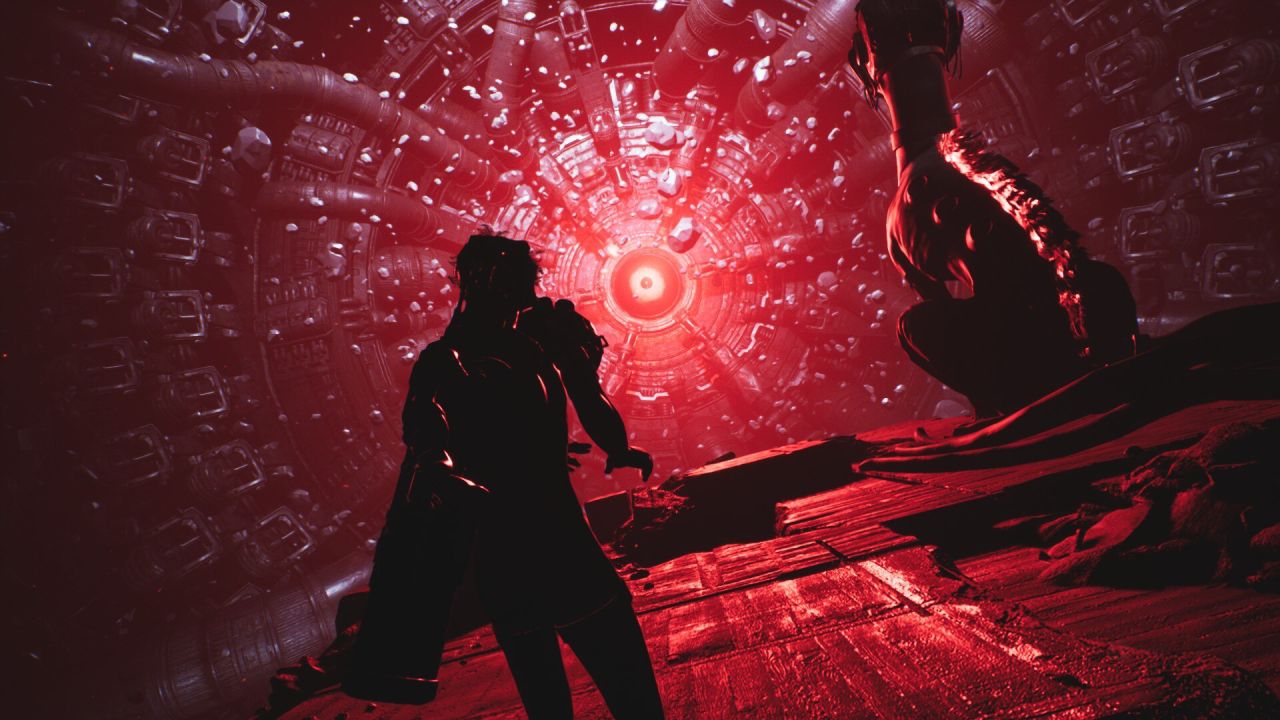
What used to be a functioning settlement is now a collapsed ruin wrapped around something far larger and far older than anything you're initially told. As you move through it, you slowly piece together what happened through fragments, codex entries, and conversations, rather than direct explanations. The game doesn't rush to fill in the blanks for you, and that uncertainty becomes part of how you experience it.
The world you're dropped into feels like a mix of industrial horror and sci-fi religious myth.
There's talk of corruption, a collective, a choir, and an Old Father, but none of it is handed to you cleanly. Instead, you're constantly assembling meaning from broken pieces, and that lack of clarity is intentional. It's not trying to confuse you for the sake of it, but it does expect you to sit in that confusion for a while before things start to connect.
Fawkes isn't alone in this descent. You're constantly accompanied by Aylin, an artificial intelligence fused into the prison system itself. Aylin isn't just a voice giving orders. It actively monitors your progress, deducts years from your sentence when you complete objectives, and speaks with a tone that feels both clinical and oddly unfamiliar with human emotion.
The relationship between you and Aylin becomes one of the central threads holding the experience together, especially since most of your time between missions is spent inside a confined cell where the two of you interact. That prison cell becomes a strange narrative anchor point.
After each descent into the Abyss, you return there, and instead of relief, you get more conversation, more evaluation, and more reminders that your existence is measured in time being taken away or added back, depending on your performance. It creates a loop where progress doesn't feel like freedom, just a slightly different version of control.
The history behind Luna Abyss also matters in understanding what it's trying to be.
Developed by Kwalee Labs, formerly known as Bonsai Collective, the game has been shown in various forms over time, including early versions that appeared at industry events like GDC. Even in those early demos, the identity was already visible.
.jpg)
A first-person shooter built around movement, exploration, and a heavy atmospheric tone that leans into gothic sci-fi imagery and unsettling world design. Over time, what you get now feels like a more complete version of those ideas, especially in how it structures its missions and boss encounters. As you progress through Luna Abyss, you realize the narrative isn't just about what happened to Greymont or what the Abyss actually is.
It's also about control systems, punishment logic, and the idea of redemption being tied to performance. Every mission you complete reduces your sentence, but dying adds time back onto it, which makes even failure part of the system's punishment structure.
You're not just trying to survive; you're constantly negotiating with a system that measures your worth in days. The story introduces figures like the Old Father, a prison authority figure tied to the deeper structure of the Abyss, and Urion, a character who transforms Fawkes and hints at a larger plan unfolding beneath everything you're doing.
There's also mention of a Scourge that wiped out the colony, leaving behind ruins, mutated environments, and whatever remains of the system that once governed this place. The writing often leans into cryptic delivery, with long, deliberate dialogue that sometimes slows the pace, but it contributes to the sense that you're not meant to fully understand things right away.
Enemies in Luna Abyss aren't always complex in behavior, especially early on.
You deal with shielded units, ranged attackers, and environmental hazards more than highly intelligent AI. The real pressure comes later, especially during boss encounters where the design shifts into dense projectile patterns and movement-heavy survival. These fights feel closer to bullet hell design than traditional shooter encounters, forcing you to constantly read movement patterns rather than just aim and shoot.
The bosses also serve as structural checkpoints for the game's difficulty curve. Most of your time in regular missions is relatively controlled, even somewhat easy, but bosses suddenly demand full attention. That contrast is intentional, creating a rhythm where exploration and traversal build you up for spikes of intensity, rather than a constant pressure the whole time.
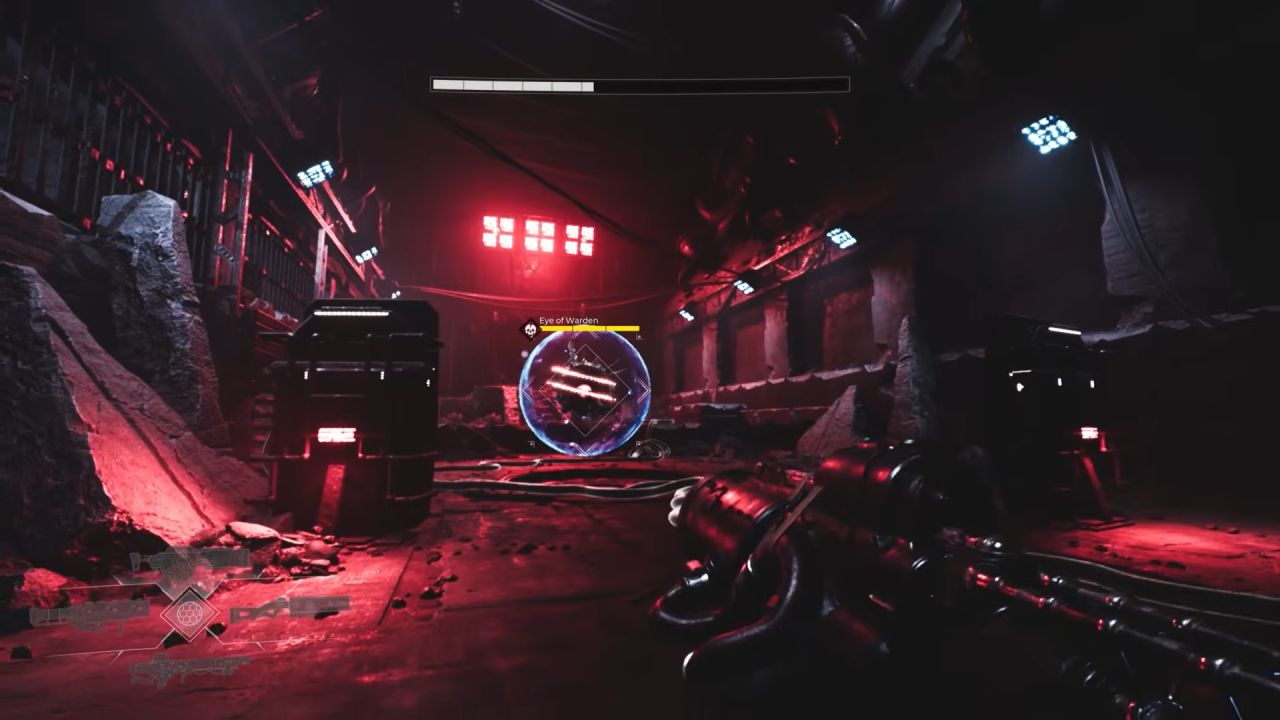
Movement is one of the strongest pillars of Luna Abyss. You're always running, jumping, double jumping, dashing, and sliding through environments designed to test your control of momentum. The structure of levels often shifts between traversal-heavy segments and combat arenas, and the transitions between the two are smooth enough that you rarely feel a hard break in pacing.
It's the kind of flow that makes you rely on instinct more than careful planning. A major part of that movement system comes from the game's body separation mechanic. Early on, Fawkes is separated from her physical form and exists as a kind of consciousness that can interact with floating objects in the environment.
You use these to launch yourself across gaps, essentially turning the environment into a network of traversal nodes. It adds a layer of navigation that goes beyond simple platforming, becoming a core part of how you move through space. Alongside this, you also get access to traditional movement tools like wall running and timed platforming sections.
These aren't punishing in the strict sense, since failure usually just costs a bit of health or sends you back slightly rather than restarting entire sections. That makes experimentation easier, and you're encouraged to learn the rhythm of movement without constant frustration.
Combat ties directly into movement rather than sitting separately from it.
You're using weapons that don't rely on traditional ammo systems. Instead, everything operates based on an overheating mechanism. You can fire continuously until your weapon overheats, at which point you either wait for it to cool down or switch to another weapon. This changes how you approach fights because you're not managing ammo resources in the traditional sense. You're managing rhythm.
Your arsenal is limited but purposeful. You're working with a scout-style assault rifle with auto-lock functionality, a shotgun-like shield breaker, and a long-range precision weapon like a railgun or sniper-type tool, depending on progression. Each weapon serves a specific role, and switching between them isn't optional in many cases. Certain enemies demand specific damage types or approaches, making your loadout feel more like a set of tools than a collection of upgrades.
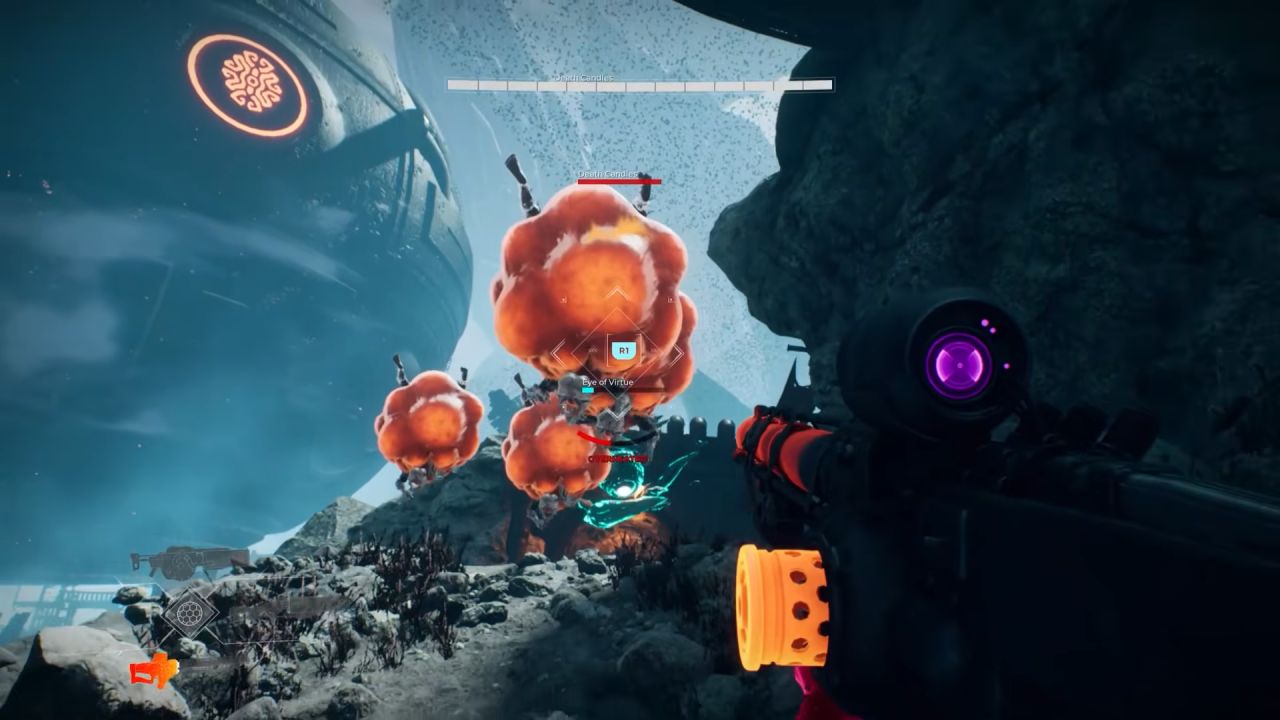
The lock-on system plays a big part in the feel of combat. It means you can focus on movement rather than precise aiming, which aligns with the game's emphasis on mobility. However, early combat can feel less demanding than expected. In non-boss fights, you're usually just auto-targeting your way through encounters with little resistance.
Execution mechanics further layer combat flow. When you finish off enemies, you're given a choice: either trigger a healing effect or unleash an explosion. In practice, healing is often the more consistent choice, as the explosion may not always feel impactful enough to justify sacrificing survivability. It's a small decision point, but one that leans heavily toward one outcome in most situations.
There are also mech segments scattered throughout the experience.
These are the moments when you are operating large armored machines with heavy firepower and fewer mobility restrictions. These sections are brief but serve as pacing breaks, giving you a quick change of scale before heading back to standard traversal and combat. They don't last long enough to be a core system, but they do add variety to the experience.
Luna Abyss has a pretty linear level design, and that influences a lot of how you interact with it. Usually, you'll be moving along well-defined paths rather than branching routes to explore. Collectibles like lore entries, health upgrades, and progression items are generally located along the main path, not buried in optional areas.
That reduces the sense of discovery for players who prefer exploration-heavy design, but it keeps pacing focused. The overall structure is also firmly mission-based. Despite some roguelike-like presentation in tone and atmosphere, there is no procedural structure or branching replay loop. You move through a fixed narrative path, completing objectives that directly influence your prison sentence.
This clarity helps maintain focus, but it also limits replay-driven variation. Progression is tightly tied to that sentence system. Completing missions reduces your time, making you feel like you're gradually working toward something, even if the nature of that "freedom" remains unclear.
Dying, however, adds time back, reinforcing the idea that failure is not neutral but actively punitive within the world's logic. This system quietly pushes you to improve without relying on traditional leveling mechanics.
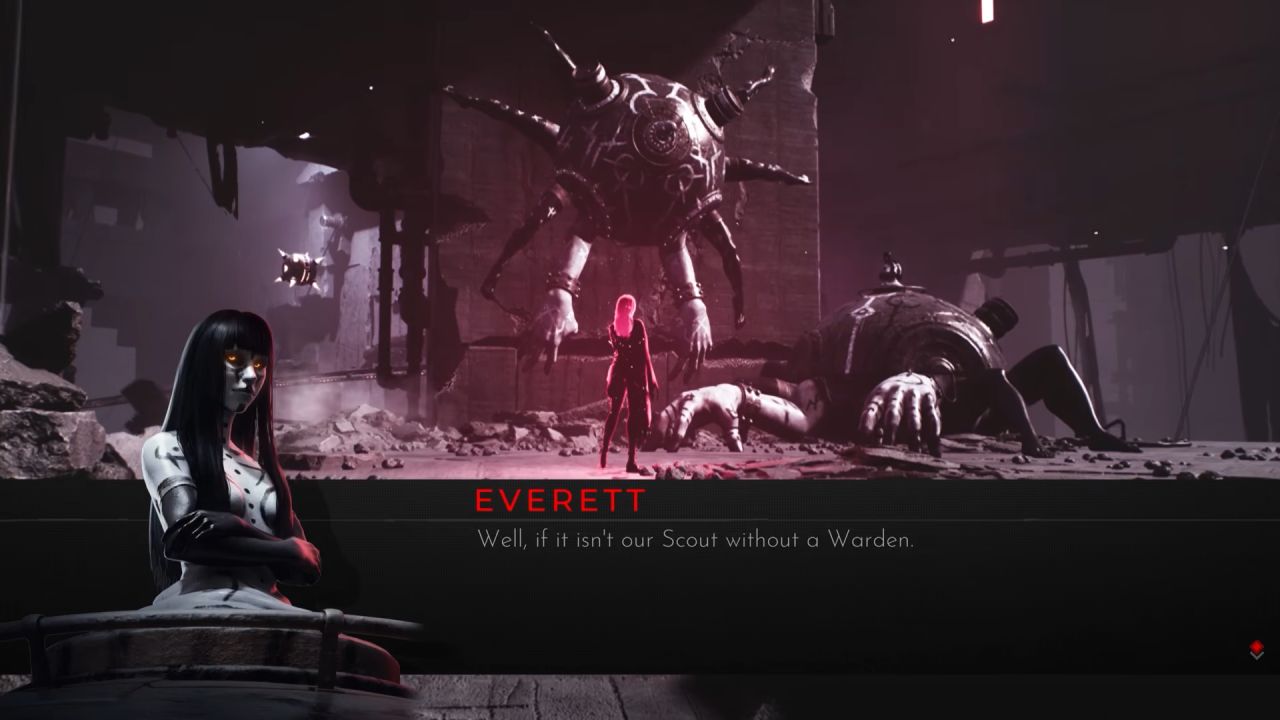
Luna Abyss establishes its identity visually fast and hard.
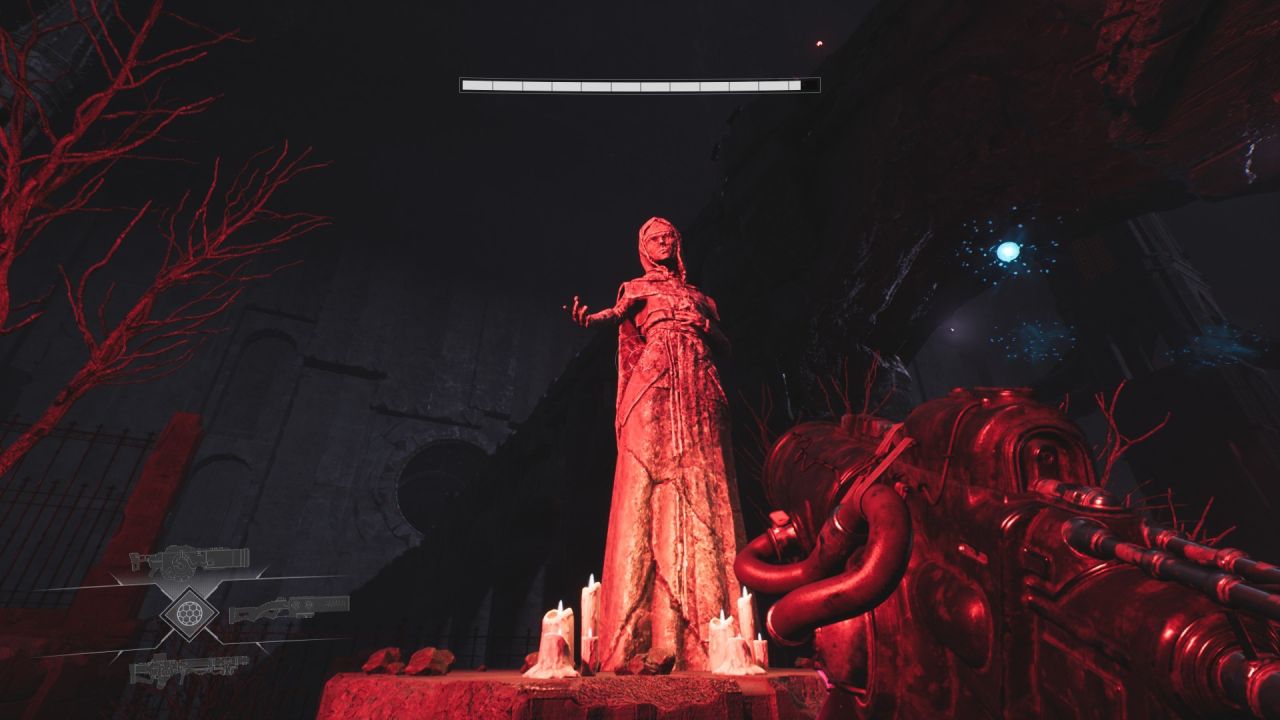
The neon purple and pinks, mixed with the heavy industrial environments, create a distinct contrast that further reinforces the unnaturalness of the Abyss. Sizes range from large open drops to tight corridors, all textured with mechanical detail and decay. But after a while, the visual language does start to repeat itself. Most areas share the same industrial tones and ruined structures, so longer sessions can feel visually familiar.
World design communicates scale. Consistently. You feel tiny inside enormous, decaying systems that stretch far beyond the immediate path you are on. The creature design also ventures into unsettling territory, biomechanical horror, reinforcing the idea that this place is not just abandoned but actively corrupted by something deeper.
Sound design and voice work are crucial for the atmosphere. Aylin's voice is especially striking for its calm, controlled, and slightly detached from human emotion, which is appropriate for its role as an overseer and system interface.
Other characters, like Urion, go for a slower, more dramatic delivery that leans into mystery rather than clarity. The performances are satisfactory, but the pacing of the dialogue sometimes makes conversations feel longer than necessary, especially when the story deliberately withholds information.
Luna Abyss is, overall, a focused, linear FPS with solid movement mechanics and a clear identity rooted in atmospheric storytelling and combat inspired by bullet hells. It doesn't try to be an open-world experience or a roguelike loop. Instead, it commits to a structured journey through a hostile environment where movement, survival, and understanding of the world converge along a controlled path.
There are clear limitations, especially in enemy complexity during standard encounters and the repetitive nature of its environments. But at the same time, the boss fights, movement systems, and core idea of a punishment-driven mission structure give it a distinct personality that sets it apart from more conventional shooters.
Luna Abyss ultimately feels like a game built around ideas rather than scale. It doesn't overwhelm you with systems or branching paths. It gives you a confined structure and asks you to learn how to move, shoot, and survive within it, all while slowly uncovering what lies beneath the moon.
Senior Editor, NoobFeed
Verdict
Luna Abyss is a focused, atmospheric FPS with strong movement and standout boss fights, held back by easy combat pacing and linear structure.
88
Related News
No Data.