
Rekindled Trails Review
PC
A soul-searching journey wrapped in cozy mechanics and inventory puzzles.
Reviewed by Zahra Morshed on Aug 03, 2025
Rekindled Trails marks a soulful debut from indie developer Kiwick, setting itself apart in the crowded field of cozy life sims. Riding high on a successful Steam Next Fest showing—with over 6,000 new wishlists and a spot in the top 5% of demos—Rekindled Trails launches as a bold fusion of inventory strategy and narrative-driven exploration.
What begins as a humble tale about a mysterious debt and a forgotten deity soon blossoms into an introspective, charming adventure. With clear inspirations drawn from genre staples like Stardew Valley and Dredge, Rekindled Trails injects originality by blending traditional crafting and resource collection with tactical inventory management and a deeper emotional arc. In the cozy chaos of crumbling villages and talking flames, Rekindled Trails crafts a new identity for narrative-rich slice-of-life gameplay.
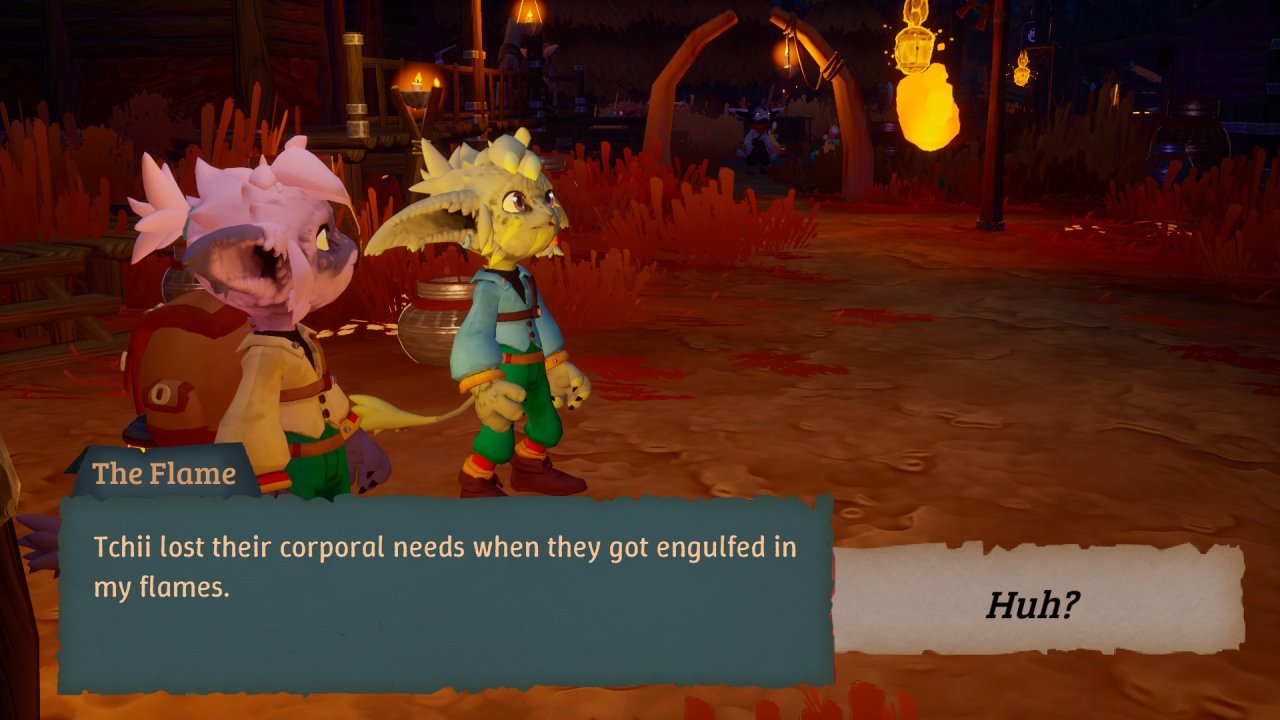
The core of Rekindled Trails lies in your role as a nameless protagonist who awakens in the ethereal world of Aurteris with no memory and a hauntingly mysterious debt. A sentient Flame—a deity once revered by the people—has imprisoned the protagonist's soul.
Now it's up to you to help the Flame regain its lost respect by rebuilding villages, making peace with townspeople who have lost hope, and bringing back the world's spiritual energy. The trip is both real and symbolic: paths need to be reopened, connections need to be rekindled, and truths need to be found again.
Set against a backdrop of fallen civilizations and ecological disrepair, Rekindled Trails unravels its mystery slowly. Clues scattered through character dialogue, visual storytelling, and collectible lore hint at a cataclysmic mistake the protagonist once made—perhaps one that led to the very downfall of the Flame's worship.
Each new village reveals fragments of this forgotten history, and each completed task brings the protagonist closer to uncovering what truly happened. Rekindled Trails excels in using quiet, meditative storytelling to create emotional resonance.
There's no sweeping cinematic drama—only soft, persistent melancholy underscoring every act of redemption. The more you engage with the world and its people, the more the layers of guilt, hope, and remembrance begin to peel away, leaving behind something warm and quietly profound.
Rekindled Trails unfolds through a trinity of mechanics: exploration, resource gathering, and strategic inventory management. Your main goal is to help the Flame regain its power by fixing up towns all over Aurteris. One way to do this is to complete quests, gather materials, and trade using a special tile-based method for selling.
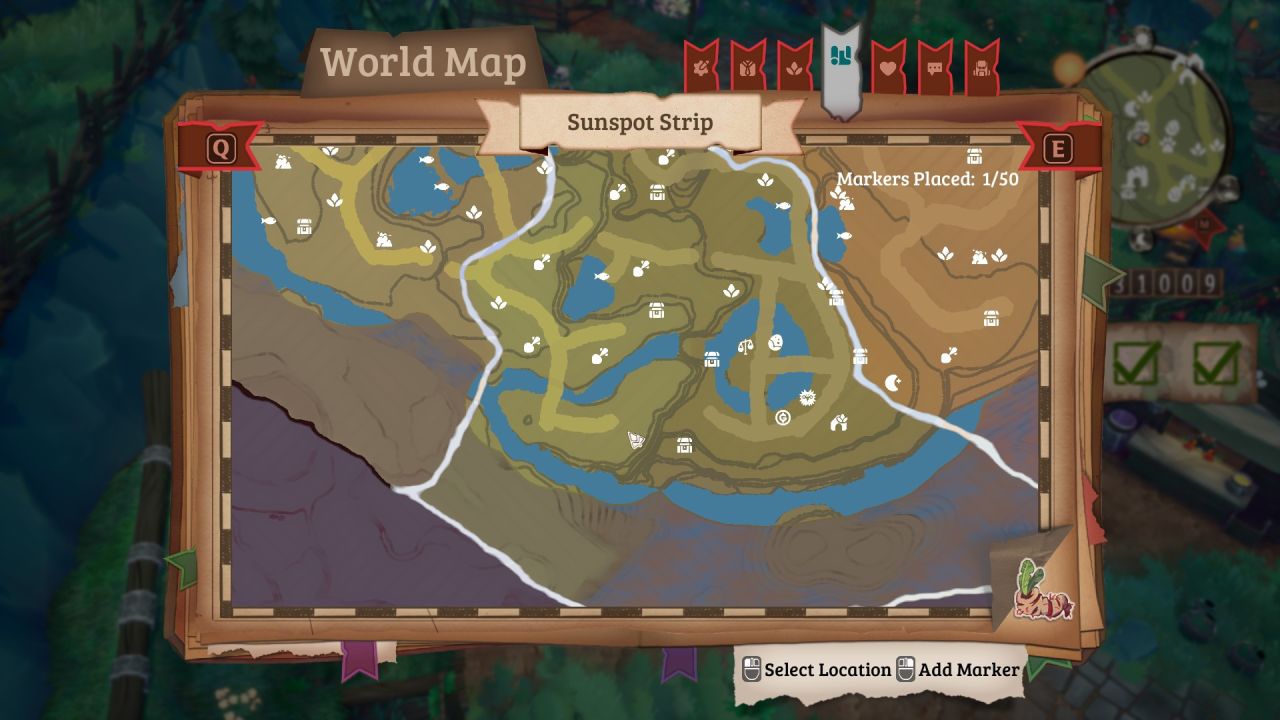
Exploration is segmented into interconnected zones, each gradually unlocked by fulfilling town requests or earning access via trade. The area starts out empty and fills in as the game goes on, which fits with the theme of rediscovery.
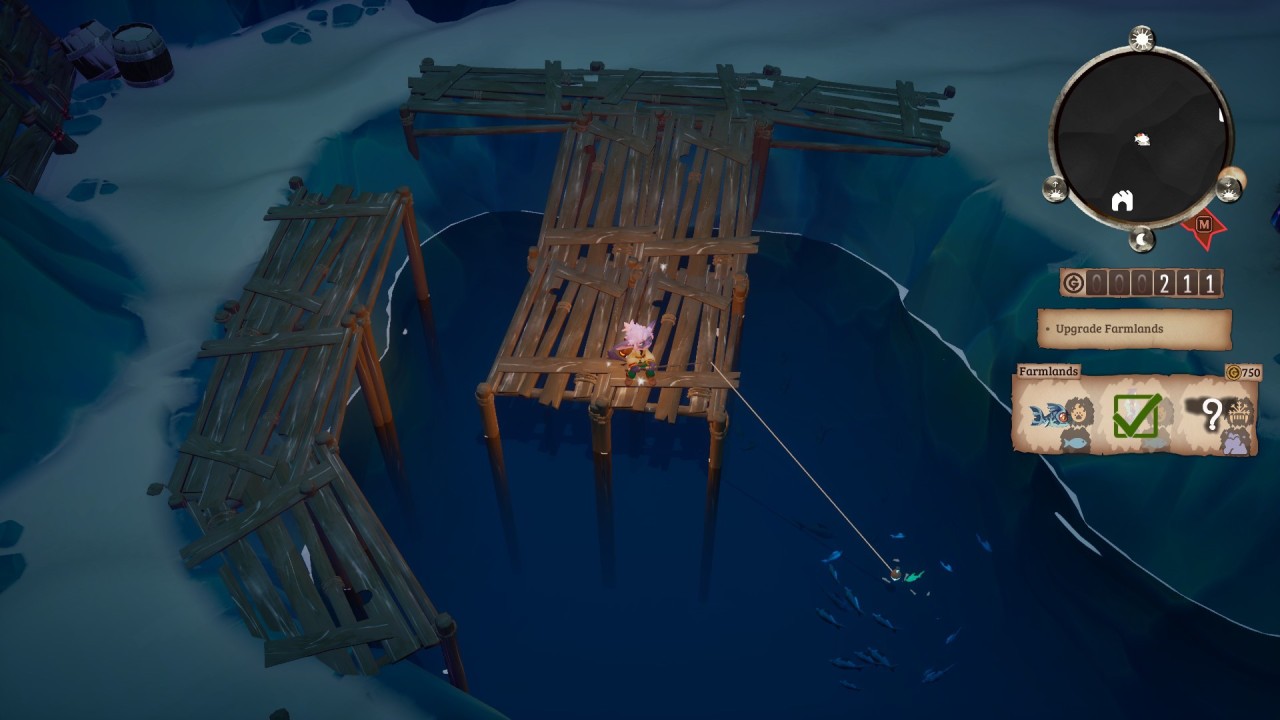
You interact with this world in a useful way by using tools like pickaxes, fishing rods, and gloves. Each of these tools comes with a simple mini-game that helps you mine, fish, and gather. Even though these parts are simple, they keep a regular loop that is easy to get into.
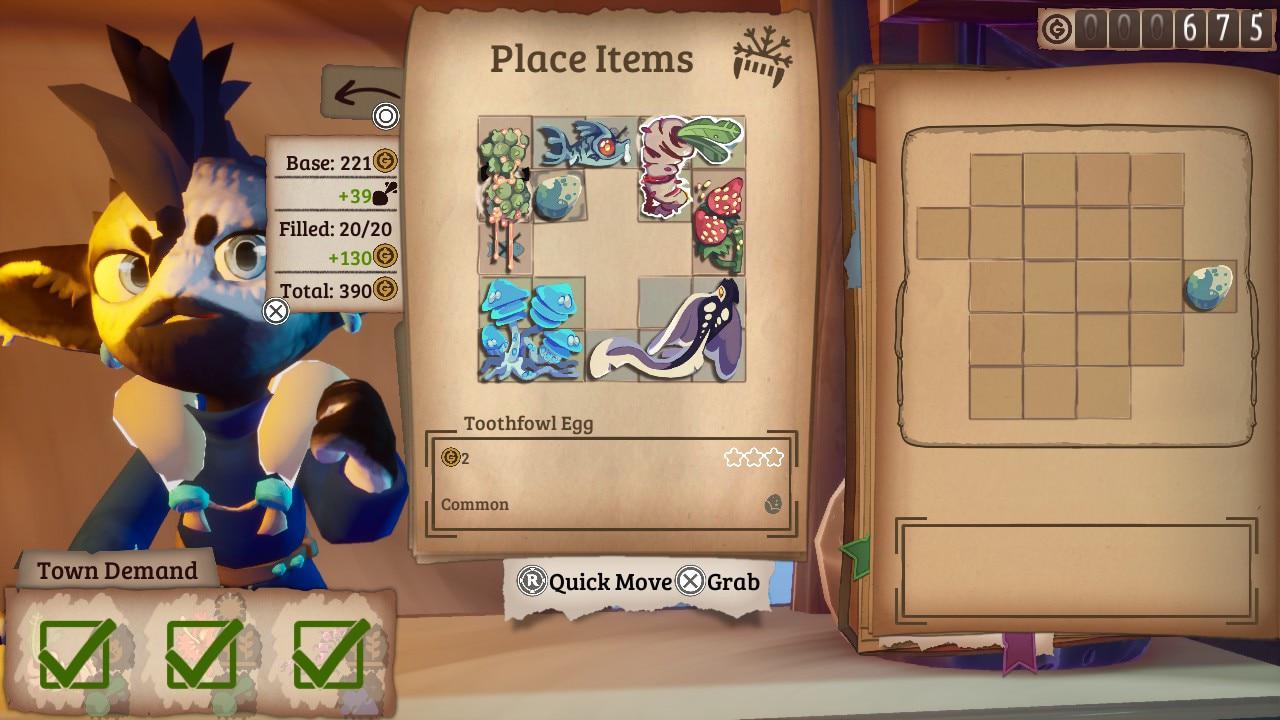
Inventory, however, is where Rekindled Trails differentiates itself from its genre peers. Instead of simple drag-and-drop or sell-all features, every item has a physical shape, and selling becomes a mini-game of spatial optimization.
Merchants present varied grid patterns—some tiles are cursed with penalties, others blessed with bonuses. You must arrange their goods in configurations that maximize profit while adhering to each merchant's constraints. It's a bit of Stardew Valley meets Tetris, and it's more addictive than it has any right to be.
Town upgrades serve as progression anchors. With each community investment—be it a new building, upgraded bed, or expanded storage—the world opens further. This system not only paces exploration but also rewards your consistency and strategic thinking. Inventory space is limited early on, pushing you to constantly balance exploration with optimization. It adds meaningful friction, making every resource and every sale count.
There is no traditional combat in Rekindled Trails, but that absence makes room for an innovative approach to puzzles. Instead of enemies, the game tasks you with economic puzzles based on their inventory and problems with logistics. This choice fits perfectly with the peaceful mood of the game while still keeping your mind active.
The tile-based selling system stands as the primary "puzzle" mechanic. Every vendor has a different-shaped grid, embedded with cursed tiles that reduce value, and bonus tiles that increase value. Your task is to fit their oddly-shaped resources—fish, herbs, ore—into the merchant's grid as efficiently as possible.
These spatial puzzles are like the stress in survival games, where every inch of your goods is important. But these puzzles are more fun and less stressful. When you're not in business, puzzles show up as quest conditions. To move town upgrades forward, villagers ask for specific combos or amounts of items. These aren't really hard, but they do add some variety to the loop of games.
The game leans into the peaceful challenge genre, testing your planning, foresight, and resource management without ever punishing you for experimenting. What's brilliant about this system is how it turns ordinary life sim tasks—like selling fish—into thoughtful activities. There's almost a Zen-like satisfaction in rotating an item into place, clearing just enough space, and watching your coin count rise.
Rekindled Trails chooses a different way to move forward. There is no XP bar, skill tree, or growing up through battle. Instead, character growth is shown by easier entry, better gear, and towns that have been fixed up. A village moves forward every time a building is built, a road is cleared, or a person is helped.
For growth, it's very important to get resources and sell them quickly. When you solve merchant tasks, you get coins that can be used to make the town better. Towns have places to sleep, shops where you can buy things, new jobs, and most importantly, more items. At first, the backpack is way too small, but each update makes it easier to explore, so you can go on longer trips and get better prizes.
This concept puts the community ahead of the battle. You're not killing monsters to get gear; instead, you're fixing up homes and restoring trust. Progress is not a number, but a feeling and a useful thing. This method rewards you if you are patient, pay attention to details, and are consistent. It's perfect for players who like slow progress over big stat boosts.
The art in Rekindled Trails has a hand-drawn warmth that goes well with the game's main theme. The environments are lovingly painted with vibrant tones and gentle gradients, presenting forests, crumbling ruins, and sleepy towns in an almost storybook fashion. The world of Aurteris feels alive, not through bustling activity, but through its stillness—the rustle of trees, the quiet hum of the wind, the soft flicker of the Flame.
Character and NPC designs embrace simplicity without sacrificing charm. Each character is distinct, with subtle animations that breathe life into their otherwise modest models. The Flame itself, a glowing companion housed in a lantern, is a standout element—ethereal, emotive, and ever-present, tethering you narratively and visually to your purpose.
Even on low-end computers, performance stays stable across all platforms, which is a credit to Kiwick's optimized art direction. Rekindled Trails doesn't have AAA quality, but it doesn't need it. Its beauty is in how subtly it makes you feel through mood rather than showiness.
The music in Rekindled Trails is a quiet masterpiece. Composed with care and purpose, it fits with the emotional flow of the game without ever being too much. Peaceful piano melodies and soft ambient tracks make the game more relaxing by providing a soundscape for discovery.
There aren't many sound effects, but they work well. A strong sense of place can come from hearing the crunch of shoes on dirt, the splash of a fish, or the clink of an item being sold. The Flame's vocal interjections are sometimes soft and intentional, which fits with how mysterious it is. There's a kind of musical storytelling going on here; as towns come back to life, so does the soundscape, which quietly supports the story's progression through changing sounds.
One small complaint: if you are used to more dramatic experiences, you might not like that there isn't full voice acting. But the choice seems to have been made on purpose—it keeps the tone calm and lets the world speak for itself.
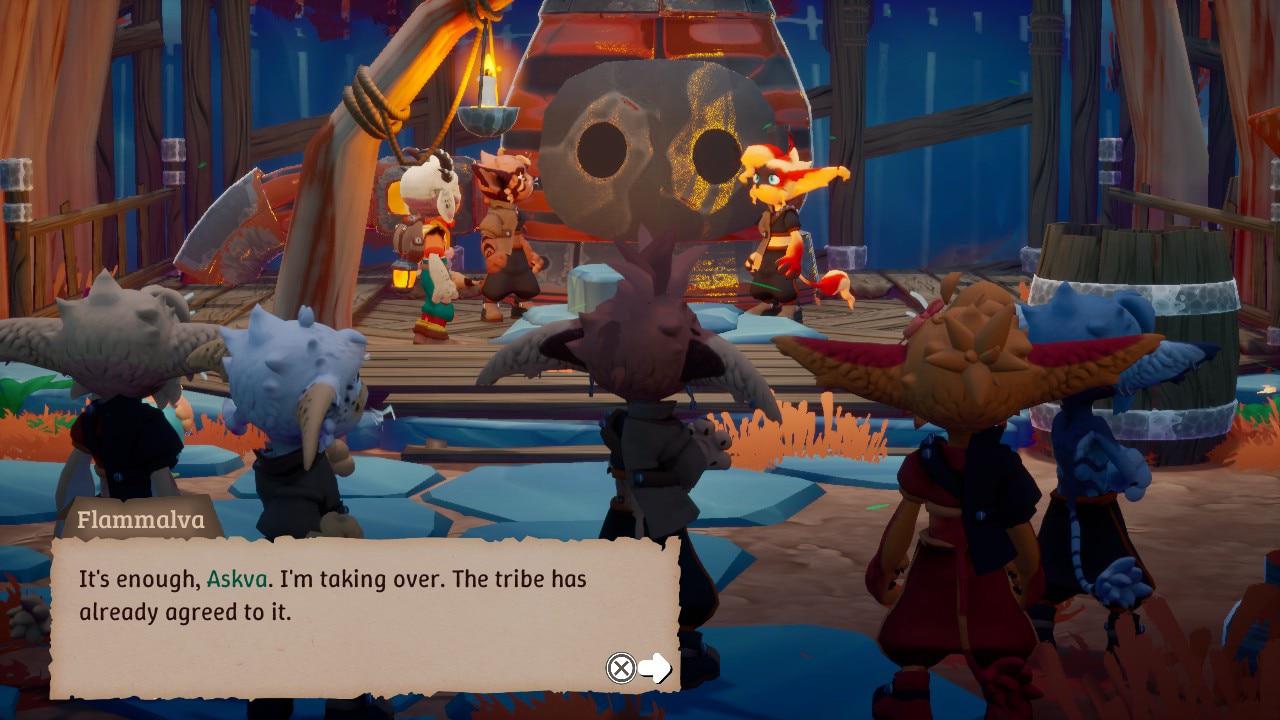
Rekindled Trails isn't just another life simulation game; it's a thoughtful look at forgiveness, remembering, and rebuilding your emotions. It uses familiar gameplay elements from games like Stardew Valley and Dredge, but it changes them around to make something unique, moving, and very satisfying. Every step you take in Aurteris rebuilds not just the world, but the self, and that's a rare thing in gaming.
The lack of combat, while notable, is never felt as a loss. Its place is now a calm tension, a light of duty, memory, and hope that never goes out. Kiwick has done something amazing: he has made a game that heals you one quest and grid problem at a time. Rekindled Trails is a soulful trip through regret and renewal for those who are willing to slow down and listen.
Contributor, NoobFeed
Verdict
Rekindled Trails delivers cozy storytelling with a brilliant inventory puzzle twist. Its quiet emotional core and inventive mechanics turn redemption into gameplay. A heartfelt, strategic adventure for those who like their stories slow-burning.
78
Related News
No Data.