
The King is Watching Switch Review
Nintendo Switch
A clever fusion of city building and roguelike strategy hindered by cumbersome console controls.
Reviewed by Elme Dhee on Jul 29, 2026
The King is Watching takes the familiar foundations of a fantasy kingdom builder and makes them much more restrictive. You still need to gather resources, construct buildings, train troops, and defend your territory, but none of those systems work automatically. Your people only work when they fall within the king's gaze, creating a simple building grid that underpins every strategic decision.
It is a straightforward premise that quickly becomes surprisingly demanding. That central idea is what gives the game its identity. Instead of simply expanding your base whenever you have enough resources, you have to consider which parts of the kingdom deserve your attention at any given moment.
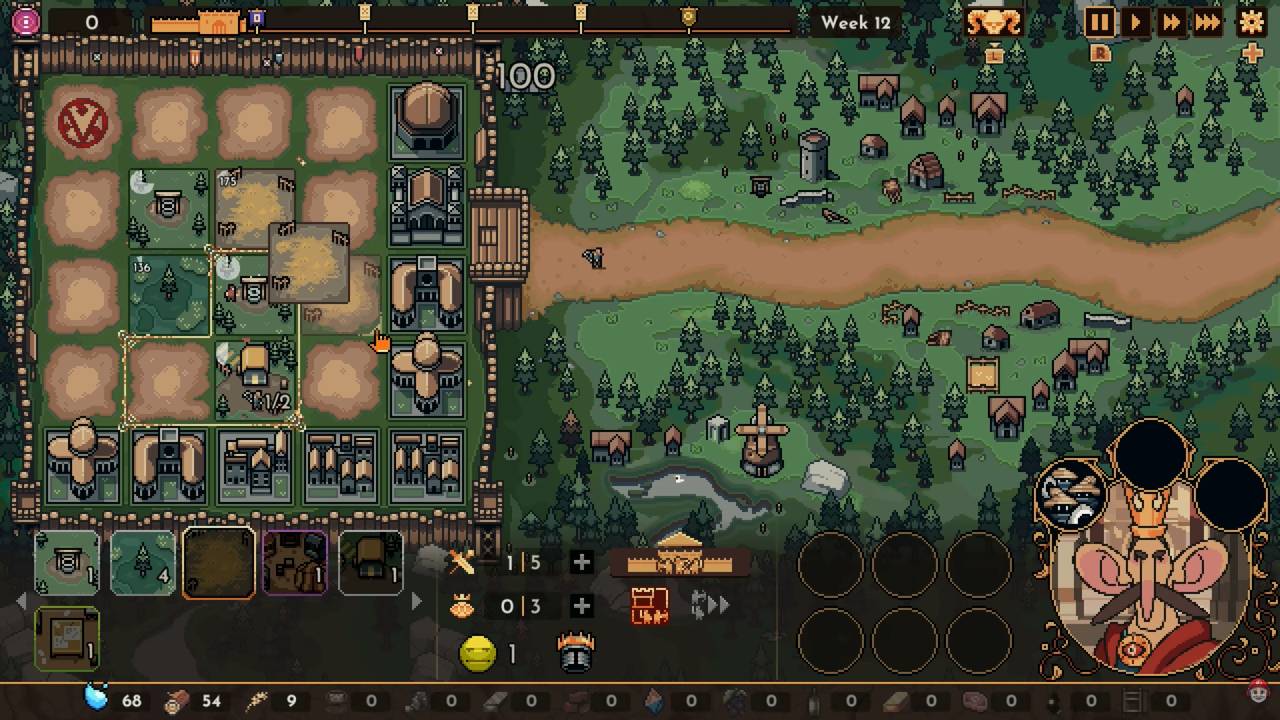
Water, wood, grain, military buildings, research, and defenses all compete for limited space within your vision, forcing you to think carefully before placing anything. For a roguelite, it is a smart way to make even basic construction decisions feel meaningful.
Your royal gaze becomes the kingdom's most important resource.
The king's vision is represented by a movable golden grid that determines which buildings are currently active. You can rotate and reposition it across the kingdom, meaning your town effectively changes depending on where you are looking. A farm outside the gaze might as well not exist, while shifting your attention toward it can suddenly bring an entire section of your economy back to life.
The mechanic sounds simple, but it shapes almost every decision you make. This makes base-building considerably more deliberate than it initially appears. Buildings that complement one another should ideally sit close together so they can operate within the same area of vision.
At the same time, military structures may need attention when enemies approach, forcing you to abandon resource production temporarily. The result is a steady balancing act between productivity and survival, with the king's gaze acting almost like another resource that must be managed carefully.
All waves force you to reconsider what your kingdom actually needs.
The pressure increases sharply once enemy waves begin arriving. A healthy economy is useful, but an impressive collection of farms means very little when your defenses cannot handle the next attack. Training different units requires specific buildings and resources, while maintaining your army demands an economy that can keep supplying them.
You therefore have to prepare for threats before they arrive rather than reacting once everything has already gone wrong. That tension gives the roguelite structure a natural purpose. Runs can go badly because of poor early decisions, inefficient layouts, or simply failing to prepare for what comes next.
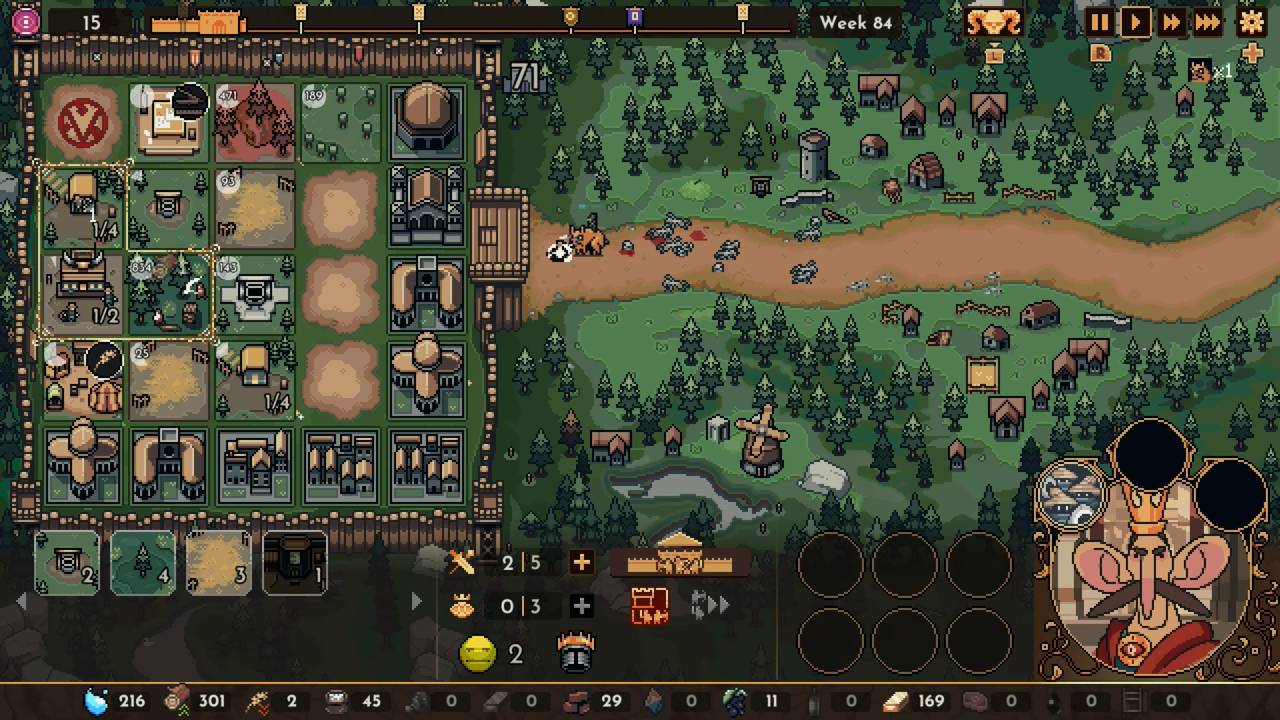
Losing can be frustrating, especially when a developing kingdom collapses because you neglected one resource chain, but it also encourages experimentation. Each failed attempt teaches you something about positioning, priorities, and which systems deserve your attention first. For a single-player strategy game, that trial-and-error loop works surprisingly well.
The strategy comes from managing several problems at once.
The King is Watching rarely lets you focus on a single objective. You might need wood for construction, grain for your population, resources for new troops, and a larger army before the next wave. At the same time, expanding your royal vision can make resource production more efficient, while increasing your army capacity gives you more room to withstand increasingly dangerous attacks.
Every improvement solves one problem while conceivably creating another. This creates a satisfying form of macro and micromanagement. You constantly look at the larger kingdom and decide what needs attention, then immediately shift your focus to whatever problem has become urgent.
Spells add a layer to that process, allowing you to support your forces or disrupt enemies when your ordinary defenses are not enough. The fantasy setting stays relatively simple, providing an appropriate backdrop without distracting from the strategy.
Progression gives all failed runs a reason to start another.
The roguelite structure would become exhausting if every attempt sent you back to the beginning with nothing to show for it. Thankfully, The King is Watching provides a steady stream of unlocks and upgrades between runs. New kings and royal advisers introduce different abilities, while additional structures and units gradually expand the strategies available to you.
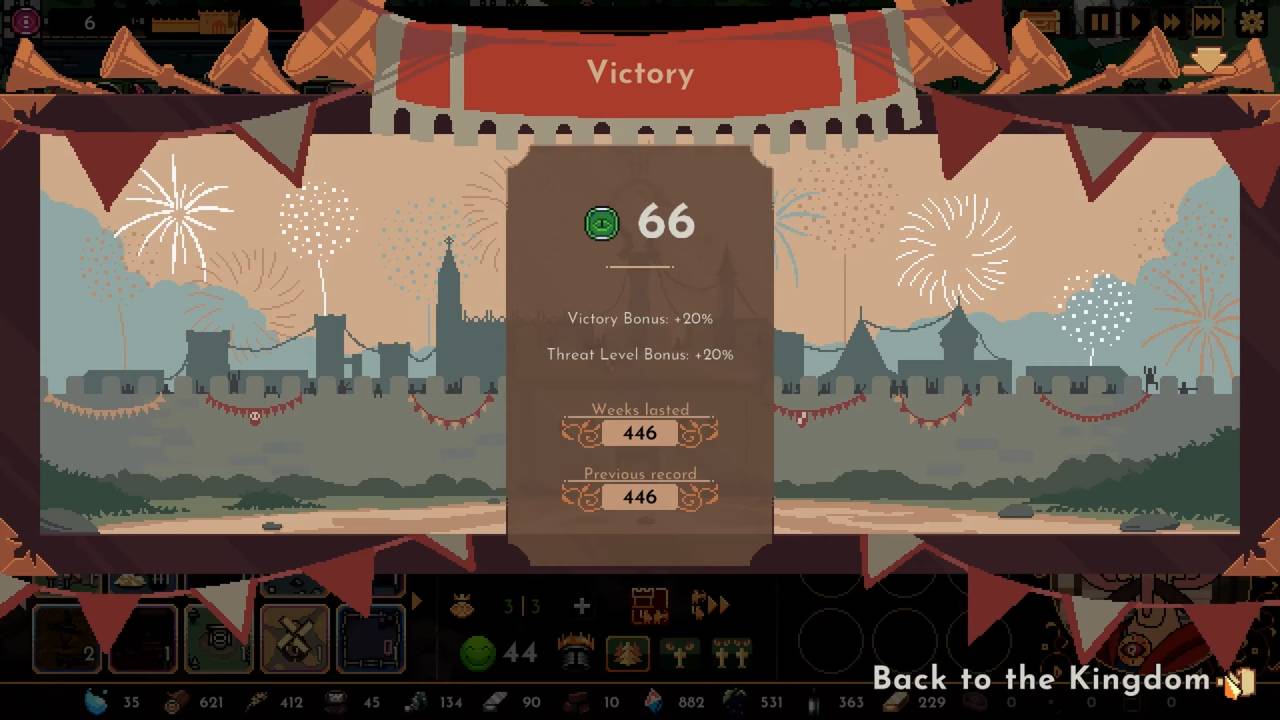
This sustains the single-player experience, progressing even when individual kingdoms inevitably collapse. That progression encourages experimentation without burying the player in unnecessary systems. Completing smaller challenges can also provide additional rewards, giving you reasons to attempt runs with unusual restrictions or different approaches.
It creates the familiar roguelite feeling of thinking, just one more run, because another upgrade, combination, or strategy is usually waiting to be tested. The King is Watching understands that good progression should make failure feel useful rather than simply punishing.
Editor, NoobFeed
Verdict
The King is Watching delivers an inventive, engaging strategic loop, but clunky Switch controls hold it back. It’s a great challenge, though best enjoyed on PC.
80
Related News
No Data.