
AI Demand Pushes Global RAM Prices Higher Across All Segments
Rising memory component costs driven by AI demand, reduced production, and shifting manufacturer priorities impact overall hardware market stability.
Hardware by Nahe Yan on Nov 20, 2025
The pricing landscape for memory has shifted significantly in recent months. Many kits now cost far more than they did not long ago, with increases seen across the entire market. The trend affects DDR5, DDR4, and even SSDs.
An overview of the causes, market mechanics, and potential consequences explains how this situation developed and which factors are driving it.
Current Price Movement
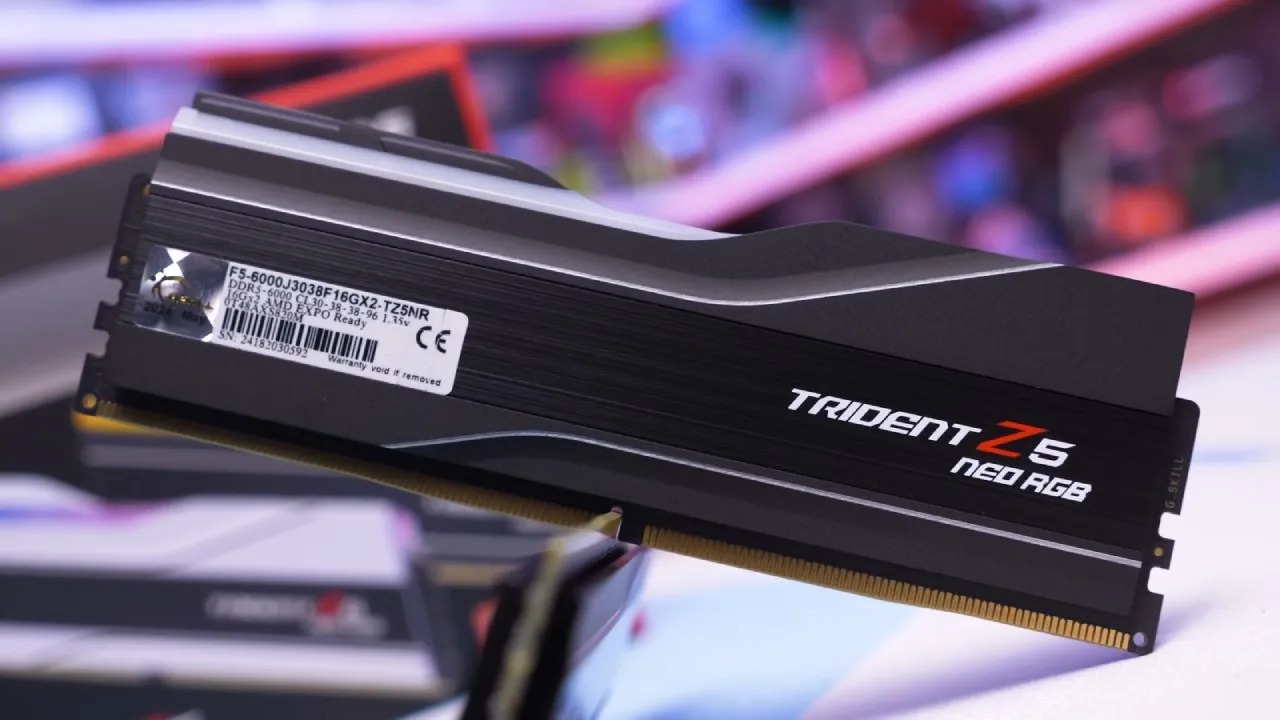
The DRAM market is developing rapidly. For instance, the price of a Kingston Fury Beast 32GB kit has climbed from 115€ to 206€. The price of a 16GB G.Skill Aegis DDR4 kit has been cut from 24€ to 94€.
The price of a 24GB Corsair 6000 kit increased from 260€ to 633€. The range of these increases is 100% to more than 200%.
Structure of the DRAM Market
DRAM market is dominated by three major manufacturers: Samsung, SK Hynix, and Micron. Together, they produce about 90% of the global supply. Any capacity shift or production adjustment from one of them immediately affects availability across the entire market. During the pandemic, high demand led to full inventories.
As remote work declined, consumer demand dropped. Producers reduced output just as a new major demand source emerged, beginning to absorb a large share of available production.
Impact of AI Demand
The strongest driver of the current situation is the demand for AI infrastructure. Companies such as OpenAI, Meta, and others require large quantities of server hardware. Recent reports indicate that roughly 900,000 wafers per month are used in AI projects, accounting for about 40% of total DRAM output.
AI servers use extremely large amounts of memory, often hundreds of gigabytes or several terabytes. Margins in this segment are higher than in consumer products, so manufacturers shift their production accordingly. Less RAM ends up in the consumer market, which pushes prices upward.
Decline in DDR4 Production
DDR4 has been in an end-of-life phase for some time. Many manufacturers have reduced or fully halted DDR4 production. At the same time, demand remains in place because many systems and workstations still rely on DDR4. Lower supply combined with steady demand creates shortages. Production capacity is increasingly allocated to DDR5, which amplifies price fluctuations in DDR4.
Effects on Other Hardware
The trend does not stop at RAM. SSD prices are rising as well, since NAND production follows similar capacity limitations. GPUs are also affected because graphics memory, such as GDDR6, GDDR7, and HBM, is heavily used in AI systems. Data centre GPUs are taking precedence for manufacturers, potentially pushing back the release of new graphics cards for gamers.
Possible Options for Buyers
A detailed assessment of our current hardware needs is essential. Should an upgrade be necessary, the secondhand market could provide a sensible option. Seasonal sales could present some opportunities, though prices won't be as high as last year's.
Anyone able to wait should understand that forecasts do not suggest a short-term price drop. The market is expected to stay tight through the next year and beyond.
Final Thoughts
The industry's structure is the primary driver of rising memory prices, which are not merely a passing trend. Changes in manufacturing processes, the growing application of artificial intelligence, and the breakdown of traditional conventions are the main forces behind the current advancement.
Consider your options thoroughly before proceeding with any enhancements. Consider the timing, the necessity, and the alternatives.
Also, check our other hardware articles:
- AMD Ryzen 9 9950X3D Review: Setting The Standard For 2025 Gaming CPU
- Amazon Luna 2025 Review: Is Prime Gaming's Cloud Service Your Go-To For Casual Fun?
- AMD RX 9070 XT Review: AMD's RDNA 4 Champion for 1440p Gaming
- GeForce Now Ultimate: Ditching Your Gaming PC For Cloud RTX 4080 Power?
- NVIDIA GeForce RTX 5080 Review (2025): Still A 4K Gaming Powerhouse?
- Intel Core Ultra 9 285K Review And Performance Breakdown (2025)
- AMD Ryzen 7 9800X3D Review: 3D V-Cache Goes God Mode with Stunning Gaming Performance
- Intel Core Ultra 9 285K vs AMD Ryzen 7 9800X3D: In-Depth Gaming Performance and Benchmark Comparison
- NVIDIA GeForce RTX 5080 Super Performance In Cyberpunk 2077: Path Tracing & DLSS 4.0 Tested
- RTX 5090 Performance Testing In GTA 5 – 1080p, 1440p, and 4K Max Settings Benchmark
- AMD Radeon RX 9070 XT In Cyberpunk 2077: Ray Tracing & FSR 4.0 Tested
- Intel Arc B580 Review: The $250 GPU Revolutionizing 1440p Gaming
- Intel Arc B570 Vs. B580: Value, Specs, And Real-World Gaming Performance
- Intel Arc B570 Review: Efficient Xe2 Performance At An Affordable Price
- RTX 5090 Laptop Vs. M4 Max MacBook Pro: Ultimate Raw Performance Vs. Battery Endurance
- Intel Arc b580 Vs. RTX 4060: Game Performance And Value Analysis
- RTX5090 Hell Is Us Demo 4K Ultra Benchmark: DLSS Vs. Native Performance Guide
- NVIDIA RTX 5070 Review: Mid-Range Muscle or Marketing Hype?
- Nintendo Switch 2 Review: Handheld Performance, Features & Value Breakdown
- RTX 5070 Ti Review: Performance, Thermals & Power Efficiency Tested
- Samsung Odyssey OLED G81SF Review 2025: Ultimate 32-Inch QD-OLED Gaming Monitor
- AMD RX 9070 Performance Review: Thermals, Clocks, and Real-World FPS
- AMD Ryzen 5 7600 Review: Best Budget Gaming CPU of 2025?
- AMD Radeon RX 7800 XT Review: RDNA 3 Power For Midrange Gaming
- Asus ROG RTX 5090 Astral OC Vs. Founders Edition: The 4K Gaming Benchmark
- ASUS ROG Astral RTX 5090 OC Edition Review: 32GB GDDR7 & 4K Gaming Benchmark
- Intel Core i5-13400F Gaming Performance: Still Worth It in 2025?
- ASUS GeForce RTX 5090 LC Liquid Cooled GPU Review: Unmatched Silence & Speed
- ASUS ROG Ally X Handheld Review: Double the Battery, Double the Comfort
- Lenovo Legion Go S Review: The Ultimate Steam Deck 2 Alternative
- Sapphire NITRO+ AMD Radeon RX 9070 XT Review: The Ultimate 4K Gaming GPU
- Alienware 16 Area 51 Review: The Ultimate 2025 Gaming Laptop
- Alienware Area-51 Review: Unmatched 4K, Thermal, and Acoustic Performance
- AMD Ryzen 7 7800X3D: Delivers Gaming Performance Far Beyond Expectations
- AMD Ryzen 9 7900X Review: Powering the AM5 Era with DDR5 & PCIe 5.0
- Intel Core i9‑14900K vs. AMD Ryzen 7 7800X3D: Power Profiles & Gaming Benchmarks
- Intel Core i9 14900K: Specs, Benchmarks, and Competitor Comparison
- ASRock Radeon RX 7800 XT Challenger OC Review: Best Price-to-Performance GPU of 2025
Editor, NoobFeed
Gaming Hardware Updates
No Data.