
Legion Go 2 Z2E vs. Z2 Gaming Performance Compared
SteamOS reduces stuttering and improves frame pacing across demanding handheld gaming workloads and power configurations.
Hardware by Shinji Okazaki on Jun 13, 2026
Handheld gaming PCs continue to advance, and with each advancement come new processors with varying performance, efficiency, and budget ratios. Lenovo Legion Go 2 comes with various AMD chips, so it's crucial to understand the differences between configurations in real gaming situations.
The SteamOS vs. Windows comparison of the AMD Z2 and Z2E on SteamOS provides an idea of how they differ in terms of frame rate, efficiency, and overall gaming experience, as well as the effects of SteamOS vs. Windows.
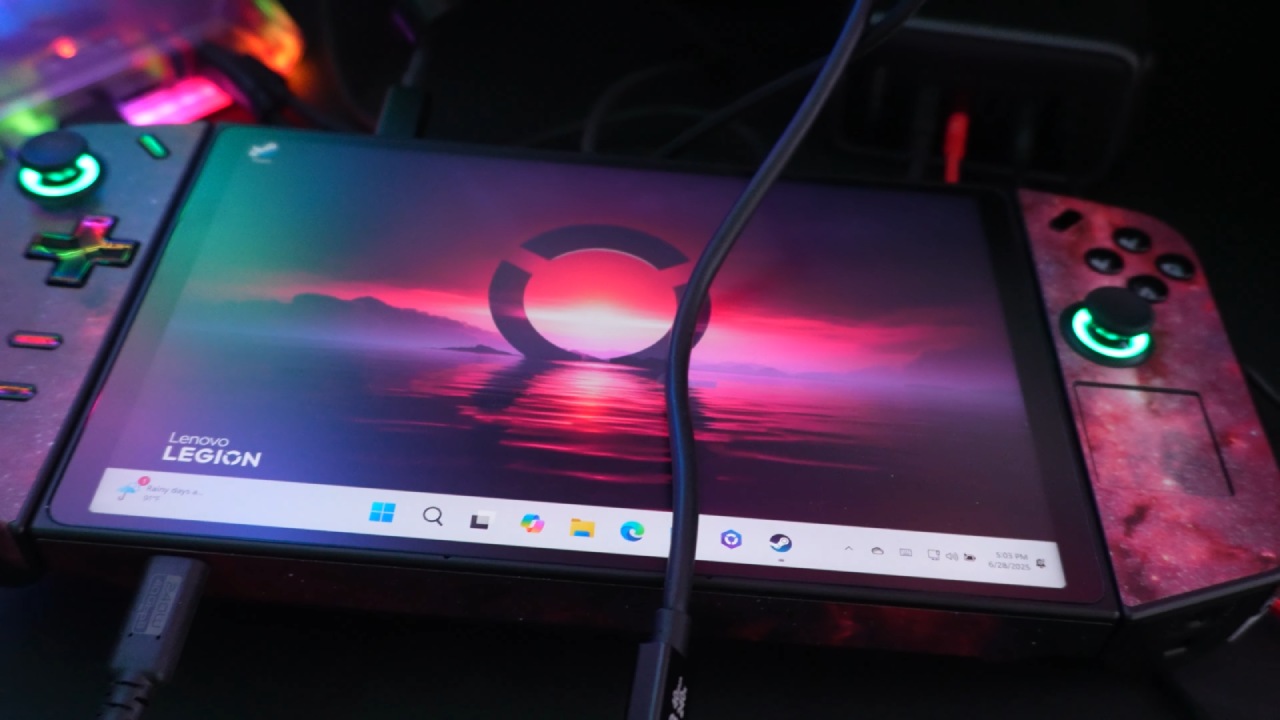
These are two Legion Go 2s. One is based on the AMD Z2, which also features the 780 M integrated GPU, and is quite similar to the Z1 Extreme. However, this is supposed to be more efficient. The answer is: Yes. Efficiency is increased, but raw performance is slightly raised. The other system is based on the Z2E and the 890M graphics, which are also currently the highest-end graphics card available.
Comparing the AMD Z2 and Z2E
Both platforms are SteamOS-based. Although SteamOS has its limitations, it's well-suited to this handheld and provides a standard platform for comparison. Final Fantasy 7 Rebirth is quite demanding to play. Final Fantasy 7 Rebirth is a fairly demanding game. The difference in performance is quite significant from 35W onward when Final Fantasy VII Rebirth begins.
This currently leaves the Z2E around 7-8 fps ahead – a 12%-15% improvement. Even at 30W, there is a clear Z2E power-savings advantage. The lag is still in the 7-8fps ballpark, with the performance rating still in the 12%-15% range. The results are not significantly different at 25W. Z2E maintains a 6-7 fps lead, which is a significant improvement.
If you cut down the power to 20W, it's even closer. Both systems perform at approximately the same level at these lower power levels. Differences are less pronounced, and overall performance is limited by the game's challenging nature. At lower wattages, the two chips perform nearly identically, and at higher wattages, the Z2E stands out slightly more, gaining about 10%.
One interesting thing is the lack of micro stutter on both systems. Final Fantasy VII Rehab has been plagued by DRM issues and micro-stuttering on Windows (even on high-powered machines). The game runs smoother on SteamOS. There isn't much to do about the stutter being visible; it mostly depends on how textures load.
The performance of the quizzes at lower wattages. The results of the quizzes at lower wattages. Z2E's performance is much better than the Z2 in some scenes at 20W. The difference in advantage can be up to 8-10fps, or even 20%! That's a big gap for a console that consumes so little power.
Pragmata Testing
Testing was shifted to Pragmata, specifically more dynamic scenes where the fluctuations in performance were easier to see. Z2E's lead ranged from 10% to 15% and was mostly even in enclosed areas; it was not particularly remarkable. But it was the more dynamic combat scenarios that highlighted the advantage.
In the 20W test, the Z2E was always faster, typically by about 10%. It's hard to make comparisons as combat is constantly evolving and testing is not easy. Yet, the Z2E had a strong lead. Both systems are very playable in SteamOS. Overall, the performance was good, with the Z2E maintaining a quantifiable edge.
The two processors were more evenly matched during CPU-intensive scenes, where numerous calculations were taking place concurrently, but the Z2E still topped the pack. Z2E generally held a 10% to 20% performance advantage in CPU-driven scenes, depending on the scene. The difference became more pronounced at 30W.
These scenes had a high CPU load, with many calculations running simultaneously. Z2 used them without any problems, while the Z2E always produced higher frame rates. For many, the benefit was 5-7fps. Average gains ranged from 15% to 20% across different workloads. The greater the available power budget, the more the Z2E benefited. The two processors were much more alike at lower power levels.
.jpg)
Overall Gaming Performance
In all of the games tested, the Z2E tended to offer 10% to 15% better performance than the Z2. In some individual situations, up to 20% was reached, but in such instances, the cases were close to the limits of error. The typical improvement is about 15%, and may vary based on the workload. That's a significant improvement, but it all comes down to price. So, is the Z2E an investment worth the additional expense?
However, if the Z2 version of the Legion Go 2 is significantly cheaper, then it's definitely worth considering. The other components remain the same, including the detachable controllers, display, ergonomics, cooling system, and design. A performance gap of about 15% can impact performance, particularly if aiming for frame rates in the 50-60 fps range.
In those cases, each extra frame can enhance the experience! But users may save hundreds of dollars by opting for another machine, the Z2, which retains all the other hardware features. However, if you're interested in the Legion Go 2 platform, both versions offer the same general setup.
Legion Go 2 is an excellent platform for SteamOS.
Almost all features are available as a first-class native application upon installation. There was only one brightness control that needed a simple script; it took only a few seconds to apply. The operating system offers a seamless and intuitive user experience, making it easy to recommend it for handheld gaming.
AMD Z2E delivers about 10%-15% higher performance in gaming applications than the base AMD Z2, and in select scenarios, up to 20%. This benefit is more apparent at higher power levels and diminishes at lower wattages. Z2E is the better choice for buyers who want to get the most out of their vehicle. Z2 is also appealing to those focused on value, thanks to its lower cost and hardware identical to the Legion Go 2.
SteamOS is a significant part of the overall experience, regardless of the processor. It offers better frame pacing, minimal micro-stutter, enhanced low-frame-rate support, and smooth sleep-mode operation, making it a great OS for handheld gaming. The testing results showed that one of the biggest upgrades for either setup was the move to SteamOS on the Legion Go 2.
Editor, NoobFeed
Gaming Hardware Updates
No Data.