
AMD's Upcoming CPUs, APUs, and the Rising Cost of Memory
AMD strengthens gaming hardware lineup amid rising memory costs and renewed GPU support commitments across all RDNA generations.
Hardware by Nahe Yan on Nov 06, 2025
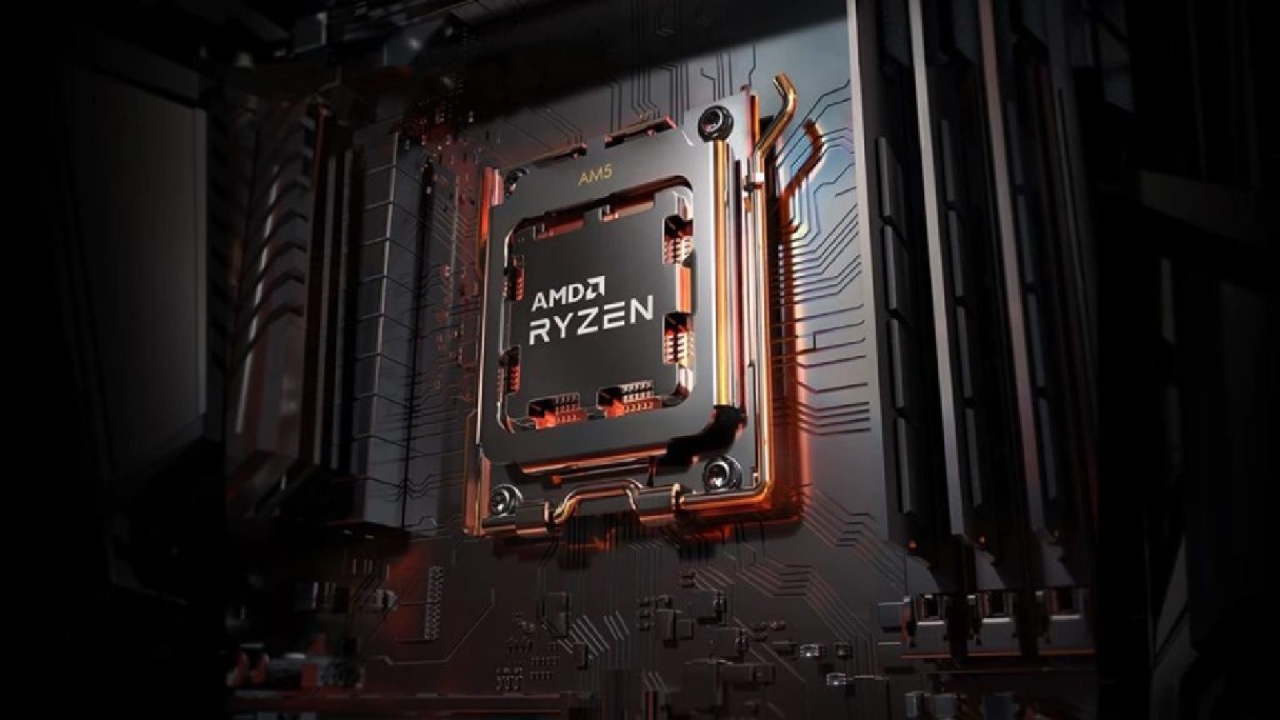
Things are getting challenging in the PC hardware business these days. AMD has made a big promise: it will soon release a new line of CPUs and gaming-focused APUs that will deliver the best price-to-performance ratios.
In the meantime, the sector is dealing with rising component prices that are now directly affecting retail customers.
Memory Prices Surge Due to AI Demand
The effects of rising DRAM prices are now being felt at the consumer level. Until recently, these increases were limited to industry and enterprise customers, but the demand for server-grade memory and HBM has now created a direct knock-on effect. Reports indicate that DRAM prices have increased by 171.8% year-over-year, and many consumers are noticing the change.
One person mentioned that they had to save for months to acquire a Corsair Dominator 64GB CL30 kit, which was priced at $280 earlier this year but is now $547 on PCPartPicker. Newegg and many other stores have a similar price trend, with several consumers reporting prices rose by more than €100 in just one week.
The primary reason for this rise is that firms are investing in and expanding their AI infrastructure. AData's chairman stated that this type of incident had not occurred in over 30 years.
He also stated that there would soon be a shortage of SSDs and HDDs. Pricing for SSDs hasn't increased significantly yet, but it's becoming more likely that storage device pricing will follow suit. If you want to buy a new SSD, do so immediately to avoid prices rising.
Game Optimization Support for RDNA 1 and RDNA 2
AMD has officially stated that RDNA 1 and RDNA 2 GPUs will continue to receive game optimization support. This contradicts an earlier decision that had made users worried. Initially, AMD placed older GPUs, such as the RX 5000 and RX 6000 series, on a separate driver branch, preventing them from receiving new game-optimization improvements.
AMD made it clear that all RDNA GPUs, from series 1 to 4, will receive driver updates on the first day of new game launches, following community feedback.
Some of these are Call of Duty: Black Ops 7, Crimson Desert, and Resident Evil: Requiem. The statement ensures that enhancements to game performance will be available simultaneously across all RDNA architectures that support them.
AMD had initially planned to put RDNA 1 and RDNA 2 into maintenance mode, but community outcry led them to reconsider. It is a good thing, but AMD needs to keep an eye on it to ensure it delivers on its promise.
Older GPUs may not support every new feature, such as FSR4 or the new Redstone technology. However, they still require regular optimization assistance to maintain their performance in future games.
AMD's Next Gaming CPU: Affordable and Efficient
Leaked benchmarks indicate that AMD is developing a new CPU, the Ryzen 7 9700X3D. It can run games well at a lower price than the 9800X3D. The 9700X3D features eight cores and 16 threads, much like the 9800X3D. However, it works at slightly lower clock speeds.
If the price is right, it could be a more affordable option than AMD's top-of-the-line X3D models. People who are really into computers can overclock their processors to achieve performance comparable to a higher-end model, which would be a better value overall.
The addition of another 3D V-Cache CPU to the range demonstrates AMD's intention to enhance gaming performance without charging top-tier prices.
.jpg)
AMD's New Ryzen Max APUs Target Gaming Performance
AMD is also expanding its Ryzen Max APU series, which already offers models with up to 16 cores and 32 threads, as well as integrated GPUs with up to 40 compute units. These APUs were primarily designed for professional use; however, current models suggest they can also be used for gaming.
A newly listed model, the Ryzen AI Max Plus 388, appears to include the full 40CU Radeon 8060S iGPU but with an 8-core, 16-thread CPU configuration. This balance of high GPU performance and moderate CPU power makes it well-suited for gaming applications rather than heavy workstation tasks.
The Ryzen AI Max Plus 392 is another version with 12 cores and 24 threads, but it keeps the full integrated GPU. If these facts are true, AMD might be preparing to release a line of APUs that are great for gaming and feature well-designed CPUs. This move aligns with AMD's broader plan to rely less on separate graphics processing units (GPUs) by integrating high-performance graphics directly into its processors.
Final Thoughts
The cost of RAM is rising, demand for AI infrastructure is growing, and new technologies are emerging. All of these things lead to a shifting picture for PC components. AMD's continued support for RDNA 1 and RDNA 2 GPUs, as well as its forthcoming CPUs and APUs, may provide gamers with additional options for hardware that is easier to use and performs better.
However, because the market is constantly evolving and parts are difficult to obtain, anyone who wants to upgrade or build a new computer must be cautious about when they do so.
Also, check our other AMD articles:
- AMD Ryzen 9 9950X3D Review: Setting The Standard For 2025 Gaming CPU
- AMD Ryzen 7 9800X3D Review: 3D V-Cache Goes God Mode with Stunning Gaming Performance
- AMD RX 9070 Performance Review: Thermals, Clocks, and Real-World FPS
- AMD Ryzen 5 7600 Review: Best Budget Gaming CPU of 2025?
- AMD Radeon RX 7800 XT Review: RDNA 3 Power For Midrange Gaming
- Sapphire NITRO+ AMD Radeon RX 9070 XT Review: The Ultimate 4K Gaming GPU
- AMD Ryzen 7 7800X3D: Delivers Gaming Performance Far Beyond Expectations
- AMD Ryzen 9 7900X Review: Powering the AM5 Era with DDR5 & PCIe 5.0
- ASRock Radeon RX 7800 XT Challenger OC Review: Best Price-to-Performance GPU of 2025
- Intel Core i9‑14900K vs. AMD Ryzen 7 7800X3D: Power Profiles & Gaming Benchmarks
Editor, NoobFeed
Gaming Hardware Updates
No Data.