
RAM Shortage Explained: Why Manufacturing Takes Months?
RAM production faces manufacturing delays, factory costs, limited capacity, and rising AI demand across the memory industry.
Hardware by Shinji Okazaki on Aug 09, 2026
The RAM shortage is everywhere, and demand for memory is higher than ever. Yet increasing RAM production is not as simple as opening more factories and making more chips. The manufacturing process takes months, requires expensive facilities, and depends on a small number of companies that control most of the DRAM supply.
Before we can understand why RAM supply is so difficult to increase, we need to look at how RAM is actually made. RAM can take around 3months to go through the full manufacturing process. It all starts with silicon. The silicon has to be purified and turned into large wafers. Those wafers then go through hundreds of individual manufacturing steps to create thousands of individual chips.
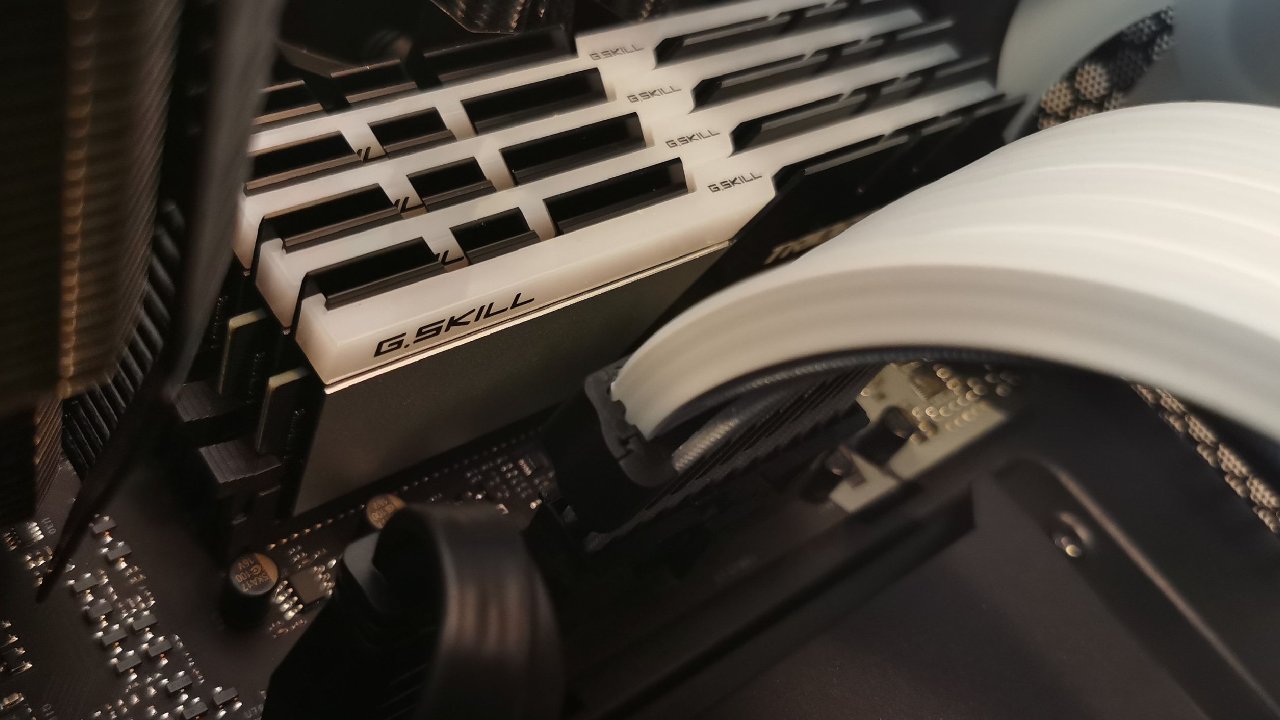
How RAM is Actually Made
Each chip has to be extremely precise because these chips are being built at a microscopic scale. Even a tiny defect can ruin a chip that has already spent weeks being manufactured. This creates one of the largest challenges in semiconductor production: yield.
Yield is basically the percentage of chips that successfully make it through manufacturing and can actually be sold. After testing, some of those chips will fail. Those failed chips represent wasted silicon, wasted materials, and weeks of factory time. Even if companies solve the yield problem, there is another issue. They need more factories.
The factories that make memory are called semiconductor fabrications, or fabs, and these are some of the most expensive manufacturing facilities on Earth. A modern semiconductor fabrication can cost tens of billions of dollars to build. Some new fabrications have price tags exceeding $ 20 billion before they even produce a single chip.
That is why increasing RAM production is not something companies can just fix overnight. But even if companies decide to build more factories, why does the supply not just increase? Companies have to decide years in advance how much memory they think the market will need. Memory companies also have to be careful because DRAM is a cyclical industry.
When demand is high, companies invest heavily and build more capacity. But when demand falls, those same factories can become extremely expensive problems. Balancing supply and demand is why only a few companies are willing to take on this risk. There are not many companies making RAM in the first place.
A Highly Concentrated Memory Industry
The memory industry is extremely concentrated. Most of the world's DRAM production comes from Samsung, SK Hynix, and Micron. That means when demand suddenly increases, there are not hundreds of companies that can jump in and just start producing more RAM.
The companies that dominate the market today have spent decades refining their manufacturing processes and building the supply chains needed to produce memory at a massive scale. So when something changes in the memory market, the entire industry feels it. We have actually seen this exact problem before, not with RAM, but with graphics cards.
In 2020, GPU demand exploded as more people were building gaming PCs. Cryptocurrency miners were also buying graphics cards at an extreme rate, while global supply chains were already under pressure. Manufacturers could not just instantly create more graphics cards. The factories producing those chips were already planned around previous demand.
The GPU shortage was not solved until years later. That is the exact problem the memory industry is facing today. But this time, the memory pressure is even larger because one of the largest technology trends in the world right now is competing for the same resource.
AI is Increasing Memory Demand
Modern AI systems require enormous amounts of memory. The problem is not just that AI needs more RAM. It needs specialized memory such as HBM, and producing it requires additional manufacturing resources. That means memory companies have to decide where their limited manufacturing capacity actually goes: more consumer RAM or more memory for AI companies.
That decision is already changing the market. Micron announced that it would end its consumer memory business and focus on larger strategic customers such as AI companies. Memory makers are shifting toward the consumers buying the most, and they do not expect this demand to slow down anytime soon.
SK Hynix's CEO warned that the next year could become the worst year in the industry.
Demand could remain higher than supply capacity even beyond 2030. That brings us back to the original question: why cannot more RAM simply be made? The problem is not that companies do not want to produce more. They are already expanding factories, but it takes weeks and even months to manufacture new chips.
The memory industry has to deal with complex manufacturing processes, expensive fabrication facilities, limited production capacity, yield issues, and demand that can change faster than new factories can be built. The hardest part is not making more RAM. It is making more RAM fast enough.
Editor, NoobFeed
Gaming Hardware Updates
No Data.