
XBOX Console Updates Improve UI Ahead of Next-Gen Plans
Smaller console improvements, a changing PC app, major studio restructuring, and a new direction for the franchise are all becoming part of Microsoft's broader strategy.
News by Adeela Tas on Sep 25, 2026
Microsoft is continuing its console update cycle through the end of the year, but you don't need to be enrolled in the Insider program to see every improvement. Smaller changes are being pushed to everyone, with September bringing several fixes that should make the day-to-day experience smoother.
These XBOX console updates include a fix for an issue that stopped the Share button from being remapped through the XBOX Accessories app. If you prefer a different shortcut, you can now assign the button accordingly, although keeping it as a screenshot and video-recording control remains useful.

Search has also received a fix after certain terms could trigger an error instead of returning the expected results. Another problem affecting the Manage Queue section inside My Games & Apps has been addressed, after the menu could crash. The update also includes general stability and performance fixes.
The changes are less about adding a huge feature and more about making the system feel more reliable.
That gradual attention to the console itself has become increasingly noticeable under Asha Sharma. The Series X was already a capable machine, but there was a period when system improvements felt scarce. These updates represent a shift toward making the hardware experience more useful for people who already bought into the platform.
Achievement tracking is also being expanded ahead of Mythic Achievements, a feature intended to recognize players who reach 100% completion in a game. PlayStation's Platinum Trophy has long provided a similar completion goal, and achievement hunters have repeatedly wanted an equivalent incentive on XBOX. Mythic Achievements should give that system a more recognizable top-level milestone.
The supporting interface changes are arriving alongside it. Achievement totals can now appear directly on game tiles, while XBOX Rewards daily streaks and points now appear more prominently on Insiders profiles and dashboards.
Players can earn Rewards points through activities such as playing games and using Game Pass, then redeem them for subscriptions and games. Putting the information closer to the main interface should make it harder to overlook.
You can also see which friends are playing a particular title without opening several menus.
Hovering over a game tile can reveal their gamerpics and gamertags, making it quicker to identify someone you could invite to a party or multiplayer session. The achievement count can also appear above the tile, showing progress such as 37 of 50 achievements for a game.
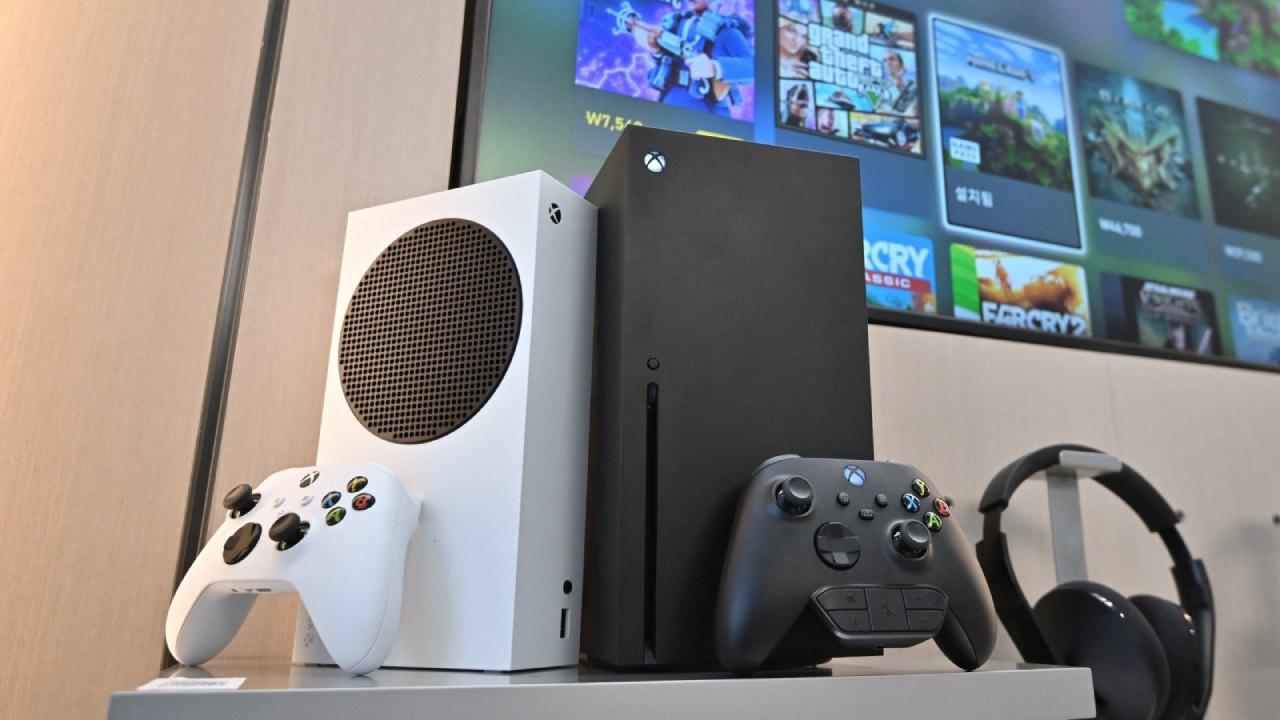
The streak tracker appears in the guide beneath your profile and sits alongside your Gamerscore, keeping these metrics visible without repeated controller inputs. The rewards counter may feel like it appears in several places, but the achievement totals and friend indicators are practical quality-of-life additions. Together, these changes make common information easier to reach.
The PC side of the platform is receiving attention too, and that may matter even more as Microsoft works toward Project Helix. The XBOX PC app has generally lagged behind the console experience in polish and performance, but its role is growing as Microsoft brings different storefronts and launchers together.
The app can aggregate libraries from services including Battle.net, the Epic Games Store, GOG, and Steam, which is convenient for a single library. The problem has been presentation. External games have sometimes appeared with poor-quality artwork, making the unified library look less consistent than native XBOX PC titles.
Battle.net artwork is improving, bringing those games closer to the visual standard used elsewhere in the app. Steam and GOG still have room for improvement, but the direction is clear. Better thumbnails may sound minor, yet presentation matters when the goal is to make a collection from multiple storefronts feel like one library.
Project Helix is currently associated with a 2027 window.
This gives Microsoft time to polish the interface before that hardware arrives. If the plan is to position the system as a hybrid machine that can provide access to a broader PC library, the software experience will need to feel finished well before launch, not polished afterward.
At the studio level, the changes are much more disruptive. World's Edge has been reorganized under the Activision umbrella as part of the broader restructuring, and its next project was reportedly canceled. A substantial portion of the studio was also laid off.
One former senior software engineer said the reorganization directly led to the cancellation and their departure. At the same time, Creative Director Adam Isgreen described the end of his time at the studio as disappointing for him and teammates at World's Edge.

The cancellation at World's Edge leaves the future of Age of Empires less certain, especially as Microsoft concentrates resources around franchises capable of generating major commercial returns. The series remains historically important, but its business scale differs from properties such as Call of Duty and Halo.
Moving major franchises across the organization also raises questions about how clearly XBOX Game Studios will be represented when players launch first-party games.
That concern extends beyond branding. Call of Duty currently carries little visible XBOX identity despite being owned by Microsoft, while Starfield and other Bethesda releases similarly emphasize their individual studio brands. A stronger platform identity could matter more if Microsoft wants its first-party portfolio to build recognition around XBOX rather than separate publishing groups.
The franchise is at the center of another major change. Now that Activision's got it, they probably can't just pick up where Infinite left off; it feels like it needs a real shake-up. Infinite actually played great; most people agree, but everything around it under 343 was kind of a mess: stuff kept getting delayed, the scope kept changing, and production was rocky.
A full reboot for Halo is one possibility, though that doesn't necessarily mean immediately replacing Master Chief with another mainline campaign. A more gradual approach could use standalone stories and spin-offs to rebuild confidence in the universe before returning to a major central entry. Another community proposal is to preserve the original Bungie-era continuity, from Combat Evolved through Reach, while resetting much of the later story.
Another argument is to restart from the third game, similar to the repeated timeline resets seen in other long-running franchises. That would provide a familiar starting point while discarding years of later continuity, but it could also make previous story investments feel irrelevant. A softer reset could offer a middle path, letting new stories establish themselves before eventually reconnecting with Master Chief.
The broader response to the restructuring has been mixed, but there has also been notable optimism about giving the franchise a different direction.
The franchise has gone through Halo 4, the controversial story choices of the fifth game, and the troubled development history surrounding Infinite. That history helps explain why some players are more open to substantial changes than they were several years ago. Meanwhile, the wider corporate strategy remains focused on profitability, major franchises, fewer management layers, and more streamlined development.
Sharma's stated approach has emphasized commercially significant releases and clearer accountability. That does not mean every studio agrees with the direction. An idSoftware employee recently described internal communication as heavily corporate and argued that staff still lack confidence in the long-term vision, while also criticizing aggressive targets following layoffs.
Those comments represent one employee's perspective rather than an official description of Microsoft’s plans. Still, they illustrate the tension created by a restructuring this large. Staff who have spent years working on established franchises can be affected even when their teams have strong histories and experienced developers.
For players, the clearest part of the strategy is happening directly in the software they use. System updates are making achievements, rewards, friends, and performance easier to manage, while the PC app is being prepared for a larger role.
At the same time, Project Helix and the restructuring of major studios point toward a platform that is trying to operate more like a unified ecosystem. The result is a mix of visible improvements and major behind-the-scenes uncertainty.
Microsoft is tightening the everyday experience while making difficult decisions about which franchises and studios receive resources. The next stage of the XBOX strategy will depend on whether those changes can produce the polished platform and stronger releases the company is aiming for without losing the identity that made its individual studios and franchises successful.
Editor, NoobFeed
Related News
No Data.