
Corsair DDR5 Now Uses CXMT Memory Chips Amid Rising RAM Shortages
Rising DDR5 shortages pushed memory supply discussions toward alternative chip makers and changing market priorities.
Hardware by Shinji Okazaki on Jun 02, 2026
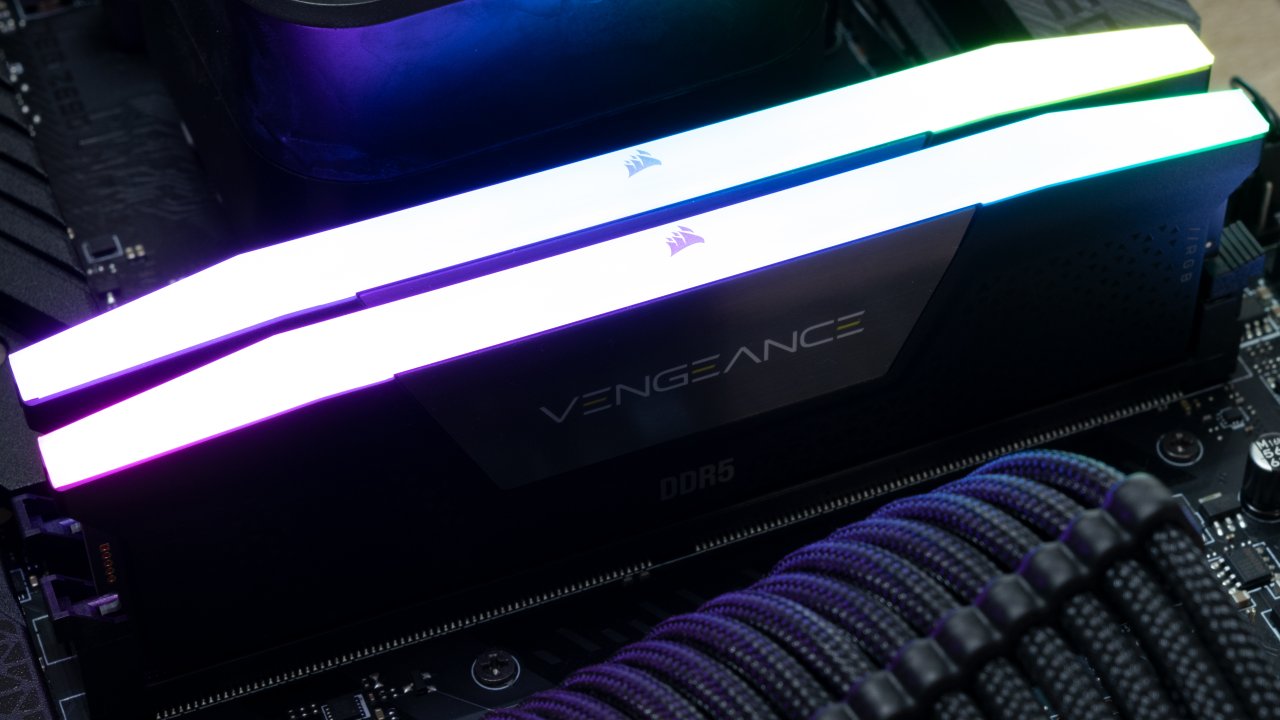
Chinese memory manufacturer CXMT is making the jump to the mainstream DDR5 market with its partnership with Corsair. A hardware enthusiast discovered this Corsair Vengeance DDR5-6000 CL36 RAM kit, which uses CXMT memory chips rather than Samsung, SK Hynix, or Micron. The kit is likely only available in China as it is based on its CN part number – the first time that CXMT DRAM has made an appearance in a major Western brand product.
All memory chips manufactured now go into inventory. Even if Micron, SK Hynix, and Samsung were the only brands producing DDR5 chips, supply would still be limited for gamers in China. But a bit of it can be diverted from CXMT, and it's a small win for the market. It may seem like a minor detail, but it does help in times of memory constraint.
What was the motivation for CXMT to say they have an abundance of supply almost sounds like a joke. Sanctions thwarted HBM production for AI because the company lacked the tools required for HBM production, and instead kept its production lines open for consumer DDR5 memory. As Samsung, SK Hynix, and Micron continue to target more lucrative areas, it seems CXMT might be targeting a portion of the DDR5 market.
Who's Really Winning the Chip War?
The dialog soon broadens to a bigger issue: when memory shortages become serious enough that Corsair has to seek out a Chinese chip maker in a no-bans zone on whom he can rely, who's really winning? In terms of strategy, it's more important to the government than gaming DDR5 memory. In the short term, consumer RAM is not expected to be pushed to accommodate broader industry needs. But there's another angle to the story.
The long-term effect can also be considered. Consumer DDR5 revenue will provide a base for CXMT's larger plans down the road. It is much more profitable to sell DDR5 memory at present, and the opportunities provided by the company's tie-ups with major brands would otherwise be nonexistent.
It's not an existential threat at this time, but it could well be. However, on a much larger scale, an Enterprise like Corsair buying memory from CXMT could have a long-term impact on the market's influence. The advent of DDR5 has truly changed the hardware landscape of the gaming industry.DDR5 has really revolutionized the gaming hardware market.
With that out of the way, the discussion shifts from manufacturing to hardware pricing. An EXPO memory profile problem that caused a system not to post prompted a reflection on memory prices and system priorities. Once the problem was solved and the computer booted up, the question was asked: So just what do you really need 64GB of RAM for anyway?
With a sharp rise in memory prices, hardware is increasingly seen as a traditional item rather than a product that might be considered for resale. A 64GB DDR5 kit is an affordable memory standard for a high-end system, but all of a sudden it just gets too expensive. If you bought a kit during the Ryzen 7000 days for $200 to $250, it's now even more worthwhile given the ongoing inventory shortage that's driving prices up.
Storage and RAM Began to Resemble Conversation Starters
A late-night stroll around a LAN gathering exposed a change in priorities in hardware discussions. People typically talk about GPUs, but in recent years, they have begun discussing storage and RAM capacities instead. Attendees weren't talking about NVMe graphics cards; they were talking about NVMe storage and memory capacity. It was a mere afterthought when anyone said 4TB of NVMe storage.
People started to boast about things like RAM capacity and storage space before anything else. Memory and storage still seemed like the first things they wanted to point out, despite having GPUs. Looking back, there was a time when storage was in the spotlight. This era of SSD adoption meant that having an SSD was enough to be believed. Before this, high-speed mechanical drives established their own hardware culture.
Redesigned drives, such as the WD VelociRaptor, were noteworthy for their 10,000 RPM speed and design. Certain versions were installed on large metal heatsinks, and the resulting appearance suggested it was designed for performance, even if not so much. Several of those drives were initially geared for servers. Previous generations were larger, and later generations became smaller and linked to a larger heatsink assembly.
The Linux Gaming Industry Quietly Took off
A LAN event with a couple hundred attendees is not a reflection of the gaming market as a whole, and there are several selection biases: geographic, admission price, and the type of buyer who travels with a gaming PC. Comparing similar events in the past did show a trend, however. Today, Linux users are increasingly presenting their gaming setups from the start, retro gaming systems and setups for games that are hard to run. Lots of people boast about their custom configurations, distros, and tweaks for getting things to work.
A gamer using Linux on his machine with an AMD graphics card was able to play racing games and multiplayer sessions without encountering major issues. In several games, the compatibility problems were not as prevalent as rumored. That doesn't mean there are no problems. Some players continue to use a dual-boot system with Windows as a fallback in case of compatibility issues.
Windows is left idle for extended periods, primarily as a fallback option.
Although Linux gamers can enjoy better experiences, there are still a few bumps in the road. Having another operating system available will give you that much more flexibility if something doesn't go as planned. To those who play the game, it's better to have the option there than to have to use it.
It is possible to start up an additional system occasionally, but when opting for a new game or software, this can take out the uncertainty. With the rise of Linux gaming support and increased compatibility, it looks like a balance needs to be struck between experimentation and reliability. As of this writing, it is still prudent to remain agnostic about options.
Editor, NoobFeed
Gaming Hardware Updates
No Data.