
Rockstar Could Bring FSR 4 and QSSR to GTA 6 on Xbox Series X and PS5
GTA 6 could receive fsr 4 and QSSR on current consoles, but performance costs remain a major consideration.
XBOX by Shinji Okazaki on Nov 26, 2026
GTA 6's upscaling technology has become a topic of discussion after FSR 4.1 was implemented on Xbox Series S. However, the Xbox Series X and PlayStation 5 versions still use a 1440p TAA solution, raising questions about why Rockstar hasn't introduced newer upscaling technologies on these consoles. Performance costs, internal resolution requirements, and image reconstruction quality could all influence this decision.
VRR captures offer a chance to see what the Xbox Series X can achieve when its frame rate is unlocked, particularly during cutscenes where unlocking the frame rate doesn't speed up the game. These captures can also serve as a benchmark for the upcoming PC version. With frame-time measurements available through VRR, we can calculate the additional cost of implementing FSR 4.
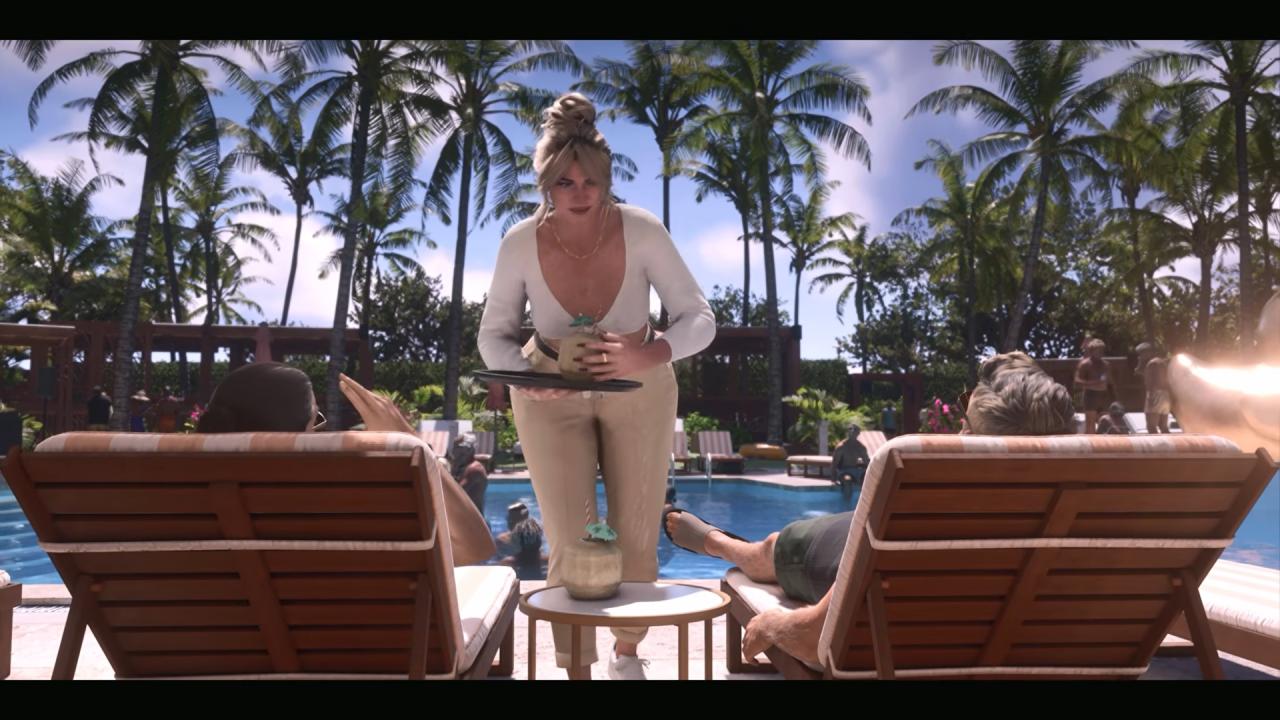
FSR 4 Could Affect GTA 6 Performance on Xbox Series X
Microsoft has published frame-time figures of 2.74ms for FSR 4 Light and 3.86ms for FSR 4 Full. Adding these figures to the existing frame times indicates how the technology could affect performance. When GTA 6 runs well above 30 FPS, there is enough headroom to accommodate FSR 4 while staying above the 30 FPS target.
However, when the game is already close to its performance limit, it presents a different challenge. In scenes where the GPU is likely the limiting factor, adding FSR 4 can push performance below 30 FPS. Depending on the situation, the added processing cost could push 5–16% more frames below the 30 FPS cap.
This does not mean Rockstar cannot introduce FSR 4 to the Xbox Series X version of GTA 6. It is technically possible, but doing so would introduce additional performance instability in scenes where the console is already struggling to maintain its frame rate. One possible solution would be to reduce the internal rendering resolution to accommodate FSR 4 slightly.
This could potentially deliver a net improvement in image quality despite the lower resolution. The same approach could also apply to the PlayStation 5 version through QSSR. However, reducing the internal resolution could affect other graphical features, particularly ray-tracing effects. According to the available information, FSR 3 has a frame-time cost of approximately 2.1ms at 4K on Xbox Series X.
GTA 6 TAA Image Quality Compared to PS5 Pro
GTA 6's current TAA implementation produces a stable, smooth image. However, the main limitation is image sharpness rather than overall stability. The resulting image looks relatively soft, which is expected from a TAA-based solution compared to a more capable temporal upscaler. It is not necessarily a poor-looking image, but the difference becomes noticeable when compared with the PlayStation 5 Pro version.
The PS5 Pro produces a sharper image through its upscaling technology. However, some of that additional sharpness comes with minor image-quality compromises. Fast-moving scenes, particularly driving sequences, challenge temporal upscalers. GTA 6 features extensive driving gameplay, with fast-moving objects and fine details that must be reconstructed over long distances.
These conditions can expose weaknesses in temporal upscaling techniques. In some situations, the PS5 Pro version can show a small amount of visual noise that isn't present in the standard PS5 version. Reducing the internal resolution to 1080p or using a more aggressive upscaling ratio could potentially make these artifacts more noticeable. This is particularly relevant when considering FSR 4.1 Light on Xbox or QSSR on PlayStation.
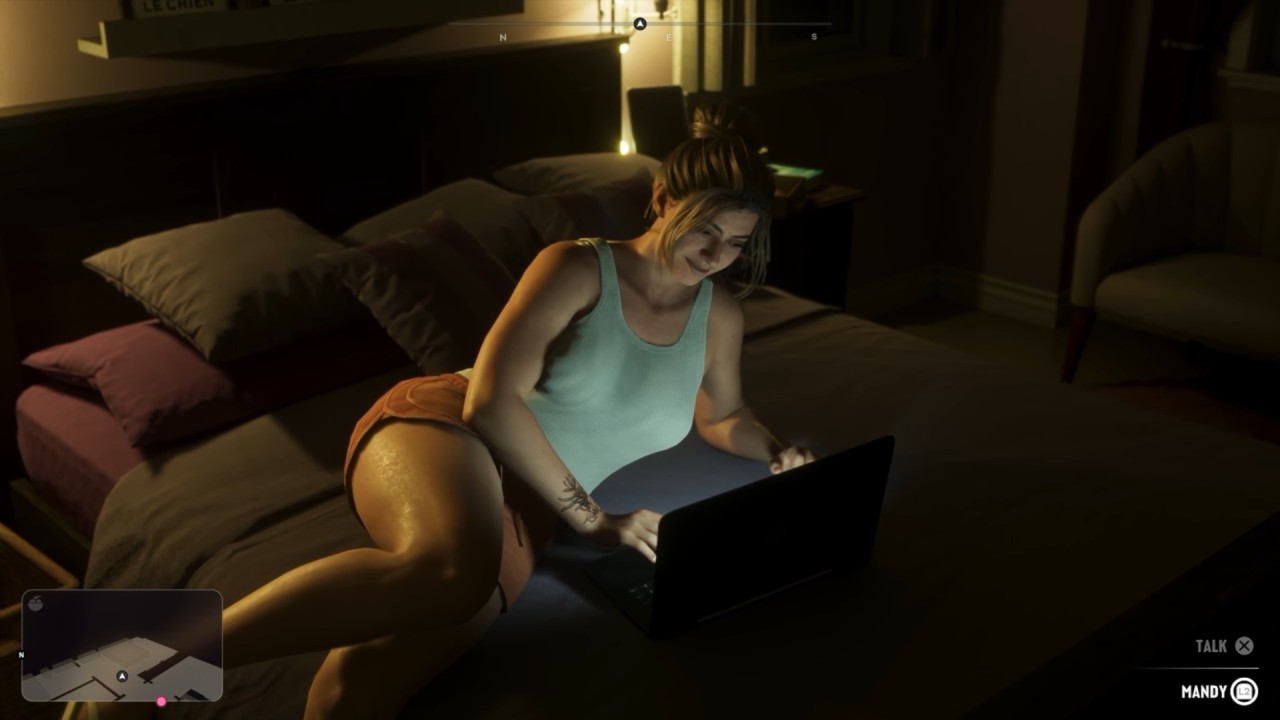
Maintaining image quality while reducing the internal rendering resolution isn't straightforward.
Another factor is the timing of these technologies. Machine-learning-based upscalers have only recently started becoming available across mainstream consoles. The first third-party QSSR implementations on PlayStation were not widely available when the discussion took place. Similarly, GTA 6 represents one of the first known FSR 4.1 implementations on XBOX.
The situation on Xbox Series S could be different. The console may have already been using a temporal upscaling solution, potentially something similar to FSR 3. Moving to FSR 4 would therefore represent a more straightforward upgrade because the existing rendering pipeline was already designed around temporal scaling.
For Xbox Series X and PlayStation 5, Rockstar has a known TAA implementation that delivers consistent results. Changing that solution shortly before or around a major launch adds testing requirements and risks image-quality regressions. This could explain why Rockstar has chosen to retain its existing approach rather than immediately introduce newer upscaling technologies.
FAQ
Q. Why doesn't GTA 6 use FSR 4 on Xbox Series X?
A. FSR 4 introduces additional GPU processing costs. At 2.74ms for FSR 4 Light, it could push performance below the 30 FPS target in demanding scenes. Rockstar may need to reduce the internal resolution to accommodate it.
Q. What upscaling technology does GTA 6 currently use on Xbox Series X and PS5?
A. GTA 6 uses a 1440p TAA solution on Xbox Series X and standard PlayStation 5, while the PS5 Pro uses a more advanced upscaling solution.
Q. How much performance does FSR 4 require on Xbox Series X?
A. FSR 4 Light requires approximately 2.74ms of additional frame time, while FSR 4 Full requires 3.86ms. These costs could affect performance in GPU-limited scenes.
Q. Could Rockstar add FSR 4 and QSSR as optional settings in GTA 6?
A. Yes. Rockstar could offer FSR 4 on Xbox Series X and QSSR on PlayStation 5 as optional upscaling settings, though internal resolution adjustments may be needed to maintain performance.
Editor, NoobFeed
Latest Articles
No Data.