
AMD Radeon RX 9060 XT Hits 4.837 GHz World Record With Jack Huynh
AMD's latest LN2 overclocking achievement pushes RDNA 4 silicon to unprecedented frequencies, bringing the elusive 5 GHz GPU milestone closer.
Hardware by Tanvir Kabbo on Nov 26, 2026
A routine community appearance at Micro Center's new Austin, Texas location turned into an incredible overclocking demonstration when AMD Senior Vice President and General Manager Jack Huynh joined forces with legendary overclocker Bill "Sampson" Alverson to push a Radeon RX 9060 XT past its previously established frequency limits.
The pair set a new world record for GPU clock speeds on a consumer graphics card using liquid nitrogen (LN2), achieving a certified 4,837 MHz (4.837 GHz) GPU core clock. This result puts AMD's RDNA 4 architecture at the forefront and brings the long-discussed 5.0 GHz barrier closer than ever.
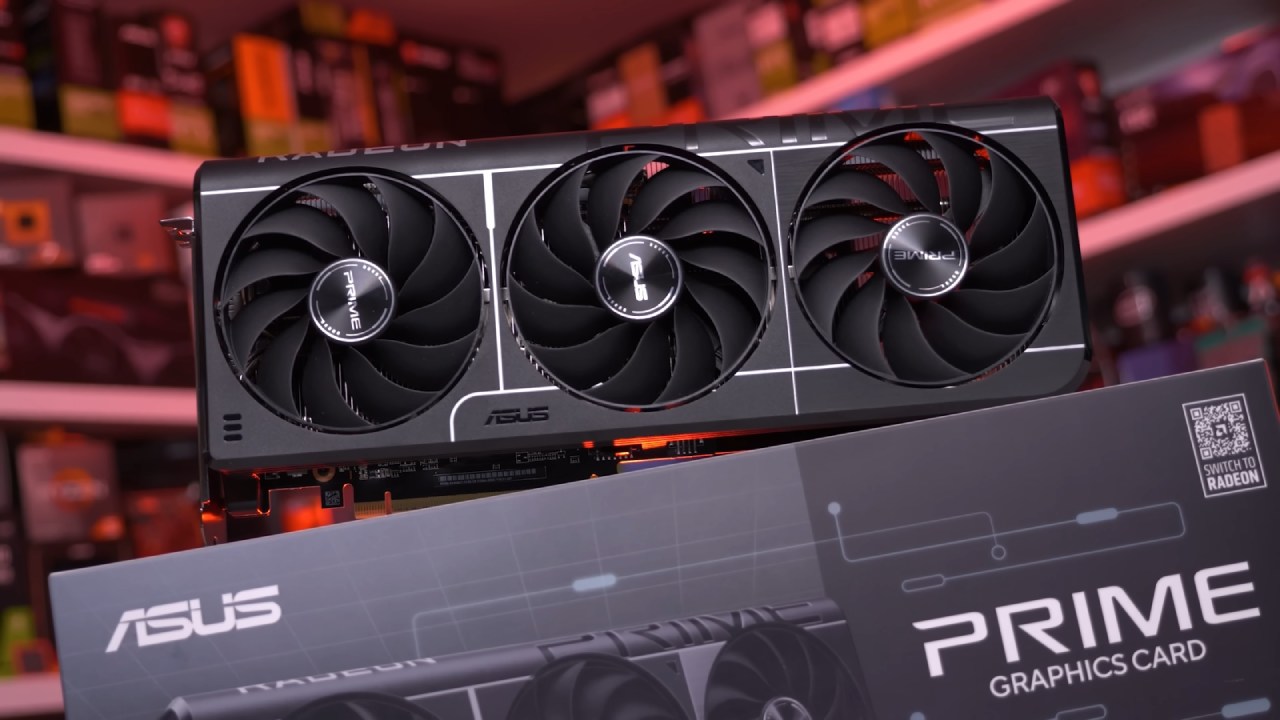
Radeon RX 9060 XT Hits 4.837 GHz: A Look Inside
The record-breaking session highlighted how much frequency headroom can be squeezed into current GPU technology when normal thermal limits are removed. With the Radeon RX 9060 XT, the speed climbed to 4.837 GHz, an amazing 54.5% over the reference boost clock of 3,130 MHz. Such scalability is particularly impressive for a consumer graphics card, as it is so difficult to push contemporary GPUs past their factory-rated speeds.
SkatterBencher logged the feat in the OC World Record Museum, along with a GPU-Z validation screenshot to confirm the hardware telemetry. Reports showed the Navi 44 GPU at -49C with a core voltage of 1.434V. Interestingly, the screenshot also captured a board power draw of just 62 watts. But this was a mere confirmation capture, not the sustained power consumption during the actual overclocking operation.
Liquid nitrogen removes most of the thermal resistance that ordinarily limits GPU frequency scaling. Combined with high voltage, extreme cooling helps keep the switching stable at frequencies well above what it is normally meant to operate at. This lets you test the extremes of properly chosen silicon instead of setting realistic conditions for daily operation.
That's quite the feat, to be sure, considering Navi 44's rather tiny physique. Smaller GPU dies often have fewer active processing units and overall silicon area than flagship chips. That can make extreme frequency scaling more feasible, but transistor properties, leakage, voltage delivery, and each chip's quality are equally crucial. Smaller dies don't necessarily mean higher clocks, though they can help when the goal is to max out raw frequency.
Why RDNA 4 Owns the GPU Clock Speed Crown
This latest milestone further extends AMD's lead in extreme consumer GPU frequency records. The previous record for the Radeon RX 9060 XT was supposedly between 4,769 MHz and 4,789 MHz, achieved earlier this year by Sampson and SoonHo. Fellow overclocking hero Splave was also there to watch the record being smashed, pushing the barrier even further with the new result.
The best Ada and Blackwell GPUs from NVIDIA, like the GeForce RTX 4090 and RTX 5090D, can achieve frequencies just beyond 4.0 GHz when overclocked to the limit. The RX 9060 XT, meanwhile, has reached 4.837 GHz, the only consumer GPU believed to have broken beyond the 4.5 GHz barrier.
However, raw frequency does not immediately correlate to graphical performance. A smaller GPU running at a higher clock speed will have far fewer processing resources than NVIDIA's flagship GPUs, and an RTX 5090D running over 4.0 GHz can achieve considerably more total computational throughput. The records show promise for frequency, not for architectural brilliance.
Still, the AMD result shows forth the remarkable scaling properties of Navi 44. RDNA 4 is of great interest to competitive overclockers because of its physical architecture, clock-tree implementation, and the quality of the underlying silicon.
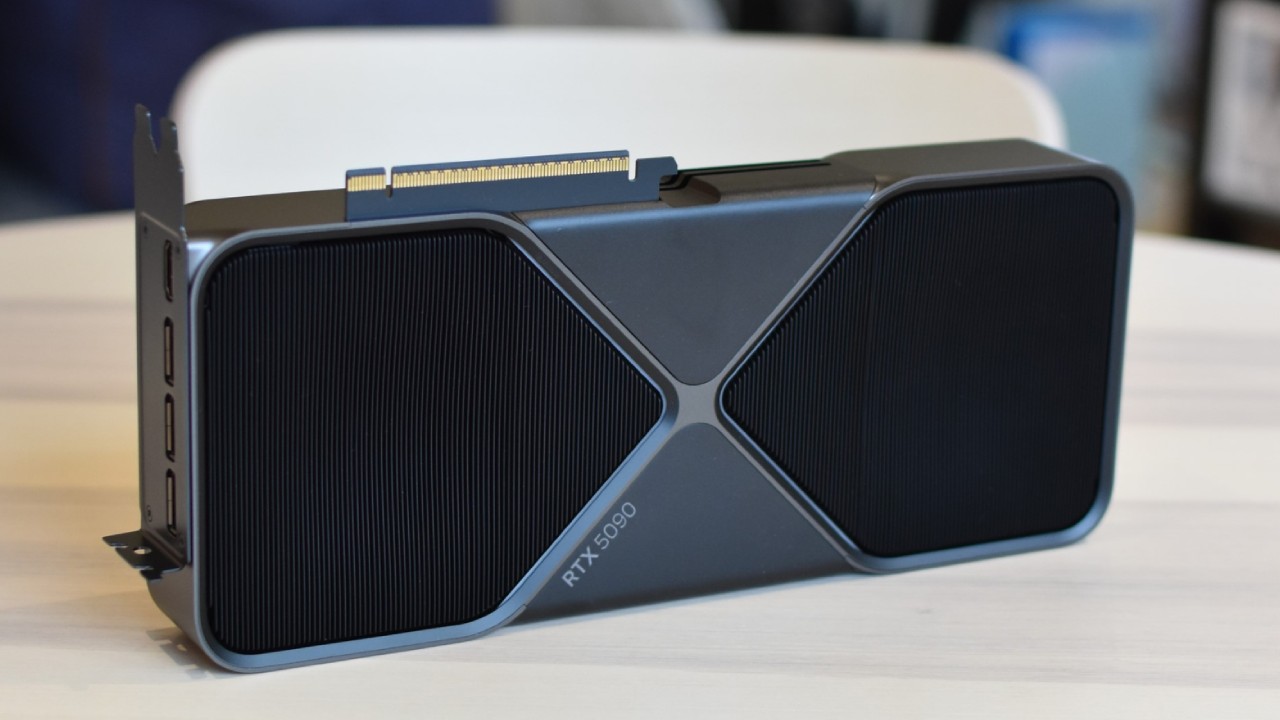
The 5.0 GHz GPU Barrier Is Almost Within Reach
Perhaps the most intriguing thing about this record is how close AMD has brought the industry to 5.0 GHz. RX 9060 XT is just 163 MHz away from the milestone at 4,837 MHz. That remaining headroom, however, makes another record-breaking run an exciting prospect for hardcore overclockers.
Achieving 5.0 GHz will still require extraordinary silicon quality, aggressive voltage tuning, and carefully managed LN2 cooling. Of course, a big part of this is the silicon lottery, and your RX 9060 XT might not overclock the same as someone else's RX 9060 XT with the same settings.
FAQ
Q. What GPU frequency did AMD's Radeon RX 9060 XT achieve?
A. The Radeon RX 9060 XT reached a validated GPU core clock of 4,837 MHz (4.837 GHz) using liquid nitrogen cooling, setting a new consumer GPU frequency world record.
Q. Who helped Jack Huynh break the GPU frequency world record?
A. AMD SVP Jack Huynh teamed up with legendary overclocker Bill 'Sampson' Alverson during a community event at Micro Center in Austin, Texas. Overclocking legend Splave was also present to witness the achievement.
Q. How cold was the Radeon RX 9060 XT during the record validation?
A. The GPU-Z validation screenshot reported a temperature of -49°C, a core voltage of 1.434V, and a board power draw of 62W during the idle validation capture.
Q. Can the Radeon RX 9060 XT reach 5.0 GHz?
A. The RX 9060 XT reached 4.837 GHz, leaving it just 163 MHz short of the 5.0 GHz milestone. Achieving that frequency will likely require exceptional silicon, aggressive voltage tuning, and liquid nitrogen cooling.
Senior Editor, NoobFeed
Gaming Hardware Updates
No Data.