
FSR 4.1 Could Transform Xbox Series S Gaming Performance
AMD's FSR 4.1 could improve Xbox Series S image quality, allowing demanding games to maintain 60 FPS with fewer visual compromises.
XBOX by Shinji Okazaki on Nov 25, 2026
AMD's FSR 4.1 could change how games look on the Xbox Series S, particularly when running demanding titles at 60 FPS. GTA 6 is reportedly the first game to use FSR 4.1 on the Xbox Series S, and its implementation shows how the technology can improve image quality. This raises an important question: could FSR 4.1 become a game changer for Microsoft's console and help it handle demanding games moving forward?
Xbox Series S has always been known as the smaller, less powerful, and cheaper version of Xbox Series X. That is what the console was created for. However, this approach has also created issues for developers, particularly around memory limitations and optimization.
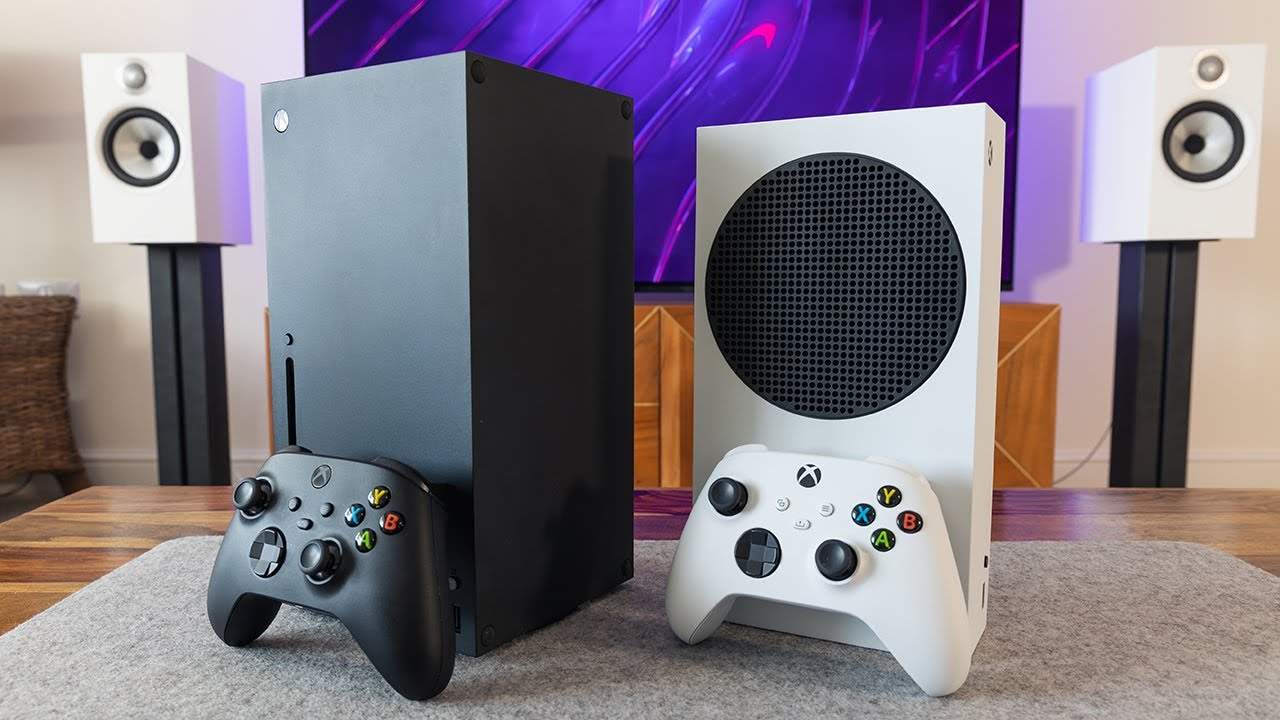
Xbox Series S Has Always Faced Hardware Limitations
Some games were well optimized for Xbox Series S, but developers still had to put extra work and budget into making them run properly. Some titles can run at higher resolutions and 60 FPS without problems. However, with demanding AAA games and ray tracing, most of these issues show up.
The console doesn't have enough RAM, and its GPU isn't powerful enough to handle everything developers might want to implement. As a result, compromises are inevitable, whether in graphics, performance, or image quality. With FSR 4.1, the question is whether this technology can help Xbox Series S overcome some of these limitations, particularly in image quality and performance.
When it comes to performance, there might not be much change. Xbox Series S versions of games won't necessarily run better just because they use FSR 4.1. Instead, the technology could provide much better image quality while maintaining the same performance modes. Different games offer different graphics and performance modes.
Some run at 30 FPS, others offer both 30 FPS and 60 FPS modes, while certain titles also provide 120 Hz and 120 FPS options. However, one thing should remain consistent with every FSR 4.1 implementation. Image quality should be much better than what we currently get, even if developers have to change the rendering pipeline or internal resolution.
Memory Limitations Will Still Be an Issue
This is where the technology could make a difference for Xbox Series S. Still, they could use FSR 4.1 to improve final image quality. FSR 4.1 won't change the Xbox Series S's hardware specifications. Developers will still have to work with only 10GB of RAM, with about 8GB available for games because the operating system uses the remaining 2GB.
Some have suggested that FSR 4.1 might use less RAM, but that still needs further investigation. For now, assuming the memory specifications remain the same, developers will still have to deal with the console's existing limitations. Running FSR 4.1 also comes with a cost. The technology requires additional resources, leaving fewer resources for the game itself.
Some might assume that this would make games run worse, but that is not necessarily the case. The interesting part about FSR 4.1 is that developers can lower the internal resolution to free up additional resources. Those resources can then be used to run FSR 4.1. Even at a lower resolution, the technology should let games deliver better image quality.
FSR 4.1 could help Xbox Series S compete with Switch 2 image quality.
We have already seen comparisons between Xbox Series S versions of games and their Nintendo Switch 2 counterparts. The Switch 2 uses DLSS, and some games have looked better on the Nintendo console in terms of image quality. However, that does not necessarily mean the Switch 2 has better overall performance. The Xbox Series S has a much more powerful CPU, which gives it an advantage there.
In fact, the Xbox Series S has pretty much the same CPU as the Xbox Series X. The main difference comes down to image quality and graphics capabilities. With FSR 4.1, the Xbox Series S could improve its image quality and close some of the gap we have seen in certain comparisons. This is particularly relevant for games that offer different graphics modes.
Some titles offer a 30 FPS mode with higher internal resolutions, sometimes reaching 1440p, while their 60 FPS modes compromise graphics and image quality. Cyberpunk 2077 is a good example. The game runs at around 1440p at 30 FPS on Xbox Series S, and the overall presentation is good. However, the 60 FPS mode comes with compromises.
FAQ
Q. What benefits could FSR 4.1 bring to Xbox Series S?
A. FSR 4.1 could improve image quality through upscaling, allowing games to deliver better visuals while maintaining their existing performance targets.
Q. Will FSR 4.1 increase FPS on Xbox Series S?
A. Not necessarily. Its primary benefit could be improved image quality rather than higher frame rates. Developers may lower internal resolutions to make room for FSR 4.1 while maintaining existing performance modes.
Q. Could Cyberpunk 2077 benefit from FSR 4.1 on Xbox Series S?
A. Yes. Cyberpunk 2077 could benefit from FSR 4.1 because its 60 FPS mode compromises resolution and image quality. The technology could help improve the final image while maintaining performance.
Q. Does FSR 4.1 remove the Xbox Series S hardware limitations?
A. No. Xbox Series S will still have its existing memory and GPU limitations. FSR 4.1 could help developers use available resources more efficiently, but it cannot change the console's hardware specifications.
Editor, NoobFeed
Latest Articles
No Data.