
NBA 2K26 Guide | Best Power Forward (PF) Build
Here's a guide on how to build a power forward in NBA 2K26.
Game Guide by Mahi Araf on Sep 20, 2025
The power forward spot has always been one of those positions that shifts in importance depending on how the game plays. For the last few years, the 6'7" build has dominated because of its speed and defensive perks, but NBA 2K26 shakes things up in a big way.
This year, taller power forwards are making a comeback, and going bigger might just be the move you need to stay ahead of the competition. Let's break down two of the most effective meta power forward builds you can run this year.
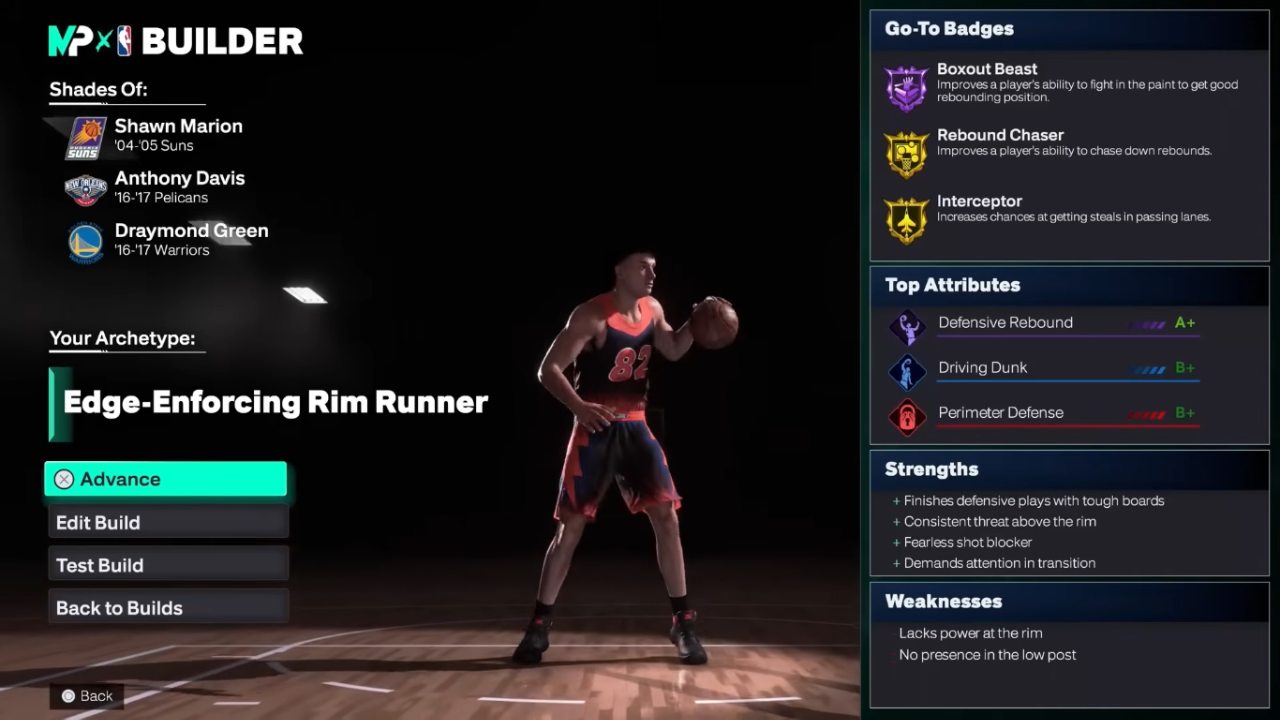
6'9" Power Forward
For a long time, the community swore by 6'7" power forwards. And why wouldn't they? It had faster movement and the ability to disrupt passing lanes. But this year, that smaller frame’s less reliable. Running at 6'7" puts you at risk of being outmatched by taller players, especially those sitting at 7'1" or 7'4".
That's where the 6'9 build comes in. Going bigger gives you a serious edge on the glass and in the paint. You're looking at stronger contests and better odds of slowing down those giant centers.
On top of that, this build still offers solid shooting and driving dunk ability. With cap breakers, you can push your driving dunk even higher to unlock contact dunks.
One of the most underrated aspects of this setup is passing. Hitting at least 75 pass accuracy is a must. Trust me, games are often won or lost on fast breaks.
Rebounding is the real game-changer, though. At 6'9", you can boost that rebounding all the way to a 99. Compare that to the 6'7", which caps out at 92, and the difference is big. That extra push on the boards matters, especially in Pro-Am or REC, where second-chance opportunities matter most.
This build might not be a flashy playmaker, but it doesn't need to be. Think of it as the perfect balance between rim-running and spacing.
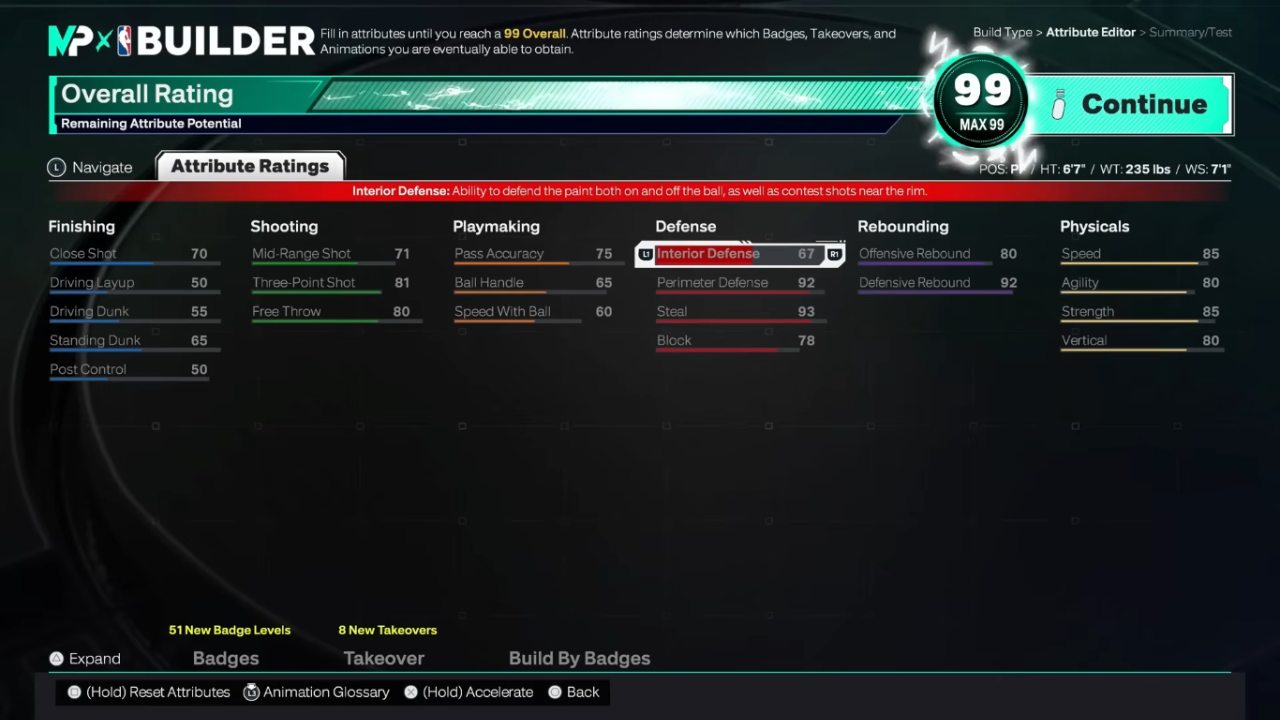
6'7" Power Forward
Now, just because 6'9" is rising in popularity doesn't mean the 6'7 is dead, far from it. This build has been the go-to for years. It's fast and thrives in situations where quick rotations are needed.
If you're the type of power forward who loves stepping out on pick-and-rolls or pressing high, then the 6'7" still makes a ton of sense. You're going to be quicker in transition and more effective when you're playing the lanes.
Of course, the trade-off is rebounding. You'll give up size and won't be snagging as many boards as a 6'9", but that's the cost of playing small-ball.
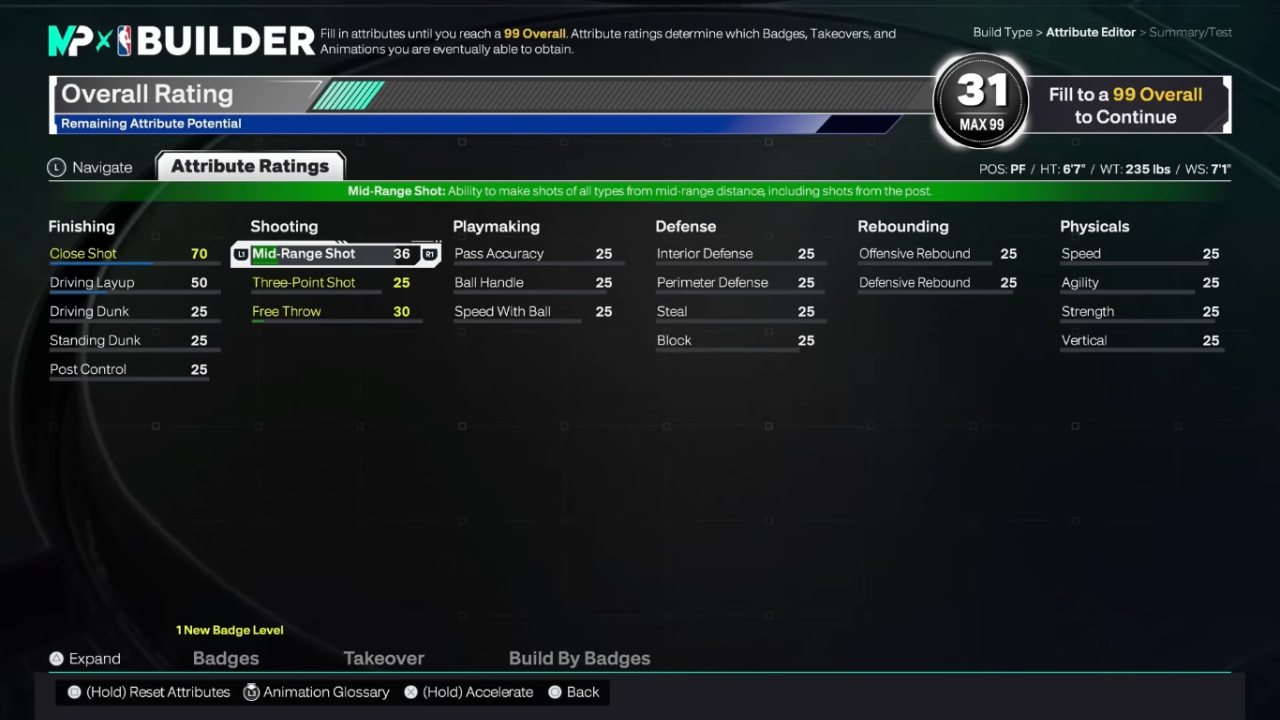
Choosing Between the Two
It really depends on your personal playstyle. Some players thrive on pressing high and forcing turnovers, which makes the 6'7" player build perfect. Others prefer controlling the paint, which is exactly where the 6'9" shines.
There's no universal answer to which one is better, because both builds are strong in their own way. What matters most is how you want to influence the game. So just go with what your gut feeling tells you.
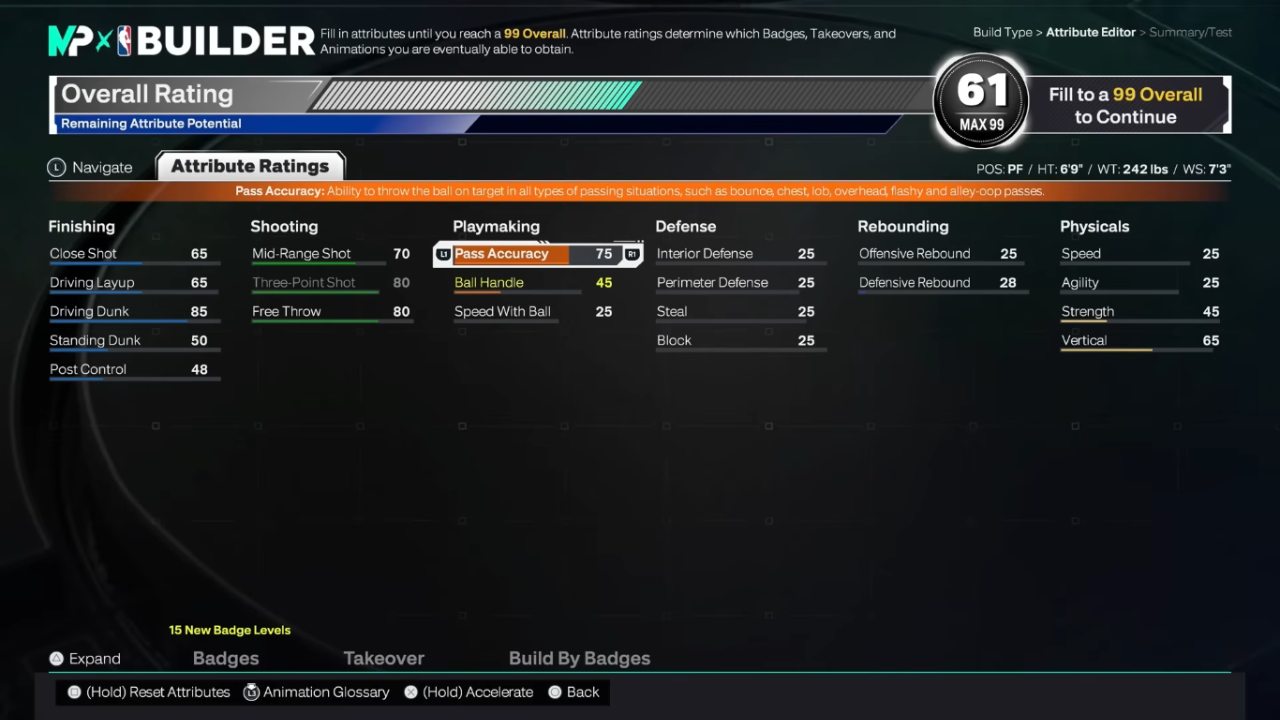
At the end of the day, both the 6'9" and the 6'7" power forward builds are extremely viable in NBA 2K26.
Whichever one you choose, just remember that these builds are flexible. Don't be afraid to make little tweaks so they fit perfectly with your playstyle. That's how you'll truly get the most out of your power forward this year.
Also, check out our other NBA 2K26 guides below:
Senior Editor, NoobFeed
Latest Articles
No Data.