
Push Your Luck: How Risk-and-Reward Loops Took Over Modern Games
Other by Ayaka Naomi on Nov 12, 2026
Every gamer will know that moment. You're running, it's going well, the next room might be the jackpot, and the sensible thing to do is to stop. Most of the time you don't stop, though. That little decision, made hundreds of times, is one of the most fundamental tricks in game design and what makes so many games of the last decade so replayable.
What push-your-luck means
Board game designers have a term for it: push your luck. In Sid Sackson's Can't Stop (1980), you roll the dice to move up the columns, and you can take your progress at any time. You can roll again, and if you do, you may go further, or you may lose all the progress you made that turn. The rule is straightforward, and the tension is always there because the decision to continue is always in your hands.
Video games took that concept and ran with it, creating entire genres around it. The same pattern applies: the reward gets bigger the longer you persist, the risk goes up as you persist and there's a very clear point at which you can walk away.
The Minesweeper lineage
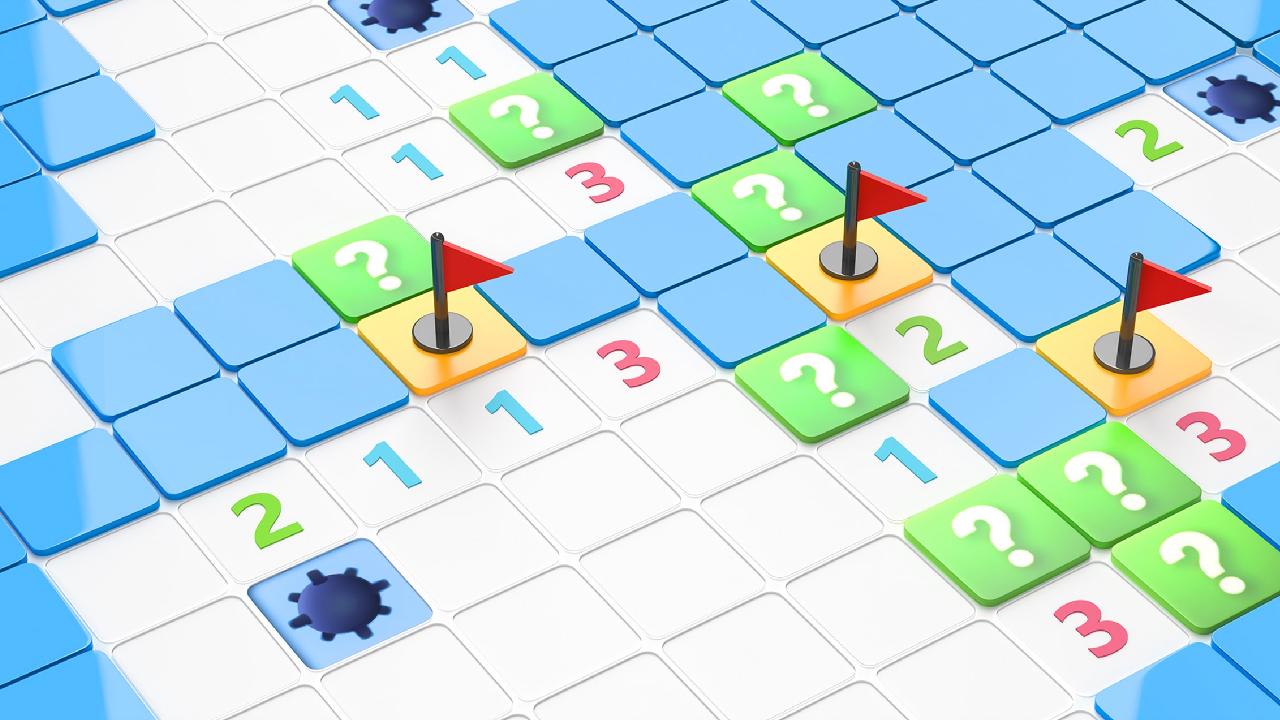
For many people, the first push-your-luck game they ever played came free with their PC. Minesweeper came with Windows 3.1 in 1992, and it taught a whole generation to be cautious about a single click. The numbers on the tiles you opened gradually turned the whole board into a logic puzzle, but every game inevitably came down to a blind guess.
That blind guess is the part that survived. Crypto casinos took the grid, removed the numbers, and added a multiplier that rises with every safe tile, so the whole game becomes the question of when to stop. Gamba, for example, runs its own mines game in its collection of in-house titles, with results you can check through a provably fair system. Most of those in-house games also support batch betting, which can place up to 100,000 bets in a single second.
Roguelikes and the “one more room” problem
Roguelikes are the genre where the push-your-luck design is most at home. In Slay the Spire, elite enemies are marked on the map, and defeating one can end your run. If you beat it, you get a relic that will carry you through to the final act. You're constantly making that decision at every fork in the road, and the best runs are generally the ones where you know when to take the hard path and when to just skip it.
Hades takes the same concept and turns it into a system you can set up for yourself. The Pact of Punishment lets you increase the Heat level (i.e., make each escape attempt harder) in return for bigger rewards. There's absolutely no pressure to crank it up, which is precisely why it works. The risk is yours to take, not something the game is doing to you.
Balatro and the poker table
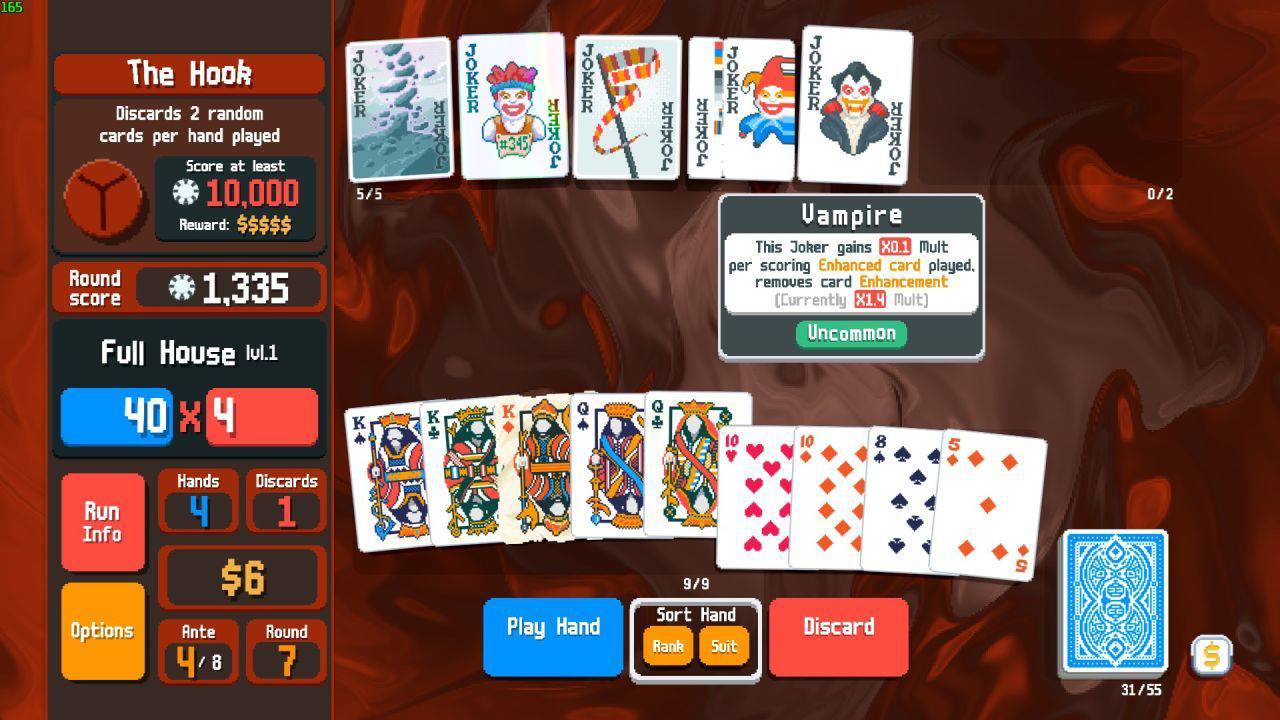
Balatro (2024) built an entire roguelike around poker hands. You play hands to beat the score called (blinds), and you can play some of the blinds to collect a tag with a bonus instead of the cash you'd otherwise get. Each skip trades cash for a shop visit for that tag, and every round will ask you whether your current jokers are up to what's coming next. A textbook example of how a fairly standard casino game can become a deep strategy loop when you can manage your risk.
Why the loop is so hard to put down
Push-your-luck design works because it combines three things players respond to:
- Visible stakes. You can see what you stand to gain and lose before you commit.
- Agency. The decision to continue belongs to the player, so a bad outcome feels like a lesson rather than a punishment.
- Short loops. A single decision takes seconds, which makes “one more” feel cheap even when it is not.
When all three are present, a game becomes easy to start and hard to stop. That is great for a roguelike session on a Sunday afternoon, and it is also why the same mechanics deserve some care.
Playing with a stop point
The best at push your luck will set their limit before they even start. In a roguelike, that might mean deciding which elites you'll skip on a weak build. Anywhere there's real money involved, it means setting your budget in advance and treating it as the price of entertainment. The excitement of the next click is the same either way; one option will cost you more than a lost run.
From Can’t Stop to Minesweeper to Balatro, the formula has barely changed in more than four decades. A reward that grows, a risk that grows with it, and a choice that is always yours remain some of the most reliable tools a game designer has.
Moderator, NoobFeed
Latest Articles
No Data.