
AMD EPYC Venice Launches With 256-Core Zen 6C CPUs
AMD Zen 6 introduces higher core density, faster memory support, and architectural changes across its next-generation EPYC Venice processors.
Hardware by Nahe Yan on Nov 11, 2026
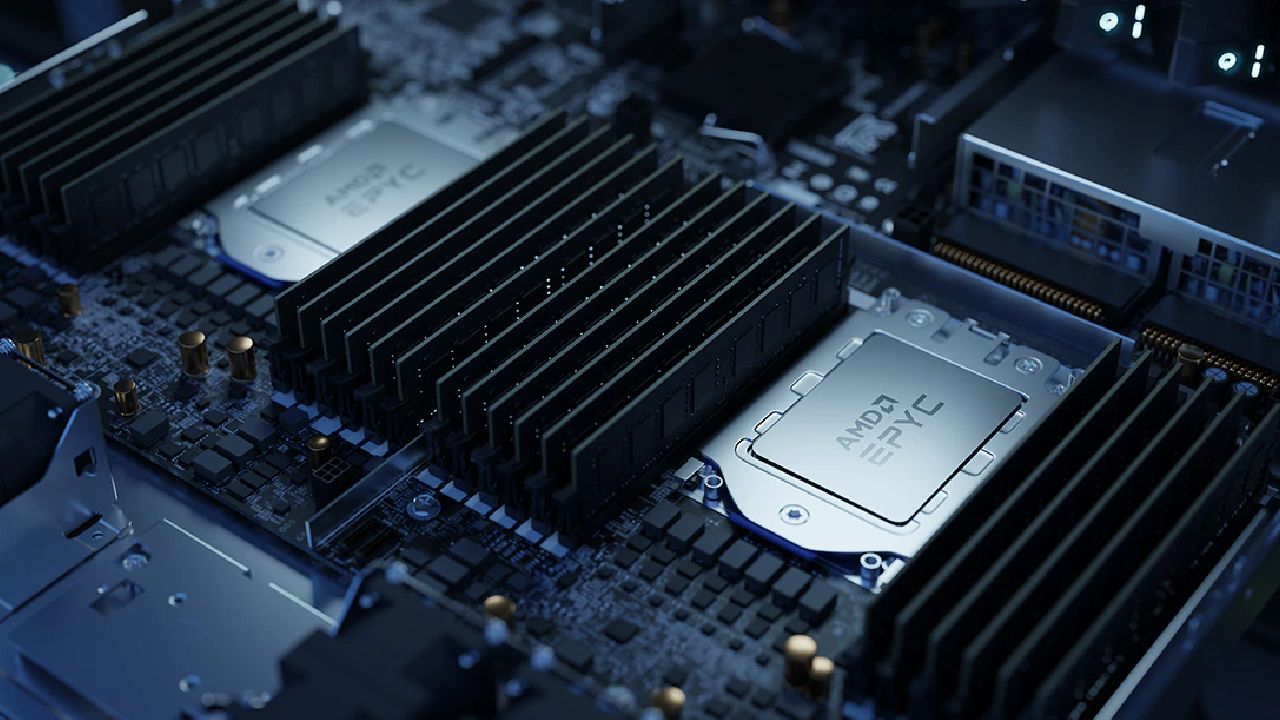
AMD's next-gen EPYC Venice CPUs have already sparked massive enthusiasm. Still, a newly disclosed die rendering has now given the best look yet at what might become one of the most ambitious server processors ever created. Banners advertising the Advancing AI 2026 keynote at Moscone Center in San Francisco seem to have leaked the internal design of the flagship 256-core EPYC Venice processor.
The image underscores months of anticipation surrounding Zen 6's aggressive scaling plan. AMD seems more focused on maximizing computing density with an advanced chiplet design that enables a huge increase in thread count, rather than chasing higher clock speeds and a few more cores. They are also leveraging the latest semiconductor manufacturing technology.
Chiplet Design Built for Extreme Compute
The leaked die architecture shows a massive package with eight CCDs around two giant core I/O dies, taking AMD's modular chiplet philosophy to new extremes beyond any previous EPYC generations. Venice raises the computation density above previous EPYC processors that had fewer CPU cores per CCD, with 32 Zen 6c cores per CCD.
The visualization shows that each compute die has two 16-core CCXs, creating an orderly design that is both scalable and easy to manufacture. That combination delivers a whopping 256 CPU cores and 512 simultaneous threads in a single processor package across all eight CCDs. This degree of thread density is more than a number milestone.
"Massive parallelism is more important than raw clock speed for modern AI inference, cloud virtualization, scientific simulations, and hyperscale workloads. By doubling down on dense Zen 6c computing chiplets, AMD seems to be targeting enterprise environments where maximizing throughput per socket matters more than traditional desktop-style performance measurements.
The modular layout also showcases the ongoing growth of AMD's chiplet approach. This enables each component to be manufactured on the process technology that best suits its workload. This improves manufacturing yields and enables significantly larger processor configurations than conventional monolithic designs could realistically achieve.
32 Zen 6c Cores Per CCD Push Thread Density to New Heights
The key takeaway is that each compute die contains 32 Zen 6c cores. Packing that many cores onto a single CCD is a huge jump in computational density over prior EPYC generations. With Zen 6c, AMD can focus on efficiency and growing core count without sacrificing the performance people expect from today's x86 server chips.
Each CCD seems to have two separate 16-core CCXs, giving it a balanced interior, making it easier to arrange the cache and helping distribute work better across hundreds of threads running at the same time. This architecture may greatly enhance VM density for cloud providers and hyperscale data centers, and can significantly cut down hardware needs at the rack level.
Packing more threads into fewer physical sockets helps AI preprocessing, containerized services, database workloads, and virtualization platforms. Instead of developing a bigger, monolithic chip, AMD is doubling down on an approach that scales horizontally through chiplets. Venice demonstrates how far that mindset can go when combined with next-generation manufacturing technologies.
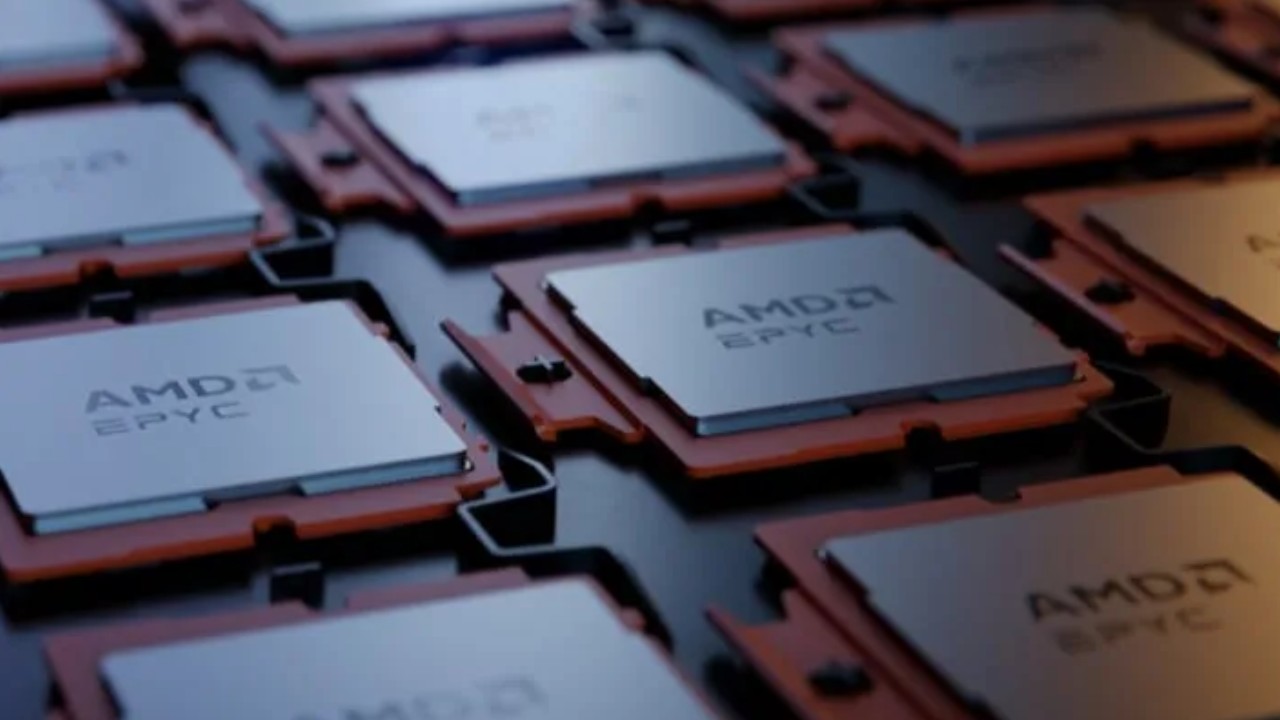
Venice appears engineered for exactly these environments.
This next-generation node also has gate-all-around (GAA) nanosheet transistors, replacing the long-standing FinFET design that has powered modern CPUs for years. In GAA technology, electrostatic regulation is much enhanced. This leads to transistors with lower leakage current and better performance and efficiency. In a 256-core CPU, these efficiency benefits aren't just nice to have; they are a necessity.
But jacking hundreds of CPU cores into one box will cause serious thermal and power-delivery problems. Unless you make major improvements in transistor density and power efficiency. The transition to TSMC's 2nm node gives AMD more transistor budget while simultaneously helping manage power consumption across an extraordinarily large processor.
The increased density also allows larger caches, enhanced interconnects, improved memory subsystems, and more sophisticated AI acceleration without dramatically increasing package size. Combined with AMD's mature chiplet approach, the 2nm transition could redefine what is practical for enterprise CPU scaling over the coming years.
FAQ
Q. What is the maximum core count of AMD Zen 6 EPYC Venice processors?
A. AMD Zen 6 EPYC Venice processors support up to 96 cores and 192 threads with eight CCDs per CPU.
Q. How many cores does AMD Zen 6C support?
A. AMD Zen 6C supports up to 256 cores and 512 threads per CPU, with 1GB of L3 cache.
Q. What memory and PCIe support does AMD EPYC Venice offer?
A. EPYC Venice supports DDR5-8000 memory, MRDIMMs running at up to 12,800MT/s, and PCIe 6.0 connectivity.
Q. How much IPC improvement does AMD Zen 6 offer over Zen 5?
A. Early calculations based on initial benchmarks suggest that Zen 6 could deliver around 16% higher IPC than Zen 5.
Editor, NoobFeed
Gaming Hardware Updates
No Data.