
Steam Deck OLED vs. ROG Ally X vs. Legion Go: Best Handheld PC for Gaming
Comprehensive overview of the best PC gaming handhelds available in 2025, covering performance, pricing, and platform differences.
Hardware by Masaru Hoshino on Dec 16, 2025
Buying a PC gaming handheld is harder than it needs to be, and that's actually a good thing. For the first time, there are many genuinely good options on the market. No matter which device you choose, you can't really go wrong. Some handhelds are simply better suited for certain people, budgets, and gaming preferences. The real question is which one makes the most sense for what you want to play and how much you want to spend.
After spending the last year comparing nearly every major PC gaming handheld, this guide brings everything together into a definitive 2025 breakdown, starting with the most affordable option and moving up to the most expensive.
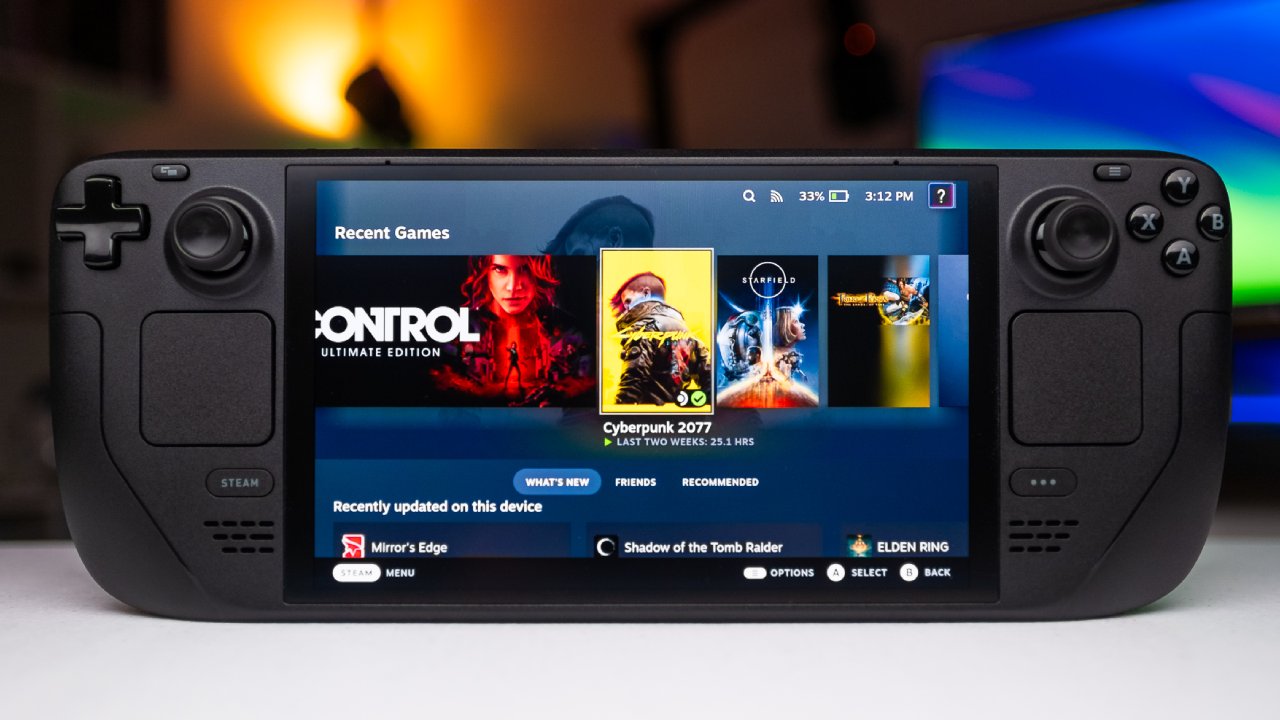
Steam Deck OLED
Steam Deck OLED is one of the original PC gaming handhelds that truly pushed this market forward. There are currently two versions available: the older LCD model and the newer OLED model. Both are starting to show their age, but if you are choosing between the two, the OLED version is the clear recommendation.
With the OLED model, you get a significantly better display, a slightly larger screen, improved battery life, and a more refined overall experience. Since it has been out for a while, you can also find it at more reasonable prices on the used market, which makes it even more appealing.
Steam Deck OLED starts at $549, making it the most affordable mainstream PC gaming handheld available. While it is still expensive, it is closer to the price of a home console than most competitors. There are two variants: 512GB and 1 TB. The higher-end version also includes a matte anti-reflective display, which we really like. The older LCD model starts at $399, but we strongly feel the extra $150 for the OLED upgrade is worth it.
SteamOS is one of the main reasons the Steam Deck OLED stands out. This device is not like most Windows PC handhelds because Valve made a Linux-based operating system for it. Overall, the experience feels smooth and steady, and like a device, since Valve also runs Steam and makes games work better on this hardware. The Steam Deck has less power than most of its rivals, but because of that, games here often run more reliably.
For anyone entering the PC gaming handheld space for the first time, the Steam Deck OLED is usually the safest recommendation. The buy-in cost is lower, performance feels polished, and usability is excellent. It is also one of the most comfortable handhelds to use, with excellent ergonomics, lightweight construction, and grips that fit well in both large and small hands.
The input options are another highlight. In addition to the touchscreen, the dual trackpads make navigating menus and playing genres like RTS games much easier than on other handhelds.
Despite concerns about button placement, everything is easy to reach, including the four programmable back buttons and responsive triggers. There is no fingerprint reader on the power button, but that omission rarely matters in day-to-day use. A microSD card slot also allows you to add more storage.
The Steam Deck OLED features Wi-Fi 6E, LPDDR5-6400 RAM, and a 7.4-inch OLED display that runs at 90 Hz with HDR support. The resolution is lower than that of many competitors', but it still looks clear on a screen this size. Lower quality also helps the battery last longer and improves performance efficiency.
AMD Zen2 CPU and RDNA 2 GPU are older, but they are still capable of running a wide range of games. Combined with a 50W50W battery, the Steam Deck OLED delivers 3-12 hours of battery life, depending on what you play.
The biggest downside of SteamOS is compatibility. Some games with certain anti-cheat systems just won't work, and a few newer or more demanding titles are either not supported or too big for the hardware. Still, there are way more games that run well than not in the Steam library's huge collection.
Overall, whether as a standalone device or as a companion to other consoles, the Steam Deck OLED remains one of the easiest handhelds to recommend.
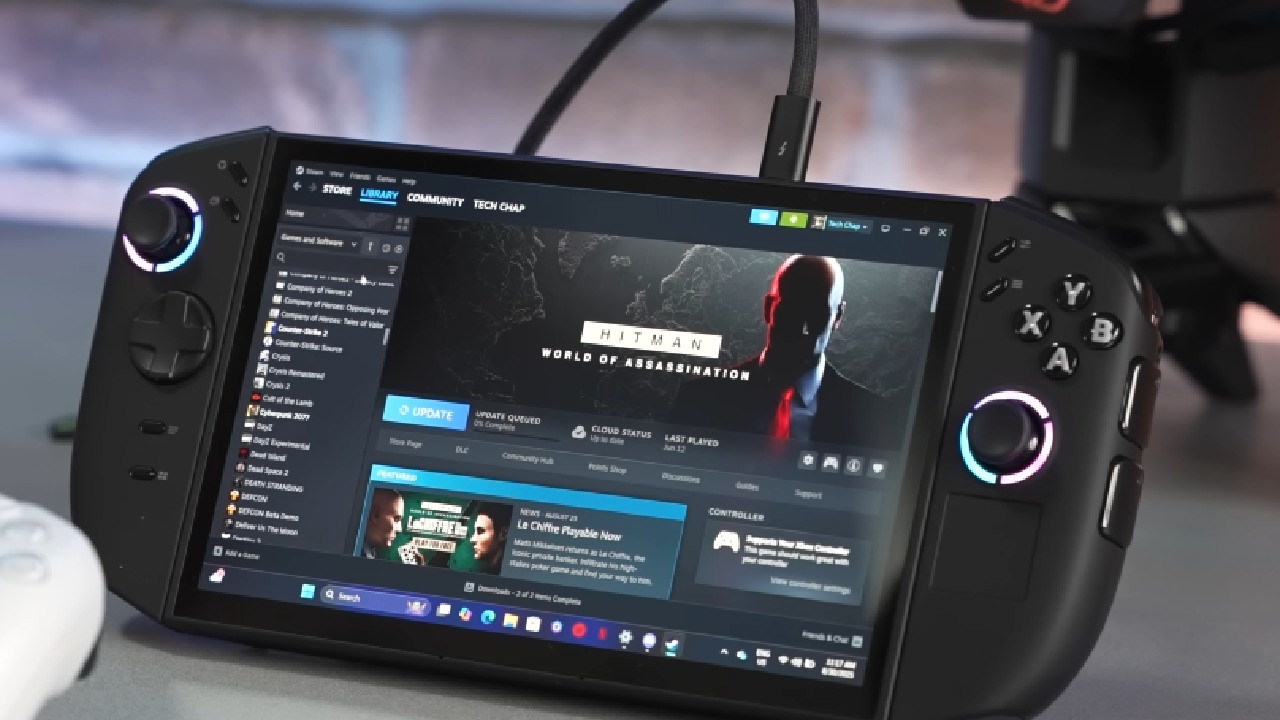
Lenovo Legion Go S
The Lenovo Legion Go S is an interesting device because it comes in multiple configurations. There are SteamOS versions and Windows versions, as well as lower-end and higher-end hardware options. Notably, it is one of the first non-Valve handhelds to ship with SteamOS preinstalled.
The SteamOS version starts at $649 and includes an AMD Ryzen 2 Go processor, 16GB of RAM, and 512GB of storage. Compared to the Steam Deck OLED, you get a larger 8-inch display with a higher 1920x1200 resolution and a 120Hz refresh rate. While it is not an OLED panel, it still looks good, and performance is slightly better in some situations.
The Windows versions start at around $900, which is a lot more, and go up to over $1000 based on how they are set up. These models have up to 32GB of RAM and 1TB of storage. The higher-end versions have the Z1 Extreme processor. The Z1 Extreme still performs surprisingly well compared to newer chips, so it's a great choice if you want more power without the latest hardware.
A 50-w battery supports 2.5 to 7 hours of use, based on what you are doing. The screen on the front is too small and doesn't seem very helpful. It's pretty comfortable, though. The general product lineup is a little confusing because of overlapping prices, which makes it hard to explain why some models exist.
If you are considering Legion Go S, the higher-end SteamOS version at around $900, it makes the most sense, especially if you want a more powerful Steam Deck-like experience. For Windows users, there are stronger alternatives available at similar prices.
.jpg)
ASUS ROG Xbox Ally and Ally X
ASUS offers two versions of the ROG Xbox Ally lineup. The standard Ally starts at $600, while the Ally X comes in at $999. The naming mirrors the Xbox S and X approach, with the cheaper model in white and the premium model in black.
Comfort is the standout feature here. The grips feel incredibly natural, similar to holding an Xbox controller, making this one of the most comfortable handhelds available. That comfort alone is enough to win over many players.
Both devices use a 7-inch 1080p IPS display. While the screen quality is fine, it does not get very bright and falls behind OLED panels in contrast and vibrancy. Still, it remains perfectly usable for most situations.
The base Ally includes 16GB RAM, 512GB storage, and the Ryzen Z2A chip. Performance is comparable to the Steam Deck OLED, which makes it harder to recommend at full price. However, when discounted, it becomes one of the most affordable Windows-based handhelds available.
The Ally X steps things up significantly with the Z2 Extreme AI chip, 24GB RAM, 1TB storage, and a massive 80W battery. Battery life ranges from about 2.5 hours to 6 hours, depending on the load. You also get Wi-Fi 6E, Bluetooth 5.4, excellent front-facing speakers, and USB 4 support for external GPUs.
The controller layout, haptic triggers, and overall build quality make the Ally X feel premium. It is also highly portable, though its shape makes a protective case almost essential.
If you want a powerful Windows handheld with excellent ergonomics and a console-like feel, the Ally X is one of the strongest options available.
.jpg)
MSI Claw 8 AI Plus
The MSI Claw 8 AI Plus may not be the newest device on the market, but it remains one of the most powerful. It's not like most others; it uses an Intel Ultra7 processor rather than AMD hardware.
At first, there were real worries about how well the game would work and whether people would be able to play it. But updates have made it much more stable and added support for more games. These days, the Claw 8 AI Plus is one of the best Windows handhelds, and it works great with the latest games.
MSI corrected many of its early missteps with this model, delivering a strong balance of power, build quality, and usability. It competes directly with the most expensive handhelds available. It remains a serious option if raw performance is your top priority.
Final Thoughts
If you are looking for the best budget-friendly and most console-like experience, the Steam Deck OLED is still the easiest recommendation. If you want something more powerful with SteamOS, the higher-end Lenovo Legion Go S is worth considering.
For a premium Windows experience with unmatched comfort, the ASUS ROG Xbox Ally X stands out. If maximum performance is your goal, the MSI Claw 8 AI Plus deserves serious attention.
Ultimately, the best handheld depends on what you value most, whether that is price, performance, comfort, or software experience.
Also, check our other articles below :
- ASUS ROG Ally X Handheld Review: Double the Battery, Double the Comfort
- Nintendo Switch 2 Vs. Original Switch 1: A Full Comparison
- How To Connect A Camera And Join Voice Chat With Nintendo Switch 2
- Nintendo Switch 2 Review: Handheld Performance, Features & Value Breakdown
- ROG Xbox Ally X Vs. ROG Ally X: Display, Battery & Controls
- ASUS ROG Ally X vs. Steam Deck OLED: Display, Battery & Gaming Benchmarks
- MSI Claw 8 AI+ Review: Display, Controls & Gaming
- Nintendo Switch 2 vs. Steam Deck OLED: Gaming, Performance, Battery, Display and Value
- PlayStation Portal Review: Remote Play, Cloud Streaming & Travel Gaming
- PlayStation Portal vs. Lenovo Legion Go: Best Portable Gameplay
- Cyberpunk 2077 Patch 2.3 FPS Test on MSI Claw 8 AI+
Editor, NoobFeed
Gaming Hardware Updates
No Data.