
Valve ARM Steam Deck Could Be Smaller and Cheaper
Valve’s ARM handheld concept could target older Steam games while keeping hardware size, power use, and pricing lower.
Handheld by Nahe Yan on Sep 26, 2026
Valve Could Make a Smaller ARM-Based Steam Deck, But There Are Limits. The idea of a smaller, lower-power Steam gaming handheld has gained attention as ARM-based gaming becomes more capable. Valve's Steam Frame has also shown how Steam games can run through an ARM-based platform.
The idea of a cheaper ARM-based Steam Deck is interesting because the Steam library spans decades. A smaller device could focus on older games and less demanding modern titles rather than trying to run every game available on Steam.
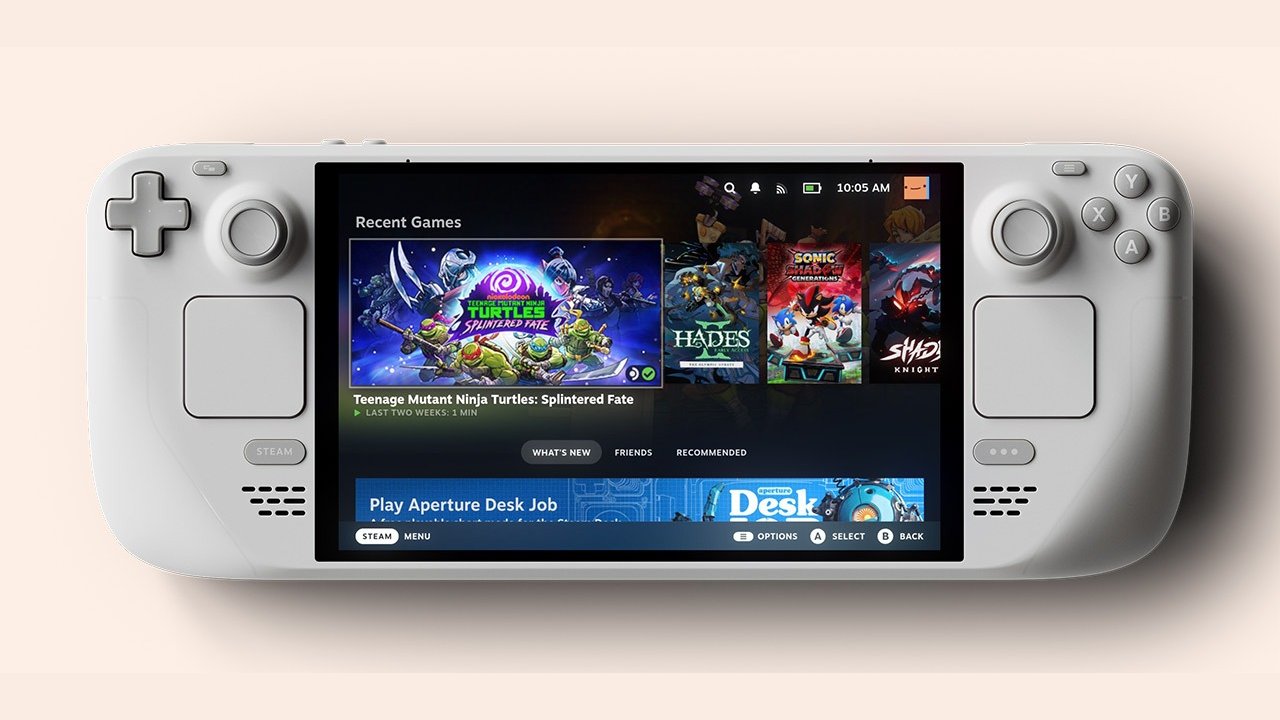
A Smaller ARM-Based Steam Deck Could Make Sense
An ARM-based handheld could also offer a smaller form factor closer to the size of a Switch or Switch Lite. That would provide an alternative to the larger handhelds that have become common. However, those limitations are already showing. ARM gaming on the Steam Frame uses a powerful ARM SoC, but Cyberpunk 2077 struggled on the platform.
The experience was poor, and the loading times were long enough to suggest that CPU performance could be part of the problem. That doesn't mean an ARM-based Steam handheld wouldn't work. We think the idea has legs as long as expectations are clear. A device like this would need to focus on older games or less demanding modern titles, especially those that don't require 16GB of memory.
The existing Steam Deck Verified system already provides a compatibility indicator, so Valve could use a similar system for ARM-based devices if it ever produced one. For us, transparency matters. If a game is supported and runs well, users would know what to expect before installing it. Older games could also translate more easily to an ARM-based system.
Steam Frame already provides an example of this approach. Its games section isn't heavily populated yet, but the games that do work well. Streets of Rage 4, for example, can run properly on the platform. TARM also has a bigger issue with modern PC gaming. PC games are increasingly using vendor-specific technologies for frame generation, upscaling, ray reconstruction, and other machine-learning features.
An ARM handheld may need to focus on older games.
A more realistic approach could be to make an ARM-based handheld specifically for games from a particular era. ARM-based pocketable gaming devices already exist built around this idea. Such a device could run games that do not demand the same level of hardware as newer releases.
However, games still wouldn't run particularly well in some cases. The translation layer itself also creates overhead. That means the ARM handheld would need a capable CPU to handle the additional work. The smaller form factor wouldn't remove the processing requirements of translating PC games.
The other question is how much a cheaper ARM-based handheld would actually cost. If Valve produced an ARM-based handheld that cost more than the original Steam Deck, the value proposition would be hard to explain. A smaller ARM-based Steam device could work if it is positioned around the games it can realistically support.
Editor, NoobFeed
Latest Articles
No Data.