
Xbox Magnus: Next Generation Console with AI Power and PC Hybrid Design
Xbox Magnus continues Microsoft’s partnership with AMD to deliver unprecedented next generation console performance and efficiency.
Hardware by Tanvir Kabbo on Oct 13, 2025
Next-generation console is definitely not cancelled. New information has surfaced from trusted insiders tied to Xbox's hardware team and AMD. The next-generation Xbox is real, and new details reveal a closer look at its larger-than-life chip.
As the Xbox console generation nears its end, rumors have circulated that Microsoft will pull support and cancel the upcoming console. Despite speculation, Microsoft PR continues to emphasize its ongoing AMD partnership in official statements.
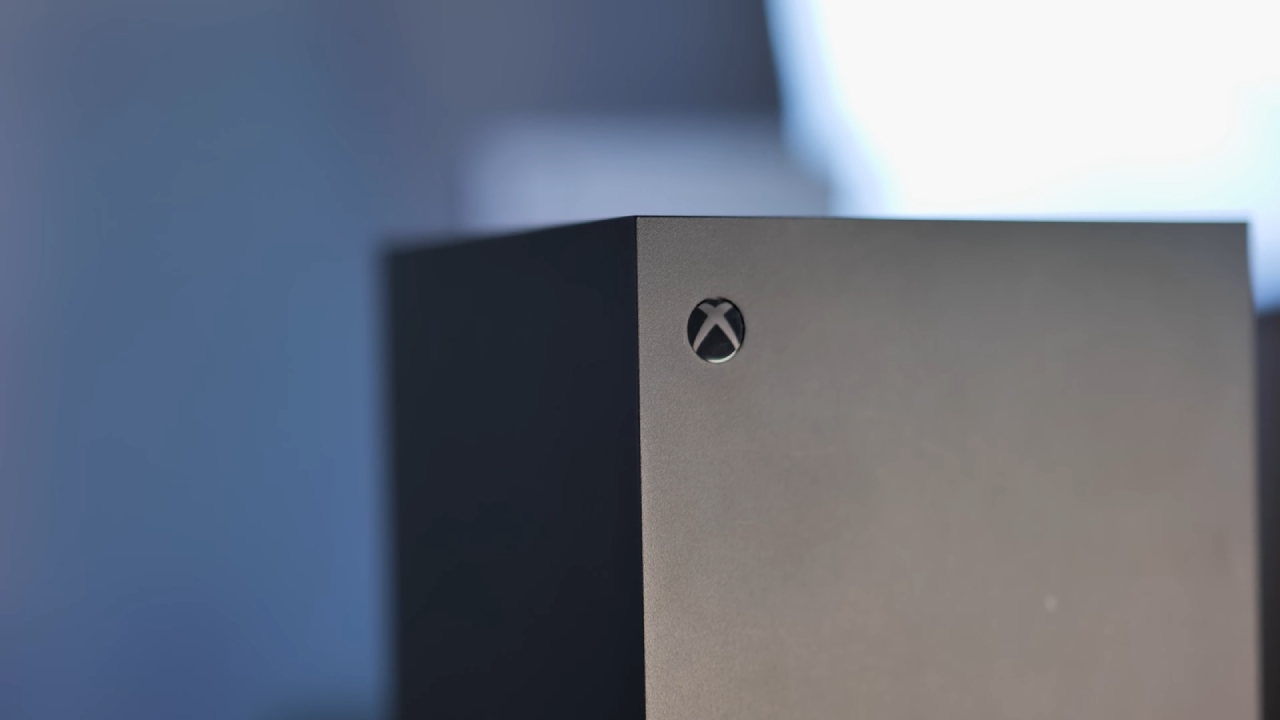
Recent leaks from hardware expert Moore's Law is Dead outline Xbox's forward-looking plans, confirming active development of the Xbox Magnus—an advanced APU built to redefine console performance.
Xbox Magnus and the AMD Partnership
An AMD engineer recently talked about the speculations that were going around. They said, "As far as I, an AMD engineer, know, Xbox Magnus is still full steam ahead." On October 3, 2025, we were literally talking about what to do next in a progress update. This proves that Xbox Magnus will still be a big part of Microsoft's plans for future products.
The engineer also noted that while originally conceived as an Xbox project, Magnus could evolve into a PC-console hybrid launching around 2027, or possibly even a gaming PC APU that carries the Xbox name in spirit.
Both Xbox and AMD are deeply engaged in the co-development of the Xbox Magnus, a supermassive CPU-GPU combination expected to deliver unprecedented performance and efficiency.
The chip is already being prepared for quantity production with TSMC and AMD, forming part of a family of processors that will power Microsoft's first-party next-generation console lineup.
A PC-Console Hybrid for the Future
Sources close to Xbox's hardware division indicate that the next-generation Xbox will function as a PC-console hybrid. It will support popular PC storefronts such as Steam, Epic Games Store, and Ubisoft Connect while maintaining full backward compatibility with the existing Xbox game library.
The development team is focused on building a compatibility layer to ensure that, both legally and technically, the system qualifies as an Xbox console first and foremost.
Inside the Xbox Magnus SOC
At the core of the next-generation Xbox lies the Xbox Magnus System-on-Chip (SOC). It features a dual-chiplet design that combines powerful gaming and AI processing capabilities. The CPU consists of a 144mm² die paired with a 264mm² GPU die, totaling 408mm²—larger than the current Xbox Series X chip at 350mm².
Despite its increased size, the new SOC maintains a balanced power output of 250–350watts with a modest thermal profile.
The CPU configuration includes three Zen6 cores and eight Zen6C cores, all built on a 3nm process. Together, they deliver significant speed improvements over the upcoming PS6, codenamed Project Orion.
The Xbox Magnus has 11 cores and 12MB of L3 cache, which should make it work better in big open-world scenarios and with complicated AI algorithms.
RDNA 5 GPU and Next-Gen Memory Architecture
There are 68 RDNA5 compute units in the Xbox Magnus's GPU, which are grouped into four shader engines. Three of these engines have nine workgroups and two shader arrays, supported by 24MB of L2 cache—five times that of the Xbox Series X.
This expanded cache minimizes bandwidth constraints, enabling faster rasterization and rendering of intricate in-game geometry.
Surrounding the chip is a 192-bit memory bus coupled with 48GB of GDDR7 RAM in a unified memory pool. This is a generational leap, tripling the Series X's memory capacity and adopting the latest high-speed GDDR7 standard.
The result is sharper image quality, smoother frame pacing, and enhanced visual fidelity—especially critical on large, high-refresh displays.
AI-Powered Neural Processing Unit
One of the standout features of the Xbox Magnus is its integrated AI-driven Neural Processing Unit (NPU). This unit delivers 110TOPS of processing power, double that of the Xbox Series X's AI performance.
The NPU handles intelligent image refinement, dynamic frame rate boosts, and low-latency rendering. It can also scale down to a lower-power 36TOPS mode for background tasks and the new AI Co-Pilot feature.
The Co-Pilot system enables players to request in-game assistance, find tips, or get answers without affecting performance or draining system resources.
This AI-driven approach reflects Microsoft's ongoing commitment to blending gaming performance with advanced machine intelligence.
Performance Advantage Over Competitors
Moore's Law is Dead says that the Xbox Magnus is about 25% to 33% faster than Sony's planned PS6 in terms of total performance. This advantage means that next-generation games will have higher frame rates, richer visual settings, and more room for bigger resolutions.
With AI-enhanced technologies such as AMD's FSR4.0 and Microsoft's proprietary AutoSR, the console will deliver superior upscaling and frame reconstruction.
Most importantly, Xbox Magnus remains an Xbox-first product, ensuring complete forward compatibility with over 4,000 current-generation Xbox titles.
However, its PC-like flexibility lets you play games from major storefronts and access up to 50 previously PlayStation-exclusive titles.
Price, Positioning, and Market Strategy
Industry analysts expect the Xbox Magnus to launch at approximately $800. Unlike previous generations, Microsoft plans for this console to be profitable from day one, rather than subsidized through software or subscription services.
The company reportedly cancelled its in-house handheld console to prioritize production agreements with AMD for the Magnus hardware.
This move shows that the company is changing its strategy to focus on high-end, niche consoles that have a lot of power and can play a lot of games. Microsoft seems set on making the Xbox Magnus a high-end flagship that will set the standard for console gaming in the future.
Future of Xbox
We think that Xbox Magnus is a really important time for Microsoft's gaming sector. It's designed to merge the best of PC and console gaming while providing full continuity for existing Xbox owners. With AMD and TSMC on board, the partnership continues to push the boundaries of performance and innovation.
While some may speculate about Xbox's long-term role in the console market, all current evidence suggests the company is committed to delivering next-generation hardware.
The Xbox Magnus promises to be the most powerful, flexible, and smart console ever made. It will mark the beginning of a new era in which power, compatibility, and adaptability all come together in one smooth experience.
Check Our Other Articles:
- PS5 Pro vs. PS5 Slim: Frame‑Rate, Graphics & Performance
- PS5 Pro vs. Radeon RX 9060 XT vs RTX 5060 Ti: Ultimate $700 Gaming Showdown
- ASUS ROG Ally PS5 Remote Play | How to do Remote play on PS5 Using Sony's Official Remote Play App
- Stream PS5 Games on Steam Deck OLED: Step-by-Step Installation and Configuration
- PS5 Pro vs. PS5 Slim vs. PS5 — Design, Storage, Specs, and Gaming
- PS5 Pro vs. Xbox Series X: Specs, Price, Storage, Customization, and Gaming
- PS5 Pro vs. PC Gaming: Comparison of Graphics, Frame Rates, and Price
Senior Editor, NoobFeed
Gaming Hardware Updates
No Data.