
Acer, MSI, or OneXPlayer: Which Panther Lake Handheld Is Actually Worth Buying
Acer Predator Atlas 8 offers the least distinctive design among the three Panther Lake handhelds compared here.
Hardware by Nahe Yan on Jul 12, 2026
Intel's Panther Lake platform is bringing a fresh wave of gaming handhelds to market, and three devices in particular stand out: the Acer Predator Atlas 8, the MSI Claw EX AI+, and the OneXPlayer 3. Two of these devices haven't shipped yet, with the Atlas 8 arriving in October and the OneXPlayer 3 shipping in August, so this comparison leans on currently available specifications, images, and footage rather than hands-on testing.
Acer Predator Atlas 8 is, honestly, the least interesting of the three. It features a standard 8in IPS display running at 120Hz with VRR, paired with the increasingly common Intel Arc G3 Extreme chip. Acer is also offering a cut-down configuration using the standard G3 instead, currently speculated to launch around $1,100.
Acer Predator Atlas8: The Weakest of the Three
That price isn't particularly appealing, since the standard G3 configuration is roughly 15% to 20% slower than a Z2 Extreme chip on paper, putting it in the same price range as competitors, sometimes even $100 more, without offering a comparably strong deal.
The more powerful G3 Extreme configuration tells a slightly better story, assuming Acer prices it competitively against devices like the OneXPlayer 3, ideally somewhere around $1,400 to $1,500, with a 24GB memory option to help keep costs down.
If Acer manages that, the Atlas 8 could end up being a reasonably solid deal, even though its design is the least distinctive of the three. It's about as generic as a PC handheld gets. To its credit, it avoids the extended-chin design seen on devices like the MSI Claw EX AI+, though that omission also makes it look less distinctive overall.
MSI Claw EX AI+: A Powerful but Overpriced Option
MSI Claw EX AI+ has come up frequently in recent handheld discussions, and compared to devices like the Legion Go, it holds up as a decent option, though not a standout one. It does just enough to avoid being the worst choice on the market. Pricing is where things get difficult, with a last-minute increase pushing the price to $1,800, a genuinely steep cost for what amounts to an average overall package.
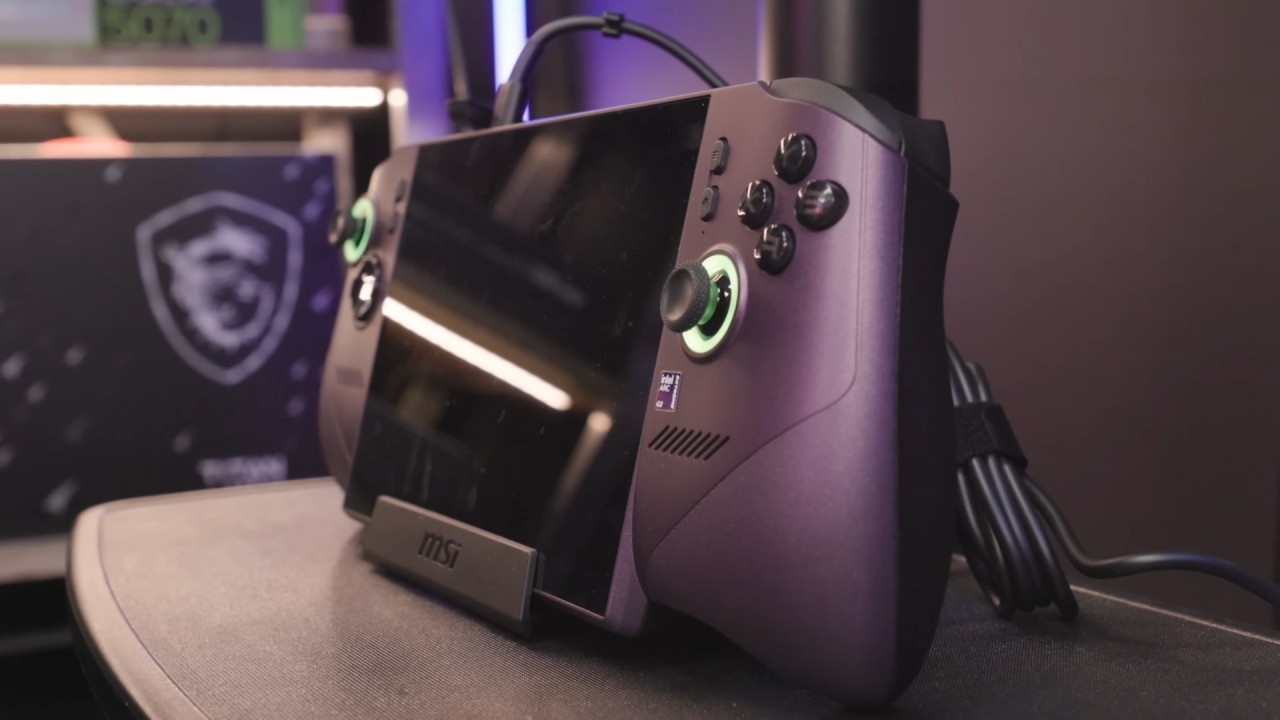
It includes an 82Wh battery, an 8in IPS display similar to the Atlas 8, which also runs at 120Hz with VRR, and the G3 Extreme chip with 32GB of memory. Design-wise, the MSI Claw EX AI+ has a more distinctive look, built around a deep purple colorway that won't appeal to everyone, along with more pronounced back buttons and an extended chin below the display, similar in spirit to devices designed around streaming use cases, though not quite committing fully to that aesthetic either.
It reads as a bit of a compromise between a few different design directions rather than landing on something clearly its own. In terms of raw performance, though, this will likely be one of the more powerful PC handhelds available, offering a clear step up over Z1 Extreme devices and a meaningful upgrade over Z2 Extreme-based handhelds that have been on the market since October of last year.
It might not be worth buying this one if you already have a Z2 Extreme. However, the jump might be worth it if you're still using a 2022-era Steam Deck. Still, $1,800 is a pretty high price, especially since the current parts shortage has driven up prices. This really is one of the best handhelds you can get right now, but the price keeps it from being the clear winner.
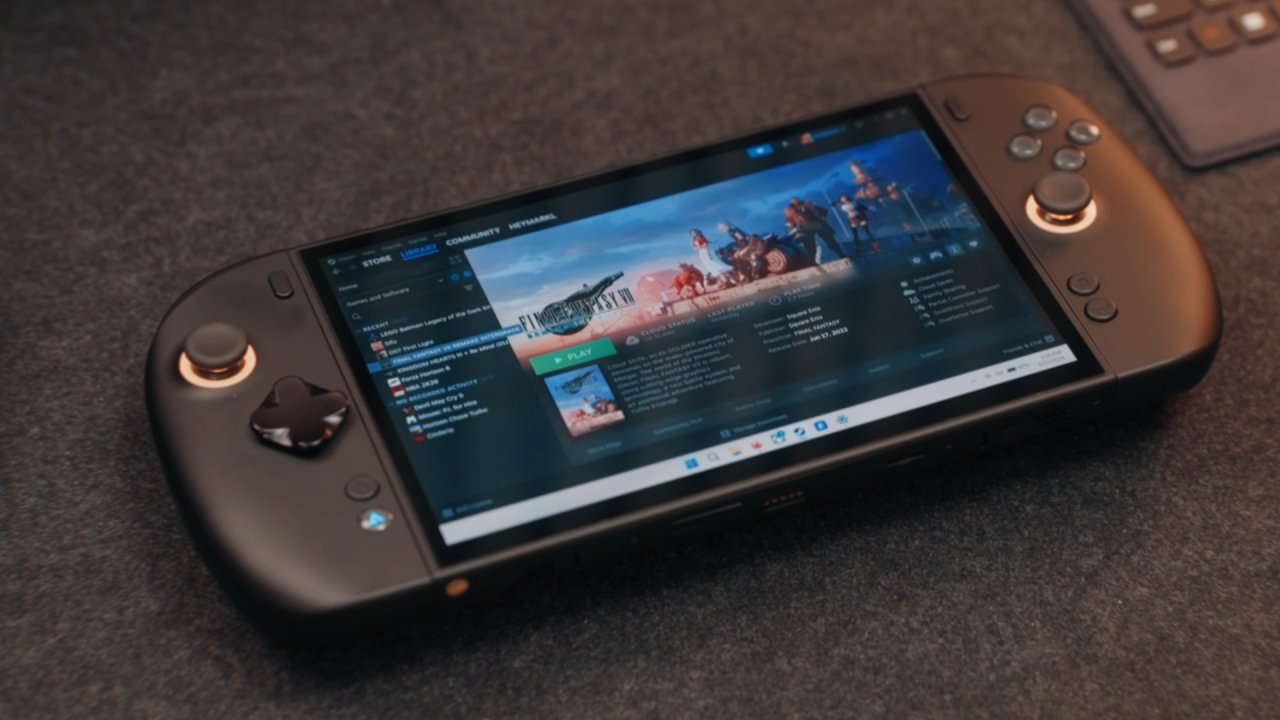
OneXPlayer3: The Best Value Right Now
Pricing isn't nearly as much of an issue with the OneXPlayer 3, at least for now. It comes in several configurations, but the base model is the one worth focusing on, since it's the configuration most buyers should actually choose. It features the largest display of the three: an 8.8in native landscape AMOLED panel with HDR support, running at 144Hz with VRR, likely matching the exact panel used in the Legion Go 2, given their nearly identical specifications.
Like the Legion Go 2, it includes detachable, three-in-one controllers, offering the same kind of flexible input options found on that device and on the Switch. Memory is configurable up to 64GB, though the 24GB base configuration makes the most financial sense once pricing is factored in. Storage scales up to 2TB, though the recommended configuration ships with 512GB.
Storage is upgradeable down the line once more affordably priced SSDs become available, with a microSD card serving as a reasonable stopgap in the meantime. It also includes the largest physical battery of the three, at 85 Wh. However, the actual real-world difference is unlikely to be significant, given that the smallest battery among these three devices is 80Wh, and the MSI Claw EX AI+ is 82Wh.
It's currently available at $1,400 for the base configuration, which includes the G3Extreme chip.
A 3Wh gap isn't likely to meaningfully affect battery life, and realistically, none of these devices is likely to deliver particularly strong battery life under heavy use. What really makes the OneXPlayer 3 stand out isn't just its AMOLED display or its versatility, but its confirmed pricing.
For anyone looking for the best overall value, this is currently the strongest option available. It offers the best display of the three and the most versatile overall experience, with only the Legion Go 2 offering a comparable experience. That device starts at $2,000, meaning the OneXPlayer 3 offers a $600 savings by comparison.
OneXPlayer 3 is currently the best Panther Lake handheld, at least during its limited early bird pricing window. This is true when you look at price, style, and specs. It remains to be seen if that will change when the Acer Predator Atlas 8 goes on sale to everyone.
If Acer can bring the price down below that of the MSI Claw EX AI+, it could become a strong option once the OneXPlayer 3 is no longer available to early birds. But for now, the OneXPlayer 3 is clearly the best choice because it offers the most features and works with the widest range of devices.
Editor, NoobFeed
Gaming Hardware Updates
No Data.