
AI Market Warning Emerges as AMD and NVIDIA Face Hardware Issues
Technology markets face renewed pressure as AI valuations rise alongside GPU memory limits and Nvidia processor problems.
Hardware by Nahe Yan on Aug 16, 2026
While investors are spending billions on AI hardware, AMD has quietly released a much smaller product, the Radeon RX 9050. The full version uses AMD's RDNA 4 architecture and includes 16 compute units, 8GB of GDDR6 memory, and a boost clock of approximately 2.6GHz. The reported price is $279, and that immediately creates a problem.
AMD did not launch the card with independent reviews, and its own 1080p medium-setting benchmarks suggest only modest performance. Its availability is even more confusing. The standalone 8GB model is reportedly limited to select markets. In the United States, customers may only receive a 4GB version inside selected CyberPowerPC pre-built systems.
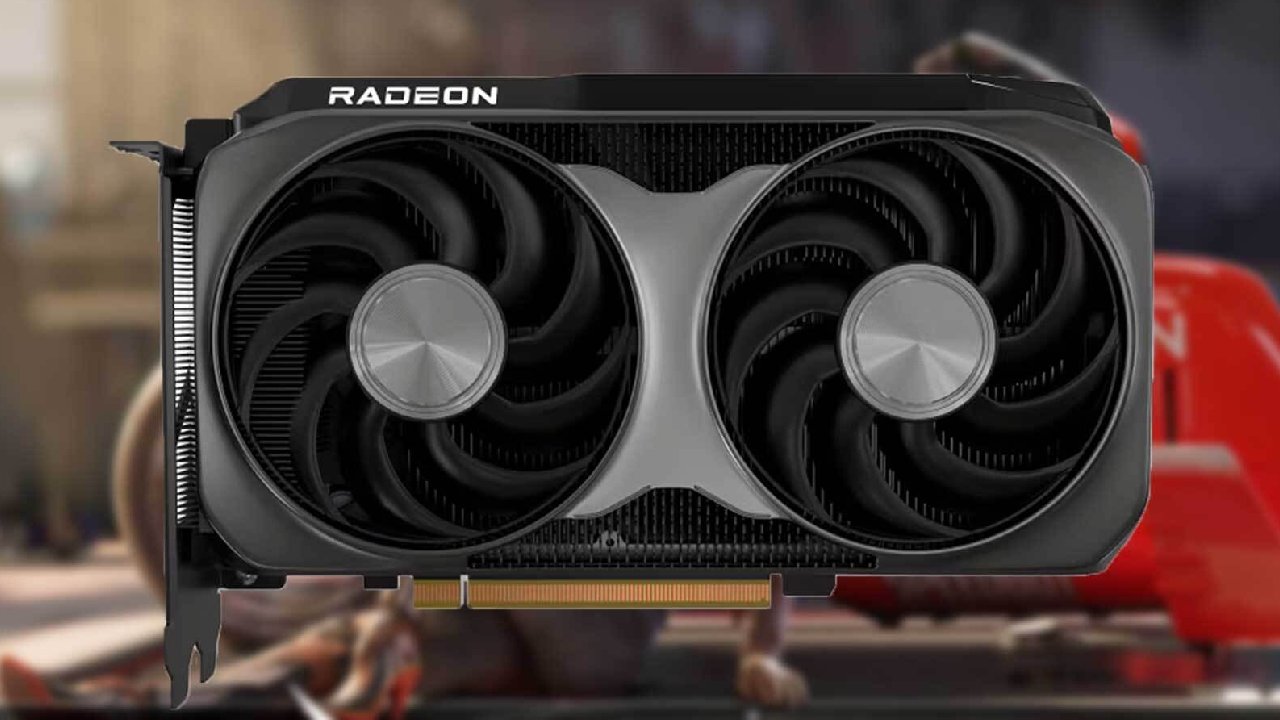
4GB of graphics memory is extremely restrictive for a new gaming GPU, especially as modern games continue to demand more VRAM. Unless the price is significantly reduced, the RX 9050 may struggle to justify its existence. If you're looking at a new gaming GPU, 4GB of VRAM leaves limited room for modern games and future releases.
NVIDIA N1X Faces Early Gaming Problems
NVIDIA's upcoming Windows processor may be more powerful, but it appears nowhere near ready. A reviewer reportedly tested an early Microsoft Surface prototype containing NVIDIA's high-end N1X processor. The chip combines a 20-core ARM CPU, a Blackwell-based GPU with 6,144 CUDA cores, and 24GB of unified memory.
Its CPU benchmark results were respectable, reaching approximately Apple M3 Max territory in some tests. Gaming performance was a completely different story. The GPU reportedly fluctuated between 1.5 and 2.3GHz, causing major stutters every few seconds. Increasing the power limit offered almost no performance improvement, while some games and workloads crashed completely.
Temperatures were also concerning. The CPU reportedly reached 98-100°C, while the GPU operated between 80 and 88°C. However, this was an early engineering sample using unfinished drivers. The hardware clearly has potential, but NVIDIA still has major work ahead in cooling, power efficiency, driver stability, and Windows on ARM compatibility.
AI investment reaches historic valuation levels.
The stock market is approaching dot-com era valuations, AMD is releasing a 4GB GPU, and NVIDIA's first Windows processor for gamers looks promising but unstable. Each new development in the tech field brings up a different worry. The market value makes us think about investing in AI, AMD's 4GB GPU shows how much pressure there is on VRAM capacity.
NVIDIA's N1X shows that hardware performance is only one part of making a Windows gaming platform. The biggest red flag can change depending on the situation, as prices can keep rising, a GPU with low VRAM can still be used in pre-built systems, and an early research sample can improve significantly with better drivers, cooling, and power management.
Editor, NoobFeed
Gaming Hardware Updates
No Data.