
AMD AM4: The GOAT Platform Still Going Strong
AMD AM4 platform continues to receive new CPUs, offering extended support and performance improvements for older motherboard generations.
Hardware by Tanvir Kabbo on Aug 31, 2025
AMD AM4 has proven itself to be one of the greatest motherboard sockets of all time. It was introduced in 2016 and got its first Ryzen CPU in 2017. Ryzen 5500X3D was released in 2025, and it is still supported today. This new CPU, aimed at specific markets outside the US, is essentially an outdated architecture with updated silicon.
Similar to previous exclusive models, it represents AMD's approach of taking existing silicon that didn't meet higher-tier specifications and repurposing it into a competitive product for niche regions.
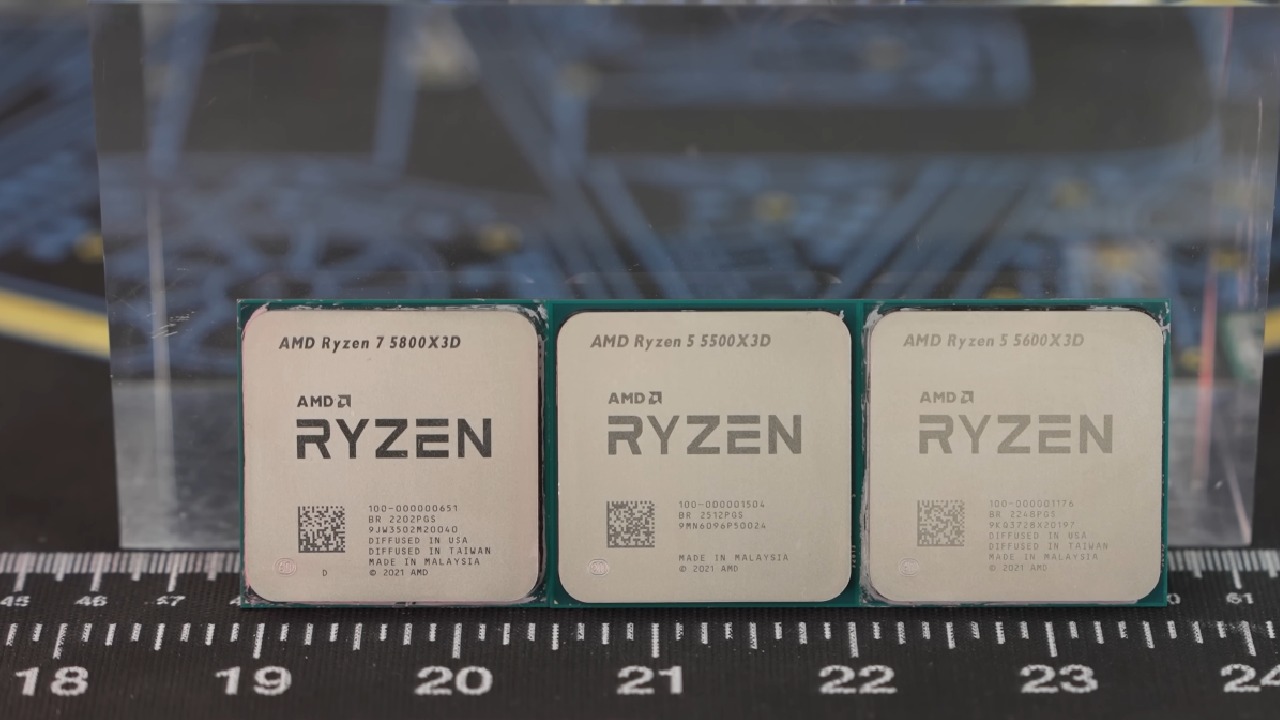
5500X3D: Specs and Strategy
Ryzen 5500X3D is a six-core, 12-thread CPU. While AMD has launched several X3D models in the past, such as 5600X3D and 5800X2D, 5500X3D represents a continuation of this strategy, offering high L3 cache and a moderate frequency range.
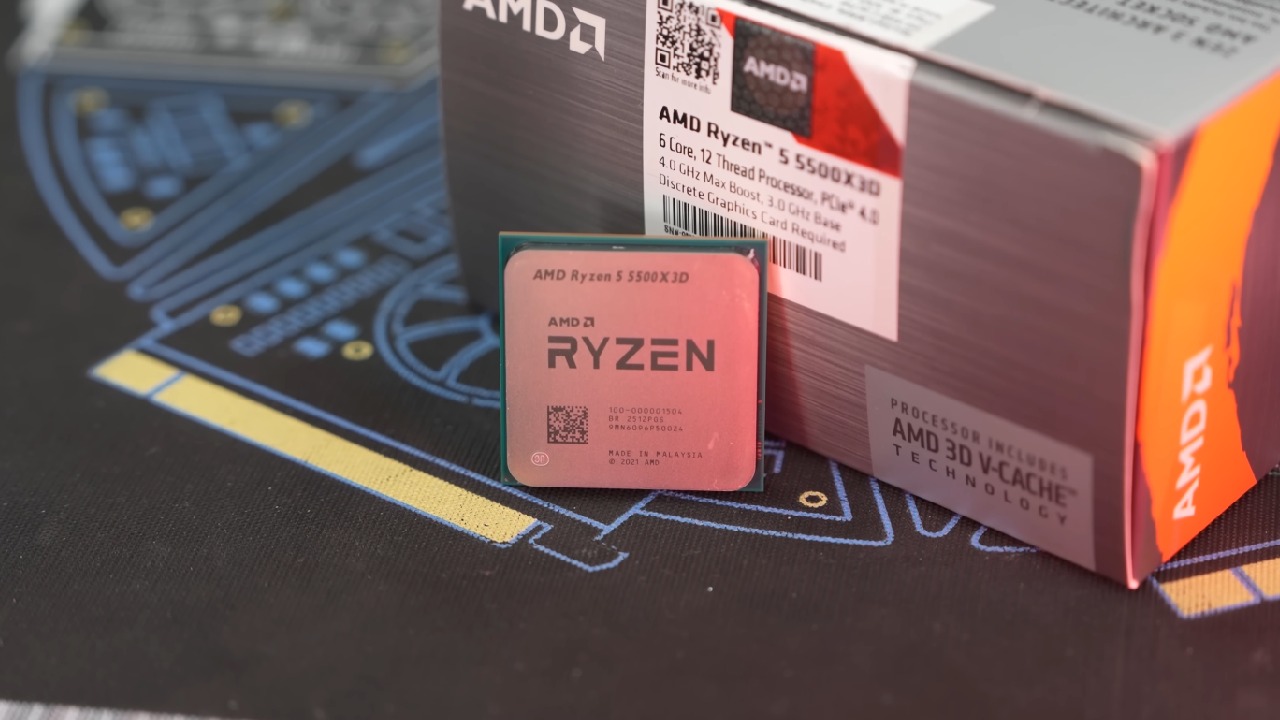
The CPU has a 105W TDP, with base and boost clocks of 3GHz and 4GHz, respectively. Essentially, AMD is taking silicon that didn't meet higher-frequency targets and reallocating it into lower-tier X3D products.
This can result in slightly lower clock speeds but still retains the benefits of the expanded 96MB L3 cache, which can help offset performance differences in gaming workloads.
Pricing and Availability
Originally priced between $240 and $250, 5500X3D is now closer to $200. In areas where it is formally available, it is still a good choice even though prices differ by location.
It is reasonably priced when compared to other CPUs in the same market, especially when you take into account the additional L3 cache that X3D models provide.
Frequency Validation
In all-core workloads like Blender rendering, 5500X3D runs at 3950MHz, slightly below its maximum boost of 4GHz. The non-X3D 5500 runs at 4250MHz, while the 5600X3D hits 4350MHz.
In single-core benchmarks, the 5500X3D also falls just short of its advertised maximum, yet this minor shortfall has a limited impact on overall gaming performance.
Gaming Performance
5500X3D takes roughly 61 seconds to finish tasks in CPU-intensive simulations like Stellaris, which is slower than higher-tier AM4 CPUs but on par with Intel counterparts. The CPU in Dragon's Dogma 2 runs at an average speed of 95 fps, which is comparable to mid-range Intel CPUs.
5500X3D performs marginally worse than 5600X3D and 5700X3D, with an average frame rate of 102 fps for Baldur's Gate 3.
The CPU achieves an average of 297 fps in Final Fantasy XIV Dawntrail testing at 1080p, which is only slightly slower than 5700X3D's 302 fps.
Similar performance is shown in the F1 24 results, with the 5500X3D lagging 5600X3D by about 11%. With an average frame rate of 164 fps in Cyberpunk 2077 Phantom Liberty, it surpasses the non-X3D 5500 and performs on par with mid-range Intel equivalents.
Starfield benchmarks illustrate that while the 5500X3D isn't a top-tier performer, it still surpasses older 5000-series models significantly.
Production and Productivity
5500X3D takes around 30 minutes to render a frame of a 3DGN logo in Blender, which is a little longer than the non-X3D 5500 and slower than more powerful models like the 3700X.
Similar patterns can be seen in file compression and decompression activities, where the CPU performs respectably but not competitively.
It took 337 minutes to compile the code, which was quicker than the non-X3D 5500 but still far slower than higher-tier CPUs.
Adobe Photoshop, Premiere, and DaVinci Resolve benchmarks place 5500X3D near the bottom, showing its limitations in production workloads.

AM4 Still Relevant
Compared to GPUs, the CPU industry is still comparatively stable, with predictable availability and cost. Because older motherboards and CPUs are still in use, AM4 is still thriving, particularly outside of the U.S.
5500X3D gives good gaming performance for its tier and resolves the cache issues of the 5500 non-X3D, despite not being a top-tier performer.
For gamers, this CPU provides a budget-friendly option that still competes reasonably with higher-end Intel and AMD chips in gaming scenarios.
In productivity workloads, it is less impressive, so anyone relying heavily on content creation might consider higher-core alternatives.
Overall, AM4's longevity is remarkable. CPUs like 5500X3D keep the platform current, cutting waste and prolonging upgrade cycles for current customers, while millions of motherboards are still in use.
The fact that a 2017 platform is still maintained in 2025 is evidence of AMD's dedication and the AM4 ecosystem's lasting worth.
Check Our Other AMD articles:
- AMD Ryzen 9 9950X3D Review: Setting The Standard For 2025 Gaming CPU
- AMD Ryzen 7 9800X3D Review: 3D V-Cache Goes God Mode with Stunning Gaming Performance
- AMD RX 9070 Performance Review: Thermals, Clocks, and Real-World FPS
- AMD Ryzen 5 7600 Review: Best Budget Gaming CPU of 2025?
- AMD Radeon RX 7800 XT Review: RDNA 3 Power For Midrange Gaming
- Sapphire NITRO+ AMD Radeon RX 9070 XT Review: The Ultimate 4K Gaming GPU
- AMD Ryzen 7 7800X3D: Delivers Gaming Performance Far Beyond Expectations
- AMD Ryzen 9 7900X Review: Powering the AM5 Era with DDR5 & PCIe 5.0
- ASRock Radeon RX 7800 XT Challenger OC Review: Best Price-to-Performance GPU of 2025
- Intel Core i9‑14900K vs. AMD Ryzen 7 7800X3D: Power Profiles & Gaming Benchmarks
Senior Editor, NoobFeed
Gaming Hardware Updates
No Data.