
AMD Radeon RX 9070 XT Review
Consistent 1440p gaming performance with improved FSR4 image reconstruction and efficient cooling in the RX 9070 XT.
Hardware by Nahe Yan on Nov 12, 2025
The AMD Radeon RX 9070 XT is one of AMD's newest GPUs. It is designed to work seamlessly with recent games and supports FSR 4 and enhanced ray tracing.
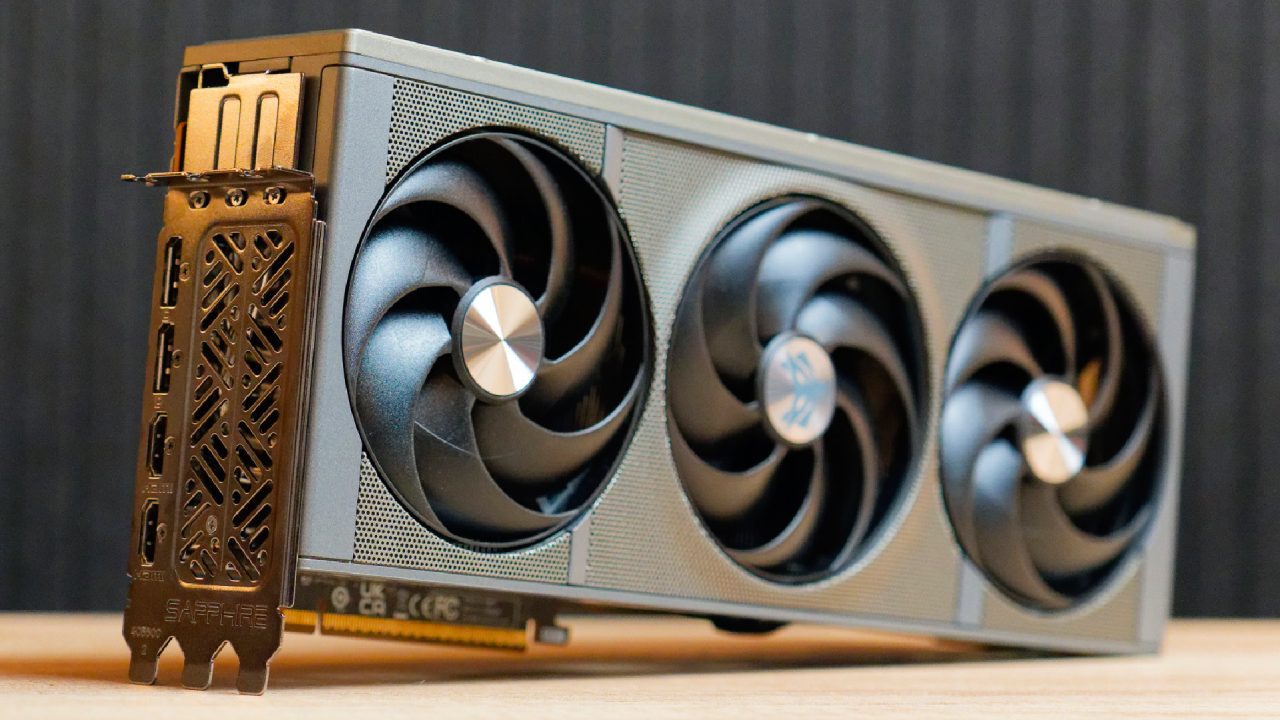
The Sapphire Pulse model discussed here has 16GB of VRAM and three fans. It has two 8-pin GPUs and a TDP of about 304–305W. It works with a 650W power supply.
.jpg)
Design of the Build and Cooling
The Sapphire Pulse RX 9070 XT is well-built and has a good cooling system. The heatsink on this card is thicker than those on other cards, including the RTX 5070 Ti, and has more surface area for dissipating heat.
Even when fully loaded, the three 120mm fans maintain low noise levels by operating at less than 50% of their maximum speed. Not having the 12VHPWR connector makes installation easier.
Conditions and Setup for Testing
We used Monster Hunter Beta Wilds, a game that works with FSR4 without any extra changes, to test performance at 1440p. We tested the GPU with both FSR4 and AMD's native AA, which is equivalent to Nvidia's DLAA.
AMD's built-in capture program handled the recording, resulting in only a slight drop in performance, about 3–4 fps, compared to gameplay without capture.
Quality Mode for FSR4 and 1440p Performance
When ray tracing was enabled and the settings set to high at 1440p, the RX 9070 XT maintained a steady 80–100 fps, depending on the scene's complexity. The FSR4 in Quality mode delivered frame rates significantly better than Native AA, and the image quality remained unchanged.
Both FSR4 Quality and Balanced modes yielded almost identical visual results. This means that the performance-oriented settings strike a good balance between quality and speed.
Frame Generation Analysis
The Fluid Motion Frames feature from AMD was put to the test to see how well it could make frames. It worked, but it exhibited noticeable visual abnormalities, particularly near moving light sources and reflective surfaces, such as candles and metal items.
AMD's single-level solution had some problems when compared to Nvidia's multi-stage frame generation (X1–X4). Flickering and ghosting happened in certain lighting conditions. However, these artifacts were not readily apparent during typical gameplay.
A Comparison of Native AA and FSR 4
In Native AA mode, the frame rates were around 60 fps. In FSR 4 Quality or Balanced mode, they reached around 80–100 fps. When we examined the images, we observed that FSR4's picture reconstruction typically matched, and sometimes exceeded, the sharpness of Native AA.
When comparing static images, it was easier to see the texture details on character models and background elements, especially when playing back at 1440p and 4K.
Performance of Power and Heat
While playing, the GPU temperature remained stable at 60°C with 100% usage, and performance remained steady, accompanied by a power draw of around 300W. During high-resolution tests, VRAM utilization averaged about 12GB, indicating that memory was being used effectively in demanding scenes.
Experience of Gameplay and Visual Observations
Because it included heavy ray tracing and complicated particle effects, Monster Hunter Beta Wilds was a good stress test. The RX 9070 XT performed these tasks well.
In battles with a lot of visual effects, such as lightning and water, frame rates stayed above 60fps in Native mode and near 90fps in FSR 4 Balanced mode. Although there were some anomalies in the frame generation, the gameplay remained smooth and appeared unchanged.
Impression in Comparison
The FSR 4 implementation was competitive with both the RX 9070 XT and other Nvidia models in terms of image reconstruction and upscaling efficiency. Nvidia's frame generation, on the other hand, remains superior at handling artifacts and maintaining consistency across different refresh rates.
AMD's single-level Fluid Motion Frames feature performs well, but it lacks the polish of multi-stage alternatives.
Final Thoughts
Sapphire's architecture makes the RX 9070 XT a suitable choice for gaming at 1440p and 4K, as well as for its cooling and build quality. FSR 4 shows significant improvements in image quality and performance scaling, particularly in the Balanced and Quality settings.
The frame generation algorithm requires further refinement, but it remains effective for most types of gaming. Overall, the RX 9070 XT is a good choice for gamers who want consistent performance and competitive image reconstruction techniques in high-resolution games.
Also, check our other AMD articles:
- AMD Ryzen 9 9950X3D Review: Setting The Standard For 2025 Gaming CPU
- AMD Ryzen 7 9800X3D Review: 3D V-Cache Goes God Mode with Stunning Gaming Performance
- AMD RX 9070 Performance Review: Thermals, Clocks, and Real-World FPS
- AMD Ryzen 5 7600 Review: Best Budget Gaming CPU of 2025?
- AMD Radeon RX 7800 XT Review: RDNA 3 Power For Midrange Gaming
- Sapphire NITRO+ AMD Radeon RX 9070 XT Review: The Ultimate 4K Gaming GPU
- AMD Ryzen 7 7800X3D: Delivers Gaming Performance Far Beyond Expectations
- AMD Ryzen 9 7900X Review: Powering the AM5 Era with DDR5 & PCIe 5.0
- ASRock Radeon RX 7800 XT Challenger OC Review: Best Price-to-Performance GPU of 2025
- Intel Core i9‑14900K vs. AMD Ryzen 7 7800X3D: Power Profiles & Gaming Benchmarks
Editor, NoobFeed
Gaming Hardware Updates
No Data.