
AMD Zen 7 Grimlock Leaks Reveal TSMC 1.4nm CPUs, FOPLP Packaging, and 32-Core Ryzen Future
AMD’s Zen 7 roadmap signals a massive architectural leap through advanced packaging and ultra-dense cache designs.
Hardware by Tanvir Kabbo on May 26, 2026
The CPU industry barely has time to process Zen 6 rumors before AMD's next major architectural leap surfaces through Taiwanese supply chain channels. According to recent reports circulating through Commercial Times, AMD is actively preparing its future Zen 7 architecture, codenamed "Grimlock" around some of the most aggressive semiconductor technologies the company has ever pursued.
What makes this leak especially important is not just the rumored transition to TSMC's 1.4nm-class A14 node, but also the packaging technology associated with it. AMD appears to be looking far beyond simple transistor scaling and focusing heavily on advanced chiplet integration, density, and thermal efficiency.
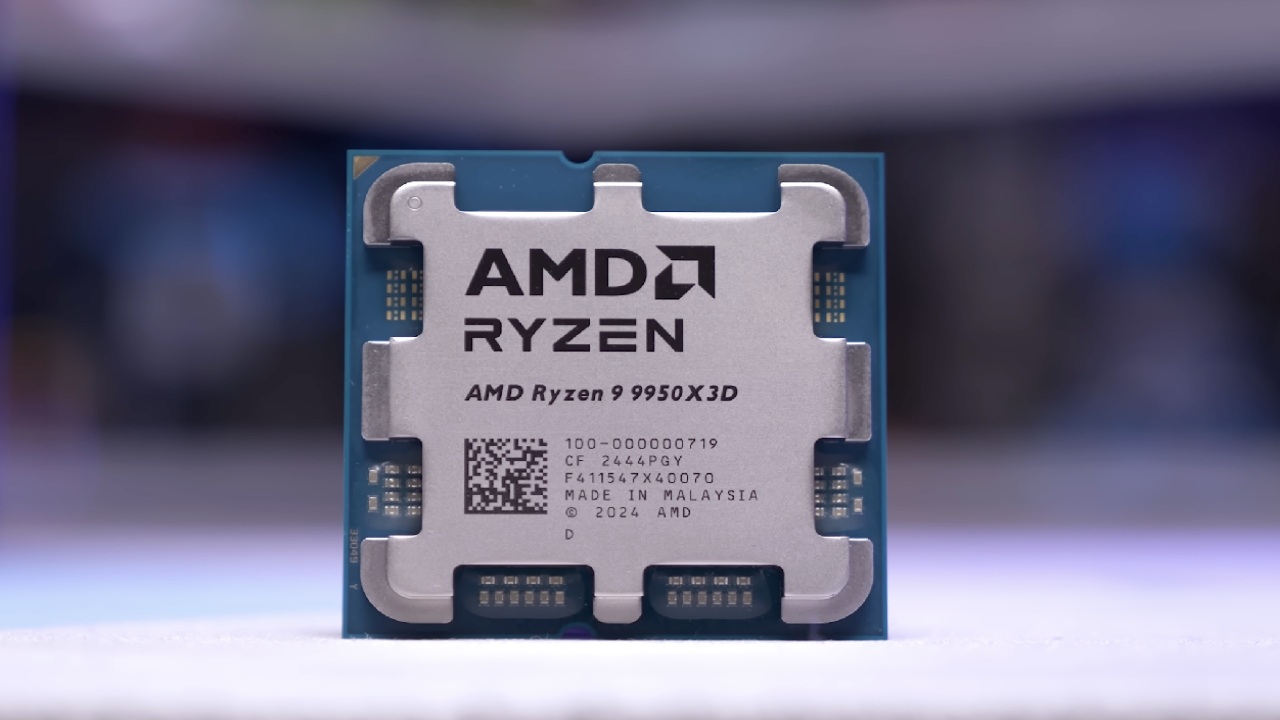
That matters because modern CPUs are no longer limited purely by raw process nodes. Packaging has become just as important as the silicon itself. If these reports hold true, Zen 7 could represent one of the biggest architectural shifts since AMD first introduced Ryzen and mainstream chiplets back in 2017.
The Move to TSMC 1.4nm Could Define the Post-3nm Era
AMD's rumored adoption of TSMC A14 signals a direct escalation in the long-term war against Intel's future 14A process technology. By the time Zen 7 enters mass production around 2028, both companies will likely be competing for efficiency leadership rather than simply clock-speed supremacy.
The significance of a 1.4nm-class process goes far beyond marketing terminology. At these scales, improvements in transistor density enable AMD to dramatically increase compute throughput while reducing power consumption per operation. That becomes critical for AI inference, gaming workloads, cloud infrastructure, and high-density enterprise computing.
But there is another important reality here. Traditional node shrinks are becoming increasingly expensive and physically difficult. Leakage, heat concentration, and interconnect bottlenecks grow exponentially harder to solve with every generation. That is exactly why AMD's packaging strategy may matter even more than the node itself.
Why FOPLP Could Be the Real Revolution Behind Zen 7
The most fascinating part of the leak involves AMD reportedly evaluating FOPLP (Fan-Out Panel Level Packaging) with support from Powertech Technology Inc. For hardcore hardware enthusiasts, this may be the true story behind Zen 7.
The limits of traditional wafer-level packaging, which have served the semiconductor industry for years, are being quickly exposed by contemporary chiplet topologies. CPUs are becoming more modular in design, and manufacturers need better ways to connect multiple dies while improving thermal performance, power delivery, and manufacturing efficiency.
And that's where FOPLP comes in. Panel-level packaging differs from traditional wafer-level techniques in that it uses large rectangular panels rather than round wafers. This dramatically improves space efficiency and potentially reduces manufacturing costs at scale. More importantly, it allows AMD greater flexibility in creating complex chiplet configurations.
This could enable tighter interconnects among CCDs, I/O dies, cache layers, and AI accelerators in Zen 7, with improved signal integrity and heat dissipation. The thermal implications alone are massive. As CPUs approach ultra-dense transistor counts, efficiently removing heat becomes one of the industry's largest engineering challenges. FOPLP could help AMD maintain higher sustained clocks while reducing hotspot concentration across stacked chiplets.
This also aligns perfectly with AMD's broader strategy. The company has spent years proving that advanced packaging is now a competitive weapon. Technologies like 3D V-Cache already demonstrated how AMD can outperform larger monolithic dies through smarter integration rather than brute-force silicon scaling. Zen 7 appears poised to take that philosophy much further.
.jpg)
16-Core CCDs Could Completely Reshape Desktop CPUs
The rumored jump to 16-core CCDs may be the most eye-catching specification in the entire leak. For perspective, Zen 4 CCDs currently top out at 8 cores, while Zen 6 is rumored to move toward 12-core compute dies. Zen 7 pushing all the way to 16 cores per CCD would represent a staggering increase in density in only a few generations.
If AMD combines dual CCDs in a mainstream enthusiast desktop processor, it would theoretically open the door to 32-core consumer Ryzen CPUs with dramatically higher efficiency than current workstation-class chips. That alone would radically change how enthusiasts think about desktop performance tiers.
Gaming may benefit in unexpected ways, too. While most modern games still struggle to scale efficiently across massive core counts, the real advantage may come from the rumored cache configuration. Reports suggest a single Zen 7 CCD paired with next-generation 3D V-Cache could hold up to 224MB of L3 Cache. A dual-CCD design could potentially create cache pools that dwarf anything currently available on consumer platforms.
That matters because cache is increasingly becoming the secret weapon behind gaming performance. AMD has already proven this, with X3D processors dominating gaming benchmarks despite lower clock speeds in some cases. With 224 MB of L3 cache per CCD, future CPUs could drastically reduce memory-latency bottlenecks in open-world games, simulation workloads, strategy titles, and AI-assisted rendering pipelines.
AI workloads may benefit even more aggressively. Large cache pools can accelerate local AI inference by reducing the need for repeated trips to slower system memory. As AI features become increasingly integrated into consumer software, massive on-die cache may become just as important as raw core count.
Server Chips Will Arrive First, While Ryzen Users Wait Longer
As exciting as these leaks are, the timeline remains extremely distant. Current reports indicate Zen 7 server processors could enter production around 2028, while mainstream Ryzen desktop parts may not arrive until 2029. That gap makes sense given AMD's historical strategy of prioritizing EPYC deployments before consumer rollouts.
Enterprise customers are also where technologies like FOPLP and ultra-dense CCDs make immediate financial sense. Datacenter operators care deeply about rack density, power efficiency, thermal stability, and AI acceleration. Desktop enthusiasts will likely inherit those innovations later once yields mature and manufacturing costs stabilize. That means Zen 7 is probably not an AM5 story at all.
Senior Editor, NoobFeed
Gaming Hardware Updates
No Data.