
AMD Radeon RX 9060XT Arc Raiders Performance Benchmark at1080p 1440p and 4K
FSR Redstone improves image stability and performance balance for Arc Raiders on mid-range Radeon GPUs.
Hardware by Shinji Okazaki on Dec 28, 2025
Arc Raiders is still one of the best technically polished games of 2025, especially when it comes to how well it works on multiple types of hardware. XFX Swift Pro Gaming version of the Radeon RX 9060 XT 16GB that we examined here can provide a wide range of enjoyable experiences, depending on the resolution, settings, and upscaling options you choose.
The system has an Intel Core i5-12600KF overclocked to 5.1GHz and 32GB of system memory. It uses the latest AMD drivers and doesn't have any manual GPU overclocking.
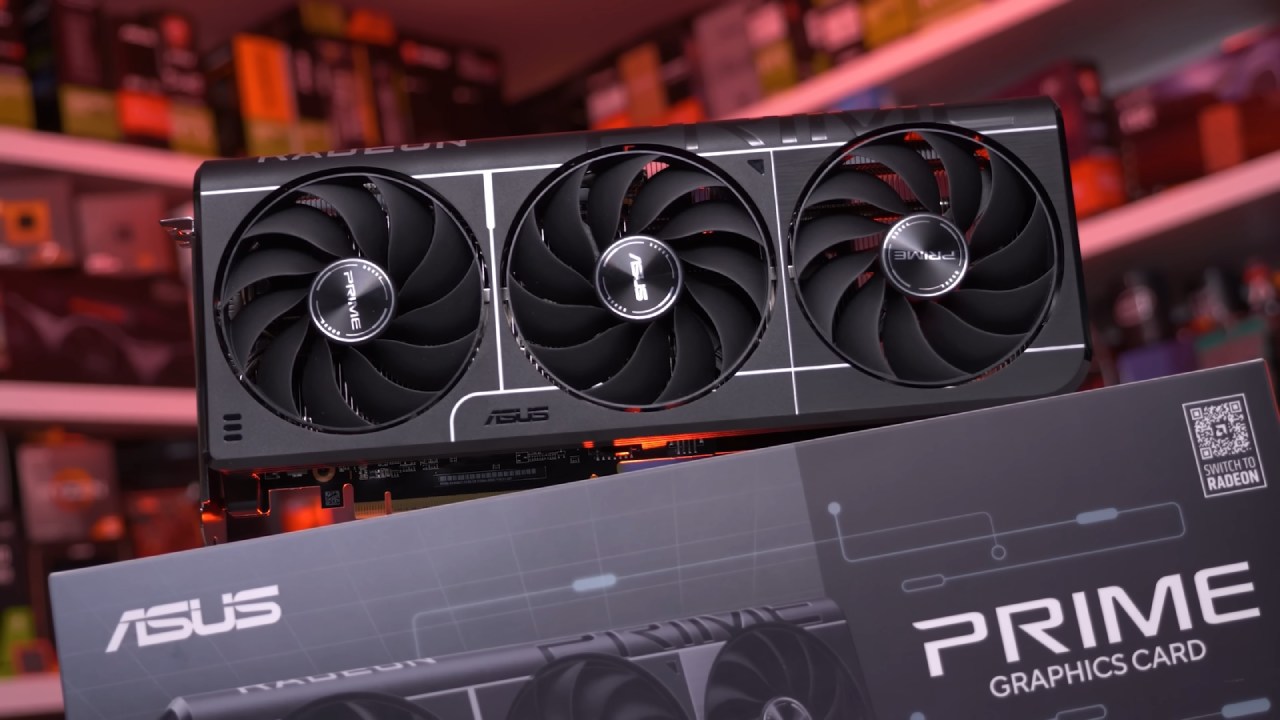
Setting up the test and the graphics
All tests are run with AMD FSR upscaling, now called FSR Redstone and based on machine learning. In the menu, the game clearly states that this is AMD FSR upscaling. We utilize native AA as a baseline and assess quality and performance settings at different resolutions. RTXGI stays on where it is set, even though it's mostly a feature for Nvidia cards. This is to test real-world performance instead of perfect setups.
We also look at the new cinematic preset that was added to Arc Raiders. It improves draw distance, lighting, and shadow coverage, with no pop-in.
1080p performance on high and cinematic settings
At 1080p with theatrical settings and FSR Native AA, performance often drops to about 30 fps, especially when it rains heavily or there is a lot of greenery. When everything is turned on, RTXGI on Epic with completely maximum effects pushes the RX 9060 XT beyond what is comfortable at this resolution. The game is still playable, but the experience doesn't match what players expect from seamless gameplay.
Switching to FSR Quality, which renders at 720p and upscales to 1080p, improves performance, but it still struggles to maintain a steady 60fps in taxing sequences. The image's sharpness is lower, but the shimmering on the leaves has mostly disappeared compared to earlier versions of FSR3. The ML-based upscaler is making great progress, especially in handling plants.
Changing from cinematic to high and dynamic high settings changes how well the game runs. Even in the same scenario, average frame rates fluctuate from about 60 fps to well over 100 fps. Visual trade-offs include a shorter draw distance and non-uniform shadows. Still, the quality of the textures and lighting remains the same. GPU usage is more variable at this point, which suggests that the i5-12600KF's overclocking only partially limits the CPU.
Performance at 1440p native and upscaled
At 2560x1440 with maximum settings with FSR Native AA, performance is always over 60fps, even in the hardest parts of the forest.
FSR Quality at 1440p, which internally renders at 960p, provides a more balanced experience. The image quality is still quite good, though it is slightly softer than native AA. The higher frame rate is the better trade-off. When FSR Quality is on, performance is usually between 90 and 100 fps, which makes camera movement smoother and fighting more responsive.
Testing FSR3 frame creation at this resolution is only for a short time, and it is not recommended. Even though the frame rate is better, there is still a perceptible delay in input and excessive motion blur. The frames that are made don't respond quickly enough for a shooter; thus, the best option is to use FSR upscaling with native rendering.
Performance and scaling in 4K
You can still play Native4K at high settings, and the frame rate stays over 30 fps when asset streaming is enabled. This shows that Arc Raiders' optimization is better than the GPU's raw power. But this mode isn't ideal for long-term play.
FSR Quality at 4K makes things sharper and speeds up the action to 50 fps while keeping the colors vibrant. The plants look a little softer than in native mode, but the overall look is still the same as in 4K mode.
FSR Performance, which internally renders at 1080p and upscales to 4K, delivers the best results at this resolution. When the camera is still, the visuals look like they are in 4K, and the frame rates are higher than 60 fps. Bushes and leaves look a little soft, but the picture stays clear and sturdy while you play.
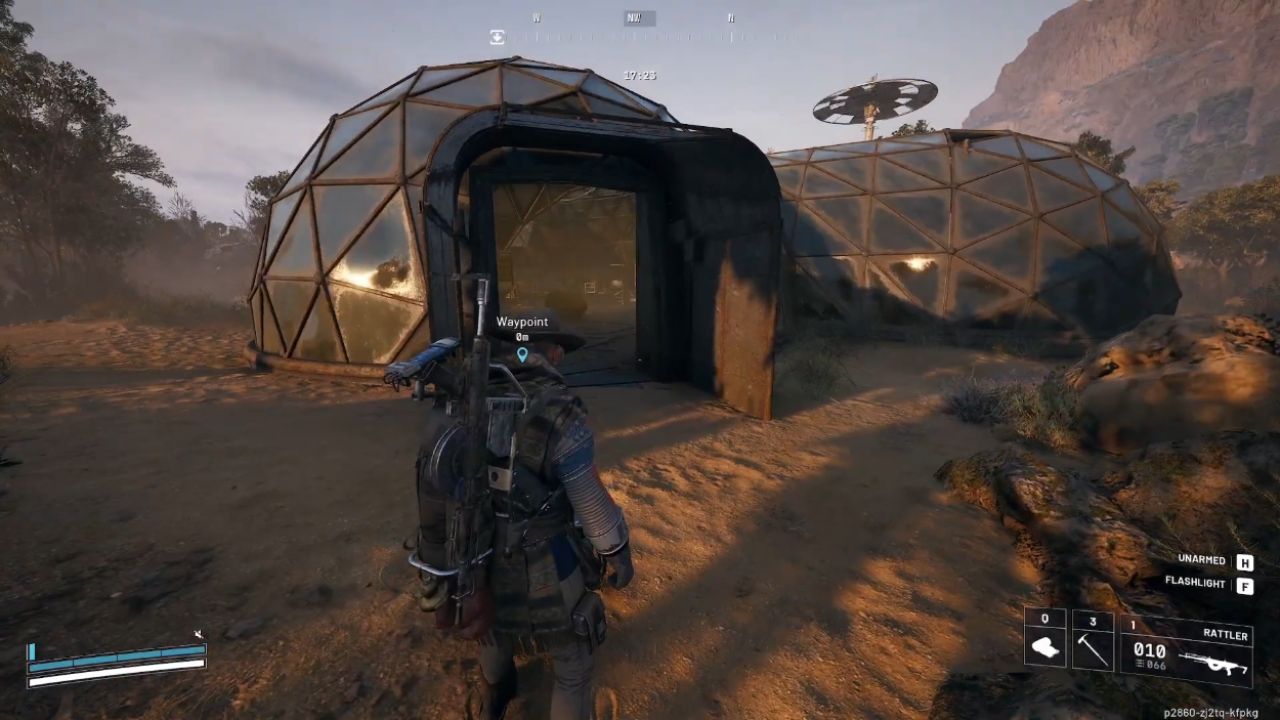
Memory Usage and Stability Observations
When testing 4K, VRAM usage stays around 7GB, suggesting that the RX 9060 XT with 8GB of RAM would perform just as well in this game. On the other hand, the system's memory usage is roughly 22GB, so having 32GB of RAM makes things run more smoothly and with fewer pauses. Moving around could be harder for systems with only 16GB of RAM.
Arc Raiders has an outstanding frame rate, even though it was built with Unreal Engine 5. A solid sign of stability for a UE5 game is an average frame rate of about 76 fps with 1% lows about 55 fps. There are a few stutters when you move around, but they don't happen very often and are easy to cope with.
Final Thoughts
The best settings for all resolutions are High settings with FSR Native AA or FSR Quality. Cinematic settings need a lot of processing power, but it doesn't help. At 1080p, high settings give you too much headroom, but 1440p is the best resolution for the RX 9060 XT, as it strikes a good balance between clarity and fluidity. 4K is only possible with very strong upscaling.
Arc Raiders has a bespoke UE5 branch and works closely with GPU vendors, making it one of the most reliable and scalable UE5 experiences available. RX 9060 XT runs the game well as long as the settings and resolution are set correctly, and expectations align with them.
Also, check our other AMD articles below:
- AMD Ryzen 9 9950X3D Review: Setting The Standard For 2025 Gaming CPU
- AMD Ryzen 7 9800X3D Review: 3D V-Cache Goes God Mode with Stunning Gaming Performance
- AMD RX 9070 Performance Review: Thermals, Clocks, and Real-World FPS
- AMD Ryzen 5 7600 Review: Best Budget Gaming CPU of 2025?
- AMD Radeon RX 7800 XT Review: RDNA 3 Power For Midrange Gaming
- Sapphire NITRO+ AMD Radeon RX 9070 XT Review: The Ultimate 4K Gaming GPU
- AMD Ryzen 7 7800X3D: Delivers Gaming Performance Far Beyond Expectations
- AMD Ryzen 9 7900X Review: Powering the AM5 Era with DDR5 & PCIe 5.0
- Intel Core i9‑14900K vs. AMD Ryzen 7 7800X3D: Power Profiles & Gaming Benchmarks
Editor, NoobFeed
Gaming Hardware Updates
No Data.