
Ryzen 10950X3D Leak Reveals Zen 6 Specs, 24 Core Design and 8000 MTS Support
Zen 6 core count increases to 24 cores with expanded cache and architectural refinements.
Hardware by Nahe Yan on Feb 21, 2026
Many of the performance goals, specifications, and core configurations for AMD's Ryzen 10000 series desktops, also known as Olympic Ridge, have been leaked online. Zen 6 is going to make significant changes to its architecture and core count.
People are also saying these processors might not come out at the end of the year, but instead in early 2027. At the same time, Intel's Nova Lake is likely to go head-to-head, with more cores and higher power use changing the game.
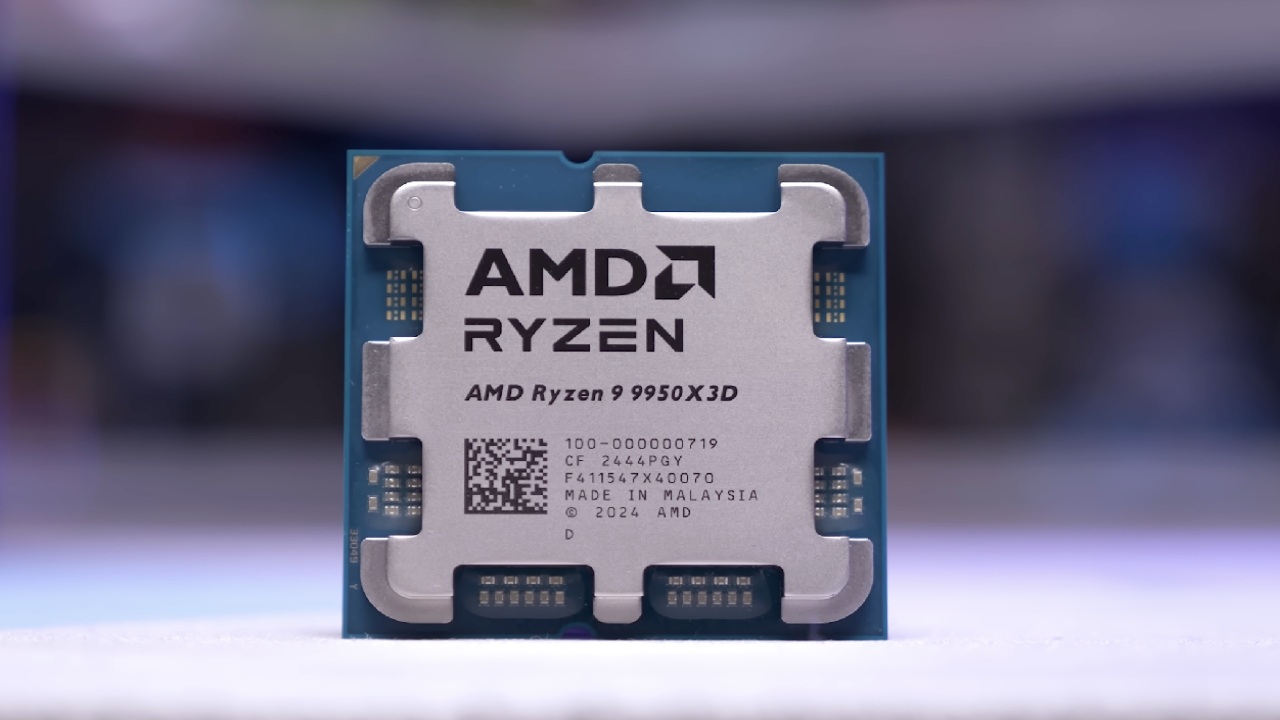
Changes to Zen 6 Core Configurations and CCD
HXL, also known as 9550 Pro on X, disclosed the configuration details. The different possibilities are 6, 8, 10, and 12 cores per CCD. With two CCDs, you may have up to 12+12 cores, or 24 cores in total. That means the top-of-the-line model has 24 cores and 48 threads.
AMD is adding more cores to each CCD. The standard now is eight cores per CCD, like the 9950X3D, which has 16 cores over two CCDs. The best configuration for Zen 6 is 12 cores per CCD. Some lower-end models may still have six-core versions. Those are meant for lower-end markets. Six cores are still enough for gaming and everyday tasks. Still, a 6-core SKU that effectively disables half of a 12-core CCD raises worries about yield.
There are still some questions about the cache configuration. Still, speculation suggests that each CCD will have 48MB of L3 cache, a 50% increase over the previous model. X3D variations would grow in size as well, possibly getting up to 96MB of 3D V-Cache per CCD. Some leaks suggest that two-high V-Cache stacks might be available. Still, it's unclear whether they will be widely available on desktops due to cost concerns.
When to Launch and Support for the AM5 Platform
Olympic Ridge is still on the AM5 socket. If a motherboard already supports Ryzen 7000 or 9000 series processors, it should be able to support Zen 6 as well with BIOS updates.
There are many reports on when the launch will happen. Most people agree that the game will come out in the fourth quarter, with mobile and X3D versions coming out early the next year, maybe around CES. But some rumors say it will be out in 2027. If that happens, AMD might introduce a temporary product, such as a new version of the 9950X3D. Data center goods are getting the most attention when it comes to production capacity.
Architecture, IPC, and clock speeds
It is said that Zen 6 will improve IPC by 10% to 15%, most likely using established benchmarks like SPECint. The revamped IOD and latency optimizations will determine how well games run.
The architecture is wider, suggesting the modifications are more significant than a simple update. But a larger design can make it less probable that the clock frequency will be quite high. Current goals call for base clocks below 6 GHz, though in some cases, PBO might push them to roughly 6.3 GHz. It is unlikely that ordinary desktop cooling solutions can work at 7GHz.
Zen 6 is also expected to support AVX-512 and FP16 instructions, which can help with some machine learning and computing tasks.
Information about memory and process nodes
There are rumors that memory support will be 8000MTS on dual-channel DDR5. Bandwidth is still constrained by the dual-channel design, even though 8000MTS is a lot.
TSMC 2nm will be used for the CCDs and maybe even 3nm for the IOD. We are still waiting for official confirmation.
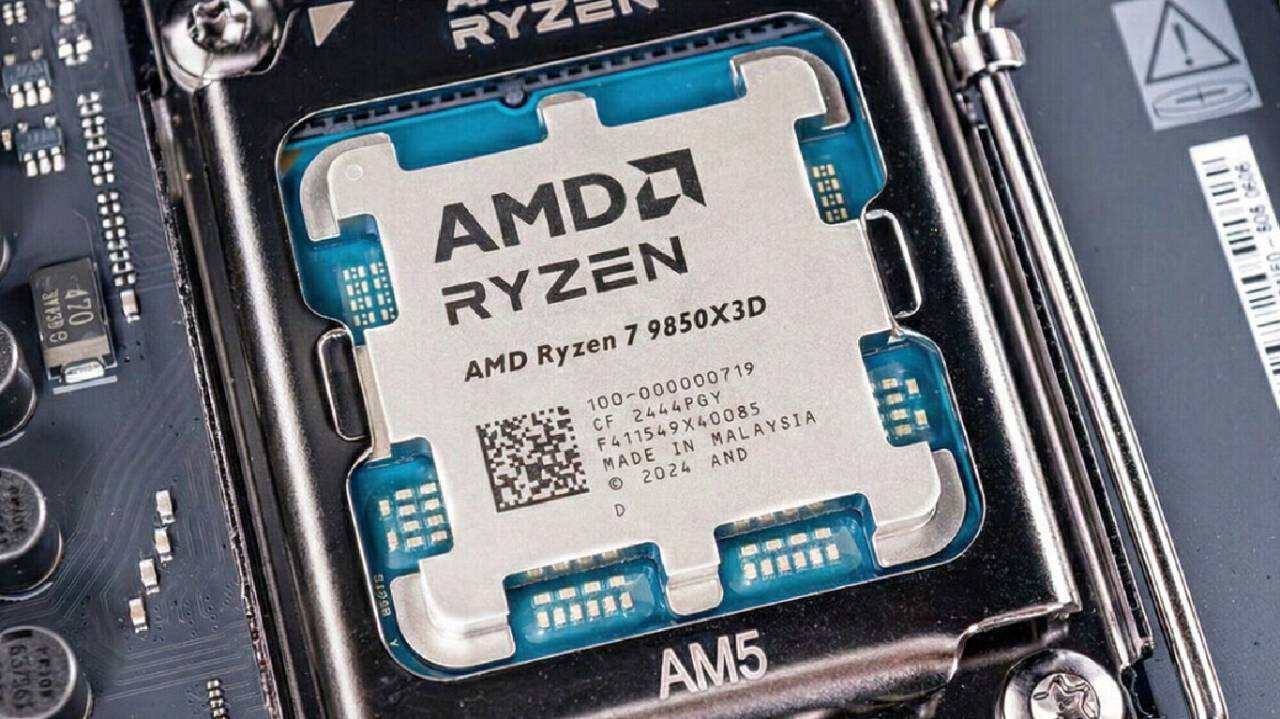
Differences between Intel Nova Lake Power and Platform
Intel's Nova Lake is likely to greatly boost the number of cores. The dual-tile setup is said to have 52 cores. Internal platform documentation says that the dual-tile setup can use up to 854W of power. Even though these power levels are not usually seen during gaming workloads, the platform is clearly aimed at greater power envelopes.
There are signs that only some 900-series motherboards will be able to handle the maximum power setup of the 52-core model. There are differences between 970 and 990 chipset boards regarding PCIe lane allocation and I/O capabilities. Higher-end boards can have up to 48 PCIe lanes, while lower-end boards can only have 34PCIe lanes. The power-delivery needs will determine which boards can handle the most expensive SKUs without problems.
The dual-tile 52-core variant is said to be more like a workstation-light processor than a gaming-focused SKU. The launch dates may be staggered, with the single-tile versions coming out initially and the dual-tile flagship coming out later.
Final Thoughts
The performance of Zen 6 and Nova Lake in single-threaded tasks is likely to be similar. When scaling beyond ordinary desktop workloads, multithreaded performance becomes increasingly complex. When using all 52 cores, dual-channel memory bandwidth may become a limiting factor, even with 8000MTS DDR5.
Final clock speeds will have a big effect on how things compare. Both AMD and Intel are trying to improve single-thread performance. Still, multi-thread scaling will depend on how well the architecture works, how much memory bandwidth it has, and how many I/O constraints it has.
The competition between Zen 6 and Nova Lake will set the standard for desktop performance in the future cycle.
Editor, NoobFeed
Gaming Hardware Updates
No Data.