
Valve Addresses Steam Deck OLED Shortage and Improves Steam Verified System
Valve confirms Steam Deck OLED shortages stem from memory and storage constraints while verification improvements roll out.
Hardware by Tanvir Kabbo on Feb 21, 2026
Valve has finally addressed the stock issues with the Steam Deck OLED, and it looks like this problem is going to be fixed soon. Alongside that, Valve is also fixing the verification program.
On top of everything, Neo1 has been getting a lot of playtime on the Steam Deck, and it has been an absolute blast.
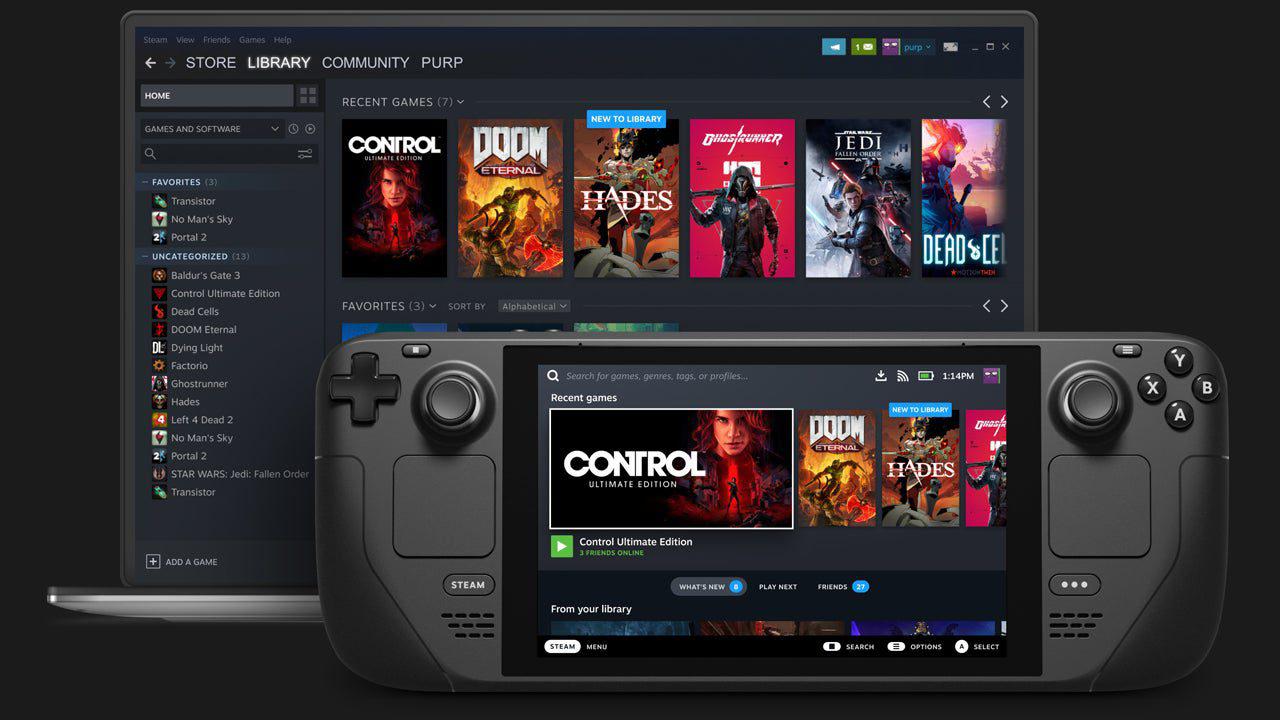
Steam Deck OLED Shortage Explained
If you check the store page for the Steam Deck right now, they are still out of stock in some regions. There is a note under it that says, “Steam Deck OLED may be out of stock intermittently in some regions due to memory and storage shortages. Steam Deck LCD 256GB is no longer in production and once sold out will no longer be available.”
It is exactly what we thought. Valve has a price they want to sell the Steam Deck at. They have to get the parts for the Steam Deck at a specific price to meet that target. They are presented with two options. They could raise the price of the Steam Deck to acknowledge the new cost of RAM, which would not be smart because it is a 4-year-old device. Compared to other handhelds, it is cheaper but also a little less performant. Raising the price to align with competitors would not make sense.
The other option, which they clearly chose, is to wait for the cost to come down. Once they secure storage and memory at better pricing, they can release it again at the original price and stabilize availability. We know many people are still buying Steam Decks for the first time, even 4 years after release. It may not be the launch window anymore, but the demand is clearly still there.
From Valve’s perspective, there may not be intense urgency to flood the market immediately. They are also working on the Steam Machine and the Steam Frame. Allocating resources carefully makes sense. If they were not looking toward a Steam Deck 2 for 2027, they probably should be.
If sourcing parts for older tech is becoming increasingly difficult, redirecting that effort toward a more performant device could be smart. Performance levels like the Z2 Extreme show what is possible, and if they can match or exceed that soon, it would be a solid move.
There is no real reason to panic. This happened before. The Steam Deck went out of stock for a few weeks, then returned and stayed available for a long time. Valve has stated it will come back, and there is no reason not to take them at their word. The RAM market situation has plateaued. AI companies and PC manufacturers are still buying RAM, but conditions have not drastically worsened.
Some people have predicted the cancellation of the Steam Machine. That seems extremely unlikely. At worst, it could miss a projected launch window and release later in the year. If waiting allows them to secure better component pricing and hit a competitive MSRP, that is the smarter path. Releasing at $1500 or $1600 would not make sense when better options exist at that range.
Valve is not a tiny operation. They have over 350 employees. Their hardware team may be smaller, but they have manufacturing experience from the Steam Deck. Their core revenue stream from Steam is strong, and PC gaming continues to perform well. Negativity may generate clicks, but it does not reflect reality. In the grand scheme, these are video games, and the situation is not as dramatic as some make it out to be.
Valve Overhauls the Verification System
Valve is also working on fixing the verification system, especially leading up to the Steam Machine. If they were not serious about future hardware, they would not be investing in a full overhaul.
First, when you leave a review for a game you have played for more than an hour or two, you will be able to attach your hardware specs. When someone looks up a review, they can find players with the same CPU and GPU combination and read about their experience. If a game runs well on specific hardware, that information becomes transparent. If it performs poorly on devices like the Steam Deck, that will also be visible.
This builds on the existing “majority time played on Steam Deck” tag and evolves it further. Additionally, in the Steam client beta, there is a new feature that allows frame rate data collection through the overlay. If you are playing a game and using the overlay, Valve can see hardware specs and performance metrics.
This addresses situations where a game technically boots and meets basic criteria but performs at 18fps to 20fps instead of a stable 30fps. Under the new system, Valve can reconsider Verified status based on real performance data. A game that “runs” but does not deliver a good experience should not carry a Verified badge.
This data can also help identify performance bottlenecks within SteamOS or Proton. Valve can pinpoint specific areas causing drops and push fixes faster. We saw a similar approach when Elden Ring launched. Through Proton updates, stuttering was addressed quickly. Now, instead of testing every title internally, Valve can leverage real-world data to streamline optimization.
This change is especially important as they aim for mid-range performance targets with the Steam Machine. Discussions around hitting 4K60 with FSR have surfaced. Valve has mentioned working to bring newer FSR versions to SteamOS, which could significantly improve performance outcomes. Collecting frame rate data will help ensure better optimization across the board.
With rising component prices, targeting mid-range performance is practical. Developers will likely continue optimizing for accessible hardware tiers, especially as cross-generation support remains common in console transitions.
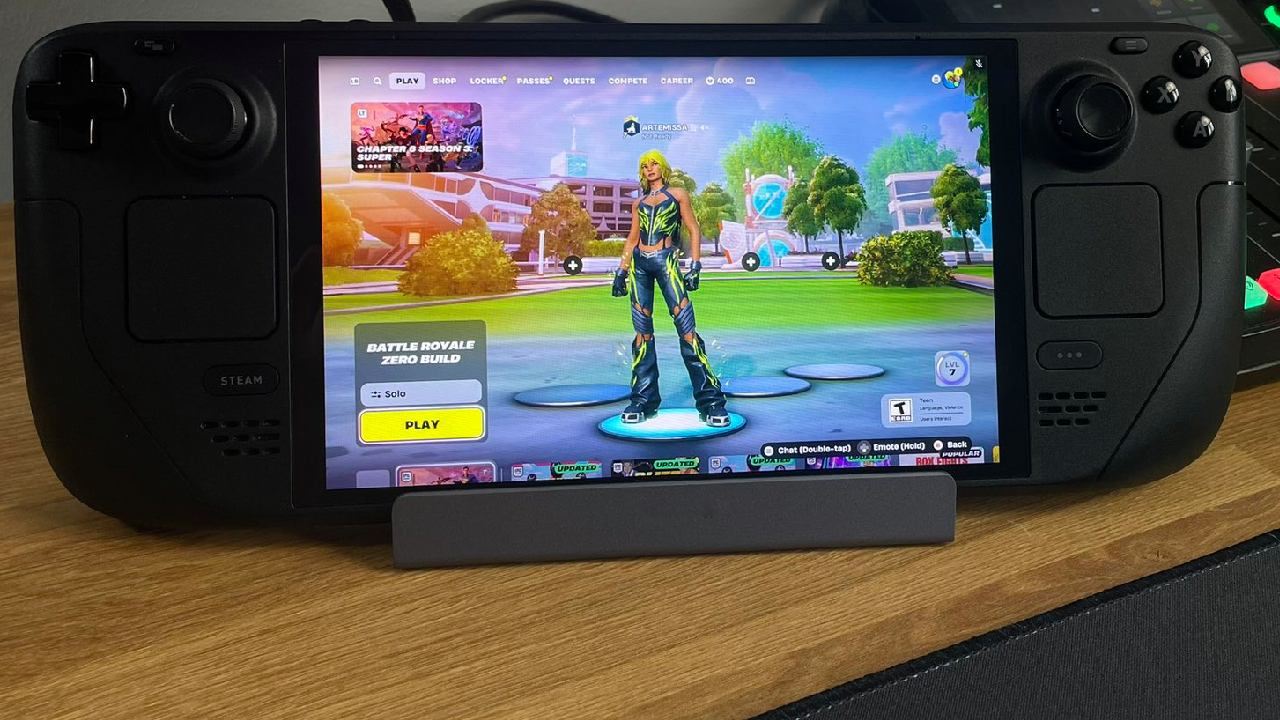
Playing Neo1 on the Steam Deck
On a more positive note, Neo1 has been an incredible experience on the Steam Deck. With Neo3 recently released and moving toward a more open-world style, there was motivation to go back and start from the beginning.
Neo1 runs well on the Steam Deck with the right settings. For a locked 30fps, most settings can remain on high. Lowering shadows to low ensures a perfect 30fps lock without stuttering or slowdown. Turning shadows off removes heavy black shadows but retains lighting, and visually it can even look cleaner on the smaller screen.
The gameplay feels inspired by Dark Souls but turns everything up to 11. Using objects gives you skill points that go into skill trees, which let you unlock complicated weapon combos. There are white, blue, yellow, and purple tiers in the Diablo-style loot system. Runbacks feel more gratifying because the quality of the drops gets better when you fight the same enemy again.
Fighting harsh bosses teaches you things. Even with superior gear, you still need to learn how to dodge and attack in a smart way to win. The pleasure is the same as the first time you played Dark Souls. Getting better at something, not merely getting better metrics, is what progress is all about.
After you finish a level, side quests become available that have extra bosses or adversaries that are different from the ones you fought before. Skill points and expensive loot are among the rewards that encourage players to keep playing. It is easy to see 100 hours going into this game. Neo2 performs even better on the same settings, achieving a locked 60fps or stable 45fps, while Neo1 feels best at 30fps.
For a low price, Neo1 offers a deep Soulslike experience perfectly suited for the Steam Deck. It is the kind of game that rewards patience, skill, and persistence, delivering hours upon hours of satisfying gameplay.
Also, check our other hardware articles:
- AMD Ryzen 9 9950X3D Review: Setting The Standard For 2025 Gaming CPU
- Amazon Luna 2025 Review: Is Prime Gaming's Cloud Service Your Go-To For Casual Fun?
- AMD RX 9070 XT Review: AMD's RDNA 4 Champion for 1440p Gaming
- GeForce Now Ultimate: Ditching Your Gaming PC For Cloud RTX 4080 Power?
- NVIDIA GeForce RTX 5080 Review (2025): Still A 4K Gaming Powerhouse?
- Intel Core Ultra 9 285K Review And Performance Breakdown (2025)
- AMD Ryzen 7 9800X3D Review: 3D V-Cache Goes God Mode with Stunning Gaming Performance
- Intel Core Ultra 9 285K vs AMD Ryzen 7 9800X3D: In-Depth Gaming Performance and Benchmark Comparison
- NVIDIA GeForce RTX 5080 Super Performance In Cyberpunk 2077: Path Tracing & DLSS 4.0 Tested
- AMD Radeon RX 9070 XT In Cyberpunk 2077: Ray Tracing & FSR 4.0 Tested
- Intel Arc B580 Review: The $250 GPU Revolutionizing 1440p Gaming
- Intel Arc B570 Vs. B580: Value, Specs, And Real-World Gaming Performance
- RTX 5090 Laptop Vs. M4 Max MacBook Pro: Ultimate Raw Performance Vs. Battery Endurance
- Intel Arc b580 Vs. RTX 4060: Game Performance And Value Analysis
- RTX5090 Hell Is Us Demo 4K Ultra Benchmark: DLSS Vs. Native Performance Guide
- NVIDIA RTX 5070 Review: Mid-Range Muscle or Marketing Hype?
- Nintendo Switch 2 Review: Handheld Performance, Features & Value Breakdown
- RTX 5070 Ti Review: Performance, Thermals & Power Efficiency Tested
- Samsung Odyssey OLED G81SF Review 2025: Ultimate 32-Inch QD-OLED Gaming Monitor
- AMD RX 9070 Performance Review: Thermals, Clocks, and Real-World FPS
- AMD Ryzen 5 7600 Review: Best Budget Gaming CPU of 2025?
- AMD Radeon RX 7800 XT Review: RDNA 3 Power For Midrange Gaming
- Asus ROG RTX 5090 Astral OC Vs. Founders Edition: The 4K Gaming Benchmark
Senior Editor, NoobFeed
Gaming Hardware Updates
No Data.