
W-OLED vs. QD-OLED vs. Tandem OLED: Which OLED Panel is Best in 2026
Modern OLED panel technologies differ in brightness, color reproduction, and uniformity, shaping overall monitor performance and user experience.
Hardware by Tanvir Kabbo on May 04, 2026
OLED displays are the newest and have self-emissive pixels, flawless blacks, and outstanding contrast. However, not all OLED panels are built the same way. Given the variety of panel types, the appropriate panel will depend on understanding how they differ in brightness, color performance, and overall usability.
What Defines an OLED Panel
An organic light-emitting layer is used in an OLED panel with color filters permitting light through. The pixels are self-emitting, that is, they emit their own light and can be turned off and on separately. Although this basic technology remains the same, panel applications differ significantly in practice, leading to variations in actual performance.
.jpg)
W-OLED: The Foundation of Modern OLED Displays
LG Display introduced the first W-OLED display panel for TVs in 2016. It is made up of a white OLED layer produced by layering a yellow layer between two blue layers. This lies under the color filters and subpixels (red, green, blue, and white).
The white subpixel is used to render pure white; the remaining subpixels are used to reproduce colors. Nevertheless, such a design implies that colors are not as bright as pure white, resulting in relatively low color brightness.
QD-OLED: Advancing Color Performance
In 2022, Samsung Display launched Quantum dot OLED, or QD-OLED. It is a technique that employs a blue OLED layer and a Quantum Dot filter to produce blue, red, and green colors.
QD-OLED panels can display more colors than W-OLED panels because they do not have a separate white subpixel. Colors are more vivid and punchy, with a better separation among the primary colors, such as red, green, and blue. This makes QD-OLED the best performer in terms of color saturation among the three panel types.
Tandem OLED: The Next Generation Evolution
LG Display announced the new W-OLED technology, dubbed Tandem OLED (RGB Tandem OLED), in late 2025. It subdivides the yellow base layer into red and green to form a four-layer stack underneath the color filters.
The design enhances the purity of the colors and moves performance to QD-OLED. Tandem OLED panels are obviously superior to traditional W-OLED panels in color performance. However, they still lag significantly behind QD-OLED panels in color volume.
Brightness Performance Across Panel Types
One of the biggest drawbacks of the previous OLED panels has been brightness. Tandem OLED is much better in this regard, providing about 500 nits in real HDR files and over 1300 nits in small highlights.
QD-OLED panels are typically in the range of 500 nits in real content and 1100 nits in highlights. Some W-OLED panels can support high brightness levels, but maintaining that level of brightness with real content can be difficult.
The brightness of SDR is more closely related to monitor tuning than to the panel type. Other displays are pushed harder to produce a brighter display, whereas other displays are concerned with consistency.
In general, the brightness performance of Tandem OLED is currently the best.
Black Levels and Performance in Bright Rooms
Tandem OLED and W-OLED displays can achieve deep black levels even in bright conditions. QD-OLED panels lack a polarizer, which increases black levels in bright rooms and often produces a purpleish cast on blacks.
Consequently, QD-OLED panels are most effective in darker settings, where optimal black levels are achieved.
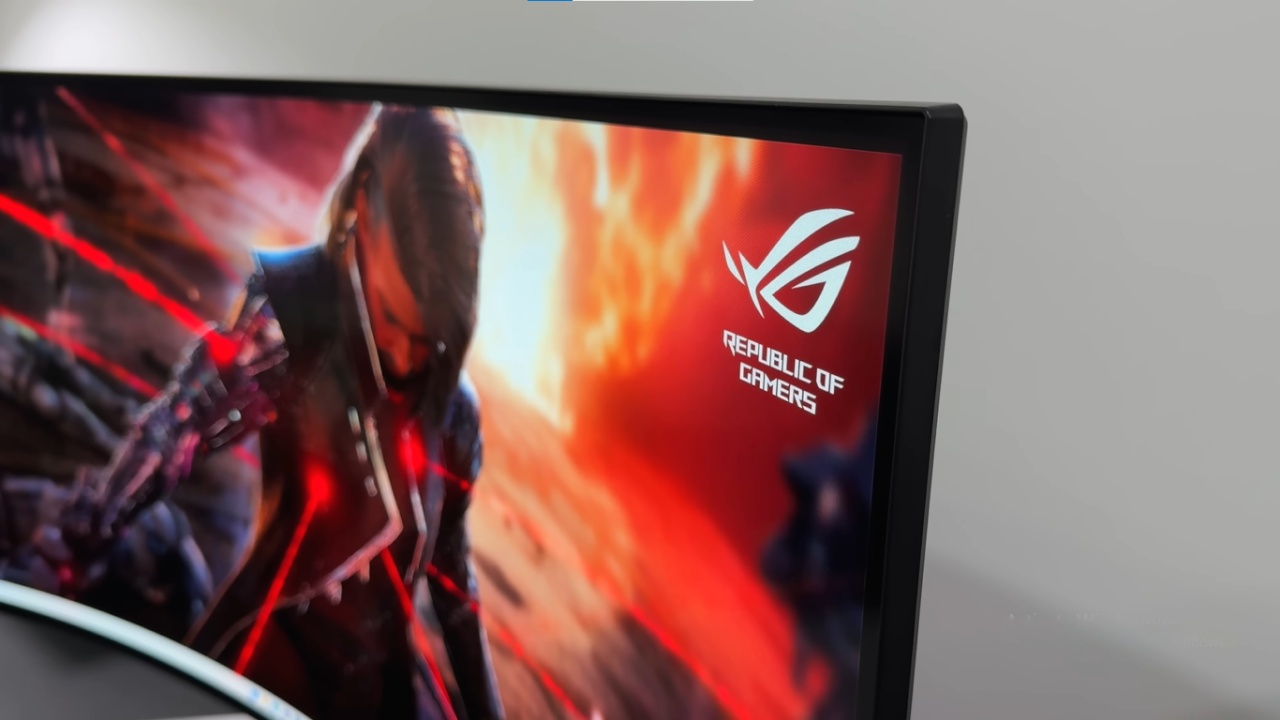
Uniformity and Banding Issues
Another area where differences arise is uniformity. Vertical banding can be observed in tandem OLED panels and W-OLED screens, particularly in dark gray environments. This is more common with Tandem OLED; however, it varies across units.
This effect may be reduced by lowering refresh rates or by using pixel refresh cycles. In most real-life situations, particularly in gaming, this banding is less noticeable.
QD-OLED panels are more consistent overall, as they better maintain uniformity and are less prone to visible banding.
Text Clarity and Subpixel Layout Challenges
Text clarity is a problem with all OLED panels because they do not use traditional subpixel layouts.
Tandem OLED and W-OLED panels use an RGBW grid with a white subpixel. This may lead to text fringing, especially on displays with lower pixel density, such as 1440p. The issue becomes less noticeable at 4K resolutions.
QD-OLED panels feature a triangular subpixel structure, which can also cause text fringing. The visual elements, such as a green and a purple edge, can be seen in some UI elements. These problems, such as W-OLED, are reduced at higher resolutions.
None of the existing OLED panel types is best for viewing text, though this will change.
Future Improvements in OLED Technology
More recent Tandem OLED displays are likely to eliminate the white subpixel in favor of a vertically oriented RGB stripe pattern. Future QD-OLED display panels will also switch to a comparable V-strip RGB design.
These innovations will significantly enhance text clarity and increase the overall accuracy of text rendering, making OLED monitors more focused on productive use.
Availability and Market Options
The W-OLED and QD-OLED displays are currently the widest variety of choices in terms of size, resolution, refresh rate, and screen covering. The options can range from 4K240Hz displays to the widest possible, making it easier to find a good model.
Tandem OLED is in its infancy, and supply is limited. The 27-inch 1440p monitors are the current options, with increased options being anticipated soon.
Which OLED Panel Type Should You Choose?
QD-OLED has also been observed to work well in color and uniformity, and is thus suitable with users who prefer vibrant colors and uniformity. Tandem OLED is an all-around choice, particularly in a bright environment, as its brightness and color performance are higher than that of W-OLED. W-OLED is very efficient, but it lacks the bright colors of newer technologies.
The selection of the ideal panel is based on its intended purpose, brightness, color accuracy, and where it will be used.
Senior Editor, NoobFeed
Gaming Hardware Updates
No Data.