
Switch 2 Saved The Donkey Kong Bananza Switch 1 Nightmare
Nintendo's next-gen console finally delivers the voxel worlds, particle effects, and dynamic gameplay fans were promised.
News by Zahra Morshed on Oct 22, 2025
When Donkey Kong Bananza was first hinted at, a lot of people thought it would have fit on the first Nintendo Switch. It had colorful worlds, landscapes that could be destroyed, and physics that changed all the time. But new interviews translated from Nintendo Dream show a much more complicated truth. It has to do with the technical problems that made the last few years of the Switch 1's life so difficult. I thought I had missed a chance, but it turned out to be an impossible dream.
The Donkey Kong Bananza team revealed that the project's first build started on the first-generation Switch, but they quickly ran into an unnoticeable wall. The amount of memory used up all the room that was there, and making big, interactive worlds shook the system.
Tanaka, the lead coder, said that the "tight" resources of Switch 1 would have made it almost impossible to make the game's big scenes come to life. It wasn't just that the optimization wasn't working right; the gadget had structural issues that made it less useful.
Moving work to the Nintendo Switch 2 wasn't just an improvement; it was a freedom. The team saw right away how the new hardware made it possible to get 60 frames per second, more objects, and complex destruction techniques that finally worked the way they were supposed to. Talks inside the company say that developers were happy about their increased freedom. Now they could make chain effects of terrain that collapsed and environments that changed, which would have killed the first Switch.
The Bananza build on Switch 1 had a hard time keeping up even 30 frames per second during the early prototype process. In fact, a lot of the test versions fell below that level during tough parts.
The console's hardware had problems with shadows, particle effects, and the science of gold fragments. Developers talked about times when there were too many particles on the screen and the processing would slow down right away, causing them to turn off all visual systems. It became clear that every step up in quality came with a technical price that the old gear couldn't bear.
The problems were not only visual. Voxel-based terrain deformation was a big part of how Donkey Kong Bananza worked. This is an advanced way to simulate damage and changes in the world in real time. Thousands of small pieces had to react dynamically to the laws of physics when players hit the ground or found secret areas. Dozens of small calculations were done before each step to make sure the debris spread out naturally. That process used more power than the system could handle on Switch 1, which caused visual tearing, delay, and instability.
The developers were in dangerous land with even small changes. One of the most shocking things that was said in the interview was that shadows, which are a big part of current game lighting, had to be taken out of the early build completely. It took more GPU cycles than the Switch 1 could spare to render how light interacts with voxel surfaces. It wasn't just about how it looked; it also changed how the game felt, how deep it went, and how clear the space was. When these things were taken away, the world felt very different to explore.
Donkey Kong Bananza's development took a big turn when it was decided to move all of its content to Switch 2. When memory and performance limits were removed, the game's design theory grew in a big way.
Last but not least, environments could respond quickly and correctly to what players do, making them feel like real ecosystems. The destruction chains became smoother, the shadows got darker, and the sharpness of motion reached levels that had never been seen before. With more ideas, the team was able to make a dream come true that had been stuck for a long time because of hardware.
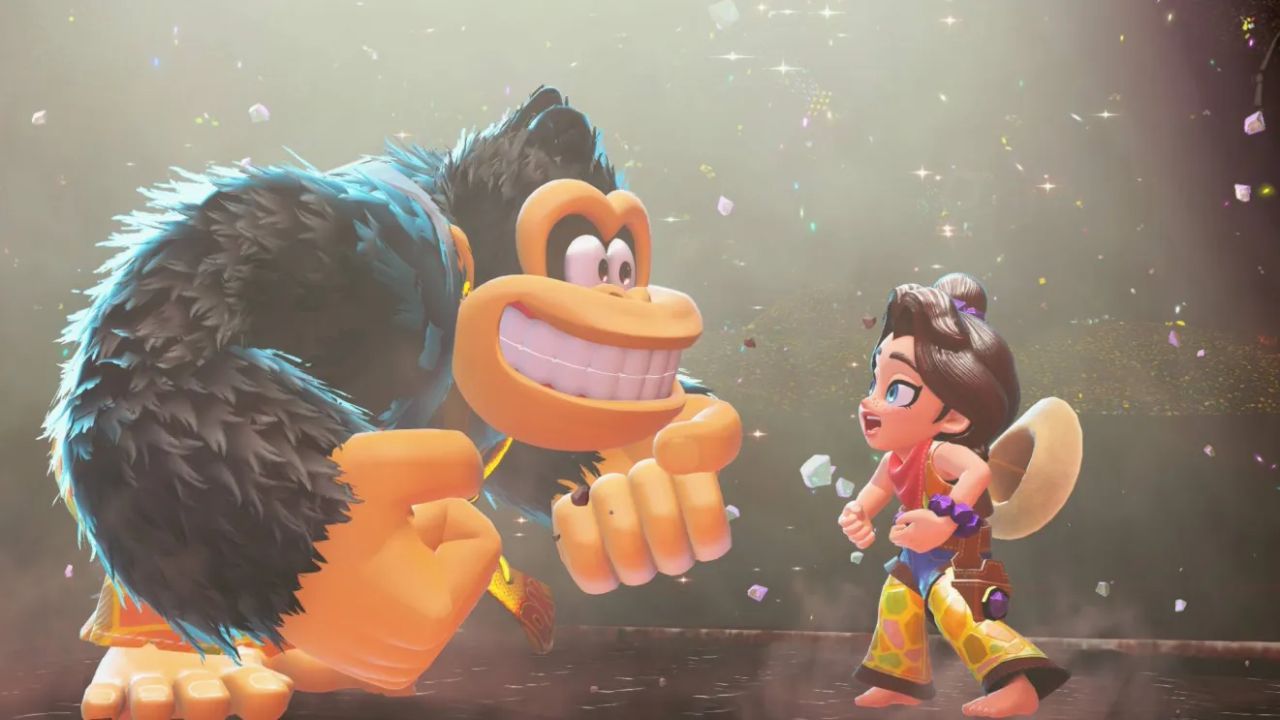
The move wasn't just for show, we can see now; it was important. From what the creators said, finishing Bananza on the old platform would have taken away from everything that made the plan special. There were hints from Nintendo experts that the new system's architecture was more than just faster; it was also built to handle real-time models like this one that are very complicated. It's not just a better version; it's the version that was meant to be.
Some fans still think that Donkey Kong Bananza came out on the first Switch, but the truth is much simpler and more telling. The project wasn't put on hold or abandoned to be safe; it was just waiting for new technology to catch up. It finally does on the Nintendo Switch 2.
Contributor, NoobFeed
Related News
No Data.