
God Save Birmingham is Turning Heads With its Realistic Survival Mechanics
God Save Birmingham is aiming for much more than another zombie survival game, with deeper systems, improved combat, and a remarkably detailed medieval world.
News by Tahmid Mahi on Jun 27, 2026
God Save Birmingham may have looked promising in trailers, but actually playing it leaves a much stronger impression. You might think you already know what to expect after seeing the physics, zombie swarms, and medieval setting, yet the experience feels entirely unique once you're controlling it yourself.
There are bugs, rough animations, AI problems, and the occasional glitch, but even in alpha, the underlying systems stand out. It doesn't feel unfinished in a bad way, but like a game with a good foundation that is still being polished.
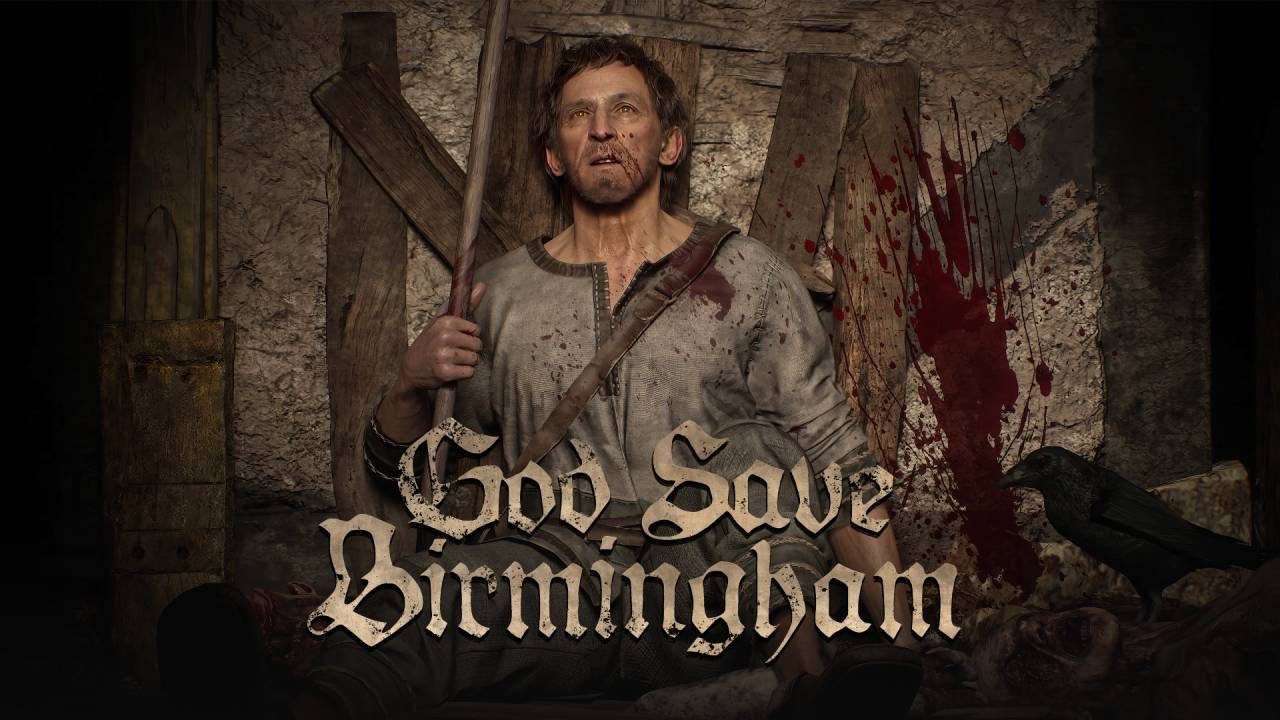
Perhaps the biggest surprise is how well all the game mechanics fit together.
It’s the kind of game where every decision you make feels meaningful, and it doesn’t often feel like the game is just throwing waves of zombies at you for the sake of action. Instead, you’re just trying to survive inside a medieval town slowly crumbling around you. That focus on simulation makes the world feel much more believable than a typical zombie survival game.
The setting itself also turns out to be more engaging than expected. The game recreates medieval Birmingham with an impressive degree of historical detail, but the development team isn’t based in England. Instead, South Korean studio Ocean Drive Studio is developing the project, which makes its attention to historical authenticity even more surprising.
As you explore the town, you quickly notice how much care has gone into its design. Streets feel authentic, buildings have their own personality, and interiors avoid the repetitive layouts that often appear in open-world games. Every part of the town feels like it existed long before the zombie outbreak began.
The latest alpha also shows how closely the developers have listened to community feedback. Combat received heavy criticism during earlier public tests, and much of it has now been redesigned. Weapon swings feel faster, controls respond more quickly, head stomps are smoother, and the overall flow of combat has improved considerably.
This balance creates a constant sense of danger in every encounter. You never feel quite at home, for the next bad choice can end in catastrophe. We've evolved the player and the enemies together, so combat feels more satisfying without removing the survival challenge. Not every battle requires a reckless attack, but careful planning.
Weapons themselves have gotten a lot more depth than just comparing damage numbers.
Now, every weapon has its durability, stopping power, and overall effectiveness, meaning you have to think more carefully about which equipment you carry. New weapon types, including one-handed swords and polearms, have also been introduced, while the developers plan to expand the medieval arsenal throughout development.
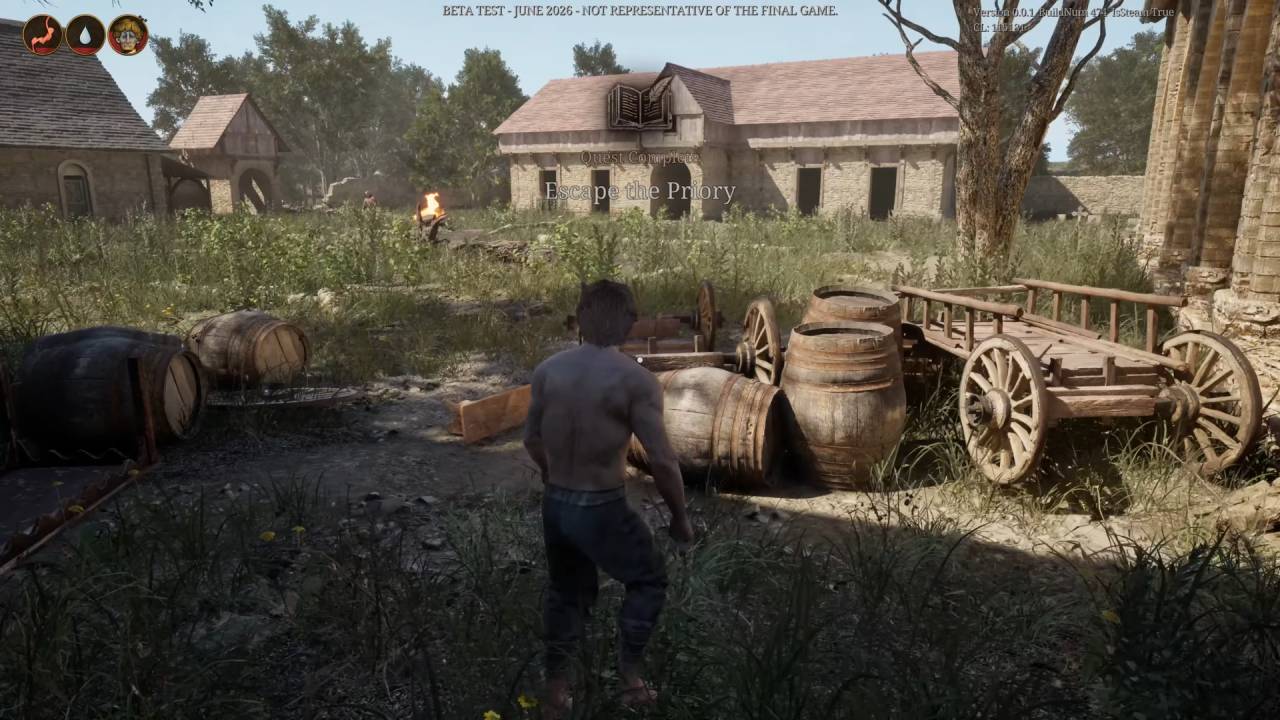
One of the game's most compelling additions is a surprisingly simple shouting mechanic. Instead of quietly avoiding zombies at all times, you can deliberately call out to attract them toward specific locations. That allows you to lure hordes away from valuable loot, create distractions, or accidentally make your own situation much worse if you panic.
Physics remains one of the game's defining features, and they influence almost everything you do. Zombies do not simply perform attack animations when they reach you. They grab onto your character, cling to you, and actively try to drag you to the ground while you physically struggle to escape.
The environment follows those same physical rules. Heavy objects consume more stamina to move, furniture requires real effort to swing, and even pulling the bottom crate from a stack causes everything above it to react naturally. Instead of scripted interactions, the world always behaves according to its physics system.
Another standout addition is the completely free ladder system. Unlike many games where ladders only function at specific climbing points, you can place them almost anywhere. That freedom sounds simple at first, but it becomes much more engaging when zombies are able to knock the ladders over while you are climbing because they remain fully simulated by the game's physics engine.
Movement throughout the town has also become much more flexible.
Windows are no longer just decorative scenery because you can now climb through them whenever doors are blocked, locked, or surrounded by zombies. That small change creates countless new escape routes inside buildings and constantly encourages you to examine your surroundings. Before long, you begin looking at windows just as often as you look at doors.
The survival mechanics go way deeper than just fighting zombies. The craft system now centers on specific professions, like carpentry, blacksmithing, and tailoring, each with its workstation set up throughout the town. Finding the right workshop is almost as important as finding food itself.
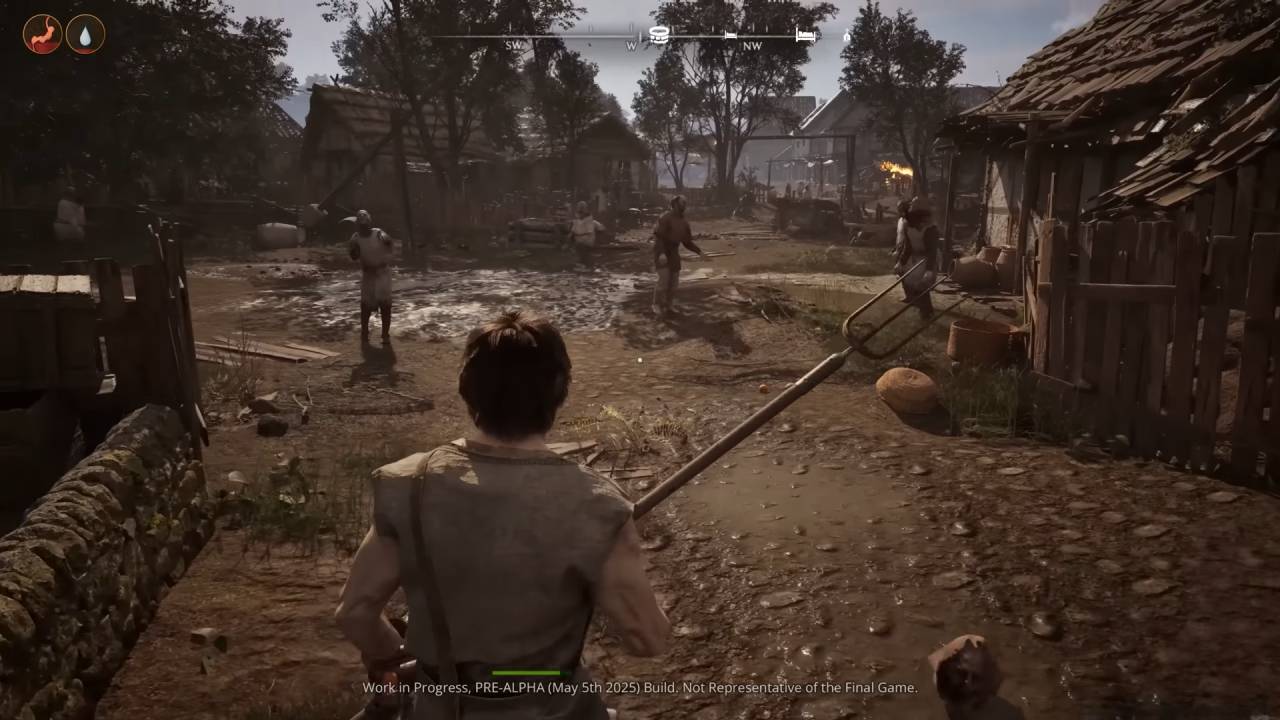
Food and long-term survival have also become significantly deeper. You can raise chickens to produce eggs, but those animals also generate noise that attracts nearby zombies, forcing you to carefully choose where you build your coop. Now the weather itself also affects your chances of survival. Rain cools your body temperature, fog limits vision, and cold weather means you have to keep fires burning indoors to survive.
Water management adds another level of strategy. Rainwater can be used for drinking, and rivers can be used for washing, but if you drink directly from them, you can get sick. Fire is equally dangerous. It spreads naturally to nearby wooden structures. A single careless campfire inside your shelter can destroy everything you gathered over hours.
Sleeping has also become a much more involved process than simply ending the day. Better beds lead to better recovery; warmer buildings lead to better sleep; and ensuring your shelter is secure before you sleep is an important part of surviving. Every decision surrounding your base now carries greater importance.
Food gathering has also seen meaningful improvements.
Berries, vegetables, and other natural resources can now be foraged throughout the environment, but they do not begin spoiling until you actually harvest them. That allows you to leave food in its natural state until you truly need it instead of carrying supplies that slowly rot inside your inventory. It creates another thoughtful layer of resource management.
Loot generation also avoids becoming repetitive. Rather than placing every item completely at random, the developers use a hybrid system that combines fixed placements with procedural generation. Buildings still make sense, but each run is unpredictable because you can never be certain what supplies you'll find inside.
The guide journal has also been re-imagined to better fit the survival experience. Rather than a traditional quest log that constantly tells you where to go, it acts as a lightweight survival journal that gently introduces new players to important mechanics. Experienced players may choose to ignore it altogether.
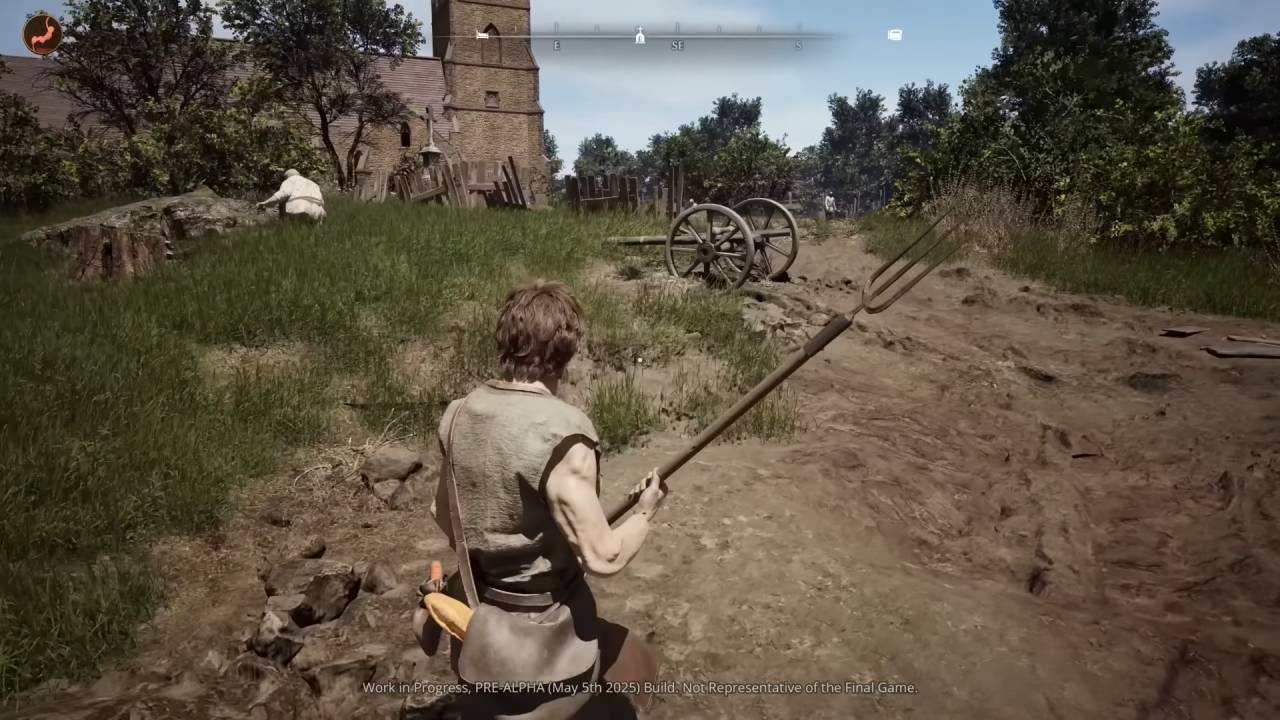
Looking Forward: Co-op multiplayer is one of the most anticipated features. It was not available during this playtest, but the developers have confirmed that they are actively working to stabilize the co-op framework before opening it to public testing. If everything progresses as planned, players will eventually be able to experience the survival sandbox together.
After spending time with the latest build, God Save Birmingham feels like a game that deserves much more attention. It does not try to stand out with massive cinematic moments or nonstop action. Instead, it focuses on constructing an intricate survival sandbox with dozens of interconnected mechanics that constantly affect one another.
Even with its bugs and missing features, the foundation already feels shockingly solid, and the more time you spend in its world, the more impressive the depth becomes. It’s the kind of game that promotes curiosity by always presenting new systems and interactions. You want to see how far it can go.
Editor, NoobFeed
Related News
No Data.