
Baladins Review
Nintendo Switch
A cute role-playing game based on a board game where dragons change your week and every choice you make affects the next loop.
Reviewed by M. Hasan on Feb 20, 2026
Not every fantasy story needs loud orchestras and wars that end the world to be interesting. There are times when a bright board, some dice, and a dragon that wants your treasure are all you need. Baladins is an RPG that was made by Seed by Seed and released by Armor Games Studios. It has a unique selling point: what if a digital game really felt like a tabletop experience?
The developers wanted to make a short, playable role-playing journey that captures the magic of getting together with a board game while keeping things simple and cute. You don't get a huge open world; instead, you get a system that loops around. Instead of working forever, you get short bursts of trying new things. It's not trying to be as good as great sagas; it just wants to have you over.
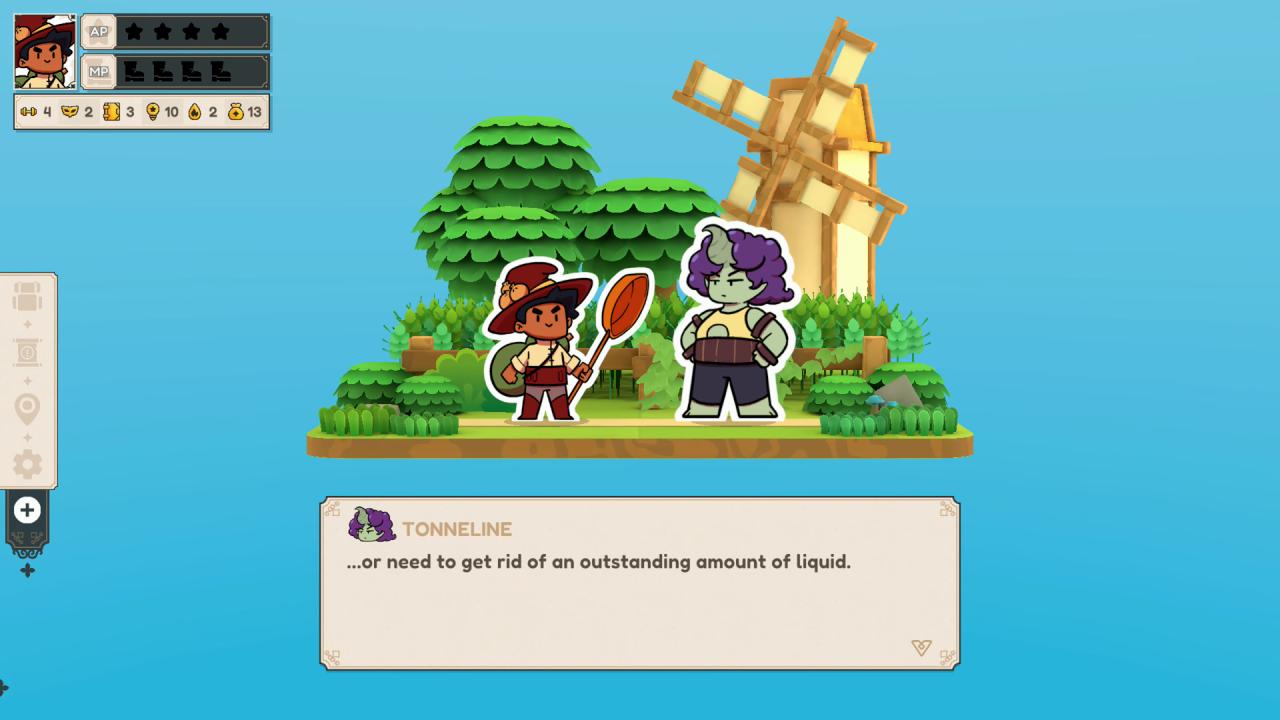
Baladins seems like a peaceful fantasy world at first glance.
You and the other heroes, who are jokingly called "Baladins" are getting ready for a happy event in your hometown. The mood is light and almost like a tale. Things look like they are going to work out, but then chaos breaks out. A huge dragon-serpent comes out of a well, eats the heroes, and breaks time in two. All of a sudden, you're stuck in a six-week loop that won't end.
The loop always ends the same way: the dragon comes back, eats almost everything you've gathered, and starts over. It's clear that the structure comes from time-loop stories like "Groundhog Day," but the goal isn't just to get better. You need to show the dragon that you trust and care about it while also figuring out the right set of actions that could break the cycle.
The story is told through conversations with people in the town, side quests, and different possible endings. Depending on what you do and how well you do it, each quest can end in a different way. Some ends are funny, while others are sad. Even though the dragon is a threat, the tone never gets too dark. Instead, it finds a mix between silly and funny things with small risks. You're not just fighting bad guys; you're also dealing with relationships, mistakes, and personal problems in different time periods.
The smart part is that your information stays the same even if the world starts over. Quests that are finished are recorded, stories built, and you slowly get a better sense of how everything fits together. Shouldn't the point of a time-loop story be to teach you something you didn't know before?
Baladins is a lot like a board game come to life.
You can start by picking one of five different classes: Cook, Pyro, Dancer, Bard, or Luxomancer. The stats you start with for each class affect how you handle events. A Pyro is great at tasks that involve destruction. A Cook might be great at jobs that involve art or creativity. When you play skill-based events, these jobs really affect how you play.
The map is broken up into towns and areas, which are shown on it like blank spaces on a board. Movement points let you move from one place to another, and action points let you do things. Each in-game week gives you a set number of tasks, so you have to decide which ones are most important. Do you train to get a stat better? Are you up for a new quest? Go to a store? Take on a dangerous challenge?
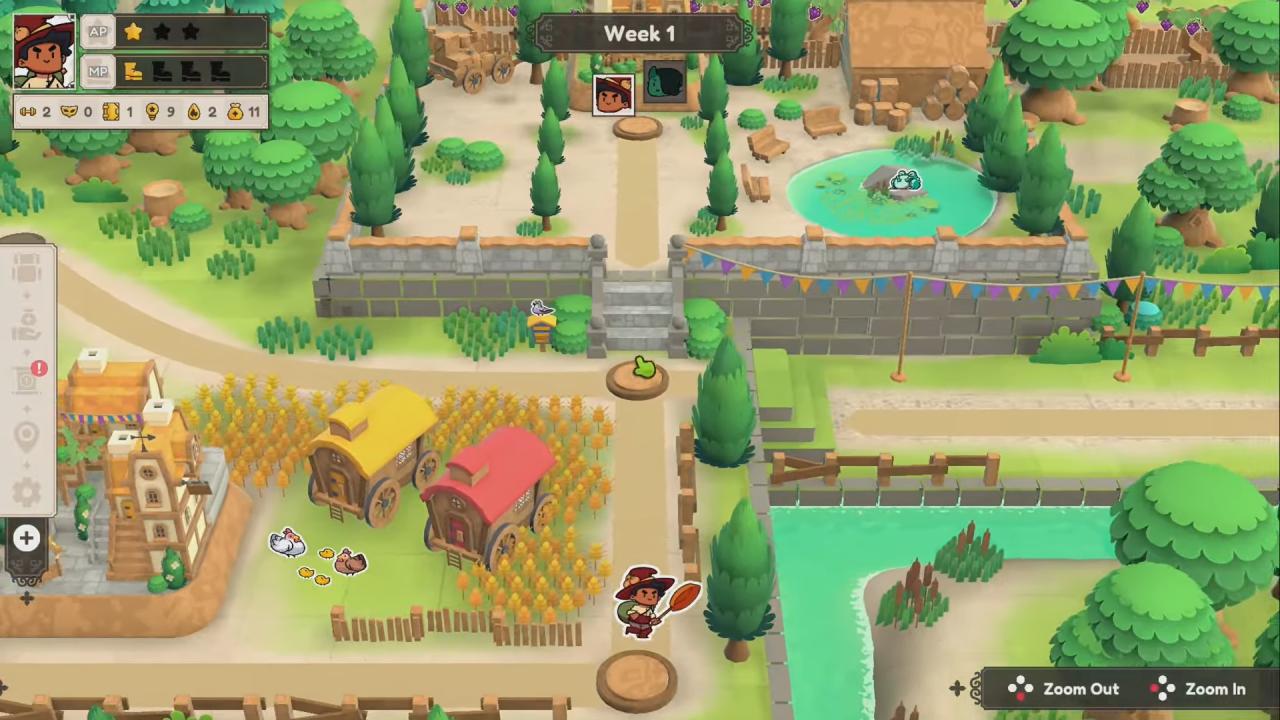
The pace is set by the six-week loop format. As you use up your action points, a week goes by. At the end of the sixth week, the dragon comes to restart everything. Sources say that each loop lasts about 30 minutes, which means that the game is great for short practices or running over and over again.
You are also free to choose how you play. You can play by yourself or with up to four other people, either in real life or online. Multiplayer lets players work together and trade with each other, which adds strategic depth. When you play alone, you have to take care of everything, but when you play with other people, chores and skills are shared more evenly.
Baladins fights don't have fancy animations or happen in real time.
Instead, skill checks are based on rolling dice. When you need to do something difficult, like convince a stubborn villager, win a duel, or finish a game, you roll three dice with six sides each. The sum is added to the stat that needs it. If the number is higher than the level of challenge, you've solved the puzzle.
There are different levels of difficulty, and the tougher tasks require stronger stats. When you succeed, you usually get gold or better skills. When you fail, you might lose resources. That means it's simple and easy to understand, even if you've never played a tabletop RPG before.
The experts say that the system feels like it can forgive. Many fights can be handled with a few training sessions and smart score boosts. This makes things less frustrating and less tense. It's not often that you feel like bad things are about to happen. The dice system makes things a little less predictable, but it doesn't punish trying new things too harshly.
The good news is that this ease of access keeps things calm. The game isn't trying to see how fast you can react or how well you can handle complicated processes. It wants you to try new things, fail easily, and try again in the next loop.
The different kinds of events work well.
There are many kinds of challenges, from food fights to sneaky moves. Different stats open up new paths, which makes the game more fun to play again and again. The repetitions are what make it less interesting. There are some quests that are just fetch-style goals, which can get boring after a while. Baladins has a complex way of moving forward. You get skill points during a loop by training or beating tasks.
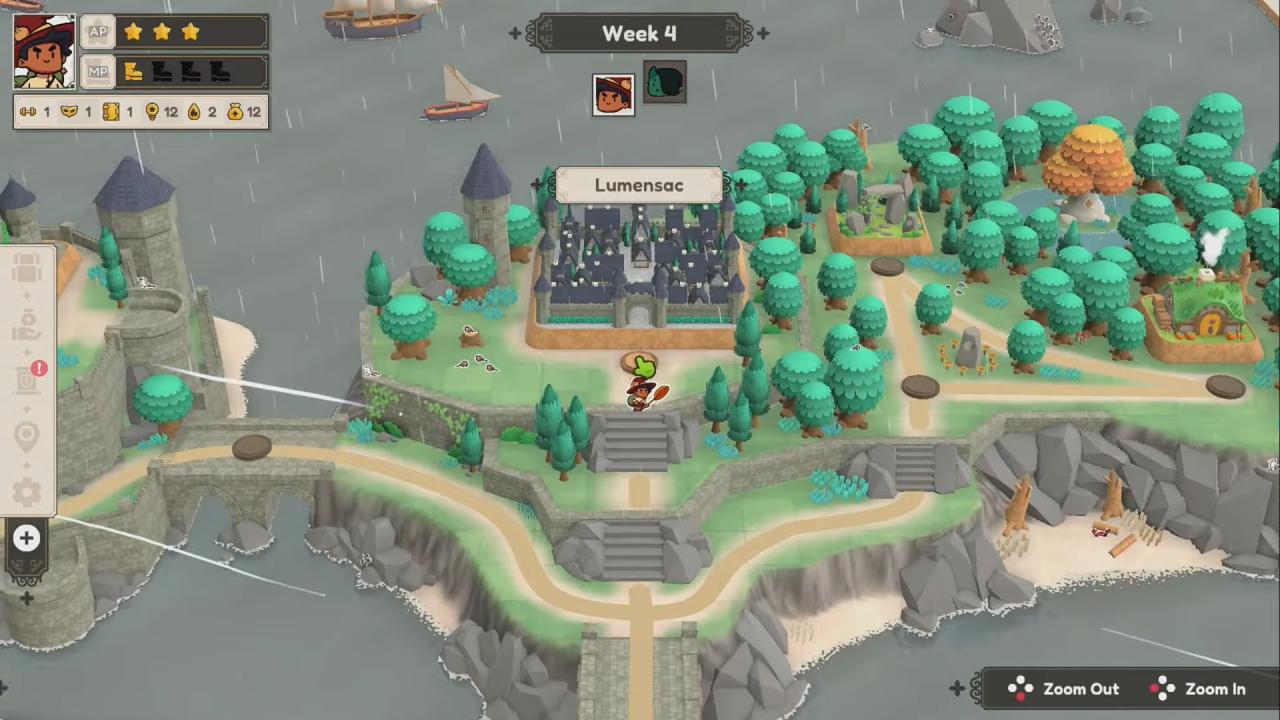
As your stats rise, it gets easier to roll again, giving you a sense of momentum within the pattern. But when the dragon resets the world, most things and short-term benefits are gone. One item is all you can bring into the next phase. Because of this limit, you have to plan ahead. What is something that should be kept? Which prize from the quest will be the most important next time?
Tracking quests and learning new things will help you move forward permanently. Once you finish a goal, it is saved, and in later loops, you can access new endings or story branches. Sources say that the people who made this system wanted to support experimentation more than perfection. You shouldn't try to finish everything in one run.
Still, the restart feature can be bad in some situations. Some players might like how new and themed it is. Some people may get tired after doing the same things over and over. The key is to find new ways to do things and get better at managing your time.
The graphics in Baladins are great.
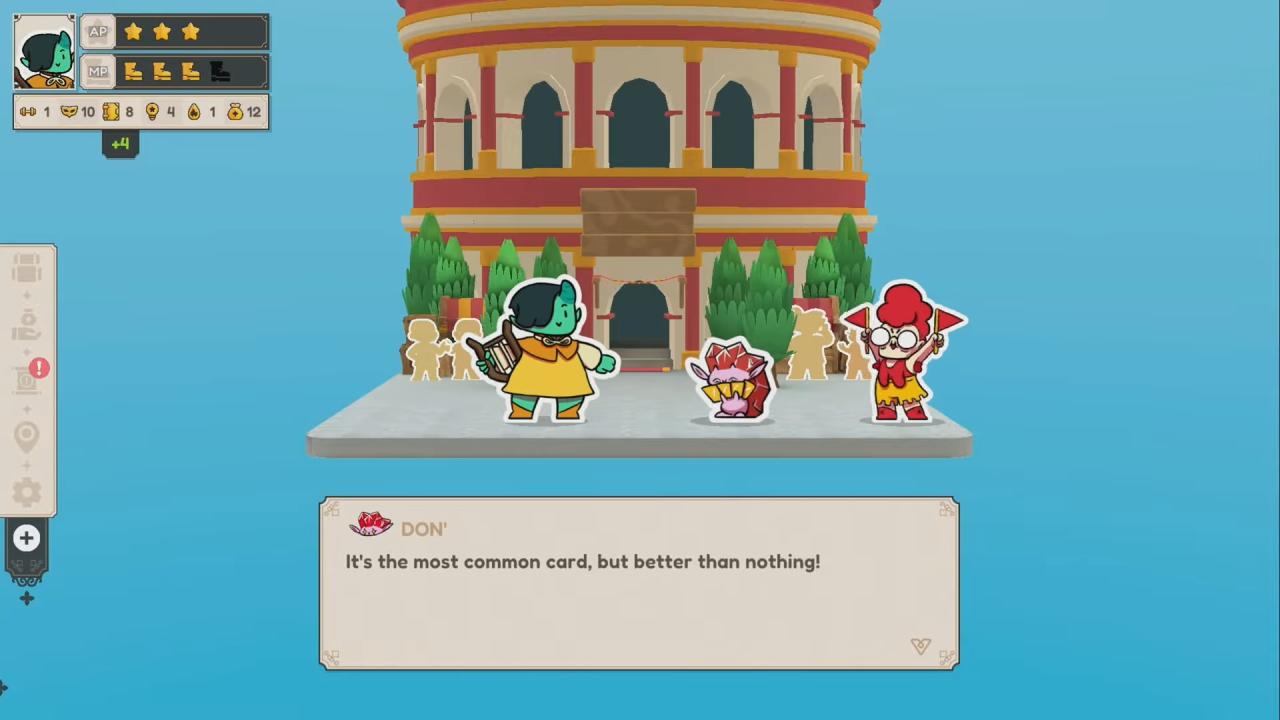
The style of art looks like hand-made paper models set on wooden stands. The characters move and bounce around with over-the-top charm, like the pieces in a fun board game. The towns seem like they belong in a dream storybook.
The color scheme is happy and warm. Even though each area has its own look, the whole thing has a fun, cohesive look. It has been compared to RPGs that are based on paper, and the similarities are clear. The design choice goes well with the idea of a table. It's not supposed to make you feel like you're in a very real world. You should instead feel like you're moving toys across a magical board.
The music goes well with the mood of the game's design. You can listen to light, fun music while you visit towns and complete quests. Some people might feel like they missed out on a chance because there is no voice acting. But since there are no sounds, you can imagine what each character is like.
The sound effects aren't loud, but they fit. The dice rolls are rewarding, and the menu is easy to use. The sound design doesn't get in the way; instead, it adds to the cozy atmosphere. Finally, I want to say that Baladins is not a fast-paced, action-packed RPG. It doesn't depend on dramatic plots or punishingly hard levels. Instead, it's a laid-back, experimental journey based on dice, loops, and finding things.
Still, there is something obviously appealing about the way it is put together. Because it runs every six weeks, it's easy to join and leave. The style of art shows identity. The dice method makes you feel welcome instead of scared. Even though it doesn't change the genre, it proudly makes its own cozy spot.
Baladins knows what it wants to be: a digital tale you can read over and over again. It lets you try new things, laugh at strange quest results, and slowly figure out a mystery that keeps looping around. Are you ready for one more roll of the dice, or will you accept the reset, gather your trust tokens, and finally trick the dragon?
Editor, NoobFeed
Verdict
Baladins is a delightful RPG with a tabletop feel, cute graphics, and an inviting loop system. Sometimes repetitive, especially when played alone, but cozy, creative, and great for casual fantasy fans who are ready to play again.
68
Related News
No Data.